
Your trailer battery is ready for Labor Day travel after it passes a full charge test, a resting test, a breakaway brake test, an equipment load test, a hardware inspection, and a charging test. Run every check at home so you have time to fix any issue before departure.
Is the Trailer Battery Fully Charged Before Testing?
Yes. Charge the trailer battery fully before running any other test so every result begins from a known state of charge.
Connect shore power or a compatible charger and let the charging cycle finish. Turn off the charging source, then record battery voltage, state of charge, and temperature. A lithium battery for travel trailer use may also show live data through a Bluetooth app.

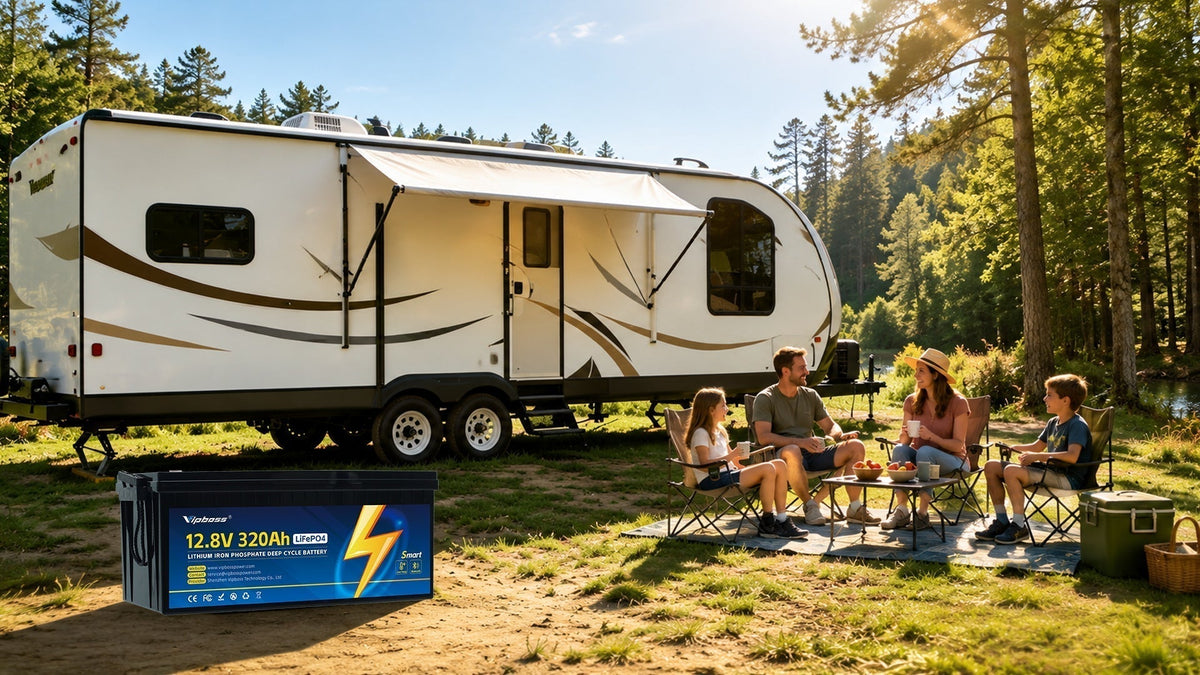
A 12V 105Ah LiFePO4 battery lists a nominal voltage of 12.8V, 1,344Wh of stored energy, a 100A BMS, Bluetooth monitoring, and a charging range of 14.2V to 14.6V. Follow the charging limits listed for your exact battery.
Complete these steps before moving on:
- Turn off lights, fans, pumps, and other trailer loads.
- Check the battery monitor for warnings or fault codes.
- Confirm that the charger completed a full cycle.
- Record the final state of charge and temperature.
- Let the battery rest before checking it again.
A partial charge can make a healthy travel trailer deep cycle battery appear weak during later tests. A full charge gives you a reliable baseline for checking storage loss and equipment performance.
Does the Battery Hold Its Charge After Sitting?
Yes. A healthy battery should keep nearly the same state of charge after resting for 12 to 24 hours with charging sources and trailer loads switched off.
Record voltage and state of charge at the beginning of the rest period. Check both readings again the next day under similar temperature conditions.
A noticeable drop may come from a small trailer load that stays active. Common hidden loads include:
- Propane detectors
- Stereo memory circuits
- Inverter idle draw
- Refrigerator control boards
- USB outlets
- Tracking equipment
- Wireless monitoring devices
If the reading drops, disconnect the battery from the trailer wiring and repeat the test. A stable reading while disconnected points to power use inside the trailer. A continued drop may point to a battery condition or monitor calibration issue.
Use an SOC monitor or app when available. Lithium voltage stays fairly steady through much of the usable charge range, so voltage alone gives a limited view of remaining energy.
Is the Breakaway Battery and Emergency Brake System Working?
Yes. The system works when pulling the breakaway pin applies the trailer brakes right away and the battery keeps them engaged during a short test.
Park on level ground and chock the wheels. Connect the trailer to the tow vehicle as directed in the trailer manual. Pull the breakaway pin, then try to move the trailer slowly. Strong brake resistance should appear right away.
Check the system in order:
- Inspect the breakaway cable and clip.
- Attach the cable to a point separate from the safety chains.
- Check the breakaway battery state of charge.
- Pull the pin and confirm brake engagement.
- Reinsert the pin and confirm brake release.
- Inspect the switch wiring and battery box.
A breakaway system wiring recall documented a wiring fault that could remove emergency brake power. A pull test checks the battery, switch, wiring, and brakes as one complete system.
Keep the test brief because electric trailer brakes draw high current while engaged. Repair weak braking, hot wiring, delayed engagement, or a fast voltage drop before departure.
Can the Battery Operate the Main Trailer Equipment Without Voltage Problems?
Yes. The trailer battery passes the load test when the main 12V equipment runs with steady lights, normal motor speed, stable voltage, and no repeated alarms.
Turn on trailer loads one at a time. Begin with lighting and control circuits, then test equipment with motors.
| Trailer Equipment | What to Watch |
|---|---|
| Interior lights | Steady brightness |
| Water pump | Smooth sound and stable water pressure |
| Vent fan | Normal speed |
| Furnace blower | Clean startup and steady operation |
| Refrigerator controls | Stable display and ignition controls |
| Slide motor | Smooth and even movement |
| Tongue jack | Strong movement and cool cables |
Watch voltage, current, and state of charge during each test. Run the slide motor, tongue jack, and water pump separately because each device may draw more current during startup.
A slow jack or slide may point to a low charge, loose terminal, corroded lug, undersized cable, or weak connection. Warm cables and lugs can also signal excess resistance.
Record state of charge before and after a 30 minute test with typical loads. The change gives you a practical estimate for overnight use with a deep cycle battery for camper trailer use.
Are the Terminals Cables Fuses and Hold Downs Secure?
Yes. The hardware passes inspection when every connection is clean and tight, each cable is free from damage, the fuse matches the circuit, and the battery stays firmly in place.
Inspect the full power path:
- Terminal lugs sit flat against the battery posts.
- Fasteners match the torque value in the battery manual.
- Cable insulation is free from cuts, melted areas, and exposed wire.
- Lugs are free from corrosion, heat marks, and movement.
- The fuse and holder are free from cracks and heat damage.
- Cable openings use grommets where wires pass through metal.
- The tray supports the full battery case.
- The strap or bracket controls movement in every direction.
Push the battery firmly from several angles. The case should stay in place with straight sidewalls, a level lid, and a tight restraint.
Replace damaged cables, lugs, fuse holders, or mounting parts before loading the trailer. Loose connections can create resistance, heat, and unstable voltage under a heavy load.
Is the Battery Charging From Every Available Source?

Yes. Each available charging source passes when the battery monitor shows incoming current and the state of charge begins to rise.
Test shore power, tow vehicle charging, solar charging, and generator charging one at a time:
- Record resting voltage and state of charge.
- Activate one charging source.
- Check the monitor for incoming current.
- Confirm that voltage enters the approved charging range.
- Wait for the state of charge to increase.
- Turn off the source and repeat the test with the next one.
For shore power, check converter operation and its battery profile. The linked 12V battery lists a charging range of 14.2V to 14.6V and a recommended charging current of 21A.
For tow vehicle charging, run the engine and fully seat the trailer plug. Watch the battery monitor for incoming current.
For solar charging, test in direct sunlight and check both controller output and battery current.
A generator usually powers the converter through the shore power connection. Check converter output while the generator runs.
Some sources may power trailer equipment while sending very little current into the battery. Confirm actual charging current before relying on any source at the campsite.
Start the Labor Day Trip With a Trailer Battery That Has Passed Every Check
Leave after the trailer battery reaches full charge, holds its charge, runs the main equipment, and accepts power from every planned source. Confirm breakaway brake operation and inspect the terminals, cables, fuse, and hold down. Save the readings so you can compare them with battery performance during the trip.
FAQs About Trailer Battery Testing
Q1: Can a Travel Trailer Be Towed if the Breakaway Battery Is Dead?
No. A dead breakaway battery may leave the trailer outside legal towing requirements in many situations. Covered trailers may need enough stored power to keep the brakes applied for at least 15 minutes after separation. Check the federal breakaway braking rule along with state rules before towing.
Q2: How Long Can a Travel Trailer Battery Remain Unused After Labor Day Weekend?
A LiFePO4 battery can often remain unused for several months when stored within its listed temperature range and recommended state of charge. Many models call for partial charge during storage and periodic recharging every few months. Remove small background loads and follow the storage schedule listed for the exact battery.
Q3: Can a Portable Energy Storage System Supplement the Trailer Battery at a Dry Campsite?
Yes. A portable energy storage system can power laptops, cooking devices, lights, fans, or other separate loads through its own outlets. Match appliance wattage with the unit’s output and stored energy. Use an approved RV connection if feeding a trailer circuit. Keep separate battery systems electrically isolated unless both systems support a designed connection.
Q4: Does Highway Heat Affect a Battery Mounted on the Trailer Tongue?
Yes. Direct sun, reflected road heat, and a dark battery box can raise case temperature while driving or parking. A light colored cover, airflow around the box, and distance from exhaust parts can reduce heat buildup. Keep drainage openings clear and follow the battery’s listed operating temperature range during summer travel.
Q5: Does a Travel Trailer Battery Need a Separate Disconnect Switch?
Usually, Yes. A disconnect switch provides a clear isolation point for storage, repairs, and electrical emergencies. Choose a switch with a DC voltage and current rating that matches the battery system. Mount it where you can reach it quickly. Keep any legally required emergency brake circuit connected through the correct dedicated power path.