


RV Batteries


Filters
3 products
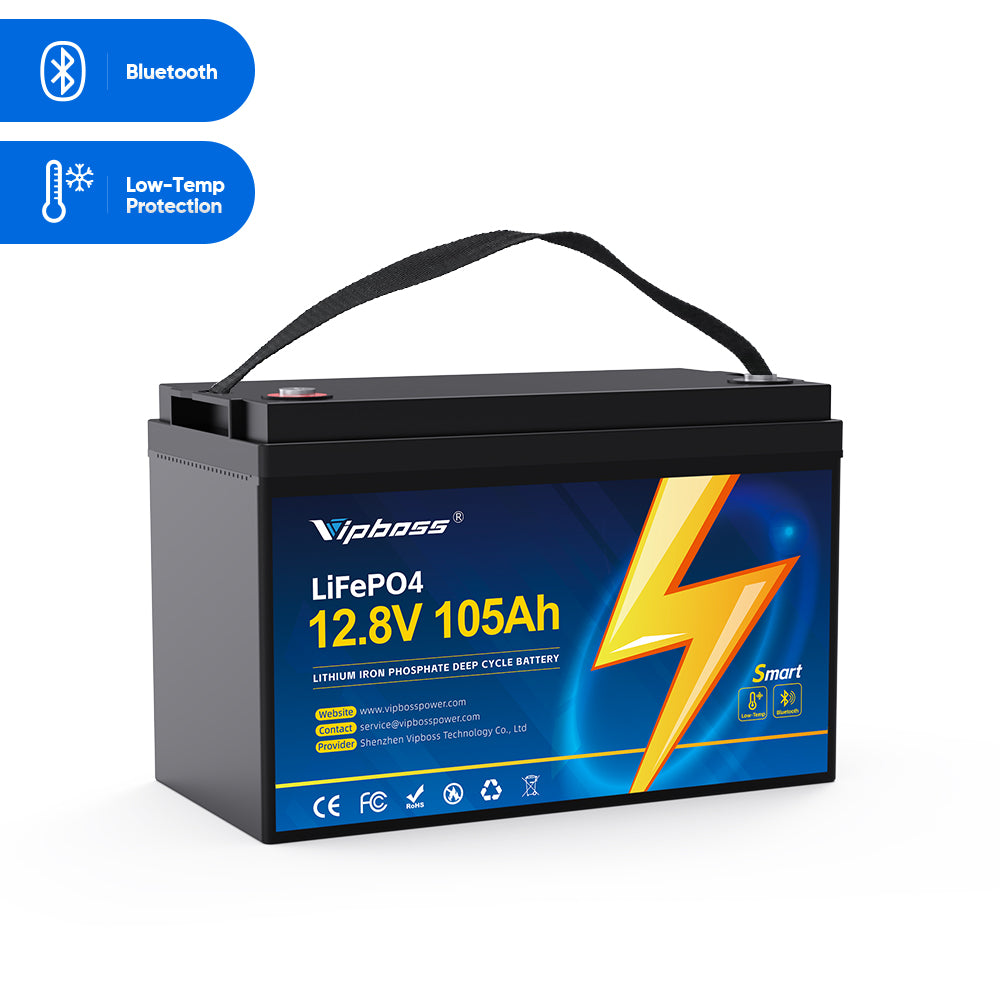
 Bluetooth&Low Temp protection
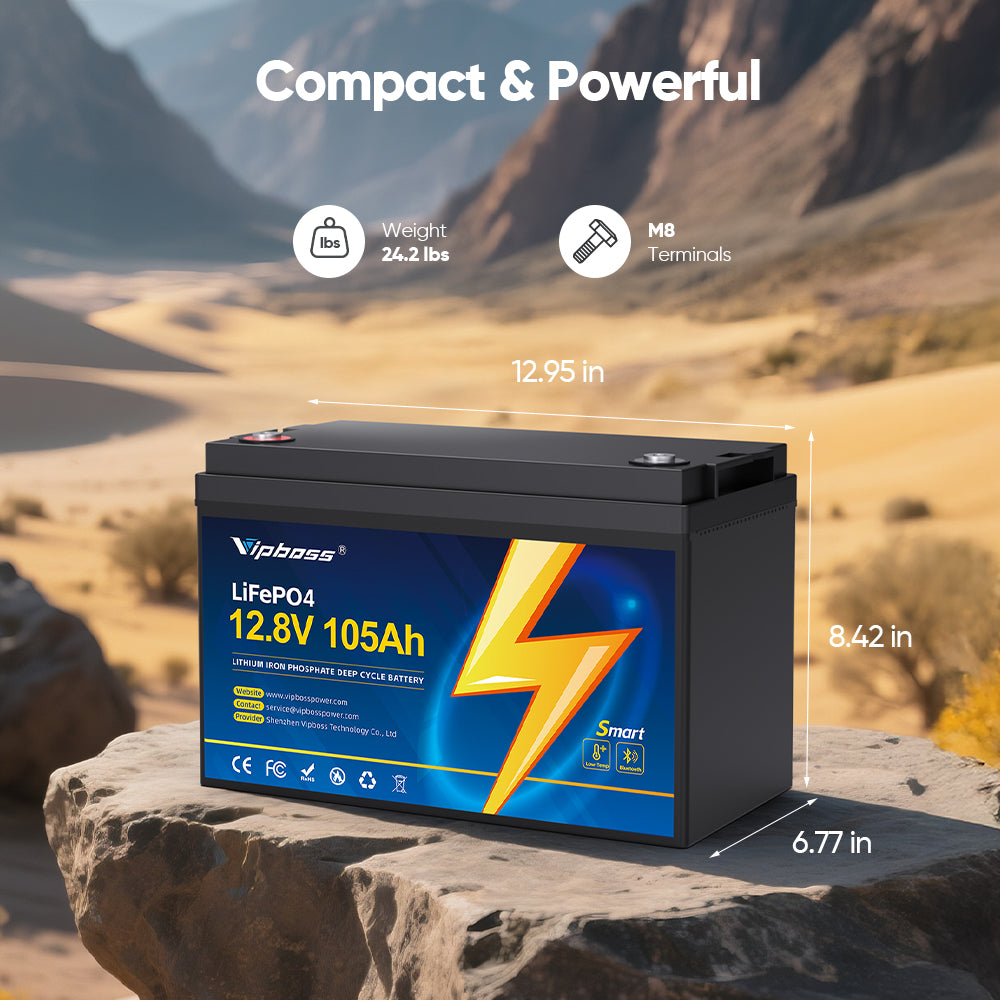
 BMS:100A
 Energy:1344Wh
 Bluetooth&Low Temp protection
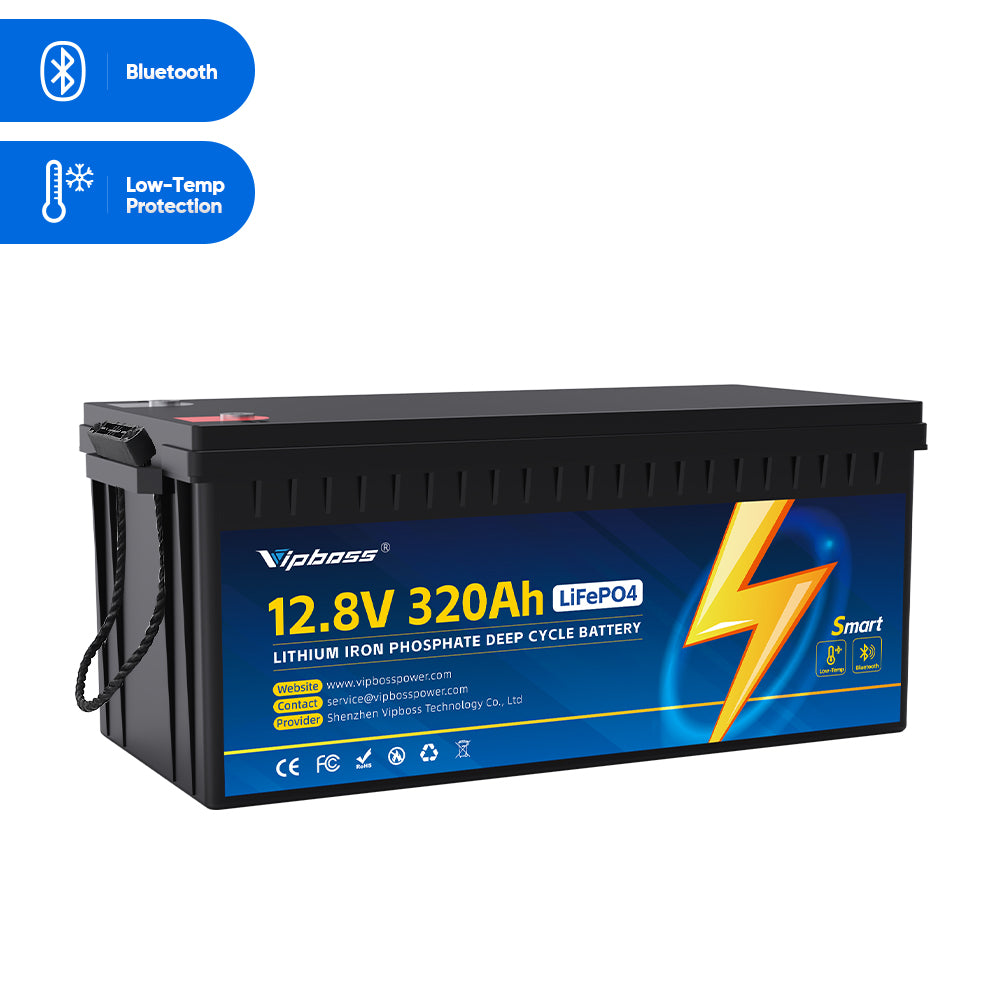
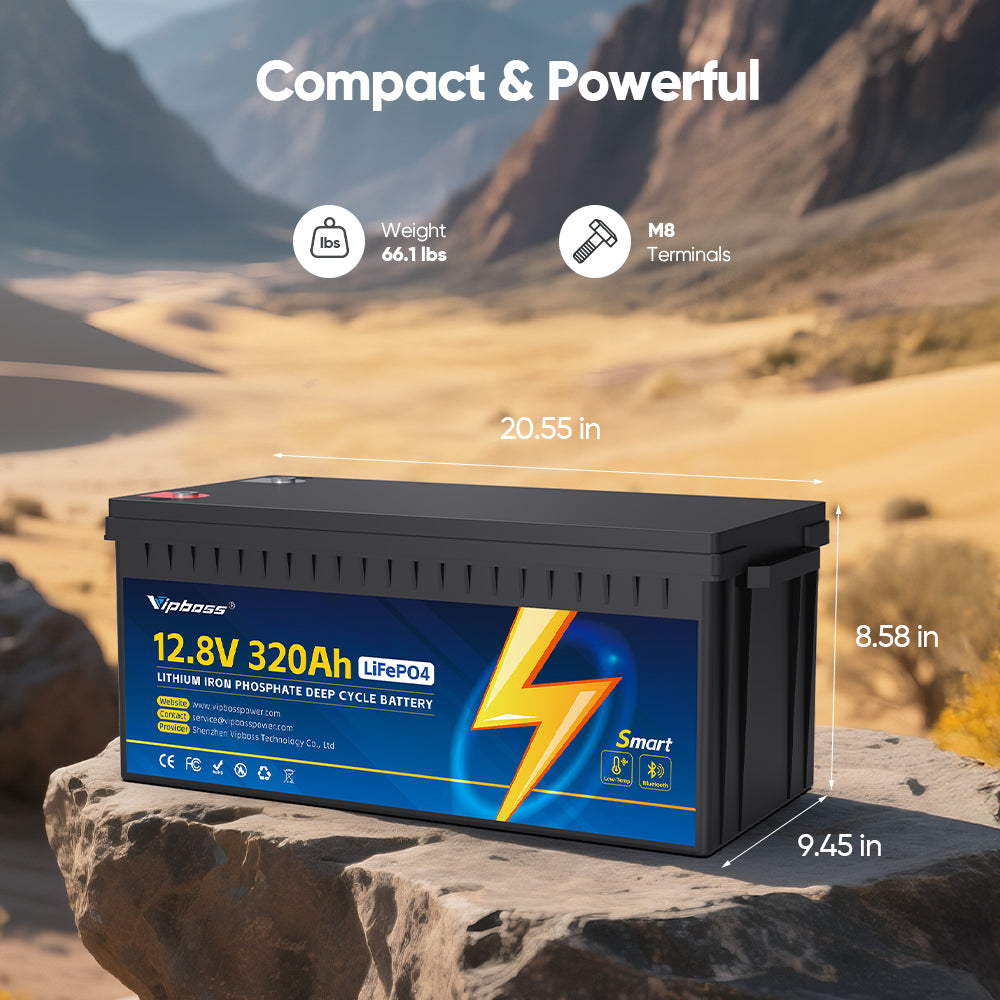
BMS:200A
Energy:4096Wh
 Bluetooth&Low Temp protection
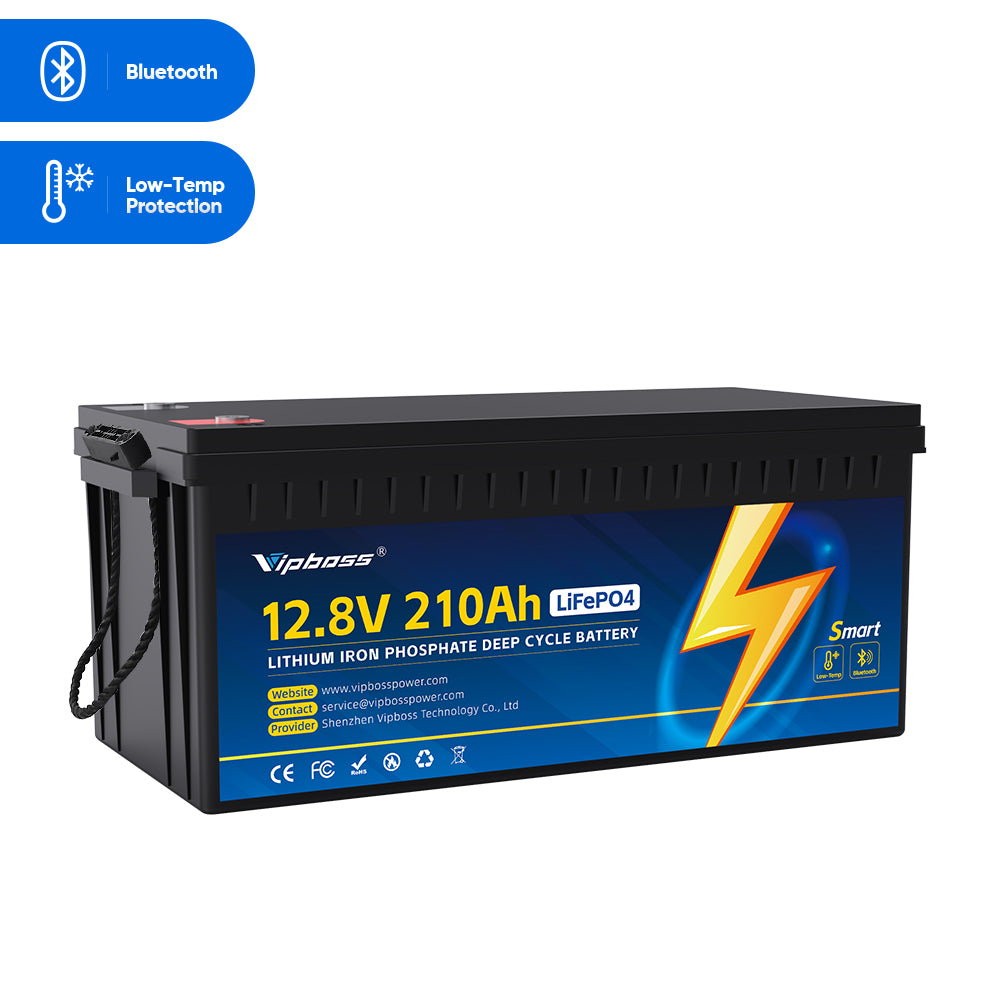
BMS:200A
Energy:2688Wh
Built for RV Life
Designed specifically for RVs. Vipboss LiFePO4 batteries deliver dependable, long-lasting power for off-grid travel. With high energy density, fast charging, and ultra-low maintenance, they’re the perfect upgrade to keep your appliances, lights, and solar system running smoothly—wherever the road takes you.
FAQs
If you have any other questions, please contact us through the following contact information.
Why should I upgrade my camper to a LiFePO4 RV lithium battery instead of traditional lead-acid?
Upgrading to a LiFePO4 RV lithium battery transforms your boondocking experience. Unlike lead-acid batteries that shouldn't be discharged below 50%, our lithium batteries allow you to safely use 80-100% of their rated capacity. They also weigh less than half as much, charge significantly faster, require zero maintenance, and offer a lifespan of over 4000 cycles (up to 10 years).
What capacity 12-volt RV deep cycle battery is best for weekend boondocking?
If you typically camp for a few days without hookups and only need to run basic loads like LED lights, a water pump, fans, and a 12V fridge, the Vipboss 12V105Ah Bluetooth LiFePO4 Lithium Battery is the perfect compact solution. Weighing just around 24 lbs, it acts as an easy drop-in replacement for standard Group 31 battery boxes while providing a highly reliable 1344Wh of usable energy.
I live off-grid full-time and run heavy appliances. Which battery setup do you recommend?
Full-time RVers running power-hungry appliances like microwaves, coffee makers, or small AC units need substantial energy reserves and a high continuous discharge rate. We highly recommend the Vipboss 12V320Ah Bluetooth LiFePO4 Lithium Battery. It is built with a heavy-duty 200A Smart BMS capable of handling large inverter surges and packs a massive 4096Wh of energy into a single case, keeping your mobile apartment running smoothly for extended off-grid stays.
Do I need to upgrade my RV's inverter or converter when switching to a 12V lithium battery?
In most cases, the physical switch is very straightforward. However, to maximize the performance and lifespan of your new lithium battery, you must ensure your RV's onboard converter/charger or solar MPPT controller has a dedicated "Lithium (LiFePO4)" charging profile. If your current charger only supports lead-acid or AGM, it may not charge the lithium battery fully to 100%, and we would recommend upgrading to a lithium-compatible unit.
Are Vipboss LiFePO4 batteries safe to install inside my RV cabin or under the bed?
Absolutely. Unlike flooded lead-acid batteries that vent toxic and explosive gases during charging, LiFePO4 chemistry is inherently stable, non-toxic, and requires zero ventilation. Combined with our advanced Smart BMS that actively prevents overheating, short circuits, and overcharging, you can confidently and safely install these batteries in enclosed compartments, under seating, or inside the living space of your rig.
Can I wire these RV deep cycle batteries together to increase my total capacity later?
Yes, our batteries are designed to grow with your solar setup. They support robust expansion capabilities, allowing you to connect them in up to a 4S4P configuration (4 in series, 4 in parallel). Whether you want to wire multiple 105Ah batteries in parallel to increase your total amp-hours, or wire them in series to create a 24V or 48V system for a larger inverter, you have the flexibility to scale your power bank as your needs evolve.
Your RV house battery decides how long you can stay parked without hookups. Vipboss 12V LiFePO4 RV batteries give campers, travel trailers, fifth wheels and motorhomes more usable power than lead-acid at a fraction of the weight. Choose from three capacities, 105Ah, 210Ah and 320Ah, and size your bank to the way you actually camp.
Why a Lithium RV Battery Outperforms Lead-Acid
A flooded or AGM deep cycle RV battery should not be drained much below half charge, so a 100Ah lead-acid bank gives you only about 50Ah of real camping power. A lithium RV battery lets you use most of its rated capacity every day and still delivers over 4,000 cycles with a design life of about 10 years. For weekend campers and full-timers alike, that means fewer battery replacements and more nights off-grid.
- More usable energy per pound. The 12V 105Ah weighs about 24 lbs, while the larger models are roughly one-third the weight of equivalent lead-acid banks, which helps with payload on trailers and vans.
- Steady voltage. Lights do not dim and the inverter does not shut down early as the battery drains.
- Zero maintenance. No watering, no corroded terminals and very low self-discharge while the rig is in storage.
How Much RV Battery Capacity Do You Need?
Start with your daily energy use rather than the battery label. Add up what you run in a typical day, then pick a capacity that covers it with a margin for cloudy weather. The table below shows three common camping styles.
| Camping style | Typical loads | Daily use | Suggested setup |
| Weekend trips | LED lights, vent fan, water pump, phone charging | about 600Wh | 1 × 12V 105Ah, about 2 days without recharging |
| Regular boondocking | Add a 12V fridge, laptop, CPAP, TV | about 1,500Wh | 1 × 12V 210Ah plus roof solar, or 2 × 12V 105Ah in parallel |
| Full-time living | Add microwave, coffee maker, short air-conditioner runs through an inverter | 3,000Wh or more | 12V 320Ah, or two or more batteries in parallel, with solar |
Daily use figures are typical estimates. Check the wattage of your own appliances and allow for inverter losses when running AC loads.
Our step-by-step guide on how many amp-hours your RV needs walks through the calculation in more detail.
Three 12V RV Deep Cycle Batteries, One Platform
Every battery in this collection uses Grade A LiFePO4 cells, a built-in smart BMS, an IP65 housing, low-temperature charge protection and Bluetooth monitoring. What changes is how much energy you carry.
Vipboss 12V 105Ah Bluetooth LiFePO4 Lithium Battery is the simplest RV lithium battery conversion. It stores 1,344Wh in a Group 31 case (12.95 × 6.77 × 8.42 in), so it usually fits the factory battery box of a travel trailer or camper van. Its 100A BMS supports inverters up to about 1,000W. See replacing your RV battery with a Group 31 lithium battery for fitment tips.
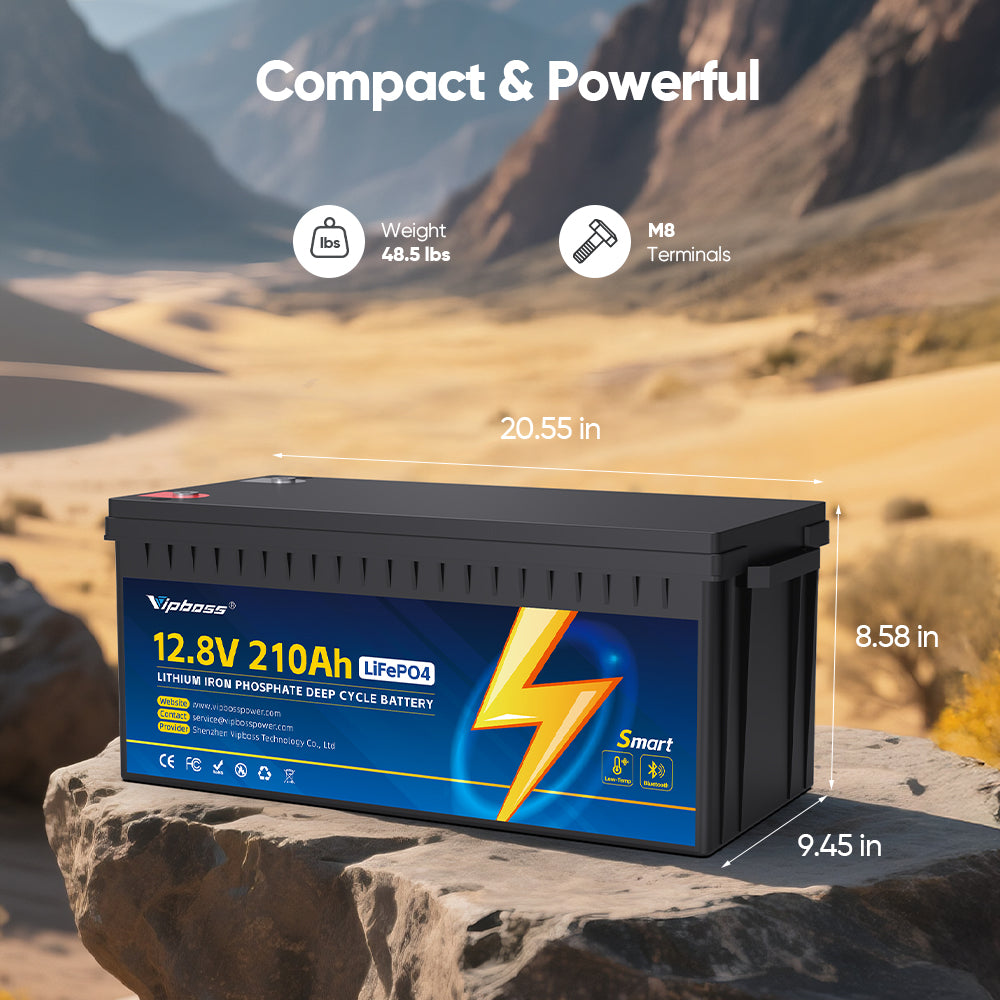
Vipboss 12V 210Ah Bluetooth LiFePO4 Lithium Battery holds 2,688Wh and moves up to a 200A BMS, enough for a 2,000W-class inverter. It is the size many owners choose for Class C motorhomes and fifth wheels that dry camp often.
Vipboss 12V 320Ah Bluetooth LiFePO4 Lithium Battery packs 4,096Wh into a single case for full-timers, toy haulers and large rigs. One battery replaces a stack of lead-acid house batteries, and you can add more in parallel as your power use grows.
What Can You Run on a Lithium RV Battery?
With an inverter, a lithium bank handles the appliances that make an RV feel like home. The product pages estimate that the 12V 210Ah can run a 500W coffee maker for about 5.4 hours or a 1,000W microwave for about 2.7 hours, and the 12V 320Ah can run a 1,100W air conditioner for about 3.7 hours. These figures divide stored energy by appliance wattage, so plan for roughly 10% less once inverter losses are included.
Inverter size matters as much as capacity. If you plan to run an inverter larger than about 2,000W, connect two or more batteries in parallel so they share the current, and size the cables and fuse for the combined load.
Charging From Shore Power, Solar and Your Tow Vehicle
Vipboss batteries charge at 14.2V to 14.6V. Set your converter or onboard charger, solar charge controller and inverter-charger to their LiFePO4 or lithium mode. If your current converter has no lithium setting, read whether you need to replace the shore power charger before you swap batteries.
A modest roof array turns any of these batteries into an RV solar battery that refills during the day. For charging while you drive, a DC-to-DC charger between the alternator and the house bank is the safest way to deliver steady current, as explained in our guide to alternator charging after a lithium upgrade. Travel trailers that charge through the 7-pin connector often see very low current, because the long, thin tow-vehicle wiring limits it. Treat that as a top-up rather than your main charging source.
Four-Season Camping and Storage
The BMS stops charging below 32°F and resumes automatically at 41°F, protecting the cells on frosty nights, while discharge continues down to -4°F so your furnace fan and lights keep working. For regular winter trips, mount the battery inside the heated living space where possible. When the RV goes into storage, the low self-discharge rate means the battery keeps its charge for months, and the Bluetooth app lets you check state of charge and voltage before your first spring trip.
Upgrading From Lead-Acid: What to Check
- Replace the entire house bank at once. Do not mix lithium and lead-acid batteries in the same bank.
- When adding batteries, use the same model and age, and connect them with equal-length cables.
- Confirm that fuses and cables are sized for the higher continuous current lithium can deliver.
- Keep the chassis starting battery separate from the house bank.
Planning your first trip without hookups? Our boondocking power setup checklist covers the full system. To compare all capacities side by side, browse the complete 12V LiFePO4 battery range.