
If you connect a battery charger backwards, unplug it as soon as you notice the mistake, then inspect the polarity labels and connector before trying again. A protected charger will often block current or show a fault instead of charging; without effective protection, the wrong connection may damage electronic components. Do not keep testing the connection to see what happens.
What reverse-polarity protection does
Reverse-polarity protection prevents current from flowing normally when the positive and negative connections are reversed. Depending on the charger design, it may block the output, disable charging, limit the fault current, or trigger a visible fault indication. The protection circuit is intended to keep reverse voltage away from sensitive electronics, but it does not make an incorrect connection harmless in every situation. The exact result depends on the charger, battery, connector, and how long the reversed connection remains in place.
Without effective protection, a reversed connection may damage electronic components. The exact result depends on the circuit design and the conditions of the connection, so a charger that appears undamaged may still need inspection before reuse.
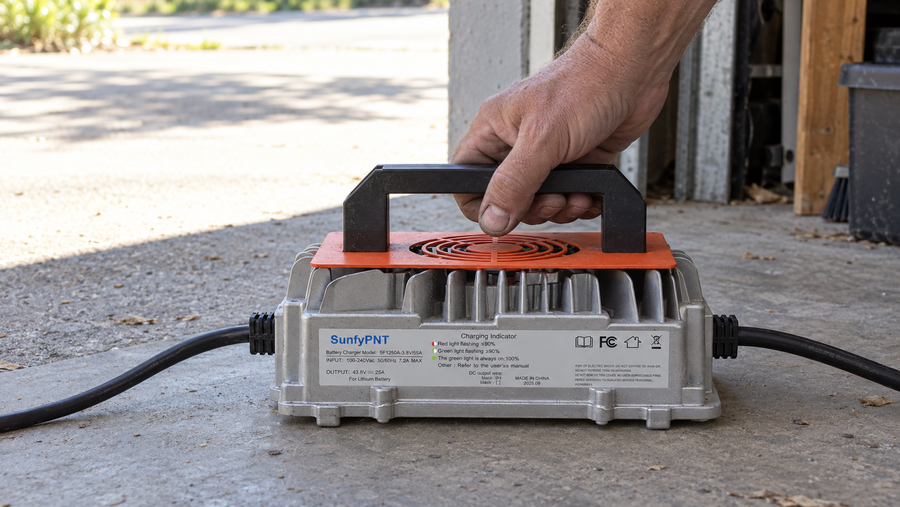
For a product-specific example, the Vipboss 36V 25A Lithium Battery Charger is designed for 36V LiFePO4 batteries and includes reverse-connection protection and fault indication. That information applies to the stated battery type and does not make reversed wiring acceptable or guarantee that a damaged battery can be recovered.
What you may observe after connecting it backwards

The most common immediate sign is that the battery does not charge. The charger's indicator may remain in standby, show a fault, or stay off. Those signs are consistent with protection shutting down, but they do not identify the exact internal failure.
If you noticed the mistake immediately and disconnected the charger, check the connector and cable for heat, discoloration, melted insulation, a burnt smell, or visible damage. If any of those signs appear, stop using both the charger and the connection until the equipment is inspected or replaced. Before any further attempt, verify the positive and negative labels on the charger, battery, and connector rather than relying only on cable color.
Reverse polarity is an incorrect external connection; reverse charging is a condition in which a battery is driven electrically in the wrong direction. To avoid treating either condition as harmless, disconnect the charger instead of repeatedly reconnecting it.
Frequently asked questions
Can I reconnect the charger correctly after reversing the leads?
Only after unplugging the charger and checking the battery, leads, connector, and terminals for heat, odor, discoloration, melting, or other damage. If any damage is present or the charger still faults after a correct connection, keep it out of service.
Can reverse polarity damage a lithium battery's BMS?
It can damage electronics if the charger, battery, or BMS does not block the reversed current effectively. A battery that shows a new fault or no longer charges normally after the incident should be inspected according to the battery manufacturer's guidance.
Is cable color enough to confirm charger polarity?
No. Verify the positive and negative markings and the connector pinout for both the charger and battery. Cable colors, replacement connectors, and adapters can be wired differently.