
For serious lithium retrofits and off-grid power systems, Bluetooth BMS is a high-impact upgrade rather than a gimmick. It is not mandatory for every battery on your property, but it becomes essential when runtime, safety, and troubleshooting matter more than saving a few dollars on hardware.
Picture this: you are dry camping miles from the nearest plug. The fridge is humming, fans are spinning, and the cabin lights still look bright, but you have no idea if your batteries will make it through the night. That "hope and guess" feeling is exactly what Bluetooth-connected battery monitoring is designed to eliminate by putting live battery data on your cell phone so you can make clear, timely decisions about loads and charging. This guide shows where Bluetooth BMS genuinely upgrades an off-grid system, where it is overkill, and how to decide which side of that line your setup falls on.
What Bluetooth BMS Actually Does
A conventional battery management system sits between your lithium cells and the outside world. It watches voltages, currents, and temperatures while it quietly balances cells, cuts off charge or discharge when limits are reached, and logs issues so the pack stays safe and lasts longer; this "battery brain" is why lithium packs in data centers, vehicles, and backup systems can run for many years instead of failing after a few bad cycles, as shown in practical overviews of modern battery management systems. In a retrofit or off-grid build, you absolutely need this protective layer, whether or not it has any wireless features.
A Bluetooth BMS does the same protective work, but it also speaks wirelessly to a phone or tablet so you can see what the pack is doing without opening a compartment or installing extra meters. Bluetooth Low Energy is specifically designed to move small bursts of data while using very little power. It relies on short-range links and streamlined radio protocols that keep transmission overhead and energy draw low, which makes it well-matched to always-on monitoring in battery-powered systems that only need to cover a few dozen feet indoors or on a vehicle deck. That lean, low-duty-cycle behavior is a core reason Bluetooth Low Energy shows up so often in battery-powered sensors and monitors.
In practice, that wireless link turns your phone into a dashboard. You can see voltage, current, temperature, remaining capacity, and cycle count at a glance, sometimes down to individual cells, instead of trying to interpret one cheap voltmeter. Bluetooth-ready lithium batteries from brands that embed monitoring directly into the case show how far this can go, with apps that expose state of charge, power flow, and health indicators so you are making decisions based on live data rather than rough guesses from a panel gauge or "how bright the lights look" estimates from your last trip. That shift from blind trust to measured reality is where Bluetooth BMS earns its keep.

The Real-World Upside: When Bluetooth BMS Is a Power Upgrade
Planning and Peace of Mind Off the Grid
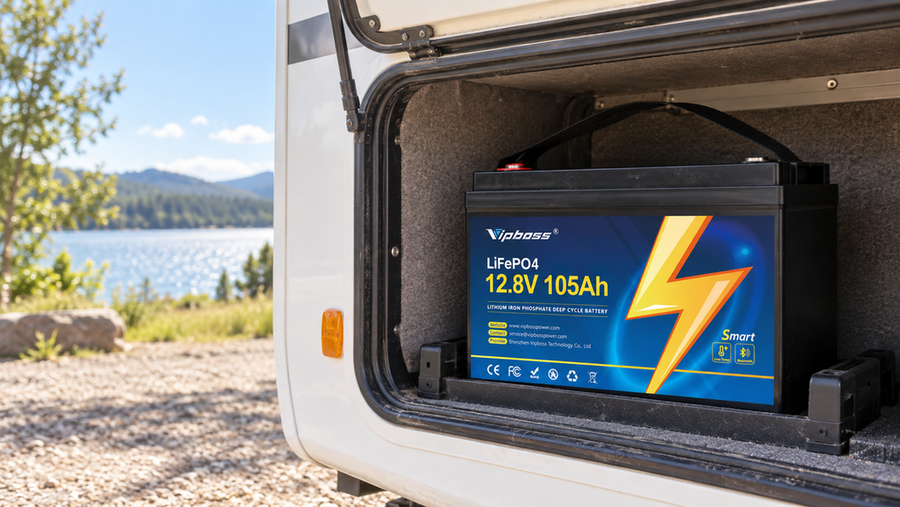
For RVs, boats, and remote cabins, the biggest practical win from Bluetooth BMS is better planning before and during trips. Bluetooth-equipped lithium batteries and monitors push real-time state of charge, voltage, current, and temperature to a smartphone, turning it into a handheld control center so you know how much energy is left rather than staring at a vague needle or a three-LED "fuel gauge," as shown in real-world Bluetooth battery monitors. That is a big difference when you are boondocking far from hookups and a surprise shutdown means melted food and a hot, sleepless night.
Consider a simple 12 V, 200 Ah LiFePO4 bank in an RV. If your Bluetooth app shows 50 percent remaining and a steady 30 A draw from lights, fridge, and fans, you can quickly estimate how long you have before you hit a 20 percent reserve point. With that knowledge, you can decide to switch the fridge to propane, turn off nonessential loads, or start a generator now instead of waiting until the lights dim. Without that data, you are guessing based on "it seems fine so far," and many owners end up chronically undercharging or over-discharging their packs.
When you add Bluetooth-enabled solar charge controllers into the mix, you can see both sides of the equation: the battery's state and the solar array's actual contribution in watts and amps. Bluetooth MPPT controllers are designed to send live charging currents, voltages, and historical performance trends to a phone or web portal so you can verify that your array is really hitting expected output, tweak charge profiles, and diagnose shade or wiring issues without hanging over the controller with a flashlight, as described for Bluetooth MPPT charge controllers. That closes the loop between solar harvest and consumption, which is exactly what you want when you are chasing the longest possible time between generator runs.
Safety, Longevity, and Protecting an Expensive Battery Bank
Lithium packs are a serious investment, and the job of any BMS is to protect that investment by keeping voltages, temperatures, and currents in a safe window. A good BMS will monitor each cell, trim charging and discharging, cut off when limits are exceeded, and flag abnormalities that would otherwise turn into early capacity loss or sudden failures, which is why BMSs are standard in sectors like finance, hospitals, and telecom where downtime is unacceptable. That protective logic is not optional for lithium; it is the minimum requirement.
Bluetooth simply surfaces that protective work so you can act before a protective shutdown becomes a trip-ending event. Bluetooth BMS units in LiFePO4 packs continuously watch cell voltage, pack current, and temperature, then feed that information to an app along with state-of-charge and state-of-health estimates so you can spot a weak string, an overheating compartment, or chronic deep discharges while there is still time to fix settings, airflow, or wiring. Manufacturers that integrate Bluetooth into their LiFePO4 packs emphasize how cell balancing, overvoltage and undervoltage protection, and temperature monitoring work together with app-based alerts to cut the risk of thermal runaway and premature aging in golf carts and solar storage systems. That combination of cell-level protection and user-visible diagnostics is especially valuable on high-voltage systems whose packs may be rated for thousands of cycles and ten-year design lives, as shown in Bluetooth-equipped LiFePO4 packs for golf carts and off-grid storage in the SpiderWay Bluetooth BMS range.

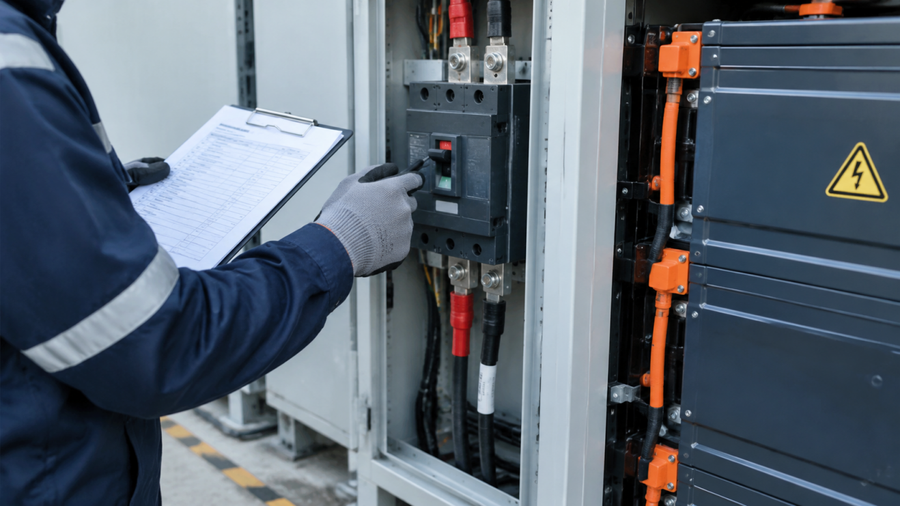
From a practical standpoint, catching a bad trend early is the cheapest "upgrade" you can buy. If your app shows one battery consistently hitting higher temperatures than the rest during charge, you can reduce charge current, improve ventilation, or rebalance strings before that pack swells, loses capacity, or trips its internal BMS. Likewise, if you see repeated deep discharges followed by very hot charging sessions, you can adjust loads or generator schedules instead of waiting for an unexpected pack failure. Continuous monitoring with clear alarms is how industrial BMS deployments reduce replacement frequency, lower maintenance cost, and keep critical loads running, and that same logic scales down well to an off-grid shed or RV.
System Design, Wiring, and Troubleshooting
Beyond user-facing apps, Bluetooth can also simplify the architecture of the battery system itself. Traditional multi-pack setups use long harnesses and stacked communication cables between modules and a central controller, which adds cost, weight, and points of failure. BLE-based BMS architectures replace much of that wiring with low-power radio modules on each battery unit that report voltage, temperature, and state-of-charge data wirelessly to a coordinator. That cut in wiring complexity makes it easier to swap packs, reconfigure banks, and scale systems without tracing and re-crimping harnesses.
In a practical 48 V golf-cart conversion or a 24 V off-grid cabin bank, that means fewer communication cables to route through tight battery compartments and fewer connectors that can corrode or shake loose. If a single module is misbehaving, the coordinator can flag it via the app, and you can test or replace that module without tearing apart the entire rack. When this architecture is paired with a smartphone view of each unit's cell voltages and temperatures, troubleshooting moves from "hunt around with a meter" to "look at the module that is asking for attention and focus there first."
On the charging side, having both Bluetooth BMS and Bluetooth MPPT in the same system gives you a nearly lab-grade view of how design choices are working.

You can watch charge current taper as absorption ends, confirm the pack is reaching target voltages evenly, and use logged data to decide whether another panel string would meaningfully increase harvest or simply saturate the controller at midday. The diagnostic and tuning benefits that solar operators get from wireless MPPT monitoring translate into better use of limited roof or yard space and clearer justification for each upgrade you make.
Where Bluetooth BMS Falls Short or Becomes Overkill
Bluetooth does not magically make a bad battery safe, and it does not replace the need for a solid, correctly sized BMS. The core protection features—overvoltage and undervoltage cutoff, overcurrent protection, cell balancing, and temperature limits—exist in non-Bluetooth BMS units as well, and you can buy basic LiFePO4 BMS hardware with balancing leads for around half the cost of some Bluetooth-enabled models from the same vendor. For example, Smart LiFePO4 BMS units with Bluetooth dongles are priced around $49.99 while similar non-Bluetooth LiFePO4 BMS hardware starts near $24.99, and full LiFePO4 battery packs in the same ecosystem run closer to 540.00, which shows that the Bluetooth layer is a small but real percentage of total pack cost rather than a massive price adder in itself, based on published pricing for Bluetooth and non-Bluetooth BMS hardware.
Where it can become overkill is on very simple, low-stakes systems. A single 12 V lithium pack powering a fishing sonar and a few LED lights, used a handful of weekends per year and stored indoors the rest of the time, may not justify the extra cost or complexity of Bluetooth apps, firmware updates, and potential connection headaches. A good shunt-based monitor with a basic display paired with a non-Bluetooth BMS will still give you accurate amp-hour counting, voltage, and current data, and for modest loads close at hand, walking over to glance at the meter is not a burden. In that kind of use case, spending more on extra capacity or a better charger often yields a bigger benefit than adding wireless monitoring.
There are also security and reliability considerations. Any radio link can be misconfigured, and Bluetooth is no exception: poorly secured connections, weak PINs, or leaving devices in discoverable mode when they do not need to be can open the door to unwanted access or mischief, as outlined in guidance on Bluetooth security. For a battery system, that risk is best managed by keeping Bluetooth modules non-discoverable after initial pairing, using available authentication and encryption options in the app, and turning Bluetooth off entirely when you are not actively monitoring or configuring the system.
Signal range and interference are more mundane but very real limitations. Bluetooth Low Energy typically operates reliably over short distances, often on the order of a few dozen feet, and metal compartments, engine bays, and dense building structures can attenuate signals. The same radio design choices that make Bluetooth Low Energy so frugal with power also limit its long-range robustness compared with higher-power radios. In critical systems where you must have a readout regardless of whether your phone connects, a wired display or panel meter in parallel with Bluetooth monitoring is a good way to build redundancy.
Bluetooth BMS vs Alternatives at a Glance
Aspect |
Non-Bluetooth BMS |
Bluetooth BMS |
External Shunt Monitor (no BMS) |
Core protections |
Yes; voltage, current, temperature limits |
Yes; same protections plus user-visible data and alarms |
None; only measures, does not protect cells |
Data access |
Often hidden inside pack |
Phone app; sometimes module-by-module insight |
Local display; sometimes remote head unit |
Wiring complexity |
Moderate; pack wiring plus any monitors |
Can reduce communication harnesses in multi-pack systems |
Requires extra shunt wiring on main negative |
Usefulness off-grid |
Essential baseline |
High; improves planning, tuning, and troubleshooting |
Moderate; good visibility but no interventions |
Typical cost impact |
Lowest |
Small to moderate premium over non-Bluetooth BMS |
Added cost but often cheaper than full swap |
The key takeaway from this comparison is that the real decision is not "BMS or Bluetooth BMS." You always want a BMS on lithium; the question is whether adding Bluetooth monitoring and wireless architecture on top is worth the incremental cost and complexity for your specific system.
Decision Framework: Do You Actually Need Bluetooth BMS?
Are You Relying on These Batteries Where Failure Really Hurts?
If a dead pack means more than mild inconvenience—think boondocking for several days, running critical electronics in a storm, or powering a trolling motor far from shore—Bluetooth BMS is very close to a must-have. In these scenarios, the ability to see exact state of charge, temperatures, and fault codes on a phone in seconds is worth far more than the price difference between non-Bluetooth and Bluetooth hardware, especially when you consider the replacement cost of a modern LiFePO4 pack. Enterprise and infrastructure deployments rely on rich BMS data and automatic alerts to keep backup and traction batteries within safe margins and avoid sudden outages, which is the mindset you want to bring to high-stakes off-grid setups.
Are You Actively Optimizing Solar Harvest and Battery Life?
If you are tuning array tilt angles, logging charge sessions, or chasing the longest possible life from an expensive bank, Bluetooth BMS plus Bluetooth MPPT gives you the feedback loop you need. Wireless MPPT controllers that log currents, voltages, and historical profiles make it easy to see whether changes to wiring, panel layout, or load scheduling are helping or hurting, and they let you adjust charge profiles, battery types, and load thresholds from a phone instead of dragging a laptop into a cramped equipment room. When those data streams are paired with cell-level information from the BMS, you can correlate behavior at the panel, controller, and battery level instead of guessing which part of the system is responsible for a performance issue.
Is Your System Small, Local, and on a Tight Budget?
If you are building a compact, low-risk system—say a small lithium pack for camping lights, a portable power box, or an occasionally used kayak motor—and your budget is tight, a robust non-Bluetooth BMS plus a simple current-and-voltage monitor can be perfectly acceptable. In this bracket, paying a premium for wireless features may not change how you use the system, because the battery is physically close, the loads are light, and a failure simply means cutting a trip short rather than losing a freezer full of food or shutting down a home office. The critical point is that you do not skip the BMS; you dial back on the connectivity features in favor of good fundamentals, much like choosing a basic but reliable alternator over a fancier data-logging one in an old truck.
Closing Thoughts
Bluetooth BMS is not a magic wand, but in off-grid and lithium retrofit work it is one of the most leveraged upgrades you can make once the basics—proper sizing, quality cells, and a solid BMS—are covered. For systems where runtime, safety, and deep insight matter, it is far more than a fancy toy; it is the difference between flying blind and driving your power system with a clear set of gauges. For small, local, low-stakes setups, you can safely treat Bluetooth as a convenience and invest the savings into capacity or better charging, but whenever your battery bank becomes mission critical, Bluetooth BMS belongs on your must-have list.