






DIY Home Battery Backup: Keep the Essentials Running When the Grid Goes Down
When the power goes out, you don't need to run the whole house — you need the fridge to stay cold, the Wi-Fi to stay up, and the lights to stay on. This collection brings together the Vipboss 12V LiFePO4 batteries that form the core of a DIY home battery backup system: pair one with an inverter for outage protection, or stack several into a solar-charged home battery bank that works year after year.
What a 12V LiFePO4 Battery Bank Can Actually Power
The honest way to size home battery storage is to start from the loads you care about, not from the headline capacity. Because LiFePO4 chemistry lets you use nearly the full rated capacity, and because inverters lose a little energy converting DC to AC, the table below shows realistic runtime estimates for each model in this collection.
| Model | Rated energy | Approx. usable AC energy | Fridge only (~60W average) | Essentials bundle (~150W) |
| Vipboss 12V 105Ah | 1,344Wh | ~1.06 kWh | ~17 hours | ~7 hours |
| Vipboss 12V 210Ah | 2,688Wh | ~2.12 kWh | ~35 hours | ~14 hours |
| Vipboss 12V 320Ah | 4,096Wh | ~3.23 kWh | ~53 hours | ~21 hours |
Estimates assume roughly 90% depth of discharge and a typical inverter efficiency of about 88%. The "essentials bundle" represents a common outage load of around 150W total — an energy-efficient fridge cycling on and off, a router and modem, a few LED lights, and phone charging. Real runtime depends on your own appliances, ambient temperature, and inverter. High-draw resistive loads such as space heaters, electric kettles, and hair dryers will drain any battery bank quickly.
If you'd like to work through the numbers for your own home before you buy, our home battery storage sizing guide walks through the calculation step by step.
Choose Your Capacity: 105Ah, 210Ah or 320Ah
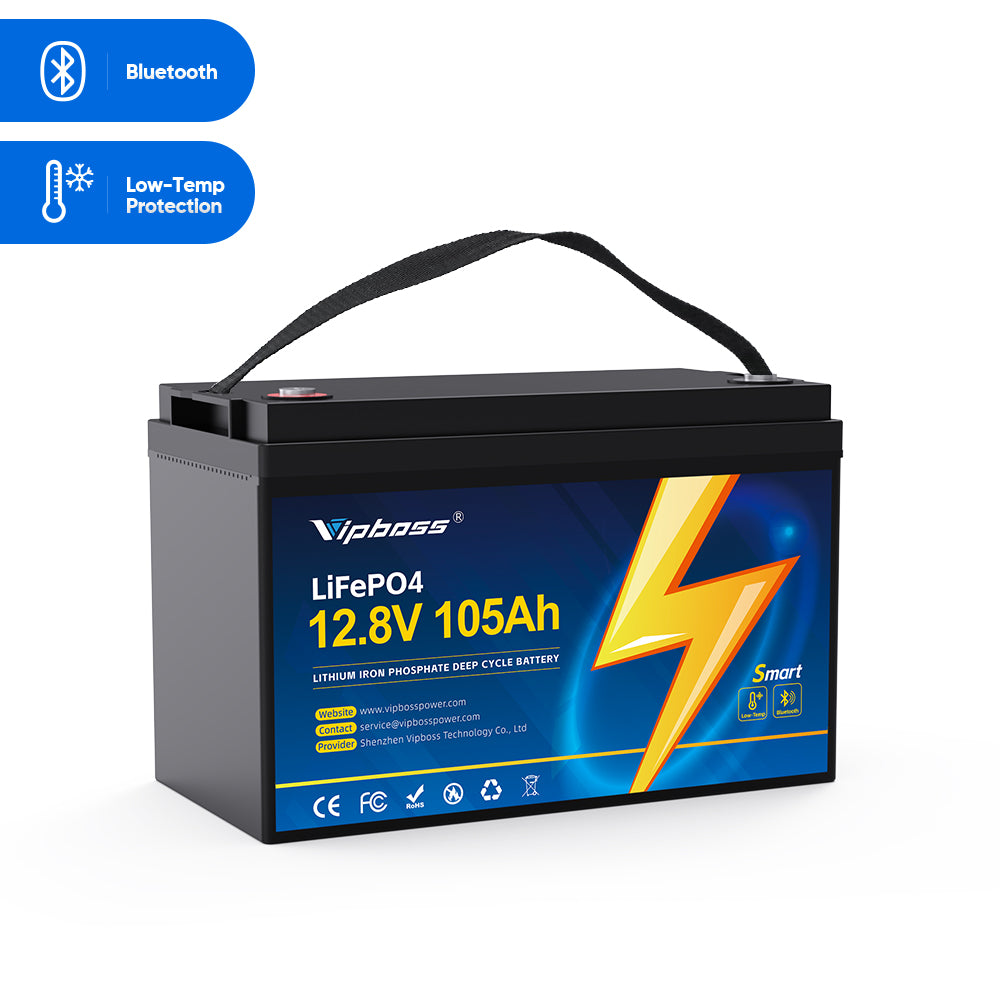
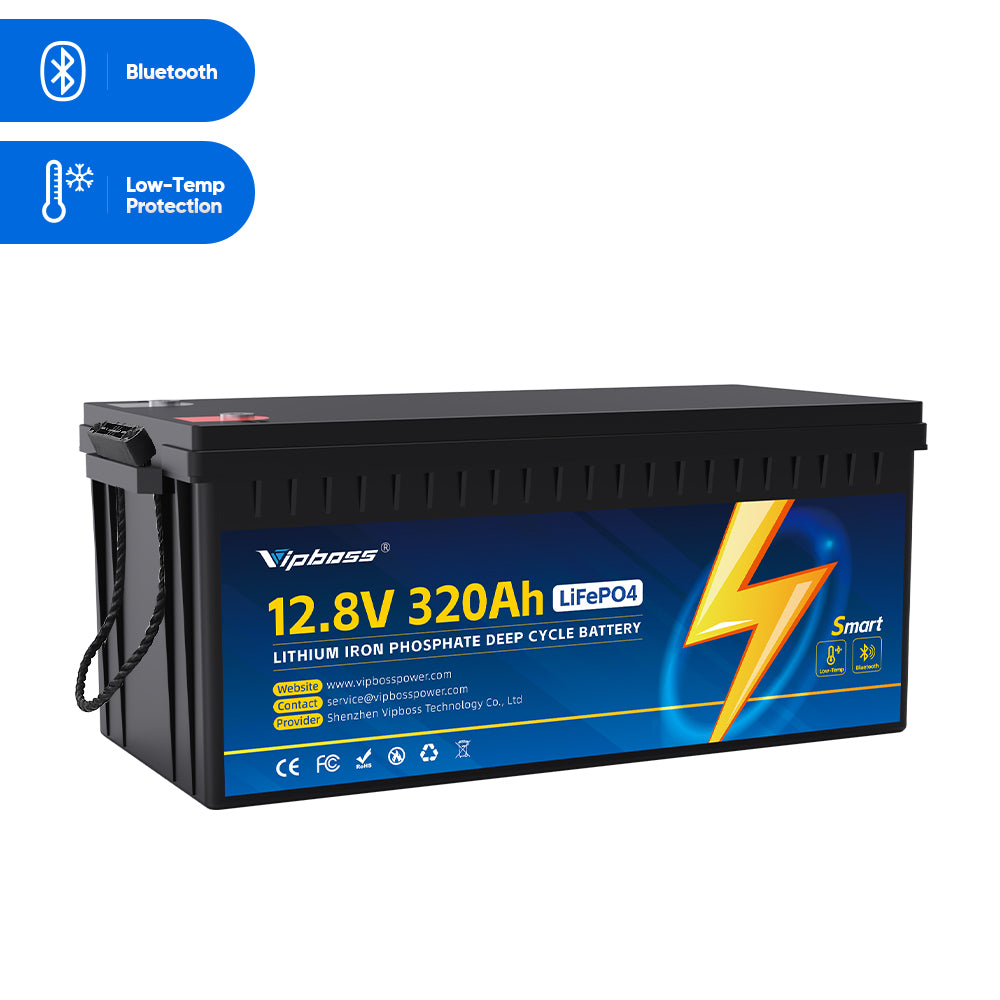
All three models in this collection share the same Grade A LiFePO4 cells, 4,000+ cycle rating, 10-year design life, IP65-rated enclosure, Bluetooth monitoring, and low-temperature charging cut-off. What changes is how much energy you bank and how much current the BMS can deliver. Those 4,000+ cycles are also what makes the upfront price work out over time — our breakdown of cost per kWh across the life of the battery puts LiFePO4 and lead-acid side by side.
Vipboss 12V 105Ah — Starter Backup
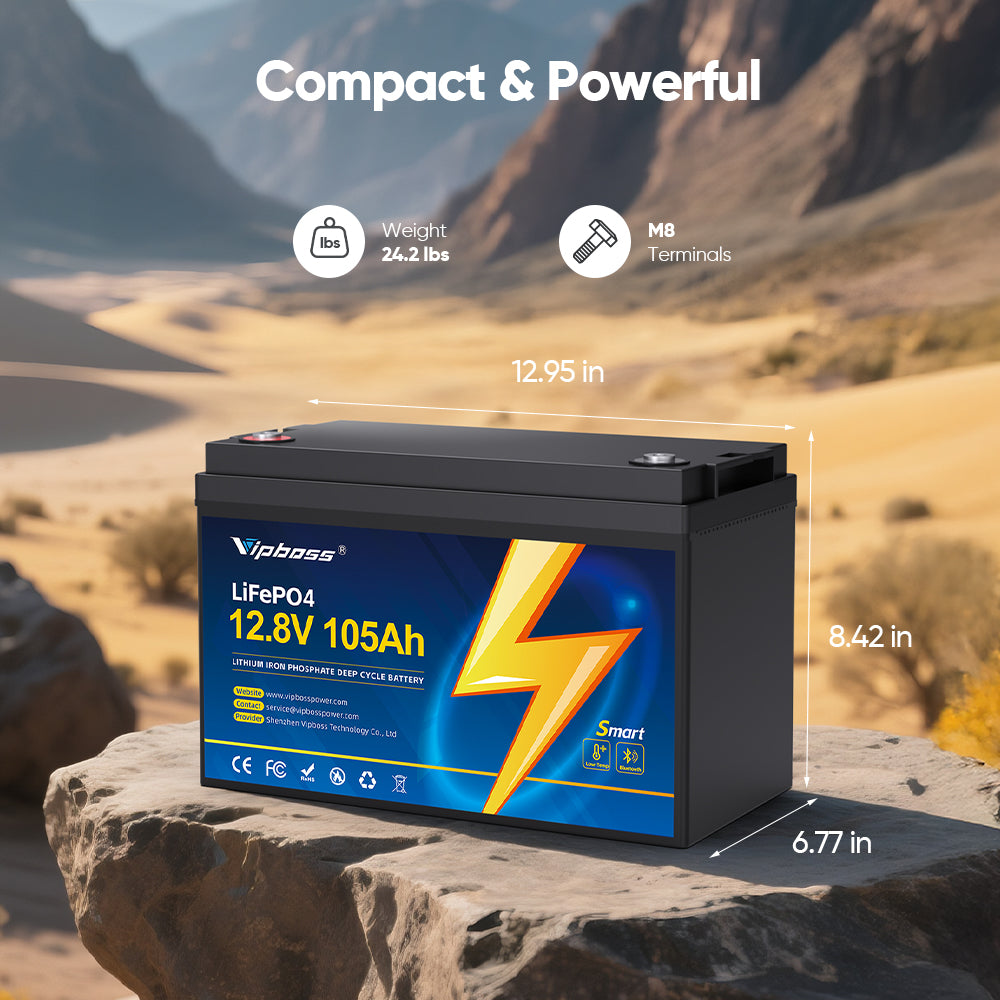
The 12V 105Ah battery stores 1,344Wh in a standard Group 31 case (12.95 × 6.77 × 8.42 in) and weighs just 24 lbs, so one person can carry and install it. Its 100A BMS suits a modest inverter running lights, a router, chargers, and a fridge. This is the right starting point if you want overnight protection for a handful of critical devices, or a first block you can add to later.
Vipboss 12V 210Ah — All-Day Essentials
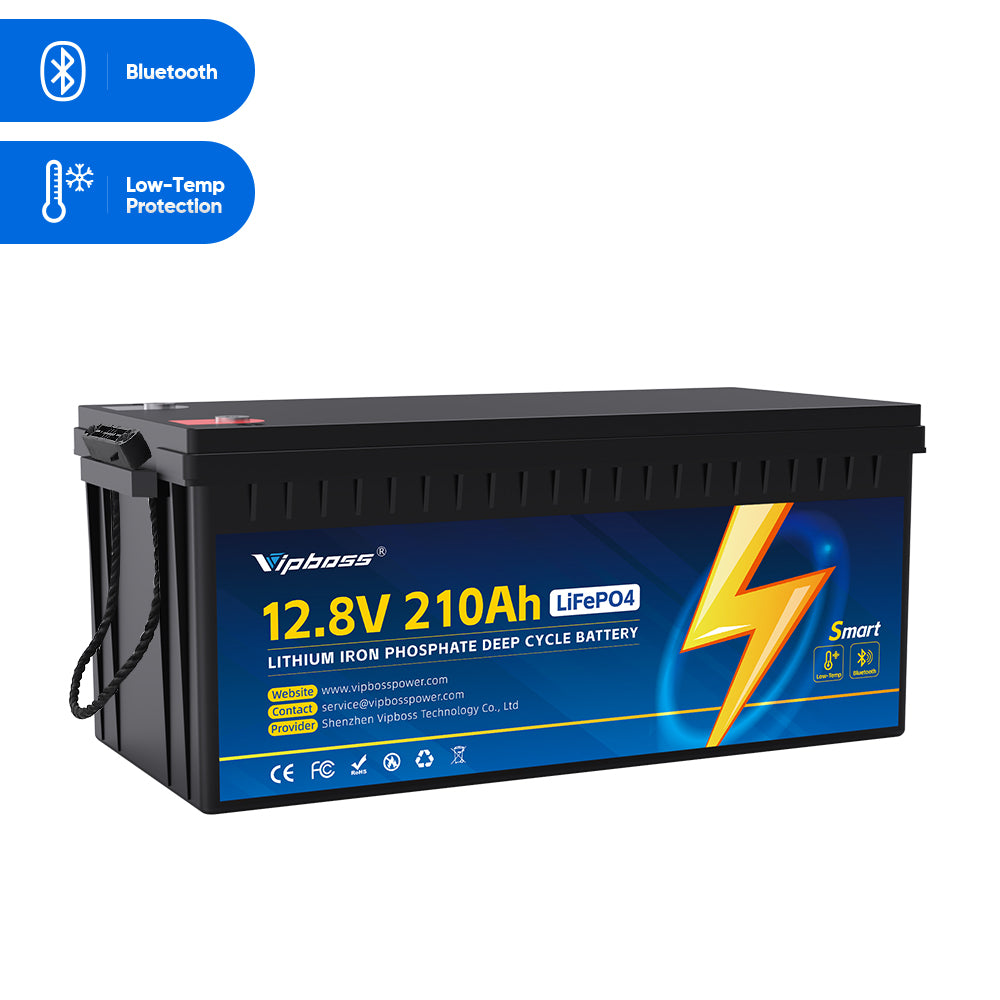
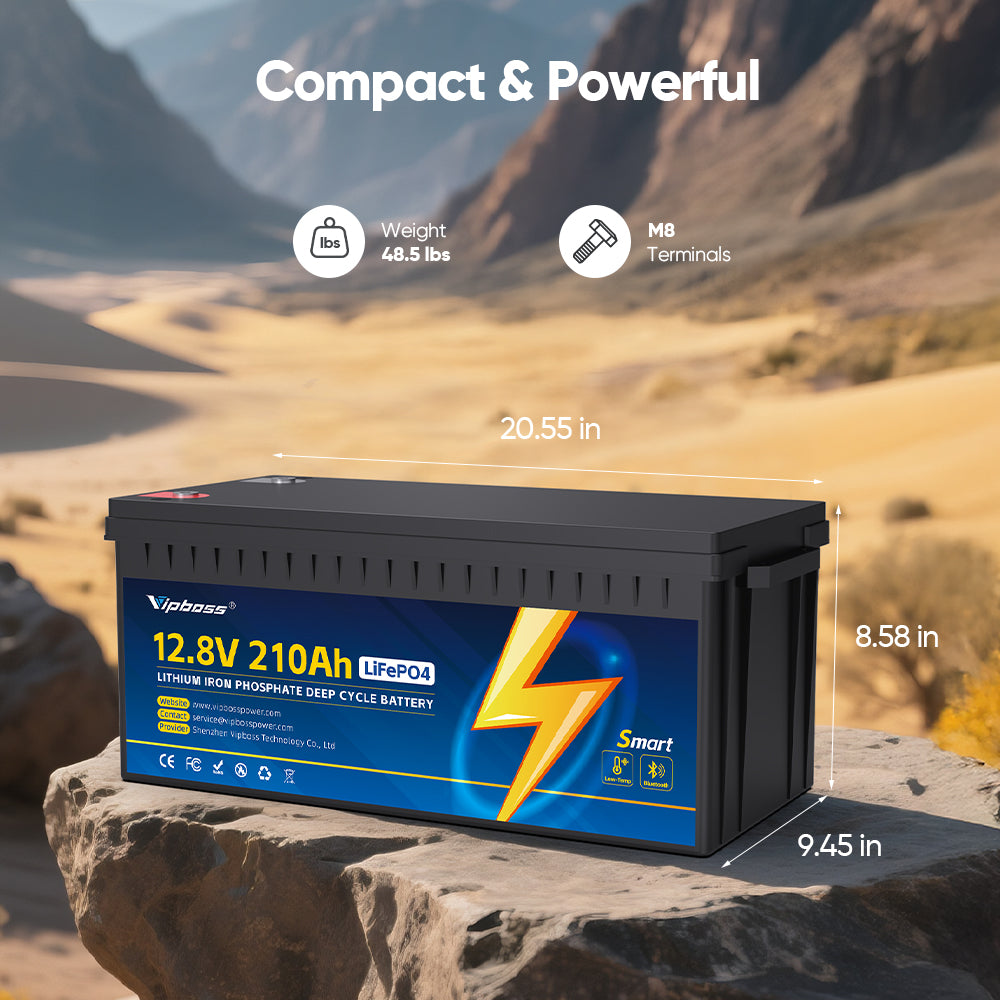
The 12V 210Ah battery doubles storage to 2,688Wh and steps up to a 200A BMS, which supports a larger inverter and heavier simultaneous loads. At 48.5 lbs it stays manageable in a utility room, basement, or garage. For most households this is the sweet spot: enough to carry the essentials through a full day and night of outage, and enough headroom to absorb daily solar charging.
Vipboss 12V 320Ah — Multi-Day Reserve
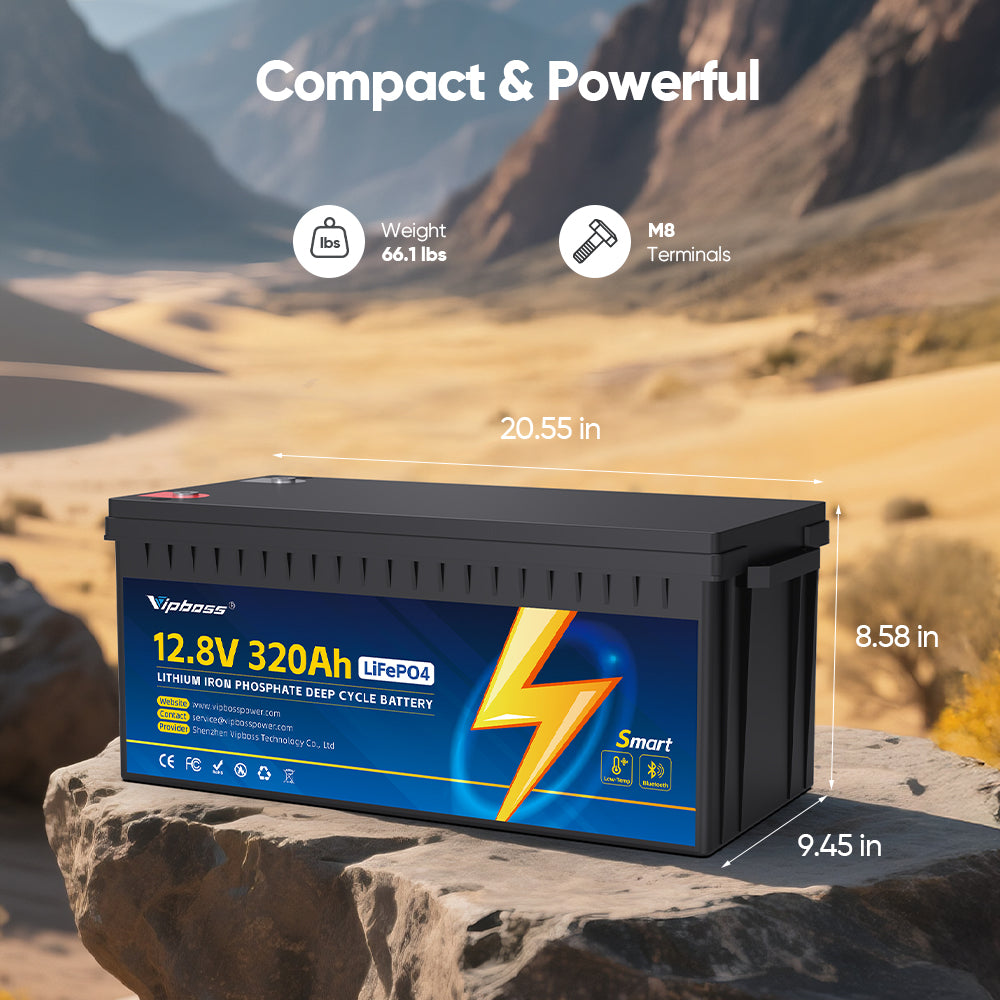
The 12V 320Ah battery holds 4,096Wh in a single 66.1 lb case — roughly one third the weight of the lead-acid capacity it replaces. With a 200A BMS, it handles sustained loads and is the most efficient way to reach multi-day reserve without wiring several smaller units together. Choose this model if you live where storms knock out power for days at a time, or if you're charging from a solar array and want somewhere to put the surplus.
Scaling Up: From One Battery to a 65 kWh Home Bank
Every battery in this collection supports up to a 4P4S configuration, so a starter backup can grow into serious home energy storage without replacing what you already own:
- 12V 105Ah — up to 51.2V 420Ah, a total of 21.5 kWh
- 12V 210Ah — up to 51.2V 840Ah, a total of 43.0 kWh
- 12V 320Ah — up to 51.2V 1,280Ah, a total of 65.5 kWh
Wiring in series raises system voltage to 24V(25.6V), 36V(38.4V), or 48V(51.2V), which lets a larger inverter draw the same power at lower current and thinner cable. Wiring in parallel adds capacity at the same voltage. Building a 48V bank is the standard route for whole-home DIY storage, and it's why choosing an expandable battery matters more than chasing the lowest upfront price. Our comparison of LiFePO4 vs NMC for DIY home energy storage explains why chemistry choice matters when the battery lives in your house.
What You Need Besides the Battery
Vipboss supplies the storage block, not a sealed all-in-one appliance. A working DIY home backup system also needs:
- An inverter sized to your peak load, set to lithium charging profiles. A mismatched inverter is the most common cause of disappointing performance — see our guide on matching your inverter to your battery.
- A charging source — solar panels with an MPPT charge controller, a shore/grid charger, or both.
- Correctly sized cable, fusing, and a disconnect between battery and inverter.
- A transfer arrangement for the circuits you want backed up, whether that's simply plugging appliances into the inverter or a manual transfer switch installed by a licensed electrician.
Anything that ties permanently into your home's main panel should be specified and installed by a qualified electrician in line with local code.
Every model here ships from U.S. local warehouses with 24/7 support. Start with the capacity that covers the loads you can't afford to lose, and expand as your solar array or your requirements grow. If your power never comes from the grid in the first place, our off-grid battery collection covers the same batteries from a full-time off-grid perspective.