


Filters
3 products
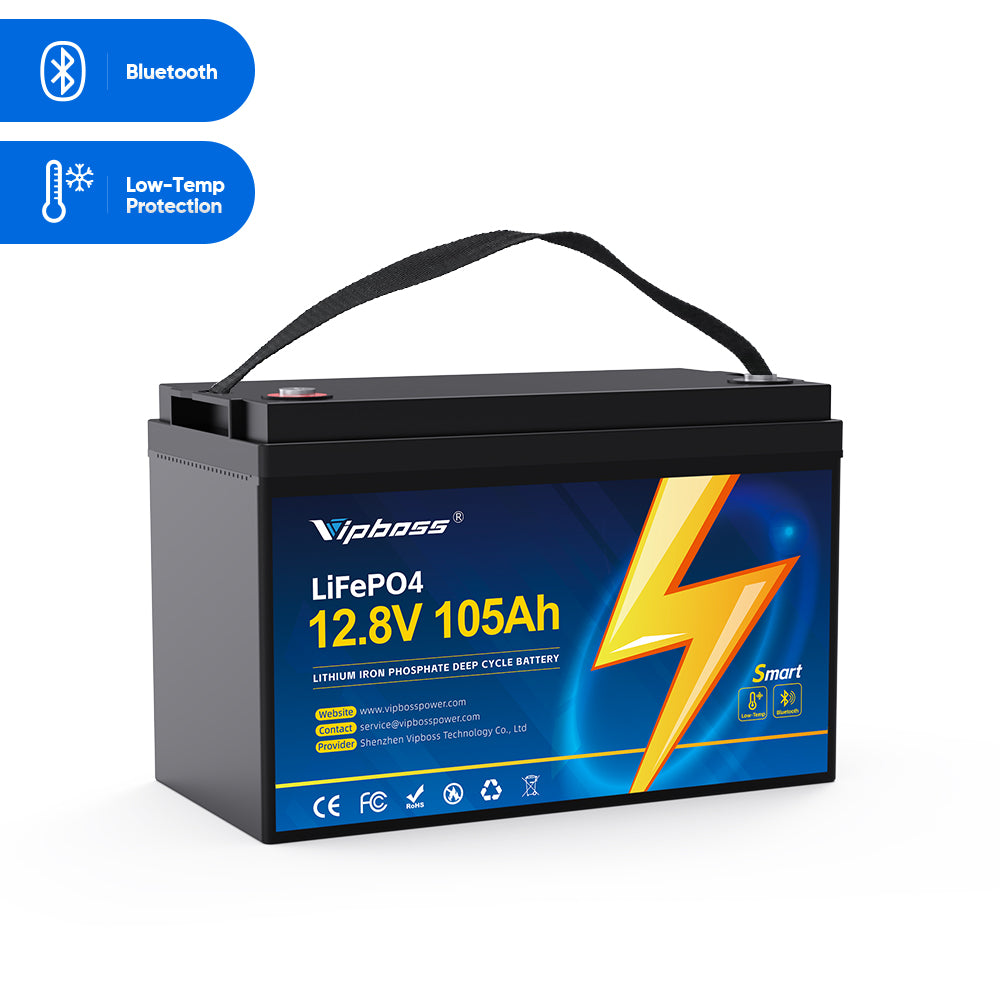
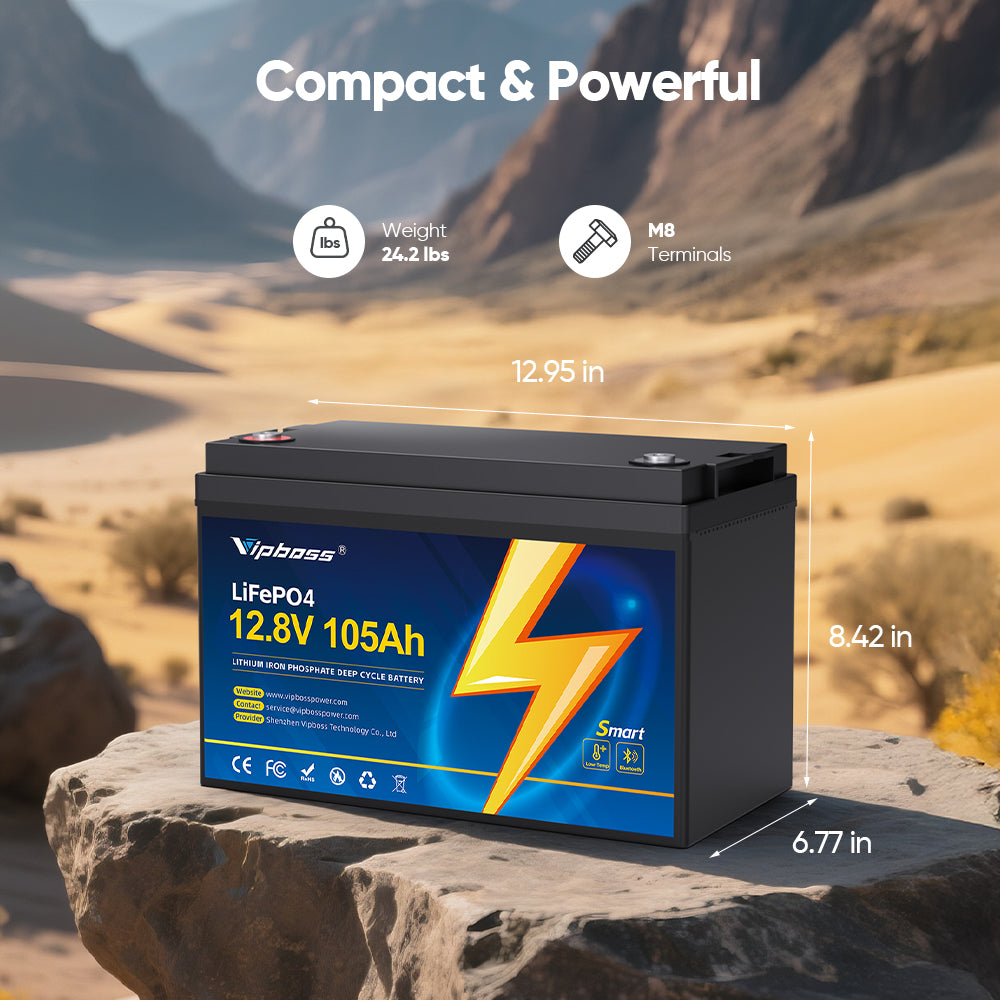
 Bluetooth&Low Temp protection
 BMS:100A
 Energy:1344Wh
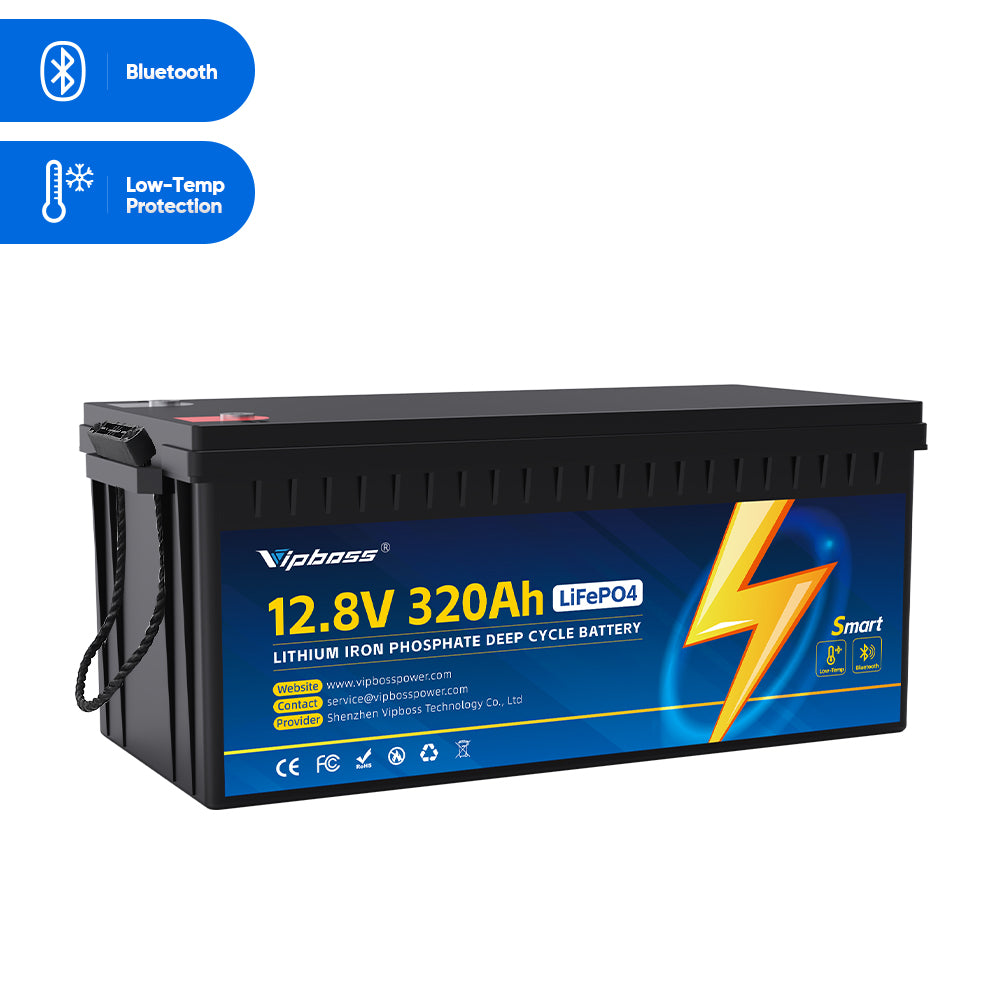
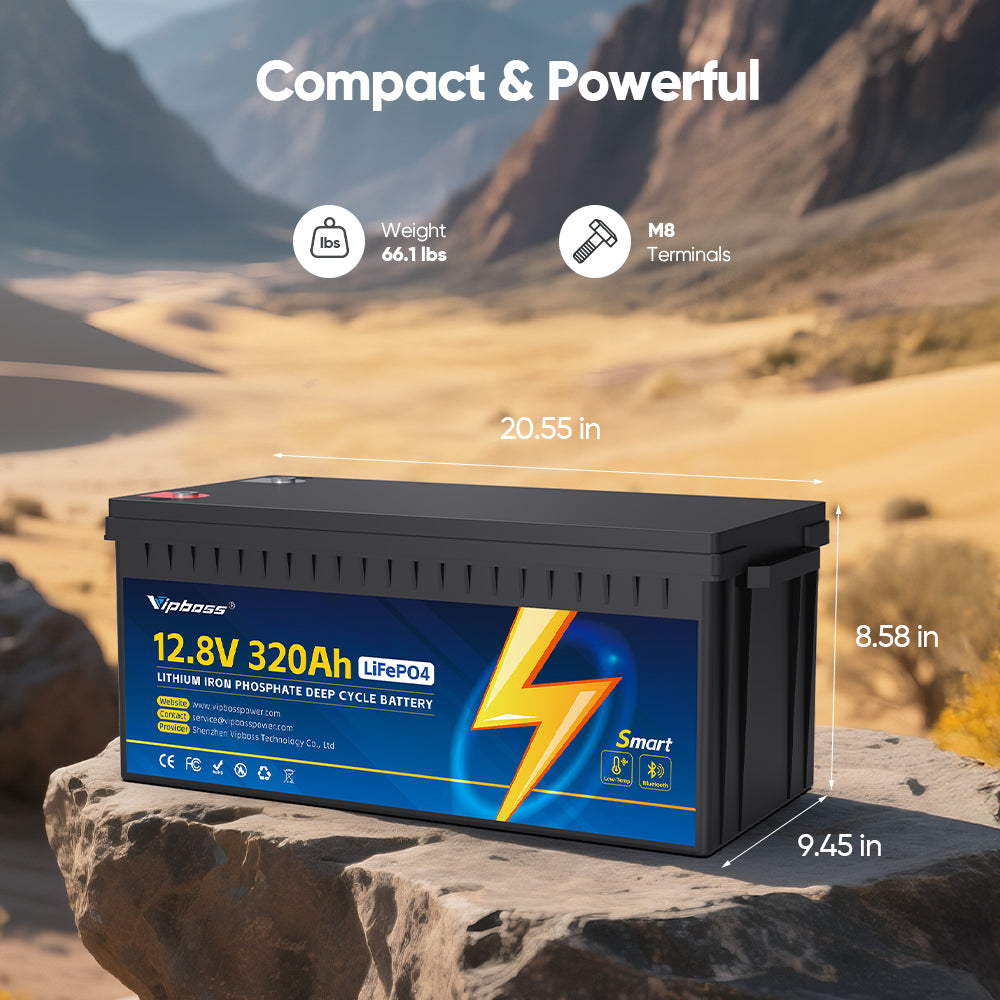 Bluetooth&Low Temp protection
BMS:200A
Energy:4096Wh
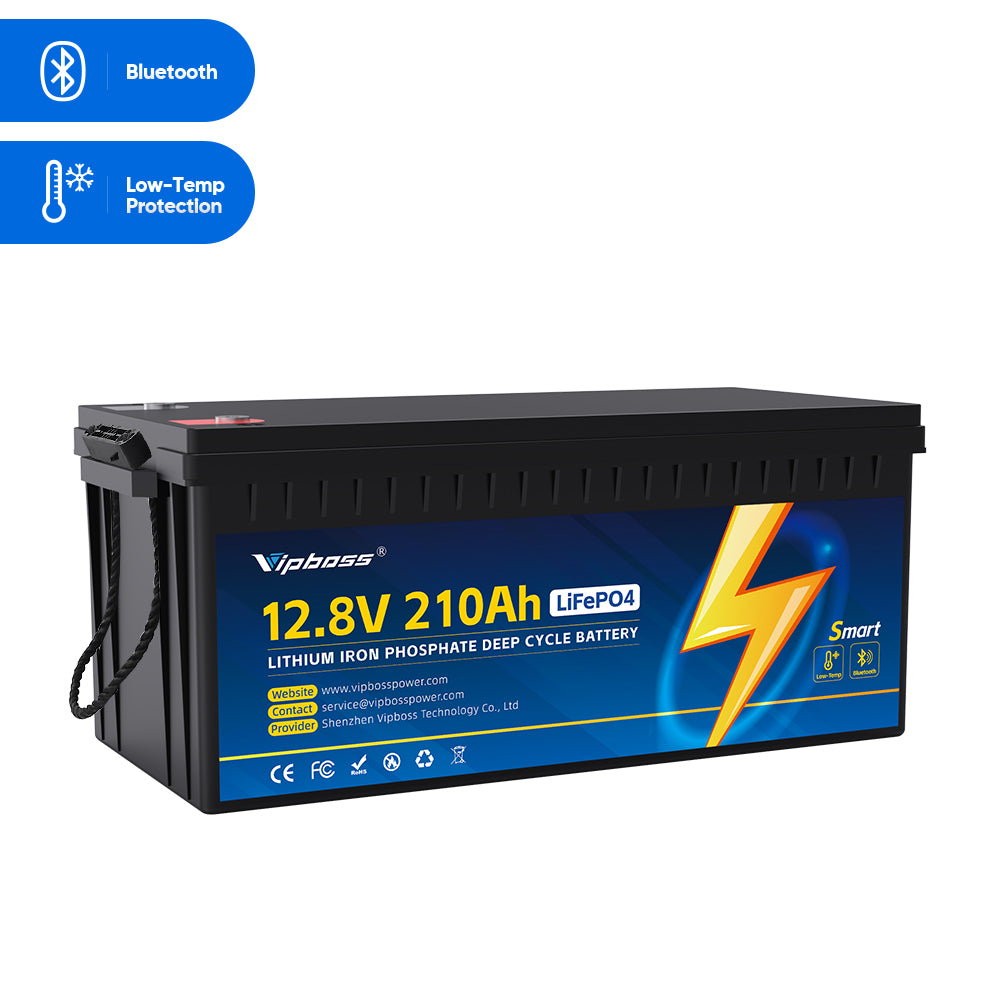
 Bluetooth&Low Temp protection
BMS:200A
Energy:2688Wh
FAQs
If you have any other questions, please contact us through the following contact information.
12V LiFePO4 Batteries Built for Deep Cycle Power
Vipboss 12V lithium batteries use Grade A LiFePO4 (lithium iron phosphate) cells to deliver more usable power, longer life and far less weight than lead-acid deep cycle batteries. This collection covers three capacities, 105Ah, 210Ah and 320Ah, all sharing the same 12.8V platform, smart BMS, IP65 housing and Bluetooth app, so you can choose by energy and fit rather than by compromise.
Compare Vipboss 12V Lithium Batteries
| Specification | 12V 105Ah | 12V 210Ah | 12V 320Ah |
| Stored energy | 1,344Wh | 2,688Wh | 4,096Wh |
| BMS / max continuous current | 100A | 200A | 200A |
| Peak discharge (3 to 5 seconds) | 350A | 600A | 600A |
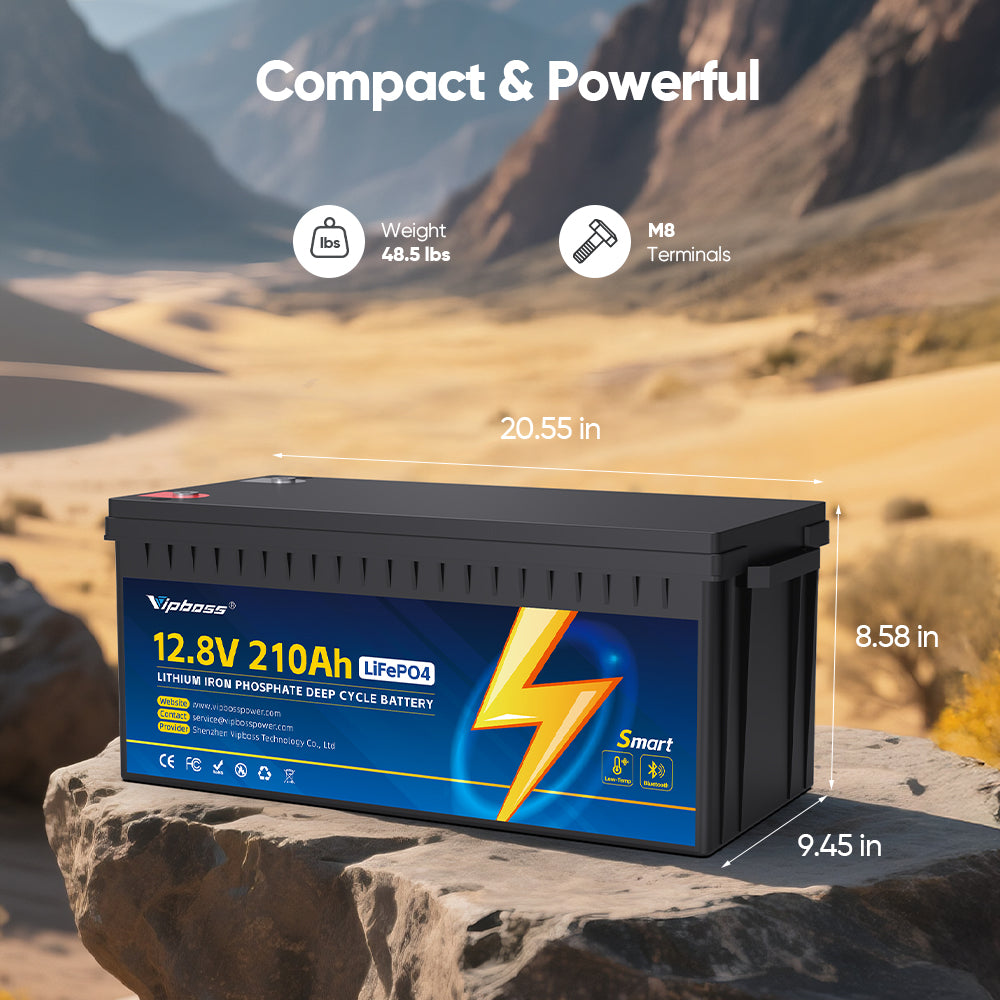
| Dimensions | 12.95 × 6.77 × 8.42 in (Group 31) | 20.55 × 9.45 × 8.58 in | 20.55 × 9.45 × 8.58 in |
| Weight | about 24 lbs | 48.5 lbs | 66.1 lbs |
| Recommended charge current | 21A | 42A | 64A |
| Typical use | Trolling motors, travel trailers, small solar kits | Boondocking RVs, larger boats, cabins | Full-time RVs, off-grid banks, heavy loads |
All three models share a 14.2V to 14.6V charge voltage, over 4,000 cycles, IP65 protection and expansion up to 4 in series and 4 in parallel.
How to Choose the Right 12V Lithium Battery
Amp-hours tell you capacity at 12V; watt-hours tell you how much energy you can actually spend. A 12V 105Ah LiFePO4 battery stores 1,344Wh, enough to run a 100W load for about 13 hours. Start with what you run each day, then choose the battery that covers it with some margin.
- Vipboss 12V 105Ah Bluetooth LiFePO4 Lithium Battery: the 100Ah-class option. If you are shopping for a 12V 100Ah lithium battery or a Group 31 lithium battery, this model fits the same space and supports loads up to about 1,280W.
- Vipboss 12V 210Ah Bluetooth LiFePO4 Lithium Battery: the 200Ah-class option, with double the energy and a 200A BMS for bigger inverters and higher-thrust motors.
- Vipboss 12V 320Ah Bluetooth LiFePO4 Lithium Battery: a high-capacity lithium battery that replaces several lead-acid batteries with one case and fewer connections.
For a worked example, read our guide to choosing the right 12V LiFePO4 battery capacity.
What Can a 12V Lithium Battery Run?
The runtime estimates on each product page give a quick sense of scale. They divide stored energy by the appliance wattage, so allow roughly 10% less for inverter losses on AC loads.
- 12V 105Ah: a 100W TV for about 13 hours, or a 350W trolling motor load for about 3.8 hours.
- 12V 210Ah: a 500W coffee maker for about 5.4 hours, or a 1,000W microwave for about 2.7 hours.
- 12V 320Ah: a 700W toaster for about 5.8 hours, or a 1,100W air conditioner for about 3.7 hours.
To estimate your own setup, add up the watt-hours you use each day and compare them with the stored energy in the table above. Most users plan to use up to about 90% of a LiFePO4 battery's capacity on a regular basis.
12V Lithium vs Lead-Acid Deep Cycle Batteries
A 12V deep cycle battery is designed to be drained and recharged repeatedly, but lead-acid only does this well down to about half charge. LiFePO4 changes the math:
- Usable capacity: you can use most of the rated amp-hours on every cycle, so a 105Ah lithium battery does the work of a much larger lead-acid bank.
- Cycle life: over 4,000 cycles and a design life of about 10 years, compared with a few hundred cycles for typical lead-acid.
- Weight: the 210Ah and 320Ah are about one-third the weight of equivalent lead-acid batteries.
- Maintenance: sealed cells, no watering and very low self-discharge in storage.
Our LiFePO4 vs lead-acid comparison covers cost per cycle and long-term value.
Smart BMS, Bluetooth and Low-Temperature Protection
Every Vipboss 12V lithium iron phosphate battery has a built-in smart BMS that protects against overcharge, over-discharge, overcurrent, short circuit and temperature extremes. Charging stops below 32°F and resumes automatically at 41°F, while discharge works from -4°F to 140°F. The Bluetooth app shows state of charge, voltage and battery status on your phone, so you always know how much power is left.
Charging and Expanding Your 12V Battery System
Use a charger, solar charge controller or inverter-charger with a LiFePO4 or 12V lithium iron phosphate mode set to 14.2V to 14.6V. The recommended charge current is about 0.2C: 21A for the 105Ah, 42A for the 210Ah and 64A for the 320Ah. See whether a regular lithium charger works for LiFePO4 before you reuse an old charger.
Connect identical batteries in parallel for more amp-hours, or in series to build a 24V, 36V or 48V system, up to 4S4P. Use the same model and age in one bank. Our guide on series vs parallel LiFePO4 connections explains when to use each.
Shop 12V Batteries by Application
The same three batteries power very different systems. For guidance written for your setup, see RV batteries for campers and motorhomes, trolling motor batteries for boats and kayaks, off-grid batteries for cabins and solar systems, and home storage batteries for backup power.
FAQs: 12V LiFePO4 Batteries
Can a 12V 105Ah lithium battery replace my Group 31 lead-acid battery?
Yes, in most cases. The Vipboss 12V 105Ah measures 12.95 × 6.77 × 8.42 in, the Group 31 footprint, and weighs about 24 lbs. Set your charger to its LiFePO4 mode and check that your cables and fuse suit up to 100A continuous.
Can I use my old lead-acid charger?
Only if it has a lithium or LiFePO4 setting with a charge voltage of 14.2V to 14.6V. Lead-acid modes with equalization or desulfation should not be used on a lithium battery.
Can I connect 12V lithium batteries in series for 24V or 48V?
Yes. Each model supports up to four batteries in series and four in parallel. A 4S bank of 12V 320Ah batteries, for example, gives you a 51.2V system with 16,384Wh of storage.
How long does a 12V LiFePO4 battery last?
Vipboss 12V batteries are rated for over 4,000 charge cycles with a design life of about 10 years. Avoiding long-term storage at 100% charge and charging within the 32°F to 131°F range helps you get the most from them.
Do 12V LiFePO4 batteries work in cold weather?
They can discharge down to -4°F, but charging pauses below 32°F to protect the cells and resumes at 41°F. In freezing climates, install the battery in a heated or insulated space.