
Correct bolt torque on battery terminals keeps high-current electrical systems cool, reliable, and safe, while mistakes quietly shorten battery life and damage equipment.
You wire a fresh lithium bank, fire up the inverter, and everything looks great until the first hot afternoon, when the lights flicker, the inverter trips, or the engine cranks slowly for no obvious reason. Again and again in off-grid and vehicle systems, the culprit turns out to be the same tiny detail: the small bolts that clamp your cables were simply tightened the wrong amount, leaving connections that run hot, corrode, and fail early. By the time you finish reading, you will understand how that happens, how to spot the damage from loose or over-cranked hardware, and how to torque your terminals so your power system delivers full performance for the long haul.
Why Bolt Torque Matters More Than Most People Think
Torque is the twisting force you apply to a fastener and the main way you control clamping force and joint reliability, a principle that holds from structural steel to small battery bolts and is highlighted in torque in fastener installation. When you tighten a battery terminal bolt, you are not just making it "feel snug"; you are setting how hard the metal faces are pressed together, which controls contact resistance, heat generation, and how well the joint resists loosening under vibration.
In any bolted joint, both under-tightening and over-tightening are harmful because they either allow movement or overstress the materials, as explained in the importance of proper torque and tightening techniques. On battery terminals that sit between high-current sources and inverters, starters, or traction motors, the stakes are higher than a squeaky bracket: a marginal joint can arc, run hot, and damage both the battery and downstream electronics.
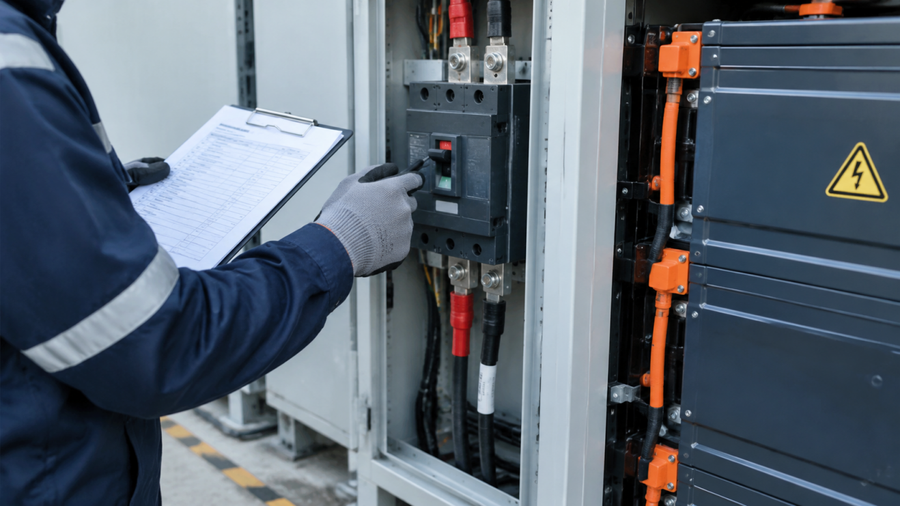
Electric-vehicle battery packs push this even further. Proper bolt tightening is what creates the clamp force that holds their high-voltage bus bars together, and a critical bolt that loosens or snaps can cause sudden power loss while driving, as described in how proper torque keeps EV battery packs safe and powerful. Understanding torque on a simple 12 V or 48 V battery bank uses the same engineering principles on a smaller scale.
Under-Tightening: The Slow Killer of Battery Terminals
When a terminal bolt is not tight enough, the metal surfaces do not fully mate, and the connection behaves like a small resistor that flexes and vibrates. On car batteries this shows up as voltage drop, hard or no starting, weak charging, dim lights, and random electronic glitches, all classic symptoms of loose battery cable terminals described in the importance of torque specifications for car battery cable terminals. The same physics applies to lithium house banks feeding inverters and DC-DC chargers in RVs or cabins.
Loose connections do not just lose voltage; they make heat. Deep-cycle fleets for golf carts repeatedly trace intermittent performance and even melted lead posts back to poor cable connections, especially those left loose or allowed to corrode, as reported in deep-cycle battery terminals: how tight are your cables. A terminal that is slightly loose can look fine but run far hotter than its neighbors under load, eventually softening the lead or deforming the lug until it fails catastrophically. Systematic wire identification during assembly makes it far easier to trace which specific terminal is causing intermittent issues when problems appear.
Electronic control systems are particularly sensitive to unstable supply voltage. Even modest looseness at the battery can disrupt the engine computer's feed, causing rough idle, stalling, hesitation, and other drivability problems that mysteriously vanish once the connections are cleaned and tightened, as illustrated in "battery cable bolts loose - but it is more complicated than that." In off-grid lithium systems, under-torqued studs on a bus bar behave the same way: they create heat and arcing points that can scar lugs and, in worst cases, contribute to thermal runaway inside heavily loaded packs.

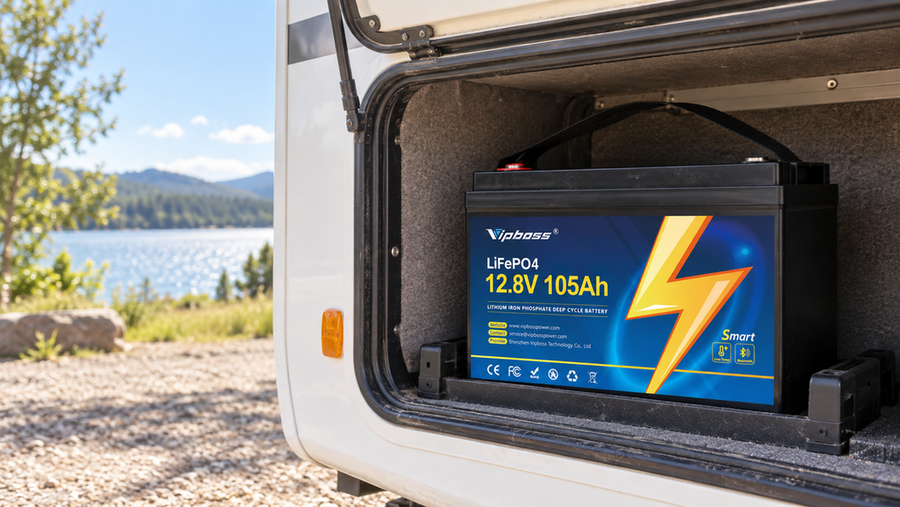
Lithium manufacturers underline this by treating terminal torque as a safety parameter rather than a mere assembly detail. They warn that loose terminals increase resistance, cause arcing and heat buildup, and can shorten service life or, under abuse, push cells toward runaway. This is why serious lithium packs for EVs, golf carts, and solar include specific torque charts and call for a calibrated torque wrench instead of guesswork.
A typical real-world pattern looks like this: a 48 V golf cart that used to run a full day suddenly starts losing steam halfway around the course. A technician opens the battery compartment and finds one or two cable ends slightly discolored and warm after a climb. Once the lugs are cleaned, the corrosion removed, and the terminals brought up to proper torque, the cart returns to its original range without changing a single battery.
Over-Tightening: The Fast Way to Crack, Strip, and Melt Terminals
On the other side, "gorilla-tight" battery bolts do their own damage. Excess torque can strip threads, deform fasteners, or crush the softer materials being joined, as cautioned in torque in fastener installation. Battery terminals are often made of soft lead or plated copper, not high-strength steel, so they reach their mechanical limit at surprisingly low torque values.
Automotive guidance is clear that over-tightening battery cable bolts can crack posts and terminals or damage surrounding components, another reason precise torque control matters in the importance of torque specifications for car battery cable terminals. Once threads on a stud are stretched or pulled, you may never again achieve the specified clamping force, even if your torque wrench reads the right number, because the mechanical joint has been permanently weakened.
In deep-cycle lead-acid packs, over-tightened bolts can deform the soft lead pads underneath. Fleet experience with golf carts shows that high-resistance connections at cables or terminals can cause excessive heating during discharge, to the point where a lead terminal can partially melt and the connection breaks, a failure mode described in deep-cycle battery terminals: how tight are your cables. Ironically, the person who cranked the nut "extra tight for safety" set up the conditions for a meltdown.
Lithium hardware has different but equally serious risks. Over-torque on threaded studs can strip the threads in the softer terminal block or crack the plastic case around them. Lithium-battery torque guidance notes that overly tight terminals can create internal leaks or short circuits that compromise both safety and lifespan. Once a thread pulls out of an insert or the case cracks, there is rarely a safe field repair; the battery may need replacement even though the cells inside are healthy.

A telling example is a bus bar stack on a LiFePO4 bank that uses a short screw into an internal terminal. If the bus bars and lugs are thick, the screw may bottom out in the hole before clamping force is fully developed. An installer who keeps cranking to make it feel tight risks stripping the internal threads. The result looks tight from the outside but has limited engagement and can loosen in service, a problem configuration discussed in battery terminal torque. In that situation, the over-torqued "fix" creates both immediate mechanical damage and long-term electrical instability.
How Tight Is Tight Enough? Real-World Torque Bands
There is no single "magic" torque number that fits all battery terminals. Lithium manufacturers and vehicle makers specify model-specific torque values and stress that you must follow the manual rather than generic tables, a consistent theme in lithium terminal torque guidance. Fastener specialists make the same point for structural hardware: torque requirements depend on fastener material, coating, and the parts being joined, and you should always consult the manufacturer's specification, as emphasized in torque in fastener installation.
The important pattern for installers is how low these numbers actually are. For deep-cycle lead-acid batteries used in golf carts and similar equipment, recommended torque ranges are only a few foot-pounds. UTL or UT threaded studs typically run around 8–9 ft-lb, large and small L and Offset S bolt-through terminals are often in the 8–10 ft-lb window, and SAE tapered posts target roughly 4–6 ft-lb, values reported for common deep-cycle designs in deep-cycle battery terminals: how tight are your cables. Most adults can exceed those with a short wrench without even trying.
Marine hardware gives another reference point. Blue-chip manufacturers of battery switches publish torque around 10–12 ft-lb for 3/8-inch studs and roughly 18–21 ft-lb for 1/2-inch studs, far lower than steel-bolt tables might suggest, as discussed in torque wrench needed for battery cable connections. Using generic automotive or structural tables on soft copper or brass electrical studs is a recipe for snapped terminals.
Lithium M8 terminals for automotive and solar applications commonly specify torques that convert to roughly 7–11 ft-lb for many systems, with some larger industrial packs running higher but still well under typical structural bolt values, according to lithium-battery torque and maintenance guidance. Those ranges underline a simple reality: properly torqued battery terminals are tight enough to prevent movement yet far from "wrench-as-hard-as-you-can."
To put this into perspective, consider the following approximate bands drawn from the sources above and typical lithium specifications.
Terminal style |
Typical torque band (ft-lb) |
Where you see it |
SAE tapered post on lead-acid |
about 4–6 |
Starter batteries, small deep-cycle banks |
Deep-cycle stud terminals (UT, L, S) |
about 8–10 |
Golf carts, scrubbers, lift carts |
M8 lithium terminals (many auto/solar packs) |
about 7–11 |
LiFePO4 house banks, small EVs |
Battery switch studs (3/8 and 1/2 inch) |
about 10–21 |
Marine battery switches and bus bars |
These are not instructions to copy blindly; they are reminders that real torque targets are modest and that the right number is whatever your battery and component documentation says.

Practical Steps To Protect Your Terminals
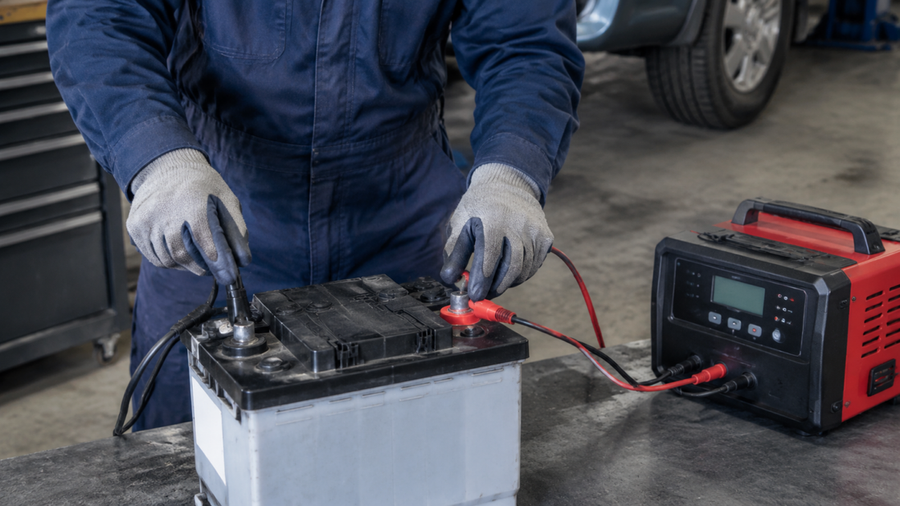
The safest way to manage torque starts before you ever touch a wrench. High-energy batteries can release electrical, chemical, and heat energy in dangerous ways if mishandled, so professional manuals for aircraft batteries stress removing metal jewelry, insulating tools, and wearing eye and skin protection when servicing packs, as detailed in the operating and maintenance manual for nickel-cadmium aircraft batteries. That same discipline applies when working over a lithium bank or a large lead-acid rack in a power shed.
Clean metal-to-metal contact is the foundation. Deep-cycle maintenance experience shows that corrosion and electrolyte residue raise resistance and accelerate heating at terminals, so technicians routinely scrub connections with a baking-soda-and-water solution, rinse, and dry before reassembly, then apply a corrosion inhibitor on the outside surfaces, a process described in deep-cycle battery terminals: how tight are your cables. The key detail is that no grease or compound should be placed between the actual contact faces; any protective film belongs on the exposed metal after the joint is torqued.
Hardware stacking matters just as much as cleanliness. For lead-acid terminals, best practice is to place the lock washer between the nut and the cable lug so the washer compresses fully without deforming the lead underneath, another point from deep-cycle battery terminals: how tight are your cables. For lithium stud designs, the entire stack of bus bars, lugs, and washers must be thin enough that the threaded portion still has adequate engagement in the terminal; otherwise, a bolt can feel tight while barely holding, an issue highlighted in battery terminal torque.
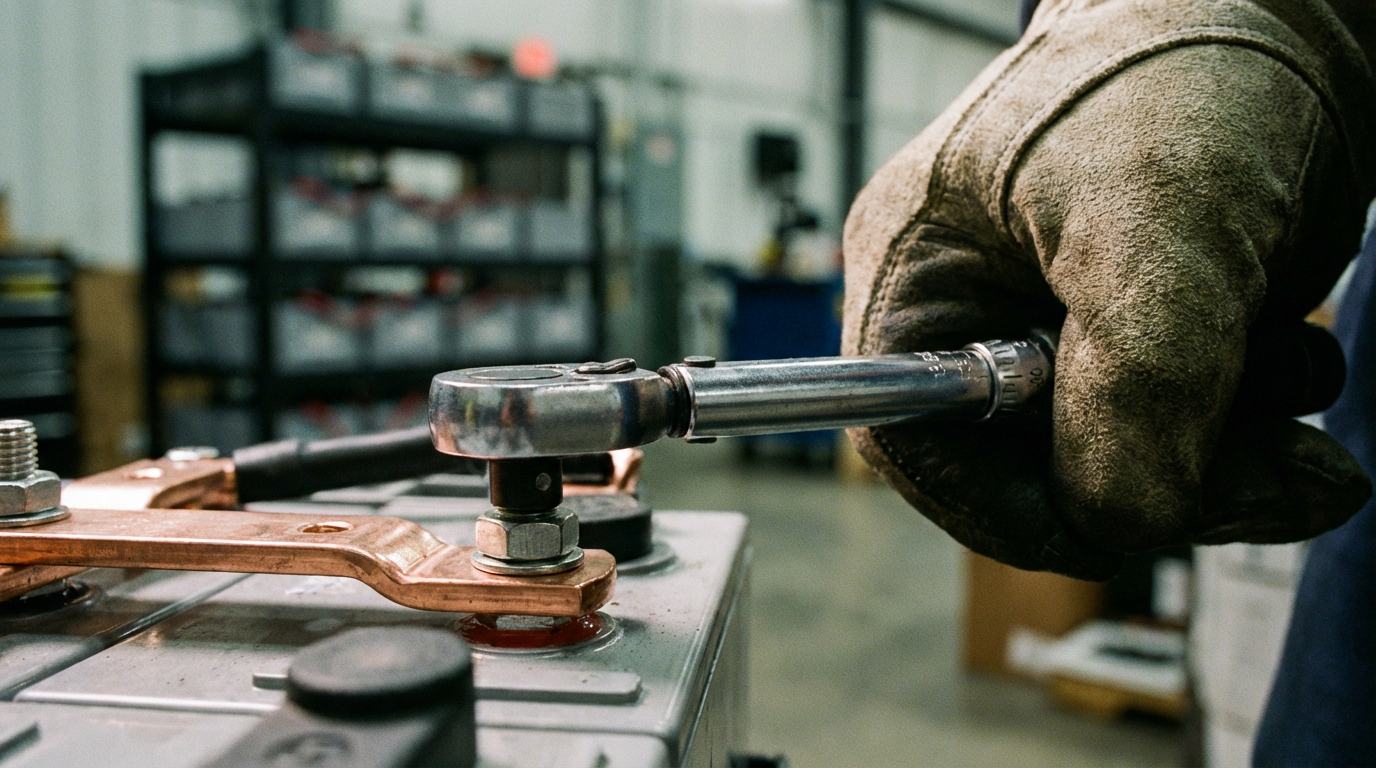
When it is time to tighten, a torque wrench is your friend, not a luxury. Fastener specialists regard it as essential for achieving specified torque accurately and avoiding both under- and over-tightening, in line with the recommendations in torque in fastener installation. A small 0–200 in-lb wrench for lead posts and a larger one for bigger studs give you control instead of guesswork, especially when working with multiple batteries where consistency across connections matters.
Field electricians with decades of experience can often judge "tight enough" by feel, but even in marine service they caution that less-experienced people tend either to over-tighten and break studs or under-tighten and leave hot, loose joints, as observed in torque wrench needed for battery cable connections. For off-grid owners and retrofitters, the practical compromise is simple: use feel only for an initial snug, then finish with a torque wrench set to the manufacturer's specification.
Finally, maintenance is not optional. Deep-cycle lead terminals are made of soft metal that creeps over time, which means clamping force falls and bolts need periodic re-torque to stay within the recommended range, a behavior noted in deep-cycle battery terminals: how tight are your cables. Lithium packs likewise benefit from periodic torque checks, especially in high-vibration environments, and torque wrenches themselves should be calibrated regularly so their readings remain trustworthy, as highlighted in lithium terminal torque best-practice discussions.
Is Torque Killing Your System? How To Spot Trouble Early
Before a terminal fails outright, it usually leaves clues. Loose or under-torqued connections tend to show discoloration, corrosion, or heat marks around the lug, along with symptoms like intermittent power, sagging voltage under load, or electronics that reset at random, warning signs emphasized in both deep-cycle fleet reports and lithium torque guidance. A quick infrared thermometer scan or even a cautious fingertip comparison (with proper PPE and safe access) after a heavy load can reveal one hot joint among cooler neighbors.
Over-torqued terminals reveal themselves differently. Cracked lead around a post, deformed lugs that no longer sit flat, or threads that feel gritty, pull, or spin without clamping all point to hardware that has been overstressed. In some cases, installers resort to shims or improvised bolts to "take up the slack" in a damaged clamp, yet experienced mechanics note that replacing a poorly fitting or damaged clamp with a correct, low-cost part is the proper long-term fix because high-current starters demand a solid, low-resistance connection, as discussed in practical repair advice on loose battery terminals.
Across cars, boats, golf carts, and off-grid lithium banks, one pattern appears again and again: hard-to-explain electrical problems vanish when the battery terminals are cleaned, inspected, and tightened correctly. Given how little time it takes to check torque with the right wrench, ignoring this connection is an expensive way to shorten battery life and chase phantom faults.

A power system upgrade is only as strong as the tiny ring of metal under each nut. Treat bolt torque on your battery terminals as a critical design parameter, not an afterthought, and your lithium retrofits and off-grid systems will run cooler, hit harder, and stay in service years longer than ones thrown together "by feel."