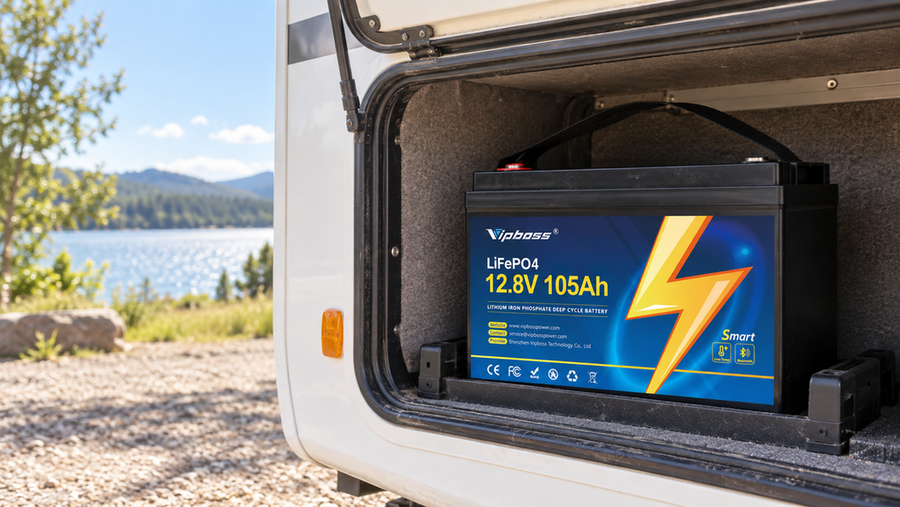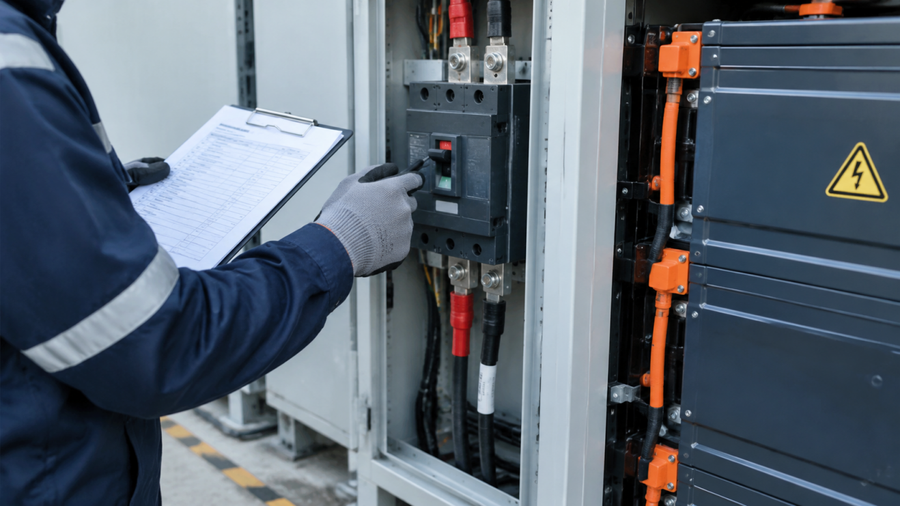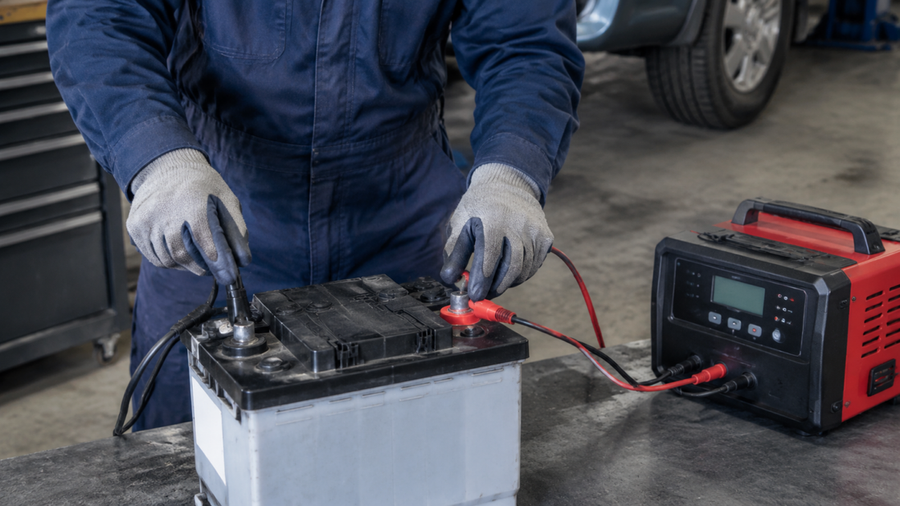

High contact resistance from lost metal-to-metal contact is usually what makes seemingly well-sized terminals run dangerously hot; this guide explains why it happens, how to find it, and how to fix it.
Most melted terminals trace back to one root cause: the real metal-to-metal contact area has been choked down by damage, dirt, or poor compression, driving contact resistance up until I²R heating cooks the connection.
You notice a sharp hot-plastic smell around the battery bank; the inverter lugs are too hot to touch, or a DC disconnect looks browned even though the cable size is generous and the load seems "within spec." A few micro-ohms more than it should be at the terminal can turn into concentrated heat that ruins lugs, breakers, and sometimes the whole off-grid system. Proper wire identification during initial installation makes troubleshooting these hot-spot issues significantly faster when symptoms appear. This guide walks through what is really happening at those hot terminals, how to test for the true culprit, and the precise fixes that keep lithium and off-grid gear running cool and reliable for years.
What "High Contact Resistance" Really Is at a Terminal
Contact resistance is the extra resistance where two conductive surfaces actually meet. It is distinct from the resistance of the cable or busbar itself, and it is exactly what contact resistance testing is designed to quantify in joints, busbars, and breaker contacts using low-resistance meters at micro-ohm levels. Contact resistance testing focuses on interfaces like lugs, relay contacts, and switchgear fingers because these spots are where overheating, arcing, and even fires tend to start when resistance creeps up. At a clean, tight joint, that resistance is extremely small; in large bolted joints, values on the order of a few to a few tens of micro-ohms are typical, and many manufacturers quote limits such as roughly 10 micro-ohms for big copper bus joints.
Specialized contact-resistance meters drive a controlled DC current, often around 100–200 A for high-current gear, and measure the resulting millivolt-level drop with a four-wire Kelvin connection so the test result reflects the joint and not the test leads. A modern contact resistance test set injects a stable high current, uses separate sense leads located right at the joint, and then computes the resistance automatically, often with resolutions of 0.1 micro-ohm and built-in pass/fail criteria for breakers, busbars, and terminals. High-current test sets are standard tools in substations for the same failure mode you see on a "simple" battery lug: invisible extra resistance that turns into dangerous local heat.
In practical terms for a lithium or off-grid system, contact resistance is what makes one terminal in a string run much hotter than the rest at the same current.

The cable can be correctly sized and cool in the middle, yet a single troubled interface at a battery post, busbar stab, or inverter lug can climb in resistance, drop extra voltage, and localize the heat right where plastic and insulation are weakest.
The Real Culprit: Lost Metal-to-Metal Contact Area
In most melted terminal stories, the main culprit is not the cable or even the absolute current; it is the loss of clean, tight metal-to-metal contact area at the interface. Common human-caused problems such as under- or over-torqued fasteners, poorly crimped lugs, contamination, and wrong hardware all create high-resistance connections that run hot and then get even worse over time. Reliability specialists point to under-torqued or dirty terminations, multiple conductors in a single lug, and damaged strands at the crimp as frequent sources of high-resistance hot spots in motor and power circuits where temperatures quietly rise until insulation starts to fail. High-resistance connections often start with a minor mechanical or cleanliness issue long before there is visible damage.
Experiments on precious-metal contacts show how surface films alone can raise resistance dramatically even when the underlying metal is fine. In vibratory feeder tests, fine silver and silver-cadmium oxide rivets exposed to bare steel or fiber bowl linings developed hydrocarbon films that pushed contact resistance from roughly 1 milliohm into effectively open-circuit conditions under modest mechanical loads after extended contamination, while identical rivets run in bowls coated with Teflon or urethane maintained low resistance over long runs. In other words, a thin organic film can isolate the real metal interface so effectively that the contact behaves almost like an insulator until high stress or cleaning restores real contact.

In real-world off-grid projects, the pattern is similar. A battery lug that was torqued "by feel," never rechecked, and then left to live in a slightly damp enclosure develops oxide and minor pitting at the mating surface. A cheap plated lug loses spring tension after a few heating cycles. A field splice on a high-current DC cable includes a few cut strands and a bit of assembly paste on the mating face. Each of these shrinks the true contact area into a small patchwork of micro-contacts; the resistance of those micro-contacts adds up, and under load the terminals in question run substantially hotter than their neighbors.
Typical Causes of Lost Contact Area
Cause |
What it does to the interface |
Where it often shows up |
Loose or under-torqued hardware |
Reduces contact pressure, allowing micro-arcing and oxide growth |
Battery posts, inverter lugs, busbar joints |
Over-torqued or damaged hardware |
Deforms lugs, cracks plating, and reduces effective bearing area |
Aluminum lugs, softer copper or tin-plated parts |
Corrosion and oxide layers |
Insert resistive films between metals and promote non-ohmic behavior |
Outdoor combiner boxes, salt-laden environments |
Surface contamination (oil, film) |
Prevents direct metal contact and can turn into insulating layers |
Shop-assembled lug stacks, uncleaned components |
Shrinks the conductive path, increasing resistance at the ferrule |
Field-crimped terminations on fine-strand cable |
The lithium-retrofit twist is that many of these issues get amplified when high currents flow at relatively low system voltages. With a 48 V bank feeding several hundred amps into an inverter or DC bus, the same few micro-ohms that were "tolerable" in a light-duty application now become a very real heat source right at the terminal.
How High Contact Resistance Turns into Melted Terminals
Once contact resistance rises, the physics is brutally simple: the power turned into heat at the joint is equal to the current squared times the resistance. Elevated contact resistance in breakers, busbars, and joints is widely recognized as a trigger for overheating, arcing, and even fires, exactly because the extra I²R loss is concentrated into a tiny volume of metal and surrounding insulation. Contact resistance meters and high-current test sets exist largely to find these high-loss spots before they cook equipment.
Consider a 48 V off-grid inverter pulling 200 A from a lithium bank. If a battery interconnect has a healthy resistance of about 50 micro-ohms, the heat at that joint is roughly 2 W. That warms the metal but is usually manageable. If corrosion and looseness push the same joint to 500 micro-ohms, the heat jumps to roughly 20 W concentrated in the small metal-to-plastic interface. That is like tucking a small soldering iron under the lug every time the inverter runs hard. As the joint heats up, the metal expands, clamping force can drop, resistance climbs further, and a destructive feedback loop kicks in: more resistance, more heat, more damage.
Field experience with motors shows that high-resistance connections can quietly run hot while equipment appears "normal" until thermal stress, insulation breakdown, or mechanical failure finally show up as a tripped breaker or burnt termination. In one documented case, phase-to-phase resistance imbalance in a pulper pump circuit traced back to corroded feeder lugs with broken strands; the motor was still operating but heading toward an expensive rewind and unplanned downtime that was only avoided because targeted testing caught the high-resistance connection in time. Similar high-resistance joints in battery or DC distribution gear have the same signature: localized temperature rise, unstable voltage at the load, and an impending failure that may not announce itself until the plastic actually deforms or smoke appears.

Motor-circuit testing for high-resistance connections highlights how this pattern repeats wherever current has to cross a compromised interface.
Finding High Contact Resistance Before Plastic Starts Smoking
The good news is that high contact resistance almost always gives you clues before the point of meltdown. Hot spots, discolored insulation, and subtle voltage irregularities all appear earlier than most owners realize. Systematic testing bridges the gap between "looks fine" and "why is this lug molten."
Proper testing with low-resistance meters
For critical joints such as lithium battery terminals, DC disconnects, and high-current busbars, the gold standard is a four-wire contact-resistance test using a dedicated low-resistance ohmmeter or microhmmeter. These instruments inject a controlled DC current through the joint and use separate voltage-sense leads placed as close as possible to the contact so that the result truly reflects the interface, not the leads or test fixture. The basic setup uses two current leads and two potential leads arranged so the voltage taps sit inside the current loop, and the meter then divides measured voltage by the test current to report resistance in micro-ohms. Four-wire contact resistance tests are standard practice on breakers, switchgear, and busbars for exactly the same heating issues seen on battery lugs.
Standards and manufacturer guidance for high-current switchgear often call for minimum DC test currents of roughly 50–100 A, with tests commonly done around 10 percent of the device's rated current and never above its rating. Typical acceptance values for breaker contacts and bus joints in heavy-duty gear sit below a few tens of micro-ohms. High-current contact resistance test sets specify values like under 50 micro-ohms at 100 A for breakers and under 20 micro-ohms at 200 A for busbar joints as representative thresholds. For off-grid DC systems, you can scale the approach: use high enough test current to meaningfully load the joint but stay within the ratings of the battery, cables, and terminations.
Accuracy depends heavily on technique. Consistent test conditions, including the same breaker or terminal positions, the same manufacturer-supplied test leads, and similar environmental conditions, are essential so trends in repeated measurements reflect real changes in the joint instead of measurement noise. Contact resistance specialists stress repeating tests at the same locations with the same four-wire layout over time and comparing results to both manufacturer limits and previous records. Trend-based contact resistance programs make it much easier to decide when to clean, retorque, or replace a connection before it grows into a runaway hot spot.

Practical checks when you do not have a microhmmeter
When you do not yet have a dedicated low-resistance meter, you can still catch a surprising number of high-resistance issues using simple voltage-drop checks under load, as long as you respect ratings and work safely. On residential circuits with aluminum wiring, one homeowner used a 1,600 W hair dryer (roughly 13 A) to load individual receptacles and watched for abnormal voltage drops, discovering that some runs dropped from about 121 V to 113 V under load while others sagged only a few volts. The larger drops, around 7–8 percent at the same current, pointed straight to higher resistance somewhere in that branch circuit and helped focus inspection on suspect terminations.
For a lithium or off-grid system, a similar approach works as a screening tool: measure voltage right at the battery terminals, then at the inverter DC input, under a steady known load. If one series string or connection shows a noticeably larger drop than its peers at the same current, you have a strong hint of added resistance. This method cannot replace a proper four-wire micro-ohm test, but it can quickly highlight which joint deserves deeper attention before it becomes the hottest spot in the room. When troubleshooting dead or intermittent circuits, tightening all neutral and ground terminations in the panel has even been enough to restore power, underscoring how a single loose connection can act like a hidden resistor until corrected. Hands-on troubleshooting cases show that tightening suspect terminations often resolves voltage irregularities that meters had already flagged.
Fixing and Preventing High Contact Resistance in Lithium and Off-Grid Systems
Once you have identified a suspect terminal, the fix is very rarely to "just replace the cable." The goal is to restore generous, stable metal-to-metal contact area under proper pressure and keep the surfaces clean over the long haul.
Start with a full de-energization and lockout, then disassemble the joint. Visual inspection should look for pitting, discoloration, deformation, or evidence of arcing on both sides of the interface. A joint that passes the resistance test but shows cratered surfaces, worn plating, or overheating marks is not trustworthy; low-resistance test programs for breakers and busbars consistently treat both visual inspection and resistance measurements as mandatory, not optional extras. Inspection plus contact resistance must both be satisfactory before a connection is considered healthy.
When reassembling or rebuilding, use lugs and hardware with the right material and rating, follow a documented procedure, and use calibrated torque tools instead of "good feel" on a wrench. Motor connection case studies attribute many high-resistance failures to poorly compressed lugs, incorrect tools, and missing anti-corrosion compound; once these practices were tightened up, the incidence of hot joints dropped dramatically. Documented motor-connection procedures emphasize proper compression tooling, correct lug selection, and the use of anti-corrosive compounds on susceptible joints, all of which translate directly to battery and DC bus installations.
For lithium banks in particular, avoid stacking too many lugs on a single stud, never mix multiple conductors into a single crimp made for one, and keep assembly lubricants, sealants, or other contaminants away from the actual mating faces. Periodic re-testing of high-current terminations, especially after major load changes or seasonal usage extremes, combined with torque verification, will catch most creeping increases in contact resistance long before anything melts. Many contact-resistance testing guides recommend at least annual surveys on critical equipment or after any significant work, with repair and retest whenever measured resistance exceeds published or trended limits. Routine high-current contact testing is what keeps large power systems out of trouble; a scaled-down version applied to your off-grid system has the same preventive payoff.
FAQ
Can a terminal look clean and still have dangerously high contact resistance?
Yes. Very thin oxide or hydrocarbon films can sit on otherwise shiny metal and dramatically increase resistance even when there is no obvious discoloration or pitting. Tests on silver-based contacts fed through different vibratory bowls showed that contacts exposed to certain coatings developed films that drove resistance into effectively open-circuit behavior, while visually similar parts from cleaner bowls maintained low milliohm-level values. The safest assumption is that appearance alone is not enough; only measurement, preferably with a four-wire low-resistance test, confirms that the joint is truly low-resistance under realistic contact conditions.
Is oversizing cable enough to stop terminals from running hot?
No. Oversizing the cable reduces voltage drop and heating in the conductor, but high contact resistance is fundamentally a joint problem, not a cable problem. High-resistance connections show up at lugs, disconnects, junctions, and breakers, and these points can overheat even when the cable in between is cool and generously sized. Reliability programs focused on high-resistance motor connections show that most hot spots trace back to how the cable is landed and terminated, not to its ampacity rating, which is why keeping terminations clean, properly compressed, and correctly torqued is so critical. Programs targeting high-resistance connections consistently find that improving termination practices does more to prevent overheating than upsizing conductors alone.
How often should you test contact resistance on an off-grid system?
For high-current components such as battery interconnects, main DC disconnects, and inverter DC terminals, adopting a yearly contact-resistance survey is a strong starting point, with additional checks after any major upgrade, major fault, or repair. Manufacturers of contact resistance test sets recommend at least annual testing on critical assets like breakers and busbars, followed by cleaning, tightening, or replacement plus retest when measured values drift above limits or trend upward from previous baselines. Maintenance guidance for contact resistance and high-current test-set recommendations both emphasize trending over time, because it is the change in resistance, not just the absolute number, that signals a joint drifting toward trouble.
When terminals run hot, the fastest path to a stable, high-performance off-grid system is to stop blaming "mystery loads" and start treating every joint as a component you can measure, improve, and keep under control. Build a habit of clean terminations, correct torque, and periodic contact-resistance checks, and your lithium bank and power hardware will deliver more power, with less drama, for many seasons of hard use.