
A damp spring can grow green corrosion on battery terminals that steals power, but a quick inspection and cleaning routine keeps both lead-acid and lithium systems running reliably.
You open the battery box on a rainy April afternoon and see green fuzz around the posts, notice that your cabin lights have been dimmer, and feel the power system straining on loads that used to feel easy. Cleaning and protecting those connections often turns a "weak battery" back into a solid, steady power source without replacing a single component. You are about to learn how to spot wet-season corrosion early, clean it safely on both traditional and lithium batteries, and keep it from coming back.
What That Green Fuzz Is Really Doing to Your System
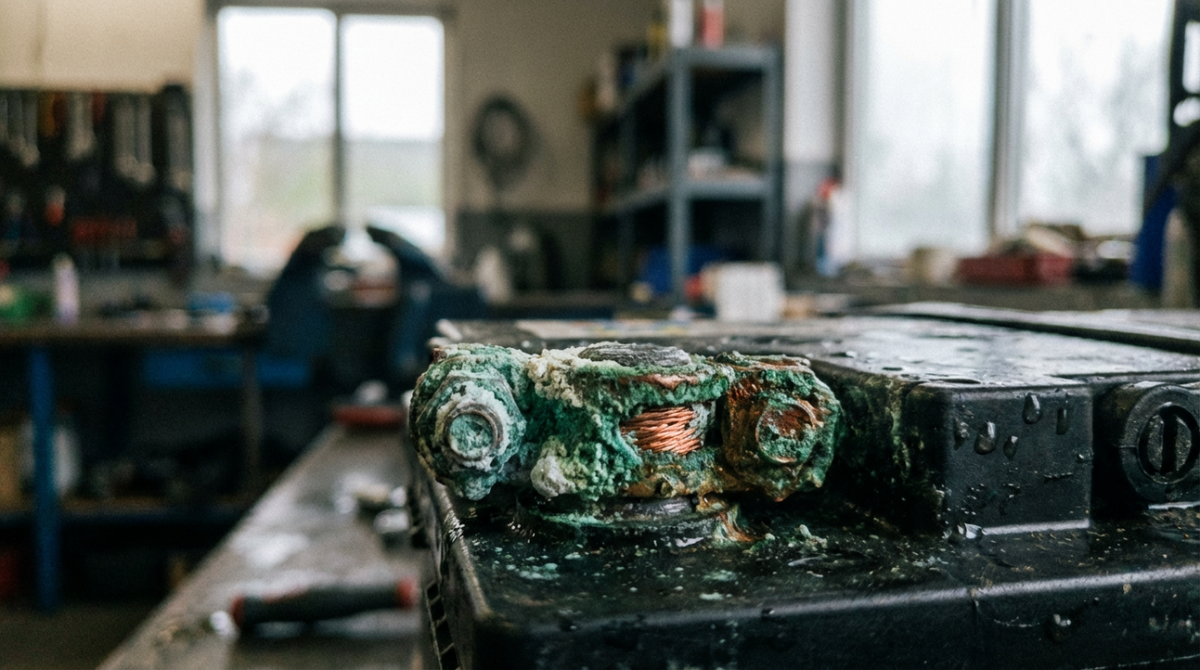
The white, blue, or green buildup around posts, clamps, and cable ends is corrosion that forms when battery gases and moisture react with metal and surface residue. It is a poor conductor that restricts current between the battery and the rest of the system, often causing dim lights, slow cranking, or even no-start situations in vehicles and boats. Battery terminal corrosion behaves this way, and its crusty deposits around posts and cables can starve starters and inverters of voltage, just as car battery corrosion does in daily drivers.
Wet spring weather accelerates this process because humidity, mist, and road or dock spray add the moisture that corrosion chemistry needs, while salty or dusty environments increase the amount of conductive grime packed into the crust. Automotive and marine service guides describe corrosion as a buildup that interferes with electrical flow, contributing to hard starts, dim headlights, and overall battery drain. They recommend inspecting posts and cables whenever electrical problems appear, and they treat battling corrosion and cleaning battery corrosion safely as core maintenance rather than cosmetic detailing.
In real systems, the effect is larger than it looks. A pair of heavily corroded clamps on an RV or boat can act like adding several feet of undersized cable to the circuit, so the alternator or solar charger works harder while the loads still see less voltage. Guides on cleaning car battery terminals explain that dirty, crusted posts can mimic a dead battery and that simply restoring clean, bare metal contact often brings back smooth starts, brighter lights, and more consistent electronics without changing the battery at all.

How to clean car battery terminals guides describe this same phenomenon in passenger vehicles.
Lithium Versus Lead-Acid: What Changes, What Doesn't
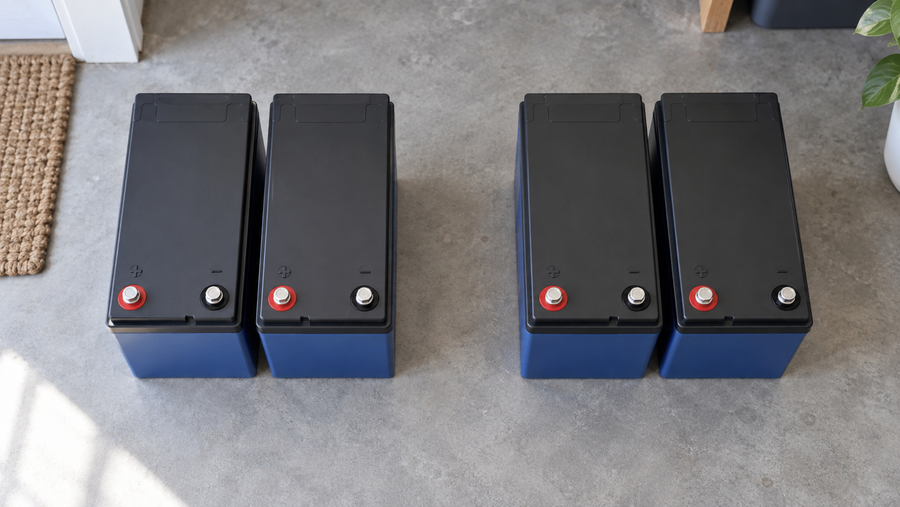
Lithium iron phosphate packs and modern portable power stations are far more stable and leak-resistant than flooded lead-acid banks, so you are unlikely to see sulfuric acid creeping out of a lithium case the way you might from an overfilled or aging lead-acid battery. Deep-cycle battery maintenance guidance, including for marine and off-grid applications, stresses that battery life hinges more on proper charging profiles and storage than on constantly topping up fluid, which is one reason lithium systems are attractive upgrades for long-term reliability. Deep cycle marine battery maintenance highlights careful charging and storage as the primary tools for extending life.
However, the terminals, lugs, and busbars in a lithium system are still metal, often copper or brass, bolted into the same damp compartments and under the same hoods as the old batteries. Corrosion experts point out that green and blue buildup typically comes from copper in wiring or clamps reacting with gases and moisture, while white powder shows lead, zinc, or aluminum in the mix. The color alone does not prove that the battery itself is failing. How to clean battery corrosion safely articles explain that shades of green or blue usually signal copper corrosion rather than a specific charging-system fault.
For many retrofits, lithium packs are dropped into boxes that previously held vented lead-acid batteries, often without fully neutralizing old acid splatter or cleaning cable ends back to bright metal. In a wet spring, the combination of leftover acid residue, fresh moisture, and dissimilar metals can grow a green ring on the new copper lugs and start the same slow voltage drop you upgraded to avoid. Treating terminal hygiene as part of the lithium upgrade, not an afterthought, keeps the new technology delivering the performance you paid for.

How to Inspect for Green Oxidation When Everything Is Damp
Before touching anything, shut down chargers, inverters, and DC loads, turn off engines where applicable, and give the compartment a chance to air out so any gases can disperse. Automotive maintenance guidance for handling corroded batteries consistently recommends wearing gloves and eye protection, working in a well-ventilated area, and following the manufacturer's instructions before loosening any cables or hardware. Battling car battery corrosion and safe corrosion cleaning procedures both emphasize protective gear and ventilation.
Once the system is safe, do a slow visual pass along the entire path from battery to loads. Look for white, blue, or green crust around posts, clamp ears, cable ends, fuse blocks, and disconnect switches; this is the same corrosion that automotive guides describe around battery posts and cables as a warning sign of electrical trouble. What is battery terminal corrosion and car battery corrosion resources both define these colors as typical corrosion patterns. In small devices like radios, flashlights, and remote sensors that share your off-grid system, leaked alkaline batteries often leave fluffy white or blue deposits and darkened metal tabs in the compartments, another form of corrosion that blocks contact and quietly kills the device until cleaned. How to fix corroded battery terminals explains how leaked alkaline cells can destroy gadget terminals if left in place.
While you are there, check the health of the hardware itself.

Cracked or swollen cases, visible leaks, frayed insulation, or deeply pitted lugs and clamps are red flags that cleaning alone may not be enough, because most corrosion guides advise replacement when cases are bloated or cables are badly damaged rather than trying to polish them back into service. What is battery terminal corrosion and how to clean battery corrosion safely references both note that cracks, leaks, or severe cable damage warrant professional inspection or replacement.
Cleaning Green Oxidation Without Creating New Problems
For most lead-acid and lithium installations, the workhorse cleaner is a baking-soda-and-water mixture that neutralizes acidic deposits and loosens the crust. Maintenance resources on car and deep-cycle batteries recommend mixing baking soda with warm clean water into a paste, applying it to corroded areas, and scrubbing gently with a brush until the buildup dissolves. Then rinse everything with clean water and dry thoroughly. How to clean car battery corrosion safely and battery terminal corrosion cleaning references both describe this approach as a standard method for restoring low-resistance connections.
Always disconnect cables before a thorough cleaning, removing the negative connection first and then the positive so a tool slip cannot easily short between a live post and grounded metal. Automotive procedures for cleaning car battery terminals stress disconnecting in this order, applying either a dedicated terminal cleaner or a baking-soda solution, letting it react and foam over the corrosion, scrubbing until metal is bright, and then drying all contact surfaces so no moisture remains to cause fresh corrosion or shorts. How to clean car battery terminals guides explain this sequence and caution against allowing metal tools to bridge both posts.
Different cleaning options have tradeoffs, especially when deposits are heavy or access is tight. Informal comparisons, including the MythBusters segment where cola and baking-soda solution cleaned similar amounts of buildup, suggest that plain water can sometimes remove crust almost as effectively as specialty cleaners. Corrosion specialists warn that sugary drinks like cola leave brown, gummy residue and should not be used because they create new contamination if any liquid seeps into the battery case or nearby components. How to clean battery corrosion safely explicitly advises against using cola and instead recommends baking soda, water, or dedicated battery-cleaning sprays. For alkaline leakage in small devices, repair guides recommend the opposite chemistry: a mild acid such as vinegar or lemon juice applied sparingly to neutralize the alkaline residue before carefully drying the metal terminals. How to fix corroded battery terminals guides describe this approach for corroded gadget compartments.
Here is how common cleaning approaches compare in practice:
Cleaner or method |
Best use case |
Key cautions and notes |
Baking soda and water paste |
Lead-acid posts, clamps, and trays with acidic corrosion around terminals |
Neutralizes acid and loosens crust; rinse and dry completely to avoid leaving conductive residue on or under hardware. |
Plain warm water |
Light surface deposits on otherwise clean terminals and cases |
Removes dirt and loose powder; less effective on thick, chemically active deposits than baking soda or cleaner. |
Commercial battery cleaner spray |
Heavy crust, tight spots, or professional service environments |
Follow product directions; many sprays foam to show reaction and must be rinsed and dried afterward, as corrosion guides note. |
Mild acid (vinegar or lemon) |
Alkaline battery leaks in radios, remotes, and small electronics |
Use sparingly on cotton swabs, then rinse and dry; suited for alkaline residue, not for lead-acid battery tops, as repair guides explain. |
Cola |
Old "shop myth" cleaners |
Not recommended because of sticky residue and risk of contaminating the battery interior or nearby parts, as corrosion-safety guidance warns. |
For very tight spaces and delicate contacts, such as battery-powered sensors, handheld radios, or connector strips feeding lithium packs, techs who repair small electronics use the same principles they use when cleaning clogged charging ports. They power the device off, inspect the port or contact area with good light, use nonmetal tools like wooden toothpicks or soft brushes to dislodge debris, and reserve isopropyl alcohol on cotton swabs for sticky grime while avoiding any force that could bend pins or crack solder joints. Ways to clean your charging port explains this gentle, nonmetallic approach to preserving delicate contacts while cleaning.
Once the metal is bright and fully dry, reconnect the positive cable first and then the negative, tightening just enough for a snug, secure grip without overtightening and cracking posts or deforming lugs.

After reassembly, corrosion guides consistently recommend adding a protective barrier, such as dedicated terminal protectant spray or anticorrosion pads combined with a light coat of petroleum jelly or dielectric grease, to block moisture and acid from reaching the metal and to slow future buildup. Battery terminal corrosion prevention resources and car battery terminal protection products both emphasize that these coatings and pads extend the time between major cleanings when applied correctly.
Keeping Corrosion Away Through Wet Season and Beyond
The fastest way to stay ahead of green oxidation is to fold terminal checks into your normal monthly walk-throughs, rather than waiting for a no-start or inverter alarm. Automotive detailing and battery care guides recommend visually inspecting terminals at least once a month and doing a thorough cleaning every six to twelve months, with more frequent checks in humid, coastal, or winter-salt environments where moisture and contaminants are highest. How to clean car battery terminals and deep cycle marine battery maintenance resources both highlight regular visual inspections as the first line of defense.
Charging strategy matters just as much as cleaning in keeping corrosion in check. Corrosion experts explain that overcharging, especially on hot days or when a deeply discharged battery is pushed hard, drives more gas and fluid out of the battery, which then reacts at the terminals to produce corrosion, while undercharging encourages other failure modes that still shorten life. What is battery terminal corrosion and how to clean battery corrosion safely references both warn against chronic overcharging and recommend having the charging system checked if corrosion is severe or recurring. Deep-cycle maintenance guides for off-grid and marine systems add that avoiding repeated deep discharges, using chargers matched to the battery chemistry, and storing batteries fully charged in cool, dry spaces or on a maintainer during long downtime dramatically improves service life. Deep cycle marine battery maintenance guidance recommends fully charging before storage, disconnecting from parasitic loads, and using a maintainer for long layups.
For lithium systems, that same philosophy applies with a different failure mode: the cells are sealed and less likely to leak, but they still dislike chronic overcharging or undercharging, and their busbars and terminals share the same humid air as everything else. Keeping chargers within the manufacturer's voltage window, relying on the pack's battery-management system for protection, and combining that with clean, protected terminals turns lithium into a low-drama workhorse even when the weather is doing its best to attack every exposed metal surface.
FAQ
Does green corrosion mean my battery is finished?
Green oxidation on terminals and lugs means the metal at the connection is reacting, not that the battery is automatically bad. Corrosion guides note that a corroded battery often can be cleaned and then continue to deliver several more years of service, especially if the underlying cause is a one-time overcharge or a stretch of very hot, humid operation, but they also stress that heavy corrosion may hint at charging problems, case cracks, or simple age. How to clean battery corrosion safely and battery terminal corrosion basics both recommend cleaning first, then testing the battery and charging system, and considering replacement when the battery is older or there are signs of physical damage.
Is it OK to just brush off corrosion without any cleaner?
Brushing away loose crust will help, but it leaves reactive material behind and does not neutralize deposits the way a proper cleaning does. Maintenance instructions for car and deep-cycle batteries consistently recommend using a baking-soda-and-water mixture or a dedicated cleaner to neutralize and dissolve corrosion, then rinsing and drying, rather than relying on dry brushing alone, because the chemicals left in place will rebuild the crust faster and can continue to irritate skin and damage metal. How to clean battery corrosion safely and how to clean car battery terminals both describe using a neutralizing solution and thorough rinse as the proper method.
Do lithium power stations and packs still need terminal maintenance?
Yes, because while the cells are sealed and far more resistant to leakage than flooded lead-acid batteries, the external terminals, busbars, and cables are still exposed metal sitting in the same humid, dirty air. Deep-cycle and off-grid maintenance advice stresses regular visual inspections, clean and tight cable connections, and correct charging practices as universal requirements, regardless of chemistry, so even lithium systems benefit from springtime checks for green or white deposits on connections and from a quick clean and protective coating when any buildup appears. Deep cycle marine battery maintenance references and battery terminal corrosion prevention guidance both highlight connection condition and proper charging as critical to long-term reliability.
A wet spring is the perfect time to get ahead of green oxidation: give every battery, busbar, and cable end a careful look, clean and protect anything that is less than bright metal, and pair that with smart charging and storage habits. Do that now and your upgraded lithium or mixed-chemistry system will pull smoothly through the rest of the season, delivering the kind of rock-solid power that lets you stop worrying about the batteries and focus on the loads they support.