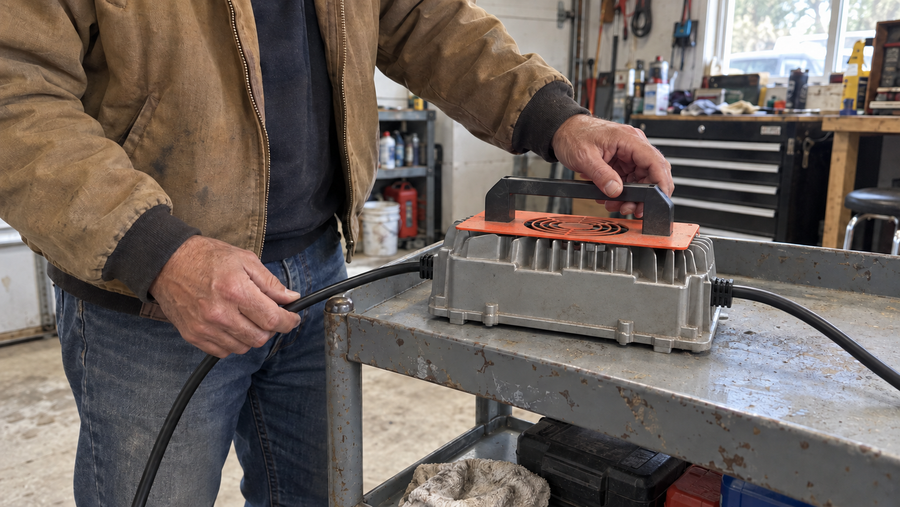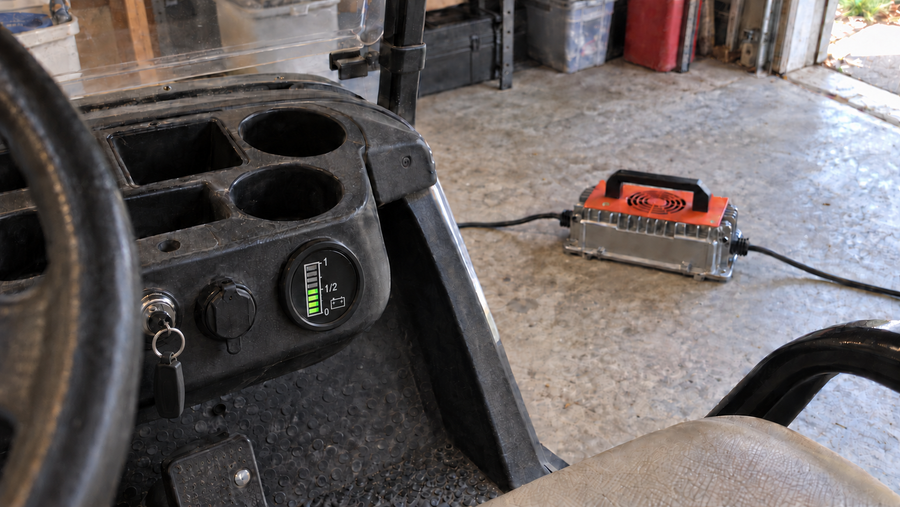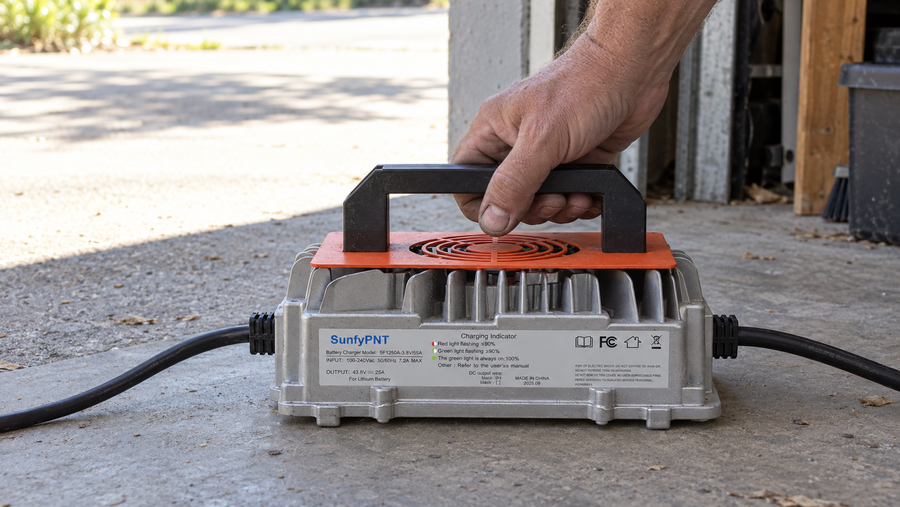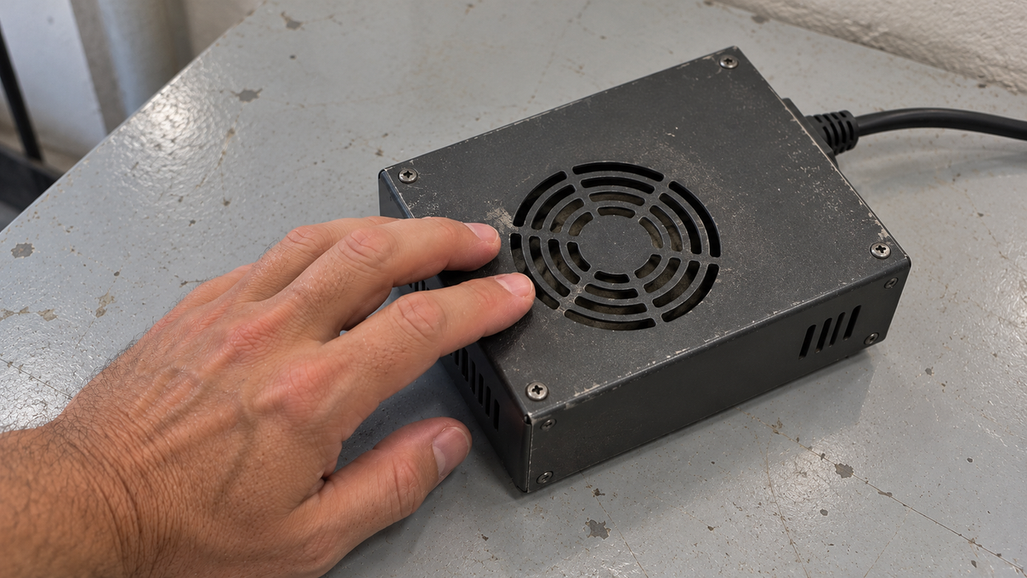

Yes—some warmth from a LiFePO4 charger is normal while it is converting power and charging the battery. Keep it in an open area so heat can escape, then check whether the heat stays steady and the charger operates normally. Stop charging if it becomes painfully hot to touch, smells burned, shows damage, triggers a fault, or repeatedly shuts down; do not resume until the battery, cables, and charger compatibility have been checked.
What normal charger warmth feels like
A working charger may feel warm because its electronics lose some input energy as heat. Warmth by itself does not prove that the charger is failing.
Normal operation should also look stable. The charge indicator should follow its expected pattern, the case should not visibly deform, and the charger should not produce a burning smell or unusual noise. Keep air around the charger so heat can escape.
Use a charger designed for the battery's specified voltage and current, and treat unusual heat or other abnormal behavior as a reason to stop charging and check the setup.
Signs the heat is unsafe

Treat the charger or battery as unsafe to continue using when heat appears with any of these signs:
- You cannot comfortably keep a hand on the case, or the heat is getting rapidly worse.
- You smell melting plastic, smoke, or a sharp electrical odor.
- The charger, cable, plug, or battery shows discoloration, melting, swelling, leaking, cracking, or other damage.
- A fault light appears, charging repeatedly stops, or the charger enters protection mode again and again.
- The battery becomes unusually hot or changes shape.
These signs can have different causes, so they should not be treated as proof of one specific fault. When any warning sign appears, stop charging and do not resume until the battery, connections, and charger compatibility have been checked.
A warm case during steady charging is usually different from rapidly worsening heat accompanied by a smell, damage, fault, or abnormal battery behavior. When those warning signs appear, stop charging rather than trying to judge the exact temperature by touch alone.
How to reduce the risk of charger overheating
Place the charger on a stable surface in an open area, keep its cooling openings clear, and avoid direct sunlight or other heat sources. Confirm that the charger matches the battery's chemistry, voltage, and permitted charging current, and inspect the cables and connectors for damage or loose contact before use.
Charger protection features provide an additional safeguard when abnormal conditions occur. For compatible 36V LiFePO4 systems, the Vipboss 36V 25A lithium battery charger combines a 43.8V, 25A output and an IP65-rated enclosure with listed protection against over-temperature, overload, short circuits, and reverse connection. When paired with a compatible battery and given clear airflow, these features help support stable, safer charging.