
A lithium battery charger may shut off before the battery appears full because it has reached the end of its programmed charge profile, the battery-management system (BMS) has stopped accepting current, a connection has opened, or the charger has entered thermal or fault protection. An incompatible charging voltage, an imbalanced or damaged battery, and a failing charger can cause the same symptom. The indicator state and the moment charging stops are the fastest ways to narrow down which explanation fits.
Confirm that charging has actually stopped
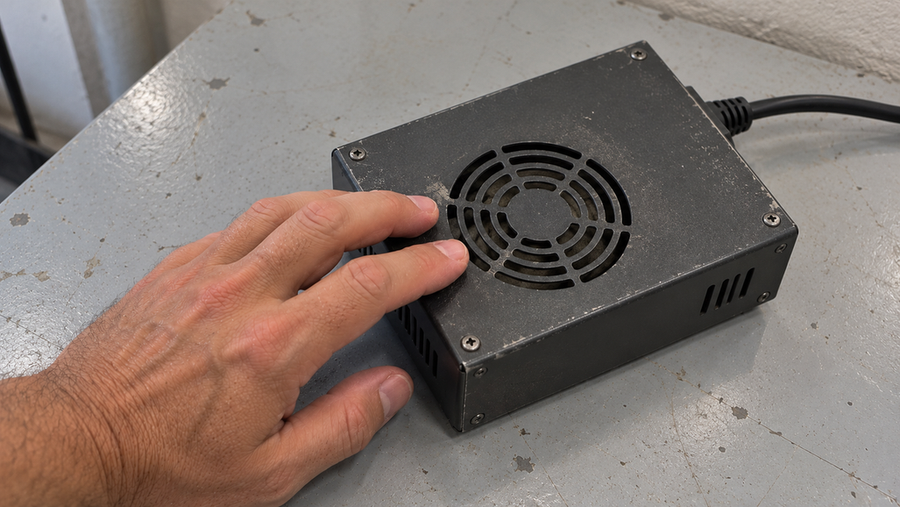
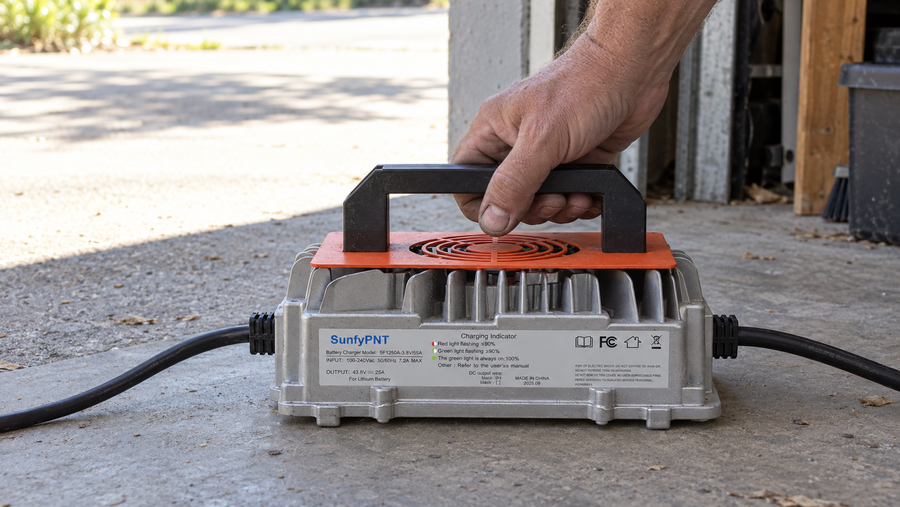
A quiet charger is not necessarily an inactive charger. Some cooling fans slow down or stop as charging current tapers, and an indicator may change when the charger moves from active charging to standby or maintenance behavior. Check the charger's documented LED pattern and, if the instructions provide a safe method, verify the battery state using the battery manufacturer's recommended reading.
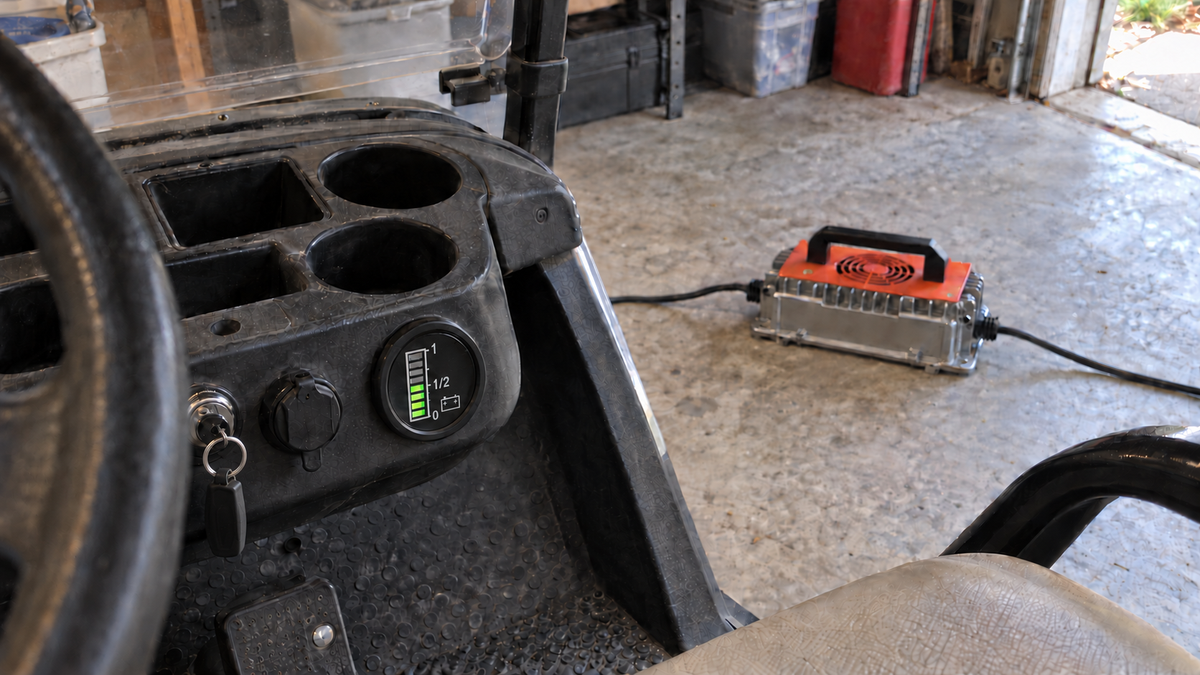
Avoid judging state of charge from one voltage reading alone. Battery voltage changes under load, during charging, and after the battery rests. A dashboard percentage or battery monitor can also be inaccurate if it is not calibrated for the battery. Compare the reading with the battery manufacturer's full-charge criteria before concluding that the charger stopped early.
What can make a lithium charger shut off early
The charger thinks charging is complete. If the charger reaches its programmed cutoff voltage, it may change to a full or standby state even when the battery monitor shows less than 100%. An incorrect charge profile, a low cutoff setting, or an inaccurate state-of-charge display can create this disagreement.
The charger does not match the battery. Lithium chemistries do not all use the same charging voltage. The charger must match the battery chemistry, series configuration, required charging voltage, permitted current, polarity, and connector. A plug that fits is not proof of compatibility.
The BMS has interrupted charging. A lithium battery's BMS may open the charging circuit when one cell reaches its high-voltage limit, the battery temperature is outside its allowed range, or another protected condition occurs. Cell imbalance can therefore make the pack stop accepting charge before its displayed capacity reaches full.
A connection is loose or damaged. A partially seated plug, corroded terminal, broken conductor, or loose battery connection can interrupt current and make the charger switch to standby or fault. Discoloration, melted plastic, cracked insulation, or heat concentrated at one connector indicates a connection problem that must be corrected before reuse.
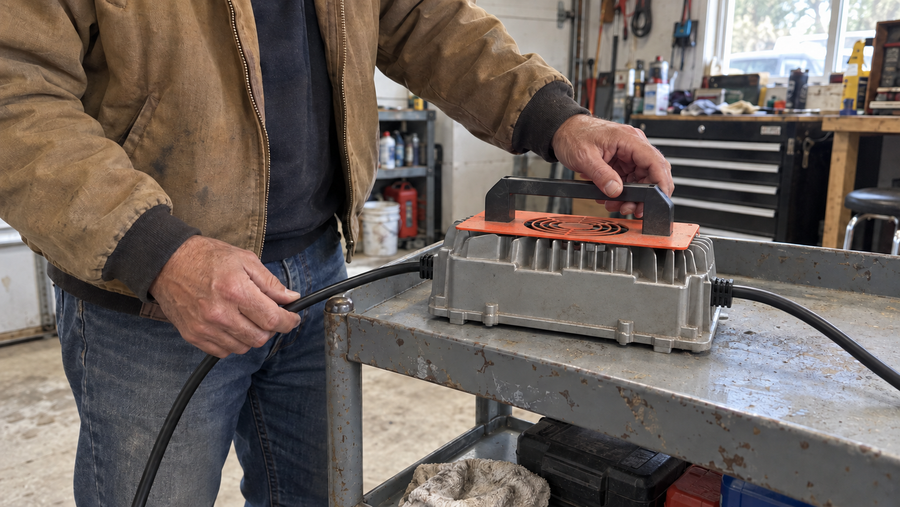
The charger is overheating. Blocked vents, restricted airflow, high ambient temperature, or an internal cooling problem can trigger thermal protection after charging has run for a while. A charger that works again after cooling still needs its placement and recurring heat problem addressed.
The battery or charger has a fault. A damaged cell, BMS problem, faulty temperature sensor, or charger component failure can cause repeated shutdowns even when the specifications and external connections appear correct. Persistent faults require testing rather than repeated resets.
Use the indicator and timing as clues

Match what you observe to the most likely part of the system:
- Full or standby appears immediately: Recheck the connector, battery voltage, charger profile, and state-of-charge reading. The charger may not be detecting the battery correctly or may already be at its programmed cutoff.
- A fault appears immediately: Check the manual for that code, then verify polarity, voltage compatibility, and the output connection. Do not assume every fault light means the same problem.
- Charging stops after running for a while: Check charger and battery temperature, airflow, and whether the same shutdown occurs at a repeatable battery voltage.
- The charger repeatedly starts and stops: Look for an intermittent connector, BMS cycling, unstable temperature condition, or an unresolved protection event.
- The issue happens with only one battery: The battery, its BMS, or its wiring is the main variable and should be tested according to the manufacturer's procedure.
These patterns narrow the diagnosis, but they do not prove which internal component has failed.
Check the system in a safe order
- Record the charger indicator or fault code and when the shutdown occurs.
- Disconnect power and inspect the battery, cables, plugs, and terminals for heat or physical damage.
- Compare the battery chemistry, nominal voltage, charging voltage, allowable current, polarity, and connector with the charger specifications.
- Clear the charger's cooling openings and confirm that the ambient temperature is within its stated range.
- Check the battery manufacturer's instructions for BMS reset conditions, low-temperature charging limits, and the correct way to verify a full charge.
- Reconnect only if the equipment is undamaged, compatible, cool, and the instructions permit another test.
If the existing charger does not match the required profile, replace it with one designed for the battery's chemistry and voltage. For a compatible 36V LiFePO4 system, the Vipboss 36V 25A Lithium Battery Charger provides a specified 43.8V, 25A output, low-voltage activation, status LEDs, and protection against reverse connection, short circuits, over-temperature, and overload.
Frequently asked questions
Can an unbalanced lithium battery stop charging early?
Yes. If one cell reaches its high-voltage limit before the others, the BMS may interrupt charging even though the pack-level display does not show a full charge. Repeated early stops at a similar point call for battery-side diagnosis.
Why does charging stop and then start again?
Cycling can result from an intermittent connector, changing temperature, BMS protection repeatedly opening and closing, or a charger retry function. Record the indicator, battery status, and timing rather than repeatedly reconnecting the system.
Will a larger charger prevent early shutoff?
No. A charger with a higher output can exceed the battery's allowed charge current and will not correct a BMS, cell-balance, temperature, or connection problem. The replacement must match the battery chemistry, voltage, current limit, connector, and polarity.
When does early charger shutoff require professional testing?
Arrange testing when the fault repeats after compatibility, airflow, and external connections have been verified, or when the battery or charger becomes unusually hot or shows damage. Persistent BMS alerts, unstable voltage, and recurring shutdowns should not be managed by repeated resets.