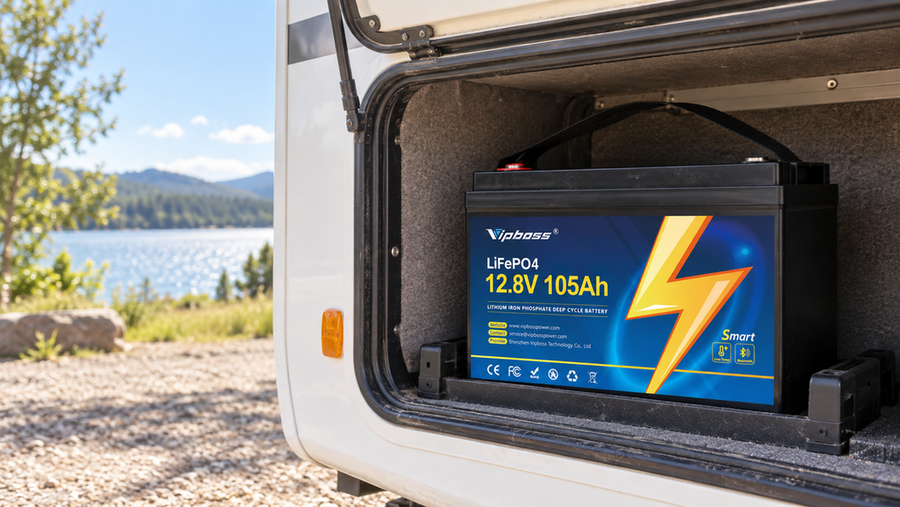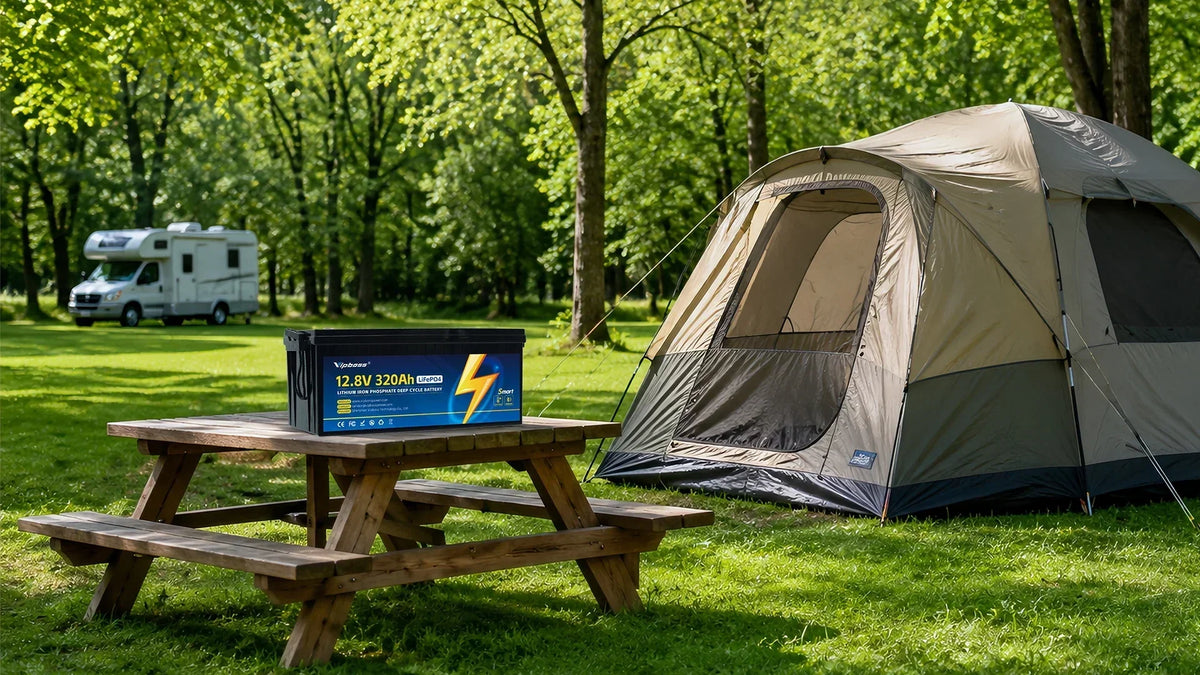

Choose a 12V LiFePO4 battery capacity based on daily power use, your highest-watt device, and how often you can recharge. A small camping setup may only need 100Ah. A longer RV, boat, or backup setup may require 200Ah or more.
How Much Energy Does a 12V LiFePO4 Battery Store
A 12V LiFePO4 battery stores energy based on amp hours and voltage. Most 12V LiFePO4 batteries have a nominal voltage of about 12.8V, so a 100Ah battery stores about 1,280Wh, while a 200Ah battery stores about 2,560Wh. Batteries store and release electricity through chemical reactions, but for daily sizing, you mainly need two numbers: Ah and Wh.
Ah and Wh measure different things. Ah shows current over time. Wh shows total stored energy. Since lights, fridges, fans, pumps, and inverter loads use watts, Wh is the better number for sizing.
| Battery Capacity | Approximate Stored Energy | Common Fit |
|---|---|---|
| 12V 50Ah | 640Wh | Light camping and small DC loads |
| 12V 100Ah | 1,280Wh | Weekend camping and simple RV loads |
| 12V 200Ah | 2,560Wh | Longer trips and marine house power |
| 12V 300Ah | 3,840Wh | Larger solar storage and extended backup |

What Can a 12V LiFePO4 Battery Power
A 12V LiFePO4 battery can run DC devices directly and AC devices through an inverter. Group your loads by daily demand:
- Light use: LED lights, phone chargers, camera batteries, a small fan, and a radio
- Medium use: a portable fridge, roof vent fan, water pump, fish finder, laptop, and some CPAP machines
- Heavy use: a microwave, coffee grinder, power tools, small TV, cooking tools, or several devices running together
Device wattage decides runtime more than device type. A small fridge may use less daily energy than a short burst from a high-watt heating appliance.
How Long Can a 12V LiFePO4 Battery Run Your Devices
A 12V LiFePO4 battery runtime depends on stored Wh, device wattage, and inverter loss. For AC loads, a 90 percent inverter efficiency estimate gives a practical planning number for many small systems.
Use a simple formula:
- Battery Wh = Ah × 12.8V
- Usable AC energy = Battery Wh × 0.90
- Runtime = Usable energy ÷ device watts
Example: a 12V 100Ah battery stores about 1,280Wh. With a 90 percent-efficient inverter, usable AC energy is around 1,150 Wh. A 100W device may run for about 11 hours. A 300W device may run for about 3.8 hours.
| Load | 12V 100Ah Estimate | 12V 200Ah Estimate |
|---|---|---|
| 50W fan or lights | About 23 hours | About 46 hours |
| 100W mixed load | About 11 hours | About 23 hours |
| 300W appliance | About 3.8 hours | About 7.6 hours |
Add a reserve because real loads change during the day. A fridge cycles on and off, while a heater or kettle pulls high power during active use.
What Charging Setup Does a 12V LiFePO4 Battery Need
A 12V LiFePO4 battery needs a charger with a LiFePO4 or LFP charging profile. The key checks are battery type, voltage, charging current, temperature protection, and manual limits.
For daily use, choose a charging setup that meets these points:
- Battery type: Use a charger made for LiFePO4 batteries or one with an LFP mode.
- Voltage match: Use a 12V charger designed for 12V LiFePO4 batteries.
- Charging current: Match the charger output to the battery’s allowed charge current. For example, a 20A charger fills a 100Ah battery more slowly than a 40A charger, while a higher rate works best when the battery manual allows it.
- Temperature protection: Charging below freezing needs low temperature protection or a battery with a built-in low temperature cutoff.
- Manual limits: Follow the battery manual for charge voltage, charge current, and storage recommendations.
For safer daily charging, use a charger that clearly supports 12V LiFePO4 batteries and stops charging within the battery’s rated limits.
When Should You Connect Multiple 12V Batteries
Connect multiple 12V batteries when one battery does not provide enough capacity, current support, or system voltage. Parallel wiring keeps the system at 12V and increases Ah. Series wiring raises voltage for systems designed around 24V, 36V, or 48V. Use the wiring setup supported by your inverter, charger, controller, and battery manual.
Use multiple batteries for:
- More daily energy: Two 100Ah batteries in parallel give about 200Ah at 12V.
- Higher current support: Parallel batteries can share current when the system is wired correctly.
- Future expansion: A larger bank can support added loads, more solar input, or longer backup time.
- Higher voltage systems: Series wiring supports equipment built for higher DC voltage.
Use matched batteries to reduce uneven current flow. Match chemistry, voltage, capacity, age, and state of charge whenever possible. A battery management system helps track voltage, current, and temperature. A single large battery can reduce parallel cables and connection points. A 12V 320Ah battery can fit users who want more energy with simpler wiring.
Pick a 12V LiFePO4 Battery Based on Real Power Use
Pick a 12V LiFePO4 battery with a clear sizing process:
- List every device you plan to run.
- Write down each device wattage.
- Estimate daily use time.
- Multiply watts by hours.
- Add 20 percent to 30 percent extra capacity for weather, battery aging, and longer use days.
- Match battery Wh, BMS discharge current, charger type, and available installation space.

FAQ about 12V LiFePO4 Batteries
Q1: Can a 12V LiFePO4 Battery Replace a Lead-Acid Battery?
Yes, a 12V LiFePO4 battery can often replace a lead-acid deep cycle battery in RV, marine, solar, and backup power setups. Check charger compatibility, terminal layout, battery compartment size, and load current first. Engine starting batteries need a model rated for cranking use.
Q2: Does a Higher Ah Battery Need More Installation Space?
A higher Ah battery usually needs more room, but the exact size depends on case design and cell layout. Measure length, width, height, cable clearance, and access for lifting. Extra capacity only helps when the battery fits safely.
Q3: Can a 12V LiFePO4 Battery Be Mounted on Its Side?
Yes, many 12V LiFePO4 batteries can be mounted on their side when the product manual allows it. Check the case design, terminal direction, cable clearance, and mounting method before installation. The battery should stay secure during travel and leave enough space for safe wiring.
Q4: Can You Charge a 12V LiFePO4 Battery With Solar Panels?
Yes, you can charge a 12V LiFePO4 battery with solar panels. Use a solar charge controller with LiFePO4 or lithium settings, then match the controller output to the battery’s rated charge voltage and current. Charging time depends on panel wattage, sunlight, battery size, and remaining battery power.
Q5: How Should You Store a 12V LiFePO4 Battery When Not in Use?
Store a 12V LiFePO4 battery partly charged, dry, clean, and away from extreme heat. Disconnect heavy loads, check the charge level from time to time, and follow the manual for storage voltage or state of charge. A cool indoor space helps slow battery aging.