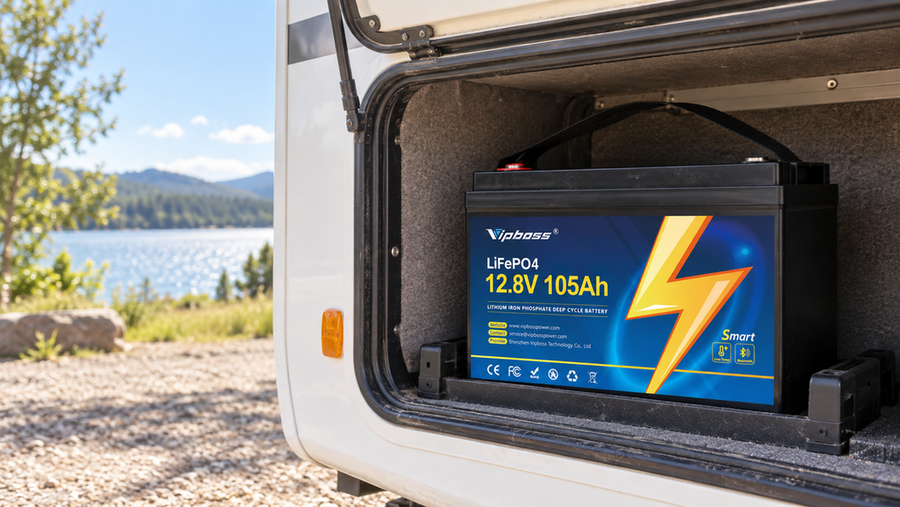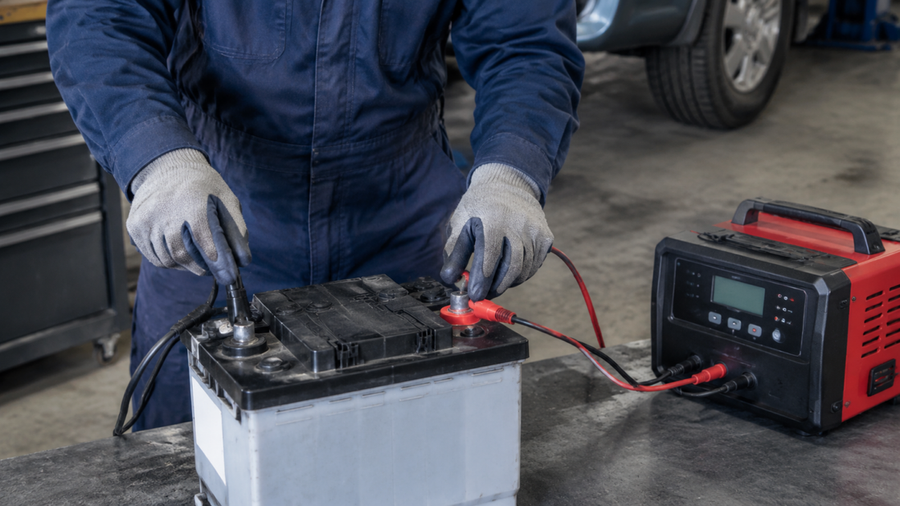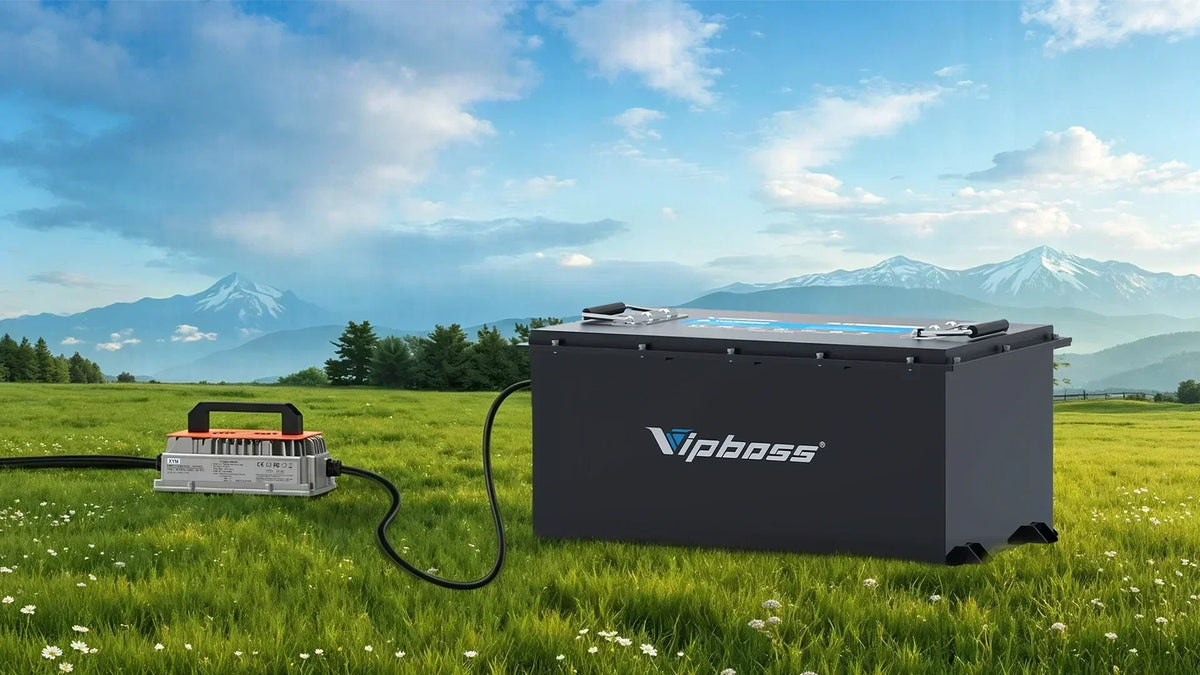

Usually, no. A regular lithium charger should not be your first choice for a LiFePO4 battery. A LiFePO4 battery charger or a smart charger with LFP mode is the safer option.
Why a Regular Lithium Charger May Not Match a LiFePO4 Battery
A regular lithium charger may not match a LiFePO4 battery because "lithium battery charger" is a broad label. It may refer to chargers for lithium-ion, LiPo, NMC, or LiFePO4 batteries. For a LiFePO4 battery, the word "lithium" alone is not enough. The charger should clearly list LiFePO4, LFP, or the correct LiFePO4 charge voltage for your pack.
A common lithium ion battery charger may follow a traditional lithium ion charging voltage of about 4.2V per cell for many lithium-ion chemistries. LiFePO4 cells usually charge to about 3.6V to 3.65V per cell. A charger made for the wrong battery type may push voltage too high, stop too early, or fail to read the battery correctly.
The BMS, or battery management system, can stop charging during overvoltage, overcurrent, reverse polarity, or unsafe charging temperatures. If the charger keeps pushing power after the BMS cuts charging off, the charger is not a good match.

What Makes a LiFePO4 Battery Charger Different
A LiFePO4 battery charger is built for the voltage range and charging behavior of LFP chemistry. Most proper LiFePO4 chargers use a constant-current and constant-voltage charging pattern, often called CC CV charging. The charger sends a steady current at first. After the battery reaches the set voltage, the current drops as the battery gets close to full.
A good LiFePO4 battery charger should have:
- A LiFePO4 or LFP charging mode
- The correct final charge voltage for the battery pack
- Charging current within the battery's rated limit
- No lead-acid equalization stage
- No lead-acid desulfation pulse
- Clear shutoff near full charge or safe maintenance behavior
- The right connector type and polarity
- Temperature protection or support for a low-temperature BMS
High-voltage float charging can place extra stress on many lithium batteries, especially when the charger holds the pack near full voltage for too long. Long-term float charging lithium batteries can shorten battery life and raise safety concerns. For daily use, choose a LiFePO4 battery charger that stops near full charge and limits time at high voltage.
How to Match Charger Voltage to 12V, 24V, 36V, and 48V LiFePO4 Batteries
Use the battery system voltage as a starting point, then check the charger's DC output voltage to confirm whether it matches your LiFePO4 battery pack.
| Battery System | Common Nominal Voltage | Common LiFePO4 Charge Voltage |
|---|---|---|
| 12V LiFePO4 | 12.8V | About 14.2V to 14.6V |
| 24V LiFePO4 | 25.6V | About 28.4V to 29.2V |
| 36V LiFePO4 | 38.4V | About 42.6V to 43.8V |
| 48V LiFePO4 | 51.2V | About 56.8V to 58.4V |
Use the battery label or manual as the final guide because charge voltage can vary slightly between battery models. For golf carts and larger battery banks, match the charger to the full pack voltage. For example, use a 36V LiFePO4 charger for a 36V LiFePO4 pack and a 48V LiFePO4 charger for a 48V LiFePO4 pack.
What Charging Current Is Safe for LiFePO4 Batteries
Safe charging current depends on battery capacity and the battery maker's recommended charge current. Current is measured in amps. For example, a 100Ah battery charged at 20A gets a gentler charge than the same battery charged at 50A.
Moderate current usually creates less heat than fast charging. Fast charging can save time, but the battery, charger, wiring, fuse, connector, and BMS must all support the higher current.
Use a quick check:
- Find the battery capacity in Ah.
- Find the recommended charge current.
- Confirm the charger output current.
- Check the wire and connector ratings.
- Stop charging if the battery or cables feel unusually warm.
A BMS limit is a safety backup, not a charging target. A charger set below the battery's maximum charge current often gives a smoother and more reliable charging routine.

Can You Use an Old Lead-Acid Charger for LiFePO4 Batteries?
An old lead-acid charger is usually a poor long-term match for LiFePO4 batteries. Some lead-acid chargers use float, equalization, repair, or desulfation stages, which can conflict with LFP charging needs.
- Desulfation mode
- Equalization mode
- High-voltage repair mode
- Long float charging at high voltage
- Unknown DC output voltage
- No lithium or LiFePO4 setting
Some lead-acid chargers may give a LiFePO4 battery a partial charge, but they may stop early or hold the wrong voltage after charging. If the charger does not show a lithium or LiFePO4 mode, the exact output voltage, and safe shutoff behavior, use a LiFePO4 battery charger instead.
How to Check If Your Charger Is Safe to Use
Check the charger label and the first charging cycle before connecting it for regular use. Outside appearance does not confirm the DC output or charging profile.
Follow these checks:
- Read the chemistry setting. Look for LiFePO4, LFP, or lithium iron phosphate.
- Read the DC output voltage. Match it to the battery system voltage.
- Read the output current. Keep it within the battery's charge current limit.
- Check polarity. Positive and negative terminals must match.
- Check connector fit. Loose plugs can heat up under load.
- Check temperature limits. Charging below freezing can harm lithium cells without proper low-temperature protection.
- Watch the first full charge. Voltage should rise normally, current should taper near full charge, and the charger should shut off cleanly.
If the charger label is missing or unclear, do not guess. A new battery charger for lithium batteries costs far less than a damaged battery pack.
What Happens If You Use the Wrong Charger
The wrong charger can undercharge, overcharge, heat up, trip the BMS, or shorten LiFePO4 battery life. The result depends on voltage, current, temperature, BMS design, and charging time.
Common problems include:
- Undercharging: The charger stops before the battery reaches a useful charge level.
- Overvoltage: The charger pushes above the safe limit, so the BMS may disconnect.
- No charging: The charger cannot recognize the battery or wake a protected pack.
- Heat: Too much current, poor connectors, or unstable charging can warm cables and terminals.
- Shorter battery life: High-voltage stress and poor shutoff can reduce long-term capacity.
- Cold charging damage: Charging near or below 0°C can stress lithium cells without low-temperature protection.
One short mismatch may not ruin a pack, but repeated use of the wrong charger adds avoidable risk.
Use the Right LiFePO4 Battery Charger to Protect Battery Life
A matched LiFePO4 battery charger helps protect capacity, cycle life, and daily reliability. If you charge LiFePO4 battery packs in a golf cart, RV, boat, home storage system, or off-grid setup, match the charger to the battery chemistry, pack voltage, charging current, connector layout, and temperature limits. The safest choice is a charger that clearly lists LiFePO4 or LFP support.
FAQ about LiFePO4 Battery Charging
Q1: How Long Does It Take to Charge a LiFePO4 Battery?
Charging time depends on battery capacity, charger current, and remaining battery level. A simple estimate is battery Ah divided by charger amps. A 100Ah battery with a 20A charger may take about five hours from low charge, plus extra time near full because current tapers.
Q2: Is It Safe to Leave a LiFePO4 Battery Charger Connected Overnight?
It can be safe if the charger is designed for LiFePO4 and stops or enters a safe maintenance state after a full charge. For overnight charging, use a matched LiFePO4 battery charger with the correct voltage, current, and shutoff behavior.
Q3: Why Is My LiFePO4 Battery Charger Not Charging?
The BMS may have disconnected, the charger voltage may be wrong, polarity may be reversed, temperature may be too low, or the battery may need activation support. Check the battery manual, charger label, connector polarity, and battery temperature before trying again.
Q4: Can I Charge a LiFePO4 Battery With Solar?
Yes, but the solar charge controller should support LiFePO4 or LFP settings. A generic lithium-ion setting may use the wrong voltage. Check the controller's battery type, absorption voltage, float setting, and low-temperature protection before charging.
Q5: What Happens If I Charge a LiFePO4 Battery Below 14.6V?
Charging below 14.6V usually means slower or less complete charging, rather than instant battery damage, as long as the charger stays within a safe voltage range. Many 12V LiFePO4 batteries allow about 14.2V to 14.6V, but the battery manual should be the final guide.