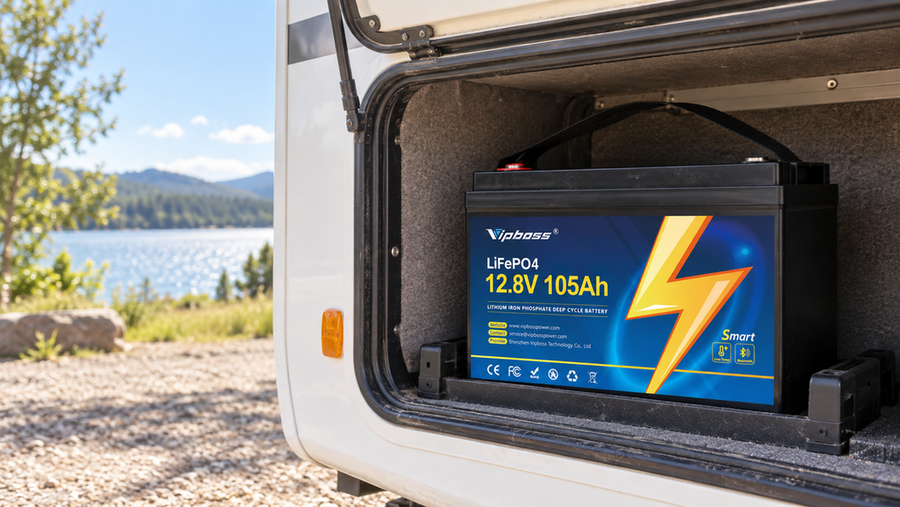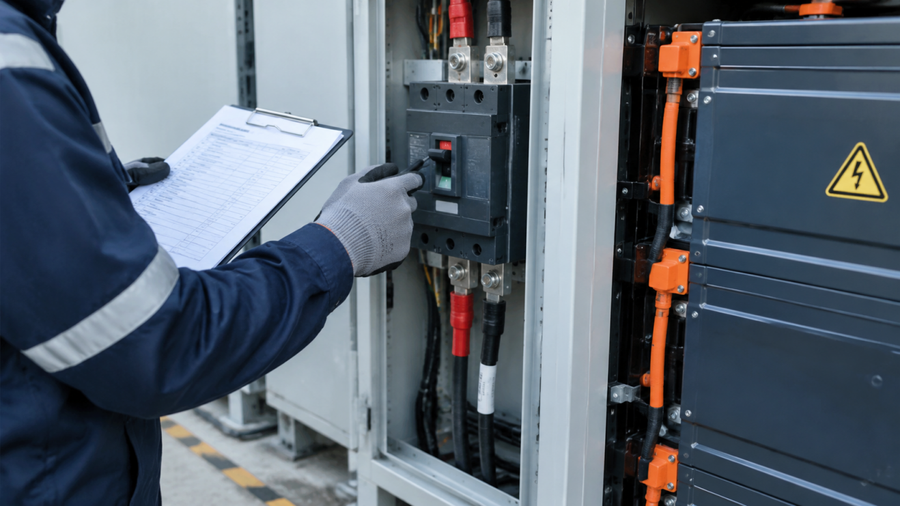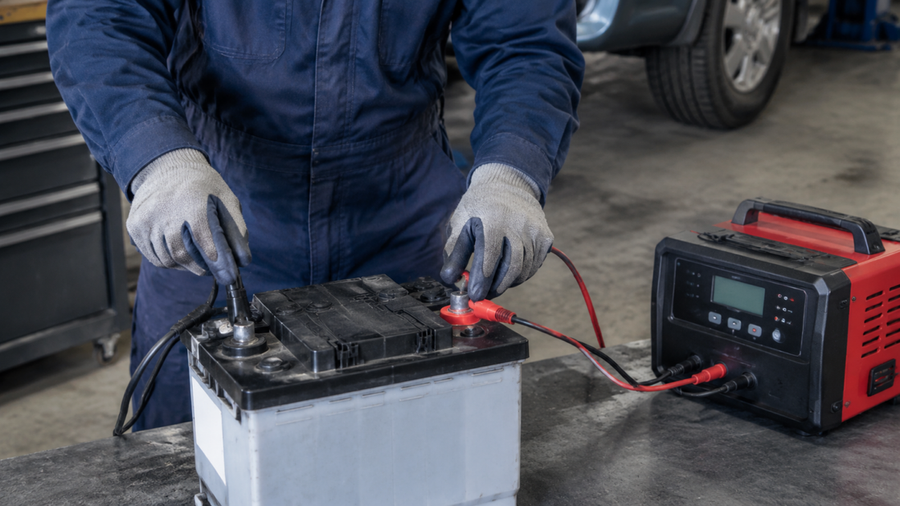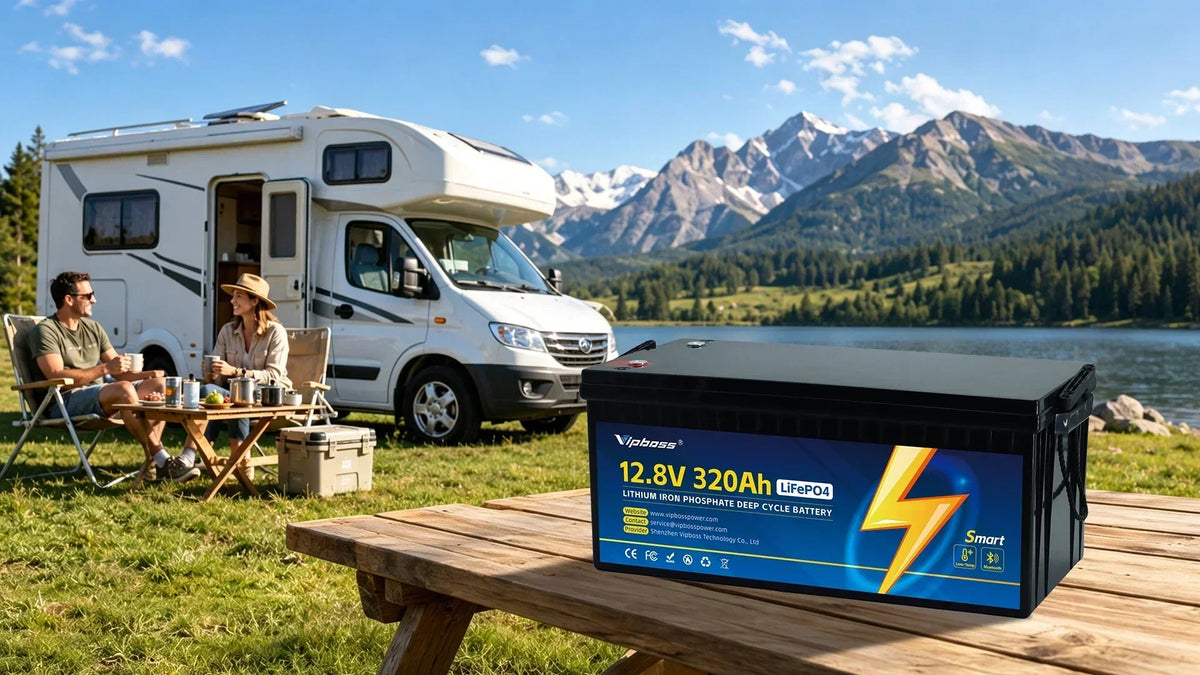

A 12V lithium battery can power RV house circuits, boat electronics, trolling motors, and small off grid systems when shore power or utility service is unavailable. The right battery depends on daily watt hour use, peak current, charger settings, available space, and required backup time.
Why Are 12V Lithium Batteries Popular for Mobile and Off Grid Power Systems?
12V lithium batteries fit many existing 12V systems, deliver steady deep cycle power, and store useful energy in a compact case. RVs, boats, cabins, and solar setups commonly use 12V DC wiring for lights, pumps, fans, refrigerators, and electronics.
Key benefits include:
- Stable DC output: LiFePO4 batteries hold a useful voltage through much of the discharge cycle.
- Several charging sources: A compatible converter, shore charger, solar controller, or DC charger can refill the battery.
- Flexible capacity: One battery may cover light loads, while a larger bank can support longer use between charging sessions.
- Battery monitoring: Smart models can report voltage, current, temperature, and remaining charge.
The 12V lithium battery range includes 105Ah, 210Ah, and 320Ah options. Capacity affects how long the battery can run your equipment, while the BMS current rating affects how much power it can supply at one time. Check both values before comparing each 12V lithium battery pack.

How Are 12V Lithium Batteries Used in RV and Camper Setups?
A 12V lithium battery runs an RV or camper house system, including lights, water pumps, roof fans, control boards, refrigerators, USB outlets, and appliances connected through an inverter.
Powering Everyday DC Loads
Most RV house circuits run on 12V DC. A 12V RV battery can keep those circuits running away from hookups. Shore power, solar panels, or a DC charger can refill the battery during travel or while parked.
Calculate the daily energy use of each device before choosing capacity. A light that uses 10W for five hours needs 50Wh per day. Repeat the same calculation for fans, pumps, refrigeration, and electronics, then add the results.
Running AC Appliances Through an Inverter
An inverter changes DC battery power into AC power for devices such as a laptop charger, television, coffee maker, or microwave. DC to AC power conversion matters because high wattage appliances can pull high current from a 12V battery.
A 1,200W AC load can draw roughly 100 to 110A from a 12V battery after inverter losses. A battery with a 100A BMS may sit close to its continuous current limit. The inverter, cables, fuse, connectors, and BMS must all support the expected current.
BMS current determines whether the battery can run the appliance. Battery capacity determines how long the appliance can run. A 12V 105Ah battery may suit a camper using around 1,000Wh per day, depending on charging conditions. Higher daily use or longer gaps between charging may call for 210Ah or 320Ah.
What Marine Applications Need a 12V Lithium Battery?
A 12V lithium battery can run trolling motors, fish finders, pumps, lighting, radios, and cabin equipment. The battery voltage must match the connected devices, and the BMS must support the highest expected current.
Common marine uses include:
- Trolling motors: Capacity affects run time, while BMS current must cover motor demand.
- Fishing electronics: Sonar, chartplotters, livewell pumps, and deck lights can use a dedicated electronics battery.
- House loads: A 12V boat battery can power cabin lights, pumps, refrigeration, and USB outlets.
For a trolling motor, first match the battery voltage with the motor voltage. Next, compare the motor’s maximum amp draw with the battery’s continuous BMS rating. Estimate run time from the motor’s average current use and the battery’s usable amp hour capacity. The marine battery range can then be compared against those figures.
Marine installations need secure mounting, covered terminals, protected cables, and suitable circuit protection. Follow the battery manual, boat manufacturer requirements, and any rules that apply to your vessel. For boats covered under 33 CFR Part 183 Subpart I, federal requirements address battery restraint and terminal protection, along with conductors and overcurrent protection.

How Can 12V Lithium Batteries Support Off Grid Solar Systems?
A 12V lithium battery stores solar energy during daylight hours and supplies power when solar production drops. Small cabins, sheds, workshops, campsites, and backup systems often use this type of setup.
An off grid solar system usually depends on four connected parts:
- Solar panels: Produce electricity during available sunlight.
- Charge controller: Manages power from the panels and applies the correct LiFePO4 charging settings.
- Off grid battery: Stores energy for evening use, cloudy periods, and times when loads exceed solar output.
- Inverter and DC protection: The inverter supplies AC appliances, while fuses and breakers protect the wiring and equipment.
Daily solar production changes with cloud cover, shade, season, panel angle, and daylight hours. Your solar array needs enough output to replace the energy your loads use each day.
A 12V 210Ah battery stores 2,688Wh of nominal energy. A 12V 320Ah battery stores about 4,096Wh. The larger battery provides more reserve time but also requires more solar input or charging time to refill.
Compare daily energy use with battery capacity and expected solar production. A balanced system should replace most of the energy used during a typical day.
How Do You Match a 12V Lithium Battery Capacity With Your Power Needs?
Match battery capacity with daily energy use in watt hours and peak current. List each device, record its wattage, estimate daily run time, and calculate total energy use.
Daily watt hours = device watts × hours used per day
Battery energy follows another basic formula: watt hours equal volts times amp hours.
The examples below are general references. Actual run time depends on usable capacity, load size, inverter losses, and available charging.
| Battery Capacity | Approximate Nominal Energy | Possible Fit |
|---|---|---|
| 105Ah | 1,344Wh | Light RV loads, electronics, and small solar systems |
| 210Ah | 2,688Wh | Higher daily use, trolling motors, and medium off grid systems |
| 320Ah | 4,096Wh | Longer reserve needs and larger inverter systems |
Use five checks:
- Add daily energy use for all devices.
- Include inverter losses for AC appliances.
- Find the highest combined wattage used at one time.
- Convert peak wattage into battery current.
- Compare required current with the BMS, fuse, cables, and connectors.
Capacity in amp hours controls run time. BMS current controls how much power the battery can deliver at once. Check both figures when matching a battery to an RV, boat, or solar system.
FAQ about 12V Lithium Battery Use, Care, and Sizing
Q1: Can You Connect 12V Lithium Batteries in Series or Parallel?
Yes, when the battery model supports the planned layout. Series wiring raises system voltage, while parallel wiring raises amp hour capacity. Use matching batteries with the same model, age, voltage, capacity, and charge level. Follow the listed connection limit, and use cables, busbars, fuses, and chargers rated for the final energy storage system.
Q2: Does a 12V Lithium Battery Need Ventilation?
Usually, no special gas venting is required for a sealed LiFePO4 battery during normal use. The compartment still needs airflow for heat control and enough space for inspection. Keep the case away from direct heat, standing water, fuel sources, and blocked storage areas. Follow the temperature and clearance limits for the battery model.
Q3: Can a 12V Lithium Battery Be Used as a Starting Battery?
Usually, no. A deep cycle lithium battery provides steady energy over longer periods, while engine starting needs a short burst of very high current. Use a battery with a clear cranking or engine start rating. Check cold cranking output, alternator compatibility, BMS peak current, terminal type, and engine requirements before installation.
Q4: Why Does a 12V Lithium Battery Read More Than 12 Volts?
A 12V label refers to the system class, so the reading changes during charging and use. A LiFePO4 battery often has a 12.8V nominal rating, and charging voltage may rise to around 14.2V to 14.6V. Resting voltage also changes with charge level, temperature, recent charging, and connected loads.
Q5: What Is the 80/20 Rule for Lithium Batteries?
The 80/20 rule is an optional habit that keeps a lithium battery between about 20% and 80% during light daily use. A wider charge range remains available when longer run time is needed. For an RV, boat, or energy storage system, follow the battery’s charging voltage, discharge limits, and storage instructions.