
A hurricane ready 48V battery bank needs a full charge, a tested backup charging source, an accurate SOC reading, and a clear critical load plan. Complete all checks before severe weather limits access to the battery, inverter, solar equipment, or generator.
Which Charging Sources Will Remain Available?
Use utility power to fill the battery before the storm and keep one compatible backup source available for a longer outage.
| Charging Source | Main Use | What to Check |
|---|---|---|
| Utility power | Fully charging the bank | Outlet condition, charger output, cable temperature, and final SOC |
| Solar panels | Recharging during daylight | Panel output, controller settings, breakers, and off grid operation |
| Portable generator | Recharging during cloudy weather | Fuel, outdoor placement, charger compatibility, and cable condition |
| Vehicle or engine source | Limited mobile charging | DC charger compatibility, current limit, and connection type |
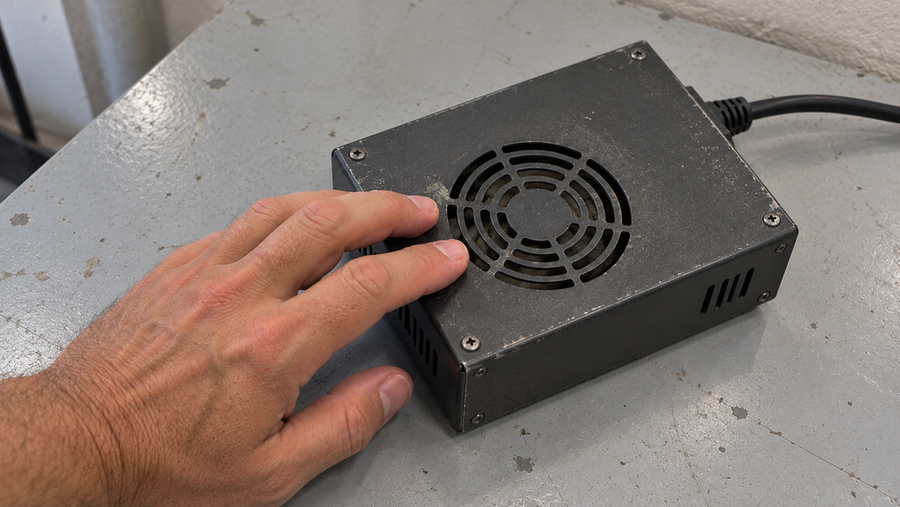
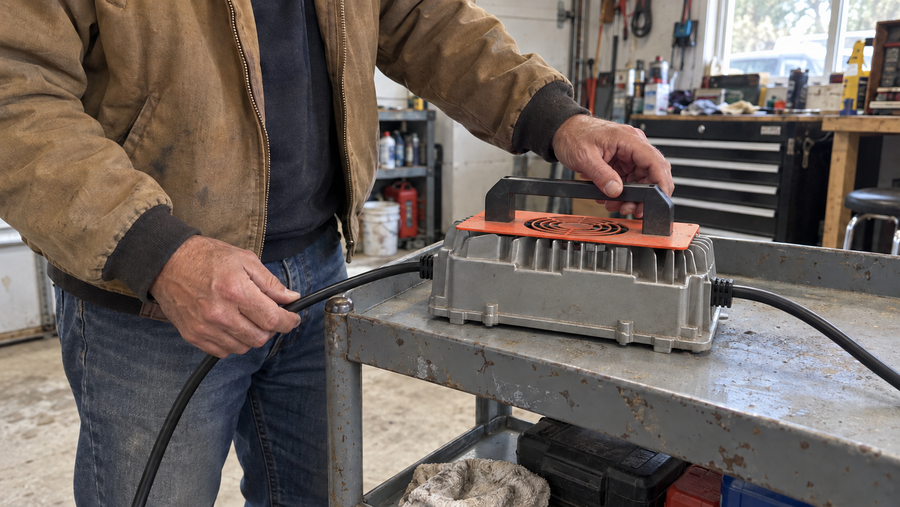
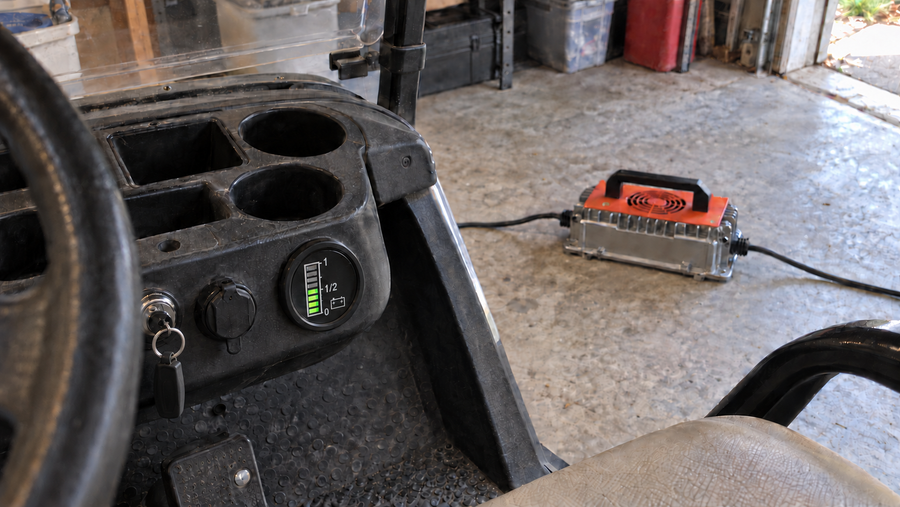
A 48V LiFePO4 battery charger must match the charging voltage, current limit, and connector on the battery pack. General lithium battery charging safety also supports charging equipment designed for the battery chemistry and system voltage.
The 48V 18A LiFePO4 battery charger has a listed output of 58.4V for compatible 48V systems. Check the battery manual, connector, charging current, and maximum charging voltage before connection.
A generator should feed the battery through a compatible AC charger. Keep the generator outdoors and follow portable generator safety steps. Solar charging during an outage also requires equipment that can operate after grid power goes down. Test every source while grid power remains available.

How Much Battery Capacity Is Ready?
Calculate usable capacity before the storm so the runtime plan reflects the energy available for household loads.
- Calculate nominal energy. Calculate nominal voltage × amp hours to get watt hours. A 51.2V 100Ah 48V battery pack stores about 5,120Wh, or 5.12kWh.
- Choose a reserve level. Leave part of the stored energy available for a longer outage, medical needs, or delayed utility repairs.
- Confirm a full charge. Review SOC, pack voltage, temperature, cell balance, and stored BMS alerts after charging ends.
- Check energy with a shunt meter. A current based monitor tracks energy entering and leaving the bank. Voltage gives a less precise SOC estimate because LiFePO4 voltage stays fairly steady across much of its usable range.
- Run a measured load test. Power an appliance with known wattage for a set period. Compare recorded energy use with the change shown on the SOC monitor.
A 300 watt appliance running for four hours uses 1.2kWh before inverter losses. Compare that demand with the battery's usable capacity rather than its full nominal rating. Temperature, battery age, inverter efficiency, startup surges, and reserve settings can also affect runtime.
Are the Battery and Inverter Ready?
The system is ready when equipment remains dry and undamaged, connections stay cool, and protection settings match the battery and inverter limits.
Check each area several days before severe weather:
- Battery cases remain secure and free from dents, swelling, heat marks, leaks, odor, or unusual sounds.
- Terminals meet the torque value listed in the product manual.
- Cable insulation has no cuts, cracks, melted areas, or exposed conductors.
- Cable lugs show no looseness, corrosion, or heat discoloration.
- Fuses and breakers match cable ratings, inverter demand, and battery current limits.
- The main battery disconnect remains easy to reach.
- Inverter settings match the 48V LiFePO4 battery limits.
- The monitor reports normal SOC, voltage, current, and temperature.
- Airflow around the inverter and charger remains clear.
A 48 volt battery bank can hold dangerous electrical energy after connected equipment has been switched off. Physical damage, smoke, swelling, repeated alarms, arcing, strong odor, or unusual heat requires professional inspection before the system returns to service.

Which Loads Need Backup Power?
Give battery power to refrigeration, medical equipment, communication devices, lighting, fans, and water control equipment before lower priority appliances.
| Load | Information to Record | Main Concern |
|---|---|---|
| Refrigerator or freezer | Running watts and startup surge | Food storage |
| Medical equipment | Watts, operating hours, and power quality | Continuous operation |
| Phones and internet equipment | Charger wattage and daily hours | Communication |
| LED lighting | Number of lights and operating hours | Basic visibility |
| Fans | Running watts and startup demand | Indoor comfort |
| Well pump or sump pump | Running watts and surge current | Water supply or drainage |
Calculate daily use for every selected appliance:
Watts × daily operating hours ÷ 1,000 = daily kWh
Add the results and compare the total with usable battery capacity. A 48V 105Ah LiFePO4 battery lists 5.37kWh of nominal energy. Available AC energy will be lower after reserve settings and inverter losses.
Startup surge also matters. A refrigerator, freezer, pump, or compressor may draw far more power for a few seconds than during normal operation. The inverter must support the combined running load and the largest expected surge. Large heating, cooling, and cooking appliances can reduce backup time quickly.
How Should You Test an Outage?
Run a controlled outage test in dry weather and confirm that every critical load operates safely before hurricane conditions arrive.
- Fully charge the 48V battery bank.
- Record starting SOC, voltage, battery temperature, and time.
- Turn off appliances outside the critical load plan.
- Use approved transfer equipment to separate backup circuits from utility power.
- Turn on critical loads one at a time.
- Activate the appliance with the highest startup surge early in the test.
- Monitor inverter output, battery current, voltage, SOC, cable temperature, and alarms.
- Record energy use under a stable load.
- Restore utility power through the normal transfer process.
- Recharge the bank and record recharge time, temperature, and fault codes.
A larger SOC drop than expected can point to higher appliance demand, inverter losses, battery capacity changes, or monitor calibration issues. End the test immediately if smoke, heat, odor, swelling, arcing, unusual noise, or repeated shutdowns appear.
Keep the 48V Battery Bank Ready Throughout Hurricane Season
Keep the battery bank charged, review critical loads, and repeat an outage test after any system change. Store manuals, charger cables, spare fuses, and shutdown steps in a dry, easy to reach place. Record SOC, runtime, recharge time, and system alerts after each test or outage. Regular checks help you spot changes early and keep backup power available when severe weather arrives.
FAQ about Hurricane Season 48V Battery Banks
Q1: Can Floodwater Exposure Make a LiFePO4 Battery Unsafe to Reuse?
Yes. Floodwater can carry salt, sewage, fuel, and conductive debris into terminals, seams, vents, and connectors. A dry exterior cannot confirm safe internal condition. Keep the unit isolated from buildings and vehicles, avoid transport in enclosed spaces, and arrange evaluation through a qualified battery service provider before reuse or disposal.
Q2: Should a 48V Battery Bank Be Disconnected Before an Evacuation?
It depends on the system design and evacuation timing. A listed shutdown procedure may call for opening the battery disconnect after loads, charging sources, and the inverter are turned off. Automatic standby systems may use a different sequence. Follow the equipment manual and leave immediately when local evacuation orders or unsafe conditions require departure.
Q3: How Often Should a Backup Battery Bank Be Checked During Hurricane Season?
Check the bank once a month, again when a named storm could affect the area, and after any long period without cycling. A seasonal check should cover resting SOC, clock and app accuracy, charger response, communication status, and standby power draw. Sudden changes may point to an accessory load or monitor calibration issue.
Q4: Can a 48V Energy Storage System Be Added to an Existing Critical Loads Panel?
Yes, when the panel has enough capacity and the transfer equipment supports the proposed inverter. An electrician must review feeder size, neutral and grounding layout, breaker ratings, backfeed protection, available panel spaces, and local permit rules. Some homes need a new backup subpanel when the existing panel cannot accept the added equipment.
Q5: What Records Should Be Kept for Storm Damage and Warranty Claims?
Keep proof of purchase, serial numbers, installation invoices, pre storm photos, post storm photos, fault screenshots, repair estimates, and written dates for water exposure or power events. Photograph labels before cleaning or moving equipment. Keep damaged parts until the insurer or warranty provider confirms whether inspection, return, or disposal is required.