
Snow is piling against the windows, the kids are eyeing the presents, and every time the lights flicker you wonder if Christmas dinner is about to turn into a cold-cuts picnic by flashlight. Winter storms are a leading trigger for long power outages, yet the homes that stay comfortable are usually the ones that tuned up their backup power before the first snowflake fell. This guide shows you how to judge your blizzard risk and turn your backup battery into a dependable workhorse when the grid takes the night off.
How a Blizzard Can Kill the Lights on Christmas
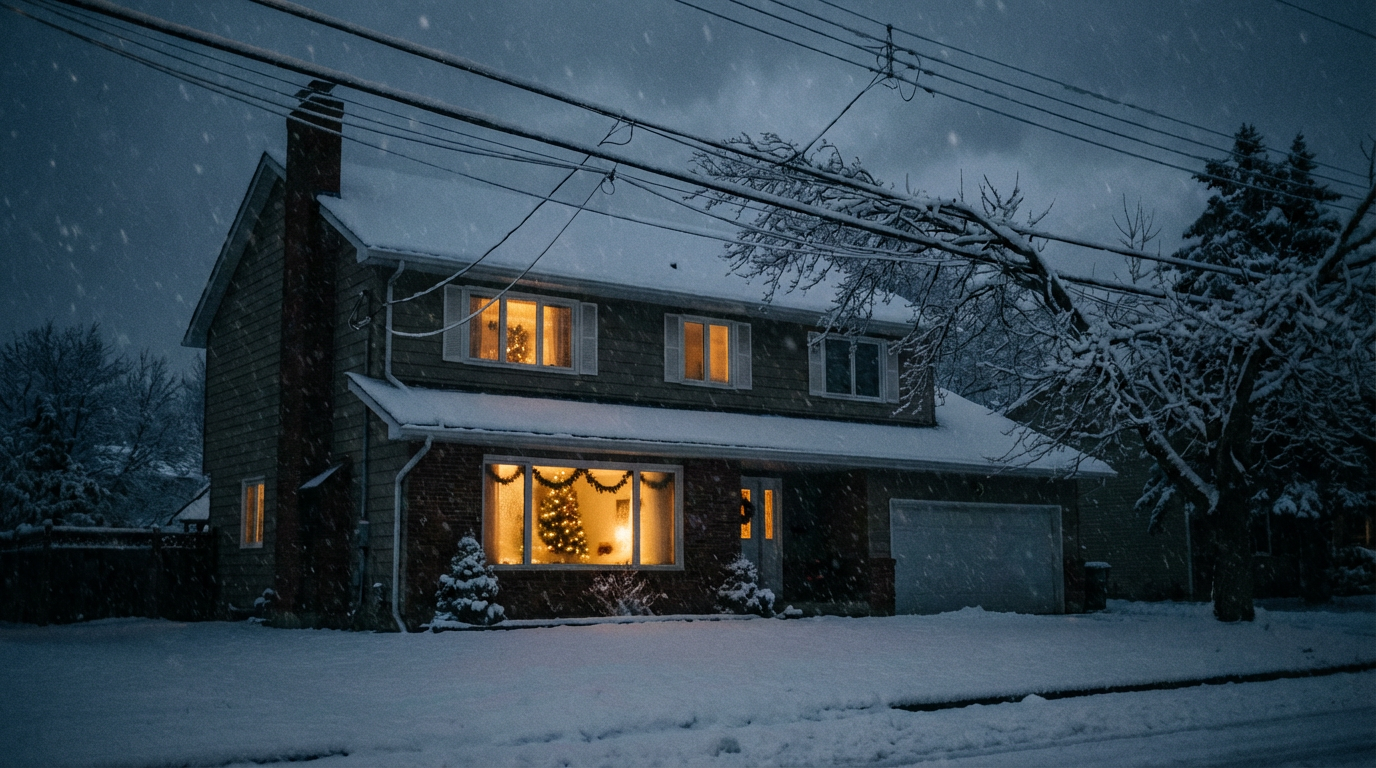
Heavy snow, ice, and wild temperature swings can snap tree limbs, pull down lines, and damage poles in ways that leave neighborhoods dark for days, as winter storm safety groups, utilities, and safety councils repeatedly warn in their preparedness guidance. A strong winter system does not just dim the lights; it can hit electricity, phone service, and heating all at once, which is why winter storms are treated as serious emergencies rather than just weather events.
When you mix extreme cold, freezing rain, sleet, heavy snow, and high winds, the result can be blocked roads, stranded vehicles, and interrupted power and communications that ripple through a community. Public health organizations describe how these winter storms shut down schools, stores, and workplaces and make travel dangerous, especially when ice and snow hide hazards on roads and sidewalks in their winter storm preparedness information. In some Northeast storms, more than 40 inches of snow have fallen in a single event, and those are the kinds of systems that shear branches onto lines and push crews to their limits.
Extended outages have effects far beyond a dark living room. Federal emergency planners note that longer power outages disrupt communications, water systems, transportation, grocery and gas availability, banking, and even safe use of medical devices, which is why they urge people to plan alternative power and supplies ahead of time in their power outage guidance. A Christmas blizzard is not just about comfort; it can test every weak point in your home's power and heating plan at once.
What Fails Inside Your Home When Power Goes Out
When the power drops, the most serious issue in winter is usually loss of heat, because a cold house can lead to frozen pipes, property damage, and health risks in a matter of hours. Electrical and safety educators warn that infants and adults over 65 are especially vulnerable to low indoor temperatures and recommend having backup heat or a safe place to go if the house cannot be kept warm enough during an outage in their winter storm preparedness advice. Even if your heat source is gas or oil, the blower, ignition, or circulation pumps often depend on electricity, so a "gas furnace" is not automatically safe from a blackout.
Food and medicine are the next weak points. National preparedness guidance explains that a refrigerator will usually keep food cold for about 4 hours if unopened and a full freezer can stay cold for around 48 hours. After that, perishable items become unsafe once they rise above 40°F for more than 2 hours, so they recommend discarding anything that crosses that line in their food and outage recommendations. That same threshold matters for certain refrigerated medications, and health authorities advise working with your medical provider on backup plans for medicine and life-supporting medical devices that rely on power and cooling, especially if anyone in your home depends on them during a winter storm in their winter weather risk guidance.
Put simply, a Christmas outage is not just about a cold turkey; it is about keeping people warm, keeping water flowing, protecting food and medicine, and making sure critical electronics and devices stay alive long enough for crews to restore the grid.

Is Your Backup Battery Really Sized for a Blizzard?
Decide Your Critical Loads
The first step is to decide what absolutely must stay on when the power fails. National preparedness agencies suggest making an inventory of everything that relies on electricity, then planning alternative power and batteries for critical items such as refrigerators, medical devices, communication tools, and lighting in their pre-outage planning advice. In a winter storm, that short list usually includes your heating system controls and blower, refrigerator and maybe a small freezer, a few key lights, a router or basic internet connection, and any medically necessary devices like oxygen concentrators or powered pumps.
In many homes, these essential loads add up to far less than the entire panel, which is why a properly designed backup system often focuses on a dedicated "critical loads" subpanel. Utilities and safety educators highlight that keeping a core set of circuits alive and shutting down everything else is what stretches limited backup resources through a multi-day storm in their winter storm power outage guidance. That is exactly how you should think about your battery: not as a way to run everything, but as the steady heartbeat for the few circuits you truly cannot lose.

A Quick Christmas Outage Math Example
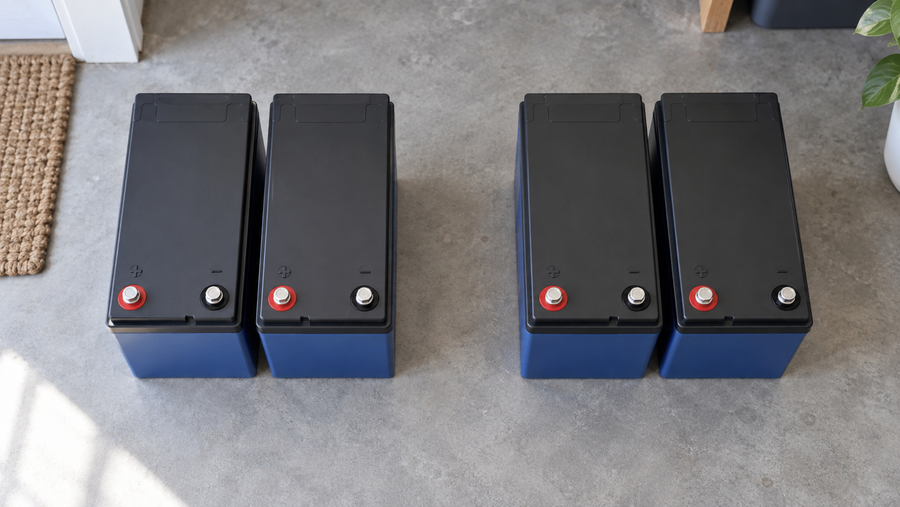
You do not need engineering software to get a feel for whether your battery is sized for a blizzard. Start with the battery's usable capacity in watt-hours, which is often labeled in watt-hours or kilowatt-hours, and estimate how many watts your critical loads draw on average. For example, suppose you have a 3,000 watt-hour battery. Your refrigerator might average 150 watts over time, your gas furnace blower and controls might average 300 watts during heating cycles, and a couple of LED light circuits plus a router might add 100 watts, for roughly 550 watts of continuous draw during active heating.
At that rate, your 3,000 watt-hour battery can theoretically run those essentials for a bit over 5 hours if they were on full time, but in real life the furnace cycles and the fridge does not run nonstop, so your effective runtime might stretch closer to 8 to 12 hours. That is why planners dealing with winter outages often combine batteries with conservation strategies such as closing off rooms and reducing thermostat set points to reduce how often the heat cycles, as emphasized in winter storm safety recommendations. If you want to ride out a 24-hour Christmas outage, either your usable battery capacity needs to be larger, your steady load needs to be smaller, or both.
Test Run Before the Storm
The most honest way to know what your battery can do is a controlled test when the weather is calm. Emergency planning resources encourage people to practice their power outage plan in advance so they can adjust before a real storm, because extended outages are rare but disruptive, and preparation is the best way to handle them, as outlined in their storm preparation checklists. Pick a mild weekend, move your critical loads onto the battery or backup panel, and intentionally run a "pseudo-outage" for several hours while you watch how the battery discharges.
Track how long it takes to drop from a full charge to half, and pay attention to which appliances or habits drain it fastest. If you see your state of charge plunging every time the oven or a space heater kicks on, you know those loads belong on the "grid-only" side during a real blizzard. Businesses that depend on standby power are advised to routinely test their generators, including weekly and annual checks, for the same reason: you do not want to discover a weak battery or miswired load on Christmas Eve when the wind is already howling, as highlighted in guidance on handling power outages in cold weather.
Getting Your Battery System Blizzard-Ready
Charge, Inspect, and Update
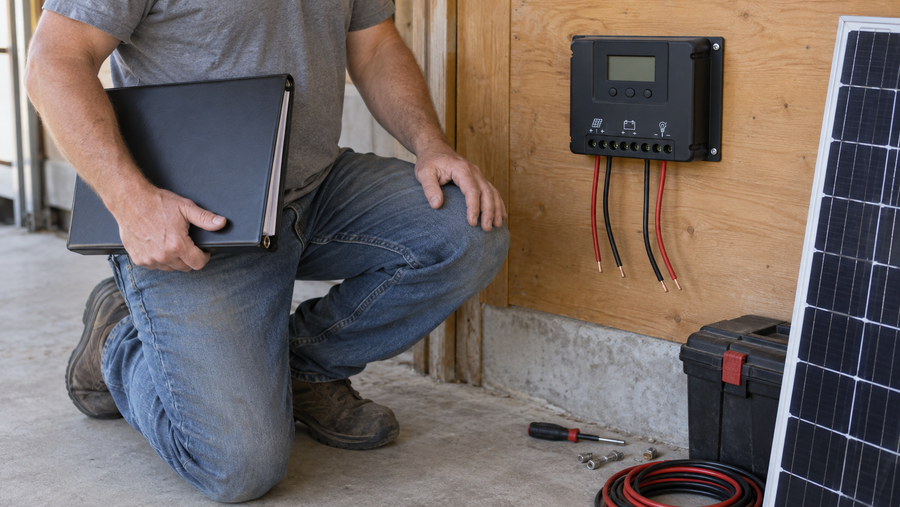
When a Christmas storm shows up in the forecast, your battery should go into "storm mode." Official winter preparedness guidance from emergency management teams stresses the importance of charging essential electronics and power banks fully before a storm, checking flashlights and radios, and staging supplies where they are easy to reach in their winter storm safety checklists. Apply that same logic to your home battery: top it off, confirm the monitoring app works, and visually inspect cables, breakers, and any exposed connections for damage or corrosion.
If your system can take a firmware update or has a "storm watch" feature that precharges the battery when bad weather is forecast, enable it while the grid is still stable. Winter guidance for generators specifically recommends starting and test-running backup units before storms and verifying fuel and ventilation, because once roads are blocked and lines are down, it may not be possible to fix issues quickly, as described in cold-weather outage planning advice on handling power interruptions. A battery is less maintenance-intensive than a generator, but you still want to catch any warnings or faults while you have full grid support.
Reduce the Load So Your Battery Lasts Longer
Every watt you do not have to supply buys you more hours of comfort. Winter storm safety groups advise staying inside, wearing layered clothing, closing off unused rooms, stuffing towels or rugs at the bottom of doors, and covering windows at night to conserve heat during outages in their winter storm preparedness guidance. Those same steps lower your heating demand, which means your battery spends more time idling and less time pushing current into the furnace blower.
Before a storm, weatherization steps such as updating insulation, sealing drafts with caulk and weatherstripping, and trimming trees away from your home and lines not only reduce heat loss but also lower outage risk, as outlined in winter storm preparedness recommendations. The evening before a blizzard, set your refrigerator and freezer to colder settings, move perishable items together to keep them colder longer, and plan to open doors as rarely as possible. National preparedness guidance stresses that keeping doors closed is key to maintaining safe temperatures during outages, and they advise throwing out perishable food that has been above 40°F for more than 2 hours once power returns in their power outage food safety guidance.
Where Batteries Fit Next to Generators
Many homes rely on a mix of battery storage and generators. Each has its place during a winter storm.
Backup option |
Key strengths |
Key limitations |
Lithium backup battery |
Silent, zero exhaust, instant switchover, ideal for critical indoor loads |
Runtime limited by stored energy; may need help for multi-day outages |
Portable gas generator |
Can run for days with fuel; handles high-power loads like electric ranges |
Requires fuel storage, regular testing, and strict outdoor-only placement |
Standby generator system |
Automatic operation, long runtimes, sized for whole-house support |
Higher upfront cost, needs professional installation and ongoing service |
Emergency managers emphasize that any generator must be used outdoors and away from windows, doors, and vents to avoid deadly carbon monoxide, and recommend installing carbon monoxide detectors with battery backup on every level of the home in their power outage safety guidance. In practice, a well-designed system often uses the battery for fast, clean switchover and everyday small outages, while a correctly sized generator stands ready for longer blizzards when fuel is available and safe ventilation is guaranteed.
Safety Rules When Snow, Batteries, and Generators Mix
Safety professionals repeatedly warn that you should never use charcoal grills, gas ovens, or unvented fuel heaters to warm your home because they can release carbon monoxide and start fires, and they advise following all instructions and ventilation requirements for any alternative heat source, with a multipurpose fire extinguisher nearby, in their winter storm preparedness advice. The same principle applies to generators: run them only outdoors, on dry ground, at least 20 feet from doors, windows, and attached garages, with exhaust pointed away from your home, as explained in winter weather risk guidance.
You should assume any downed or hanging power line is energized, stay away, and call your utility rather than trying to clear branches or snow yourself. Safety organizations stress that lines can be hidden under snow and ice and remain dangerous even if they are not sparking, and they urge using flashlights instead of candles during outages to reduce fire risk in their winter storm preparedness recommendations. Keep extension cords for generators and batteries out of puddles and snow, use only heavy-duty cords rated for outdoor use, and avoid overloading outlets that might later see a sudden surge when the grid returns.
Staying warm without overtaxing your backup power is partly about clothing and habits. Federal emergency guidance explains that in extreme cold, you should dress in layers, cover exposed skin, limit time outdoors, and watch for signs of frostbite and hypothermia, especially shivering, confusion, and slurred speech, in their winter weather risk guidance. Combined with simple indoor conservation steps such as closing doors to unused rooms and covering windows at night, as recommended in winter storm preparedness advice, those habits reduce how hard your heating system and battery have to work.
A Simple Christmas Blizzard Playbook
When forecasts hint at a Christmas blizzard, treat the day before as your setup window. Charge your backup battery and all phones fully, top off vehicle fuel tanks, run a short test on any generator you own, and stage flashlights, a radio, and warm clothing where you can reach them in the dark. Winter storm readiness checklists from emergency management teams highlight that storing nonperishable food, drinking water, prescription medications, baby items, and pet food ahead of storms is one of the most effective ways to stay safe and reduce stress when roads and power lines are compromised, as described in their winter storm safety guidance.
On storm day, start with a warmer house than usual so the structure itself acts as a heat reservoir, then switch nonessential loads off or unplug them so they will not drain your battery or surge when power returns. Preparedness guidance explains that disconnecting appliances and electronics helps protect them from voltage spikes when the grid comes back and that leaving one light on is a simple way to tell when power is restored, as laid out in their power outage safety advice. If the lights begin to flicker, move everyone into the warmest core rooms you have chosen, close interior doors, and set expectations about which outlets and appliances will stay live if the backup system takes over.
If the power fails, move quickly and calmly to your backup plan. Check that your battery has taken the load or that your generator has started if you use one. Keep the refrigerator and freezer doors closed, use only the lighting you truly need, and rotate device charging so you do not waste energy on idle electronics. As the hours pass, periodically check battery state of charge and indoor temperature, and be ready with a trigger point: a temperature or battery level at which you will head to a friend's home, a relative's place, or a community warming center if it is safe to travel. Emergency planners encourage contacting local officials to identify powered warming sites when home heat cannot be maintained during long outages in their winter weather risk advice.
Winter Backup Battery FAQs
Will my backup battery still work when it is very cold?
Most modern lithium batteries will run in cold weather, but they may deliver less runtime and, in some cases, have restrictions on charging below certain temperatures to protect the cells. The practical solution is to place home batteries in conditioned or at least semi-conditioned spaces whenever possible and to monitor their performance in cold snaps during the year, not just during storms. If your battery enclosure is in an unheated garage or outside, factor in reduced effective capacity for blizzard planning and lean harder on conservation steps to stretch each charge. Cold temperatures also affect solar panel output—the relationship between panel temperature and power production means winter conditions can actually improve efficiency, but shorter daylight hours remain the bigger constraint.
How often should I test my backup battery system?
A good rhythm is to perform a brief functional test every month or two and a longer simulated outage at least once a year, plus an extra run before winter storm season. This mirrors the way businesses are advised to maintain standby generators with scheduled weekly, monthly, and annual checks so they will perform in an emergency, as described in guidance on handling power outages in cold weather. Use these tests to verify that automatic switchover works, that your critical loads behave as expected, and that you understand how quickly the battery discharges under realistic conditions.
Is a battery alone enough for a Christmas blizzard, or do I still need a generator?
For short outages of a few hours, a properly sized home battery that covers heating controls, refrigeration, lighting, and key electronics is often all you need, especially if you prepare the house and reduce demand. However, national preparedness experts point out that extended outages can disrupt community services and last beyond a day, and they urge people to consider multiple backup options for power and heat in their power outage preparedness guidance. In areas where multi-day blizzards are common or where someone relies on powered medical equipment, pairing a battery with a safe, correctly installed generator or having a clear plan to relocate to a powered location gives you a wider safety margin.
Power Up Before the Snow Flies
A blizzard does not care that it is Christmas; it will expose every weakness in your power plan the moment the first branch hits a line. If you define your critical loads, confirm your battery's true runtime, tighten up your home's winter efficiency, and practice a simple outage playbook, you turn that backup system from a question mark into a reliable partner. Do the work now, while the grid is steady, and when the snow starts to roar you can focus on the celebration, not the circuit breakers.