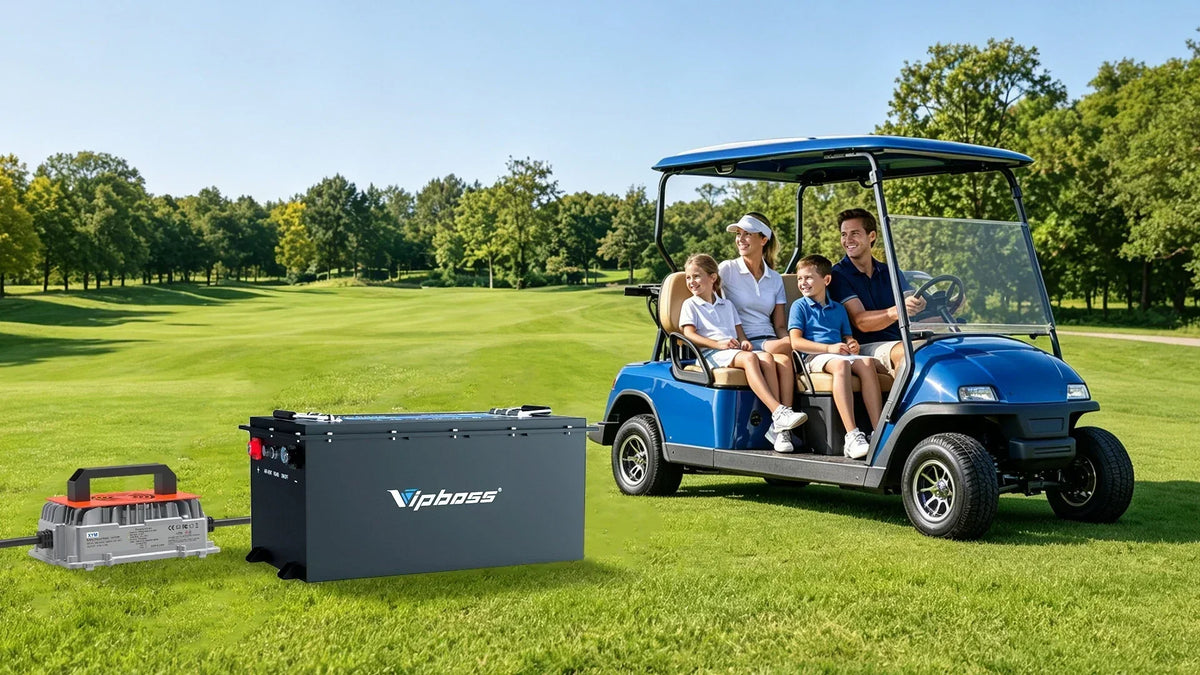

A 48 volt battery charger must match the battery chemistry, full charge voltage, current limit, connector, and BMS. A correct match supports steady charging for a golf cart or energy storage system.
Why Does a 48V Lithium Battery Need the Right Charger?
A 48V lithium battery needs a charger built for its chemistry, cell count, and full charge voltage.
Many LiFePO4 batteries sold as 48V contain 16 cells and have a nominal voltage of 51.2V. Nominal voltage describes the battery during normal use. Charging voltage is higher because the pack needs extra voltage to reach full capacity. The 48V 105Ah lithium battery specifications list a 51.2V nominal voltage and a charging range of 56.8V to 58.4V.
The charger controls the voltage and current entering the pack. The BMS monitors cell voltage, pack current, temperature, and protection conditions. Common battery management system functions include charge control, status monitoring, and protection against overcharge, over-discharge, overcurrent, short circuit, and high/low temperature conditions.
The BMS acts as a final protection layer. A charger that stops below the required voltage can leave part of the capacity unused. A charger with a higher voltage limit can trigger protection and interrupt charging.

How Do You Choose a Charger for a 48V Lithium Battery?
Choose a 48 volt battery charger based on chemistry, output voltage, charging current, connector, polarity, and application.
| What to Check | What to Confirm |
|---|---|
| Battery chemistry | The charger profile matches LiFePO4 or another battery type |
| Output voltage | The final voltage matches the battery charging range |
| Charging current | The output stays within the battery’s recommended limit |
| Connector and polarity | The plug fits and the positive and negative connections match |
| Application | The charger suits the golf cart or energy storage system |
Charging current affects how long the battery takes to charge. Divide battery capacity in amp hours by charger current in amps for a basic estimate. For example, a 105Ah battery paired with an 18A charger takes about 5.8 hours in ideal conditions. Temperature, remaining charge, power losses, and current taper near full capacity can extend the actual time.
A 48V 18A lithium charger supplies 58.4V and 18A for compatible LiFePO4 batteries. Compare both values with the charging range and current limit listed for your battery.
For a golf cart, also check that the plug matches the charging port. A lithium conversion may use a different port or adapter from the original battery setup.
Can a 48V Battery Charger Work With Different Lithium Battery Types?
A 48V charger can work with different batteries only when chemistry, cell count, and full charge voltage match.
The 48V label describes a general voltage class. Exact charging voltage comes from battery chemistry and the number of cells connected in series.
| Battery Type | Typical Nominal Cell Voltage | Charging Requirement |
|---|---|---|
| LiFePO4 | About 3.2V | LiFePO4 profile for the pack cell count |
| NMC | About 3.6V to 3.7V | NMC profile with the correct final voltage |
| LTO | About 2.4V | LTO profile with a lower voltage per cell |
| Smart battery pack | Varies | Correct voltage plus any required data connection |
A 48V LiFePO4 battery charger for a 16 cell pack may have a final output of 58.4V. An NMC or LTO pack carrying the same 48V label can require another voltage limit.
A matching plug confirms physical fit only. Compare the charging voltage on both labels. Some smart packs also need communication between the charger and BMS before current can flow.
Which Charging Features Support Battery Life?
Useful charger features control voltage, current, temperature, electrical faults, status, and heat.
Battery protection features
- Correct charging profile: Voltage targets should match the battery chemistry and cell count.
- Current control: Output should stay within the battery limit and taper near full capacity.
- Temperature protection: Charging can pause outside the approved temperature range.
- Reverse polarity protection: Output can stop after crossed connections are detected.
- Short circuit protection: The charger can shut down after an electrical fault.
- Overload protection: Output can be limited when demand exceeds the charger rating.
Daily use features
- Clear status lights: Indicators show charging progress and fault conditions.
- Cooling fan or heat sink: Airflow moves heat away from internal parts.
- Low voltage activation: A compatible charger may wake a battery after low voltage protection.
- Suitable cable length: The cable should reach the port without tension.
- Compatible plug: The connector should fit firmly without looseness or exposed contacts.
Cold charging deserves extra care. LiFePO4 aging research found that low temperature cycling follows a different degradation pattern from normal temperature use. Follow the charging temperature listed for your battery.
For outdoor parking areas, check the charger enclosure rating and keep every connector dry and above standing water.

How Should You Use and Maintain a 48V Lithium Battery Charger?
Use the charger in a dry area with open airflow and inspect the hardware before every charging session.
- Check the equipment settings. Turn off the golf cart before charging. For an energy storage system, follow its instructions for inverter and load settings.
- Inspect the charging area. Place the charger on a firm surface with open space around every vent.
- Check the hardware. Look for damaged insulation, loose contacts, bent pins, discoloration, blocked vents, or moisture.
- Follow the listed connection order. Connect the battery and AC power in the sequence shown in the charger manual, then confirm the expected status light.
- Keep cables clear. Route cords away from wheels, sharp edges, hot parts, water, and foot traffic.
- Use a suitable extension cord. Its current rating and wire size should support the charger input.
- Watch for unusual signs. Stop charging after persistent fault lights, strong odors, unusual sounds, plug discoloration, or excessive heat.
- Follow the listed disconnection order. Remove power and the battery connection in the sequence shown in the manual.
Clean the housing with a dry cloth after disconnecting AC power. Keep intake and exhaust vents clear. Store the charger away from direct sun, high heat, and moisture. Coil the cable loosely to protect internal conductors near the plug.
Replace damaged plugs and cables with parts that match the charger voltage, current rating, and connector type. A loose connection can create heat and unstable charging.
Choose a Charger That Fits Your Battery
Compare the battery label with the charger voltage, current, chemistry, connector, and polarity before placing an order. Confirm that the charging profile matches the battery manual and that the cable and port can handle the rated current. Complete these checks before purchase to support smooth, reliable charging.
FAQs
Q1: Why Is My 48V Lithium Battery Charger Not Charging?
Check the outlet, breaker, fuse, charging plug, and connector seating. A charger that powers on but stays in standby may have an incomplete battery connection or damaged cable.
Q2: Why Does a 48V Battery Charger Get Hot During Charging?
Mild warmth is common during AC to DC conversion. Stop charging if the case becomes too hot to touch comfortably, the plug changes color, or the cable softens near the connector. These signs may point to poor airflow, loose contact, or excess resistance.
Q3: What Do the Indicator Lights on a 48V Battery Charger Mean?
Lights often show standby, active charging, full charge, or a fault. Colors and flash patterns vary across models, so check the charger label or manual for the exact code.
Q4: How Long Does a 48V Lithium Battery Last on a Golf Cart?
A compatible 105Ah 48V lithium battery may provide up to 50 miles per charge under favorable conditions. Hills, passenger weight, speed, tire pressure, motor output, and accessories affect actual range.
Q5: Can a 48V Charger Wake Up an Energy Storage Battery in BMS Protection Mode?
Yes, when the 48V battery charger has low voltage activation and the battery permits recovery charging. Repeated protection events can point to a wiring fault, heavy load, low temperature, or cell imbalance.