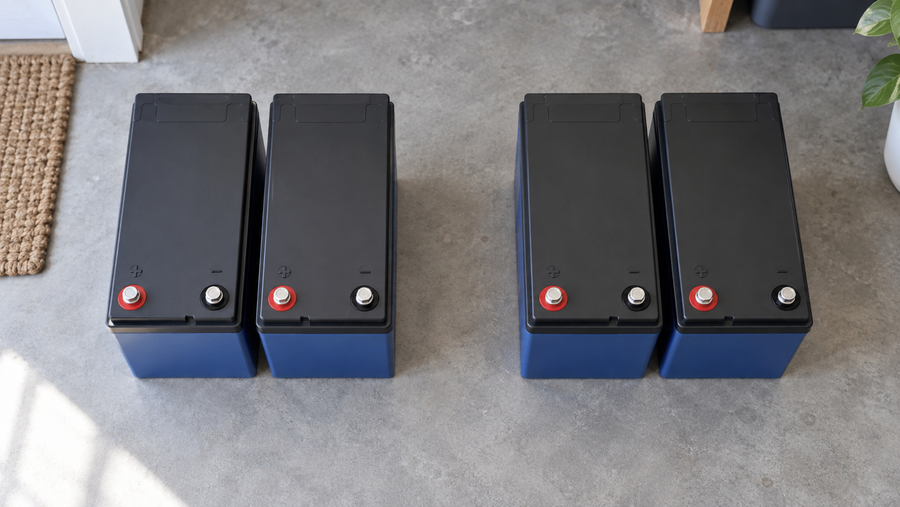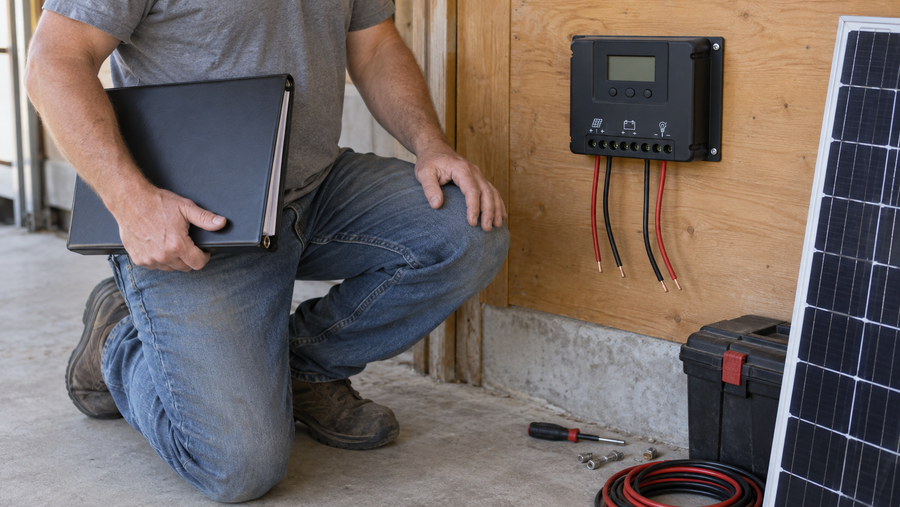

This guide helps you tell whether slow hill climbs come from battery voltage sag, wiring issues, or a worn motor, and what to fix first for stronger uphill performance.
Most hill-climbing problems start with the battery pack and wiring, not the motor itself. Voltage sag under load can starve even a healthy motor, while a truly tired or undersized motor usually shows up only after the electrical supply has been proven solid.
You know the feeling: the cart is fine on the flats, but halfway up that familiar hill it bogs down, everyone leans forward instinctively, and a newer lithium cart glides right past. In real-world upgrades, the fastest turnarounds usually come from fixing what feeds the motor—battery pack, connections, and system voltage—long before swapping driveline hardware. Here is how to tell whether you are dealing with an aging motor or simple voltage sag, and what to do to get your cart pulling hard uphill again.
Why Hills Expose the Weakest Part of Your System
Modern golf cart performance rests on four pillars: battery condition, motor and controller, tires, and basic maintenance. Hills magnify whatever is weakest because they demand far more current than flat cruising. When you point the cart uphill, the motor suddenly asks the pack for a surge of current; if the pack cannot maintain voltage under that load, speed drops even if the motor is mechanically sound. Owners often blame “old motors” because the symptom is sluggish torque, but the underlying cause is frequently that the motor is being starved of voltage rather than worn out.
This is where voltage sag comes in. In power systems, voltage sags are temporary drops below the nominal supply level when a heavy load kicks in, and they can stall motors, upset electronics, and shorten component life. Your golf cart is no different: a steep hill is a sudden heavy load, and if the pack voltage falls too far below its rated value during that climb, the motor simply cannot produce the torque you expect, no matter how new it is.
Voltage Sag: The Hidden Hill Killer
For a 48-volt cart, the pack is designed to live in a fairly tight voltage window, and dropping below that window is considered over-discharging. Guidance on minimum voltage requirements for 48V golf carts pegs a typical lead-acid pack’s minimum safe level around 42 volts, with lithium packs protected by a battery management system in roughly the 40–44 volt range. Once you are routinely pulling the pack below those thresholds on hills, you are outside the safe operating zone and will feel it as slow climbs, stalling, and rapidly shrinking range.
What matters for hill climbing is not just resting voltage, but how far the pack sags under load and how quickly it pops back once the load disappears. Battery guides that chart state of charge for 6-, 8-, and 12-volt batteries show that a healthy lead-acid unit sits near its nominal voltage at rest and only dips modestly when current rises. As internal resistance increases with age, that same load yanks the voltage down much harder and for longer. If your cart drops to the low 40-volt range or below on a climb and then rebounds several volts as soon as you back off the pedal, the pack is behaving like a tired deep-cycle bank, not like a strong power source.

Consistent sag is not always the batteries alone. Deep-cycle packs in golf carts are asked to deliver high discharge rates and tolerate repeated deep cycling, which means any weakness in the current path will show up on hills. Corroded lugs, loose or undersized cables, and uneven loading of only part of the pack all raise resistance and sharpen sag, so a cart can “test fine” at rest with a voltmeter yet fall flat the moment the hill demands real current.
A Simple Driveway Test for Voltage Sag
A quick test, adapted from real shop diagnostics, can clarify whether sag is your primary problem. Battery and performance articles on 48V systems emphasize watching pack voltage under load, not just at rest, and you can do a basic version of that with nothing more than a meter or a pack-voltage display. Fully charge the cart, note the pack voltage on level ground, then watch it as you climb the steepest safe hill you regularly use. If the number dives sharply and bounces back the moment you ease off, sag is driving your hill issues.
The pattern is key. A cart that feels strong at first but fades quickly as you keep climbing, with the voltage marching steadily downward, is acting like batteries that are near end-of-life or frequently over-discharged. A cart that never feels strong, yet the pack voltage stays reasonably stable on hills, is more likely dealing with a motor or controller that cannot turn available volts into torque efficiently or is being limited by its own protections.
When the Motor and Controller Are the Real Problem
Hill-oriented upgrade guides put a lot of emphasis on torque, and for good reason: a motor with more torque, paired with a properly sized controller, maintains speed and pulling power on steep terrain. Performance upgrade discussions show that power system overhauls combining stronger motors with matching controllers and batteries can transform a sluggish cart into a confident hill climber. If your pack checks out under load but the cart is slow everywhere, especially with a hot-smelling motor or controller, drivetrain hardware deserves a closer look.
One clear sign of a motor-centered problem is that performance is poor on flat ground as well as hills even right after a full charge, something speed-focused electric golf cart upgrade articles mention when they talk about motors and controllers as the next lever after batteries. Worn brushes, partially shorted windings, or an overheating motor will limit torque regardless of voltage, and controllers that are undersized, mis-programmed, or tripping on over-temperature will roll back current exactly when you expect them to punch hardest.
There is also the matter of system design. Articles that explore AC conversions, higher-output motors, and programmable controllers explain how swapping a stock DC setup for an AC kit and matching high-amp controller can push carts well beyond 25 mph while carrying 4–6 passengers and climbing hills confidently when the rest of the system is balanced correctly. Those same upgrades show that if you simply bolt in more motor without enough pack voltage or controller capacity, you are paying for torque you can never actually reach on a hill.
Batteries: Lead-Acid Fatigue Versus Lithium Muscle
Traditional golf carts rely on lead-acid batteries that are heavy, need frequent charging, and are often ready for replacement after only a few years of use, which is why lithium packs are strongly recommended for more power-hungry applications. A guide on maximizing golf cart performance with lithium batteries notes that lithium packs are significantly lighter, deliver higher energy density, and maintain power more consistently over thousands of cycles, which directly translates into better hill performance and range.
Lithium knowledge resources for golf carts describe three core technical advantages: reduced pack weight, higher available power output, and more consistent performance over the discharge curve. A lithium golf cart knowledge center highlights how dropping up to about 200 pounds of lead-acid out of the chassis lets the same motor accelerate faster and carry speed better on inclines, with the added benefit that voltage stays flatter as you use the pack. On hills, that means you feel much less of that end-of-round sag where the cart that started the day strong is crawling by the last few holes.
Real-world case reports back this up. In one steep-hill scenario, an owner swapped a lithium pack into a cart that previously struggled and kept the original system intact so it could be reversed later. After the lithium upgrade on a steep hill, the cart climbed the previously worrisome incline effortlessly and even felt lighter to steer thanks to the reduced weight, all without touching the motor or drivetrain. That is classic “voltage sag cure”: the same motor finally got the steady voltage and current it needed under load.
Lithium is not a magic band-aid for everything, though. If your cables are corroded, your controller is limiting current, or your gearing is wrong for the terrain, a lithium pack will still be choked by those bottlenecks. What it does do is remove the battery as the weak link for most use cases, so if a lithium cart still crawls on hills with a healthy pack, attention should swing quickly to motor torque, controller programming, and drivetrain configuration.
System Voltage: 36V Versus 48V and Why It Matters on Hills
Speed and hill-climbing articles emphasize that moving from a 36-volt to a 48-volt system, or buying a cart that starts at 48 volts, can significantly improve both acceleration and hill power when matched with the right motor and controller. Tips on making an electric golf cart go faster point out that higher pack voltage gives the motor more electrical headroom, allowing it to draw the current it needs for torque without sagging the pack as quickly. That is why many of the best hill-climbing carts in comparison pieces run 48-volt high-capacity packs, often lithium.
Minimum voltage guidelines for 48V golf cart packs also double as a hill-performance sanity check. A lead-acid pack that repeatedly drops below about 42 volts under typical hill loads is being over-discharged and will lose capacity quickly, while lithium packs have built-in management systems that will shut them down entirely when they hit low-voltage limits to protect the cells and motor. If your cart is still on a tired 36-volt lead-acid pack and spends its life on steep terrain, upgrading to a well-designed 48-volt system often gives more reliable torque than chasing marginal motor tweaks on a low-voltage foundation.
Supporting Players: Tires, Suspension, Weight, and Accessories
Tires and chassis matter more on hills than most owners realize. Guidance on improving golf cart performance notes that tire choice affects traction, acceleration, and speed, while worn or low-pressure tires increase rolling resistance and drag the cart down. Underinflated turf tires or oversized mud tires can make a healthy drivetrain feel weak on an incline because the motor must overcome both gravity and unnecessary friction.
Suspension upgrades aimed at electric carts highlight how better suspension systems can stabilize the chassis and keep the tires planted over bumps and uneven slopes. On steep hills, a cart that squats badly at the rear or lifts weight off the front wheels loses traction just when you need it, so heavy-duty springs, quality shocks, and correct ride height can indirectly improve hill performance by letting whatever torque you have actually reach the ground instead of spinning or hopping.
Weight and accessories are another quiet drain. Lithium upgrade guides and performance articles stress that every additional passenger, rear seat kit, or bag of tools is weight your motor must haul uphill, and that shedding unnecessary mass makes a noticeable difference. Battery specialists mention tire pressure and unnecessary cargo as easy wins, while speed tips from electric cart optimization content highlight removing unneeded accessories to ease the load on both motor and pack. Even how you power accessories matters: using a dedicated voltage reducer, such as 48-to-12-volt converters similar to the Pro Chaser power reducer, prevents 12-volt loads from unevenly draining part of the pack and contributing to premature sag.
Quick Decision Guide: Symptom, Likely Cause, First Move
Before you spend on big hardware, it helps to map what you feel on the hill to what is most likely going wrong. Performance upgrade overviews that discuss power systems, tires, and braking together underline the value of diagnosing smartly rather than throwing parts at the problem. The table below summarizes common hill symptoms and what they usually point to, based on the patterns described in battery, performance, and upgrade resources.
Symptom on a hill |
What it usually points to |
First move to confirm |
Cart is strong on flats but slows dramatically on hills, then recovers quickly on level ground |
Voltage sag from tired lead-acid batteries, corroded or undersized cables, or unevenly loaded pack |
Measure pack voltage at rest and under load; if it drops well toward or below the low 40-volt range on a 48-volt cart and rebounds immediately, the pack and cabling need attention |
Cart feels weak everywhere, even right after a full charge, and motor or controller gets hot |
Aging or undersized motor and controller, sometimes combined with poor ventilation |
Verify that pack voltage stays relatively stable under load; if it does and performance is still poor, have the motor and controller load-tested and consider a higher-torque or AC kit |
Cart used to climb fine but now fades halfway up familiar hills, with noticeably shorter range |
Lead-acid pack at or near end-of-life, potentially over-discharged below safe minimums |
Check age of the batteries, compare resting voltage to typical full-charge values, and consider a lithium upgrade or fresh, correctly sized deep-cycle pack |
Lithium-equipped cart still struggles on steep hills despite good range |
Motor torque, gear ratio, or controller current limits that are not matched to terrain |
Review controller settings, gearing, and tire size; discuss a high-torque motor and properly sized controller with a performance shop |
Putting It All Together
Most carts that struggle on hills do not have a “weak motor problem”; they have a power-supply problem, and voltage sag is the main culprit. Start by proving your pack, cables, and system voltage under real hill loads, and only once that foundation is solid should you consider higher-torque motors, stronger controllers, and gearing changes. The payoff is simple: when voltage stays healthy and the drivetrain is matched to your terrain, your cart will pull every hill on your route with the kind of confident, effortless power that makes every upgrade feel worth it.