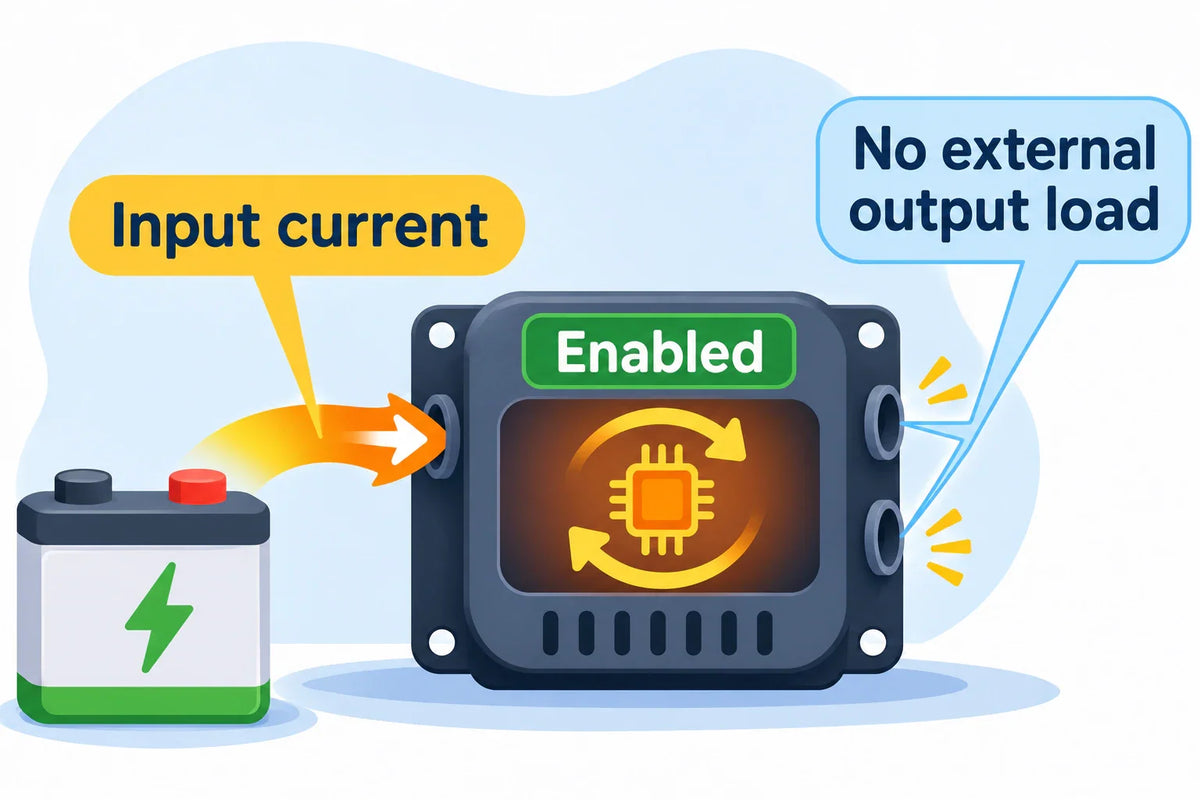

Yes. A DC-DC converter can draw input current with no external output load if it remains enabled. “No load” describes what is connected to its output; it does not necessarily mean the converter is powered off. The current that matters for battery standby use depends on the converter’s state and on whether the stated figure applies to the complete module.
Three current figures describe different conditions
| Figure on the datasheet | Operating state it describes | Use for battery standby planning? |
|---|---|---|
| Enabled no-load input current | Complete converter enabled with no external output load | Yes, when the figure and conditions match the complete module in use |
| IC quiescent current | Regulator IC under its specified test state | Not as a substitute for complete-module input current |
| Shutdown input current | Converter disabled under its specified conditions | Yes, for intervals when the complete converter is in that disabled state |

Enabled no-load input current is the current drawn at the converter’s input while it is enabled and regulating its output with zero external load. This is the relevant operating condition when the output is unused but the converter remains on. Check the specified input voltage, output voltage, and test conditions because the measured current can depend on them. The distinction between total input current at zero load and other regulator-current terms helps identify whether a figure matches that condition.
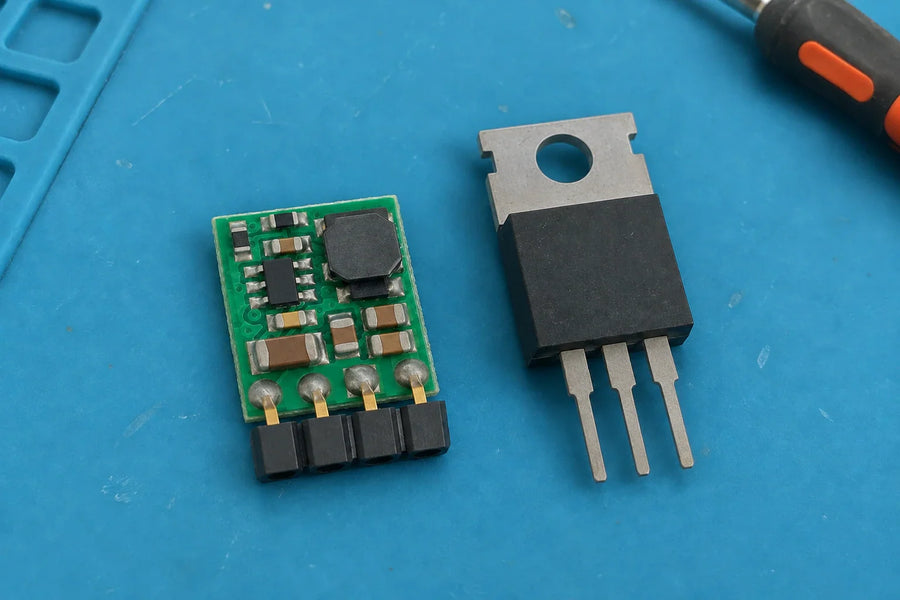
IC quiescent current describes current associated with the regulator IC’s internal operation under the datasheet’s stated conditions. It is not automatically the input current of a finished converter module: the module may include other circuitry, and the IC specification may use a different operating state or measurement condition. Use an IC-only figure only when the quantity you are evaluating is specifically that IC current; for battery standby estimates, look for a complete-module input-current figure in the enabled no-load state.
Disabled or shutdown input current describes a different state, with the converter disabled rather than enabled at zero output load. Its value and test conditions must apply to the particular converter and its disabled state. Shutdown current is separate from enabled no-load current, so use the figure for the state being evaluated.
Estimate standby charge use
Use the complete converter’s documented input current for the state you want to evaluate. If that figure is unavailable, a measurement of the complete module under the relevant input voltage, output condition, and enable state is more applicable than substituting the IC’s quiescent-current specification.

For a roughly steady current, estimate charge used as:
Charge (Ah) = input current (A) × time (h)
Convert units before multiplying. For example, convert milliamps to amps by dividing by 1,000, and convert minutes to hours by dividing by 60. This gives an estimate for the stated current and interval, not a prediction of every factor affecting battery performance.
If the converter spends part of the interval enabled and part disabled, calculate each period using the current for that state, then add the charge amounts:
Total charge (Ah) = enabled current (A) × enabled time (h) + shutdown current (A) × shutdown time (h)
This separates the converter’s ongoing enabled draw from its disabled-state draw. A no-output-load reading alone does not tell you which state the converter was in, so identify the enable state and measurement conditions before using a current figure.
FAQs
Does a DC-DC converter still draw current when nothing is connected to its output?
Yes, if it remains enabled; no external output load does not mean the converter is powered off.
Can I use an IC’s quiescent-current specification as the converter module’s no-load input current?
Not automatically: the IC specification may describe a different current or operating condition, and the finished module may include other circuitry. Use a complete-module figure or measurement that matches the enabled no-load state.
How do I estimate battery charge used by a DC-DC converter during standby?
Multiply the applicable steady input current in amperes by the time in hours to estimate charge use in amp-hours. If the converter spends time in both enabled and shutdown states, calculate each period with its corresponding current and add the results.