
A 36V setup fits flat roads, short trips, and light loads. A 48V setup is better for hills, heavier passengers, cargo, and longer routes. Golf Cart Batteries should match your cart’s electrical system before you think about speed or extra power.
Check Your Current Golf Cart Voltage
Check your cart voltage before buying new Golf Cart Batteries. A 36V cart usually needs 36V replacement batteries, while a 48V cart usually needs 48V replacement batteries.
Do not guess from cart size or seat count. Two carts can look similar and use different battery systems. Wrong voltage can cause poor performance, charger mismatch, or damage to electrical parts.
Use these steps:
- Open the battery compartment.
- Count every battery in the tray.
- Read the voltage printed on each battery label.
- Add the battery voltages together if the batteries are wired in series.
- Check the charger label for output voltage.
- Check the controller label or owner's manual if battery labels are hard to read.
Six 6V batteries equal 36V. Six 8V batteries equal 48V. Four 12V batteries also equal 48V. If the battery labels are faded or the setup looks unfamiliar, identify your golf cart voltage before buying.

Common 36V and 48V Golf Cart Battery Setups
Most 36V and 48V golf carts use either several batteries wired together or a single matching lithium pack. Battery count alone does not always indicate the total voltage, because six batteries can be 36V or 48V.
Common 36V setups include:
- Six 6V batteries
- Three 12V batteries
- One 36V lithium pack
Common 48V setups include:
- Six 8V batteries
- Eight 6V batteries
- Four 12V batteries
- One 48V lithium pack
The answer to how many batteries a golf cart takes depends on cart voltage, battery type, tray space, and original design. Older lead-acid carts often use several batteries. Lithium setups may use one larger pack with a matching charger.
36 volt golf cart batteries and 48 volt golf cart batteries can both work for neighborhood driving and golf course use. The right option depends on system fit, terrain, load, and range needs.
Choose 36V or 48V for Your Use
Choose 36V for lighter, flatter driving. Choose 48V for hills, heavier loads, and longer routes.
| Your Situation | 36V Fits Better | 48V Fits Better |
|---|---|---|
| Terrain | Flat neighborhood streets or golf course paths | Hills, uneven ground, or rougher routes |
| Driving distance | Short daily rides | Longer routes or frequent use |
| Passenger load | One or two people most of the time | Rear seat passengers, cargo, or heavier loads |
| Performance need | Basic cruising feels fine | Stronger acceleration or better pull under load |
| Upgrade plan | Simple battery replacement | Larger performance upgrade |
For simple flat driving, 36V golf cart batteries usually make sense. For more weight, hills, or longer use, 48V golf cart batteries are usually the better fit.
Should You Keep Your Voltage or Upgrade?
Keep your current voltage unless your cart needs more power for normal use. A same voltage replacement is usually easier because the charger, controller, wiring, solenoid, motor, and accessories may already match.
A 36V to 48V upgrade can work on some golf carts, but batteries are only one part of the change. Check these parts first:
- Battery tray space
- Charger voltage and charge profile
- Controller voltage rating
- Solenoid rating
- Motor compatibility
- Main cable condition and gauge
- Battery meter or state of charge display
- Lights, horn, USB ports, stereo, and other accessories
Putting a 48V pack into a cart still built for 36V can damage components or lead to unsafe operation. Charger match also matters. General safe charging practices recommend using the charger supplied or recommended for the product.
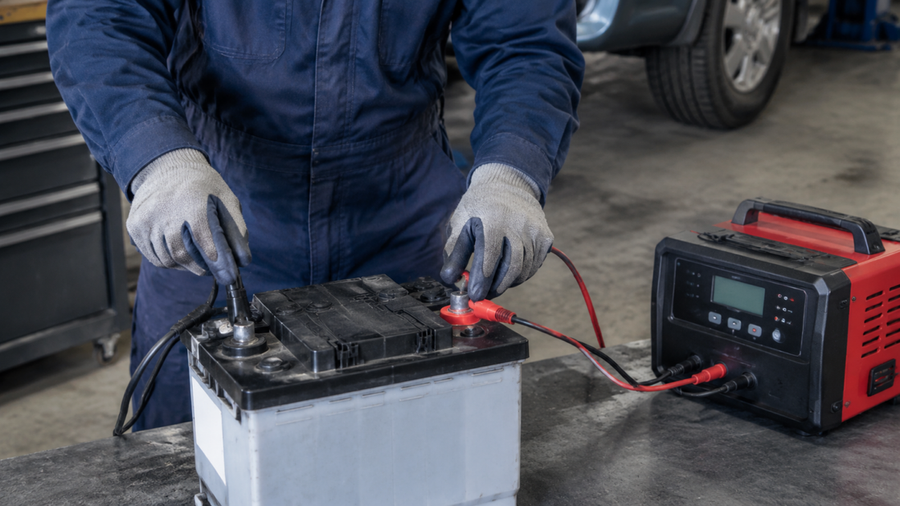
Lead-acid batteries also need careful handling. Charging areas need airflow, and battery work should avoid sparks, short circuits, and acid contact. Good habits around industrial lead-acid battery charging help reduce fire, explosion, and acid-contact risks.
Upgrade when your cart feels weak on your normal routes. If your cart already handles those routes well, a same voltage replacement is usually the easier choice.

Get the Right Battery Setup
Check voltage, charger fit, tray space, and route distance before choosing a battery. Do not rely on battery count alone. A good replacement should match your cart's electrical system, fit the battery tray, and provide enough capacity for your normal routes. If you are changing from lead-acid to lithium or moving from 36V to 48V, check the charger, controller, cables, and accessories before buying.
FAQ about Golf Cart Batteries
Q1: What Is the Average Lifespan of a Lithium Battery in a Golf Cart?
A lithium golf cart battery often lasts around 8 to 12 years with proper charging and storage. Heavy loads, deep discharge, extreme heat, and a mismatched charger can shorten its lifespan.
Q2: Can You Mix Different Golf Cart Batteries?
No. Do not mix batteries with different voltages, ages, capacities, or chemistries in the same pack. Mixed batteries can charge unevenly, lose performance faster, and put extra stress on the whole system.
Q3: Does Battery Capacity Matter for Range?
Yes. Voltage affects power delivery, but capacity affects how far the cart can go. A higher amp hour or watt hour rating usually supports longer driving, as long as the battery fits the cart and charger.
Q4: Why Does My Battery Meter Look Wrong After Switching to Lithium?
Many older battery meters were made for lead-acid batteries. Lithium batteries hold voltage differently, so the meter may drop suddenly or show the wrong level. A lithium compatible meter gives a more accurate reading.
Q5: Should I Replace All Golf Cart Batteries at Once?
Yes, in most multi-battery setups. Replacing only one weak battery can leave old batteries pulling down the new one. A full matched set usually gives better balance, charging, and performance.