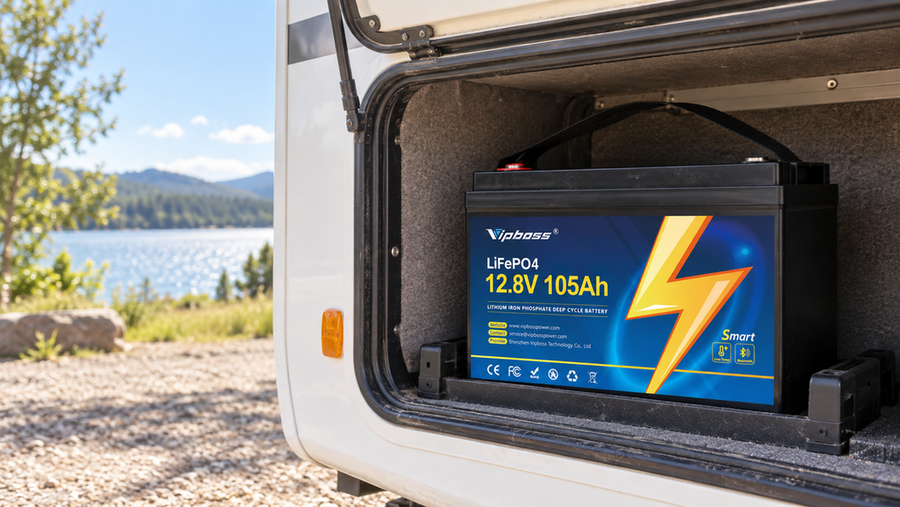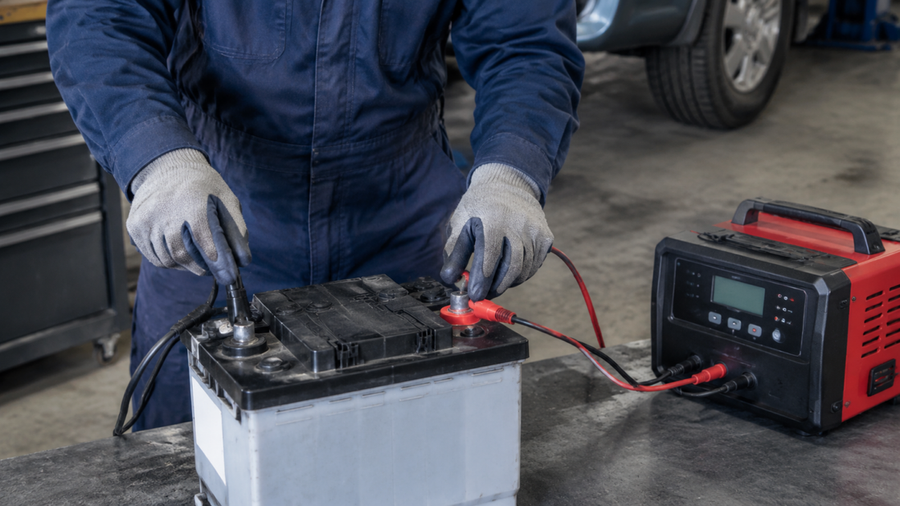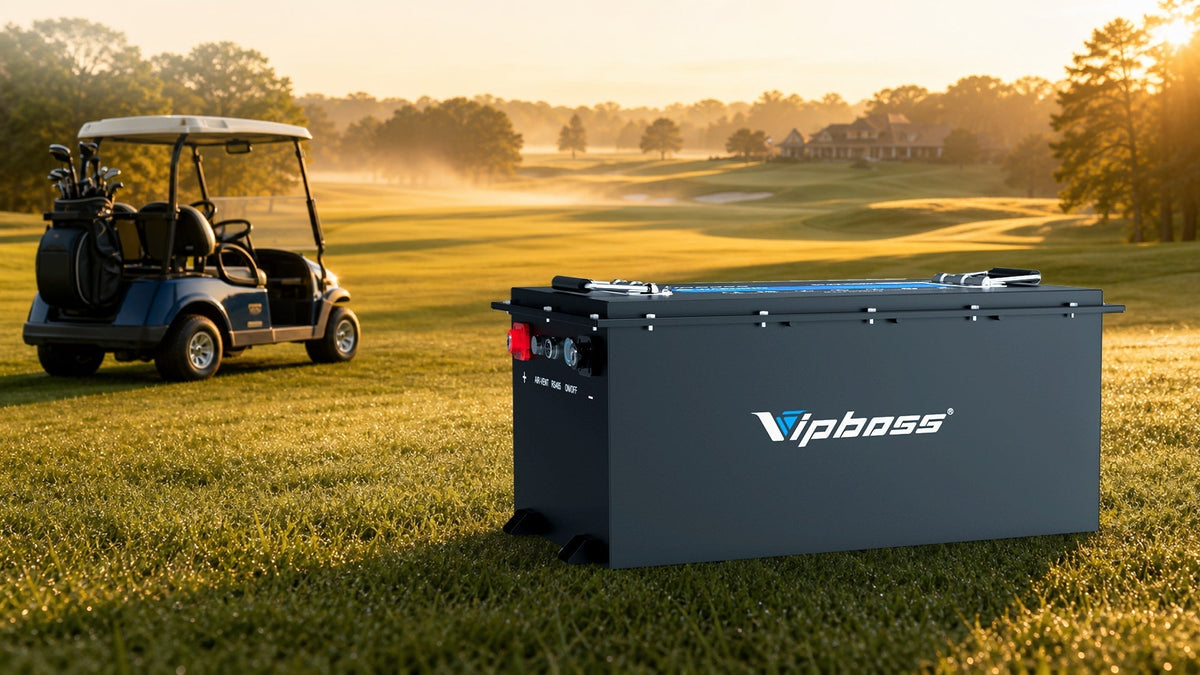

A golf cart battery replacement can use one full battery pack or multiple smaller batteries, but the right choice depends on your cart’s voltage, tray space, charger, wiring, and accessories. Some carts use 36V power. Others use 48V power. Some owners stay with a similar battery layout. Others switch from lead-acid to lithium.
Count How Many Batteries Your Golf Cart Currently Uses
Your golf cart may use three, four, six, or eight batteries, depending on its voltage system and battery type. Start with the battery tray, then check the battery labels to confirm the setup. This first step helps you avoid buying a replacement that has the wrong voltage, size, or charger match.
Step 1: Count the Batteries in the Tray
Count how many batteries are installed in the battery tray. A 36V cart may use six 6V batteries or three 12V batteries. A 48V cart may use six 8V batteries, four 12V batteries, or one 48 volt golf cart battery pack.
Take a quick photo of the battery tray before you remove anything. This gives you a clear record of the current layout, cable direction, and battery position.
Step 2: Read Each Battery Label
Check each label for voltage and capacity. Look for markings such as 6V, 8V, 12V, 36V, or 48V, along with amp-hour ratings if they are listed. The label matters because two carts that look similar can use different battery layouts. For example, two golf carts may both have six batteries, but one may use 6V batteries while another may use 8V batteries.
Step 3: Confirm the Voltage With the Charger Label
Check the charger label to confirm the system voltage. A 36V charger usually pairs with a 36V battery setup. A 48V charger usually pairs with a 48V setup. The replacement battery should match both the cart and the charger. If you plan to switch from lead acid to lithium, also check the charger type, because lithium batteries often need a charger with a matching lithium charging profile.
Compare One Battery Pack With Multiple Golf Cart Batteries
One battery pack provides the full system voltage in a single unit, while multiple batteries use several smaller batteries connected together. A single pack is common in lithium golf cart upgrades, while multiple batteries are more common in older lead-acid layouts.
| Option | Best For | Key Benefits | What to Check |
| One Battery Pack | Owners who want a cleaner golf cart battery replacement | Fewer cables, fewer terminals, less clutter, and often built-in BMS protection | Match the pack to the cart voltage, charger, tray size, cable layout, and accessories |
| Multiple Batteries | Owners keeping the original battery layout | Fits many older carts and may offer flexible placement | Batteries should match in voltage, capacity, chemistry, age, and condition |
For example, one 48 volt golf cart battery pack may replace four 12V batteries in some 48V carts. If you use multiple batteries, avoid mixing different brands and new and old batteries. For lithium setups, only connect 12V batteries in series if they are approved for that use.
Match Golf Cart Battery Voltage With Wiring, Space, and Accessories
Battery voltage affects wiring, tray space, charger choice, and low-voltage accessories. A replacement battery must match the cart’s electrical system and the way the cart is used.
A 36V cart needs a 36V setup. A 48V cart needs a 48V setup. If the voltage does not match, the cart may not run correctly. It may also damage parts or create charging problems.
Match the Wiring to the Battery Layout
The wiring must match the battery layout because series wiring adds voltage. Three 12V batteries in series create a 36V setup. Four 12V batteries in series create a 48V setup.
A single pack usually needs fewer main cables, but it still needs proper cable size, secure terminals, a fuse or breaker where needed, and a safe mounting setup.
Take clear photos of the old battery bay from several angles. This helps you track the main positive cable, main negative cable, charger wires, and accessory wires.
Check Battery Tray Space and Terminal Position

The new battery must fit the tray, seat space, hold-down area, and cable path. Voltage is only part of the choice.
A lithium battery pack may be smaller and lighter than a full lead-acid bank, but size still matters. Check length, width, height, terminal direction, cable bend room, and mounting points.
A battery that fits on paper may still be hard to install if the terminals face the wrong way or the cables are too short.
Power 12V Accessories With the Right Converter
Many golf cart accessories need 12V power, even if the cart runs on 36V or 48V. Lights, horns, USB ports, radios, small fans, and phone chargers often use 12V.
Some older carts pull accessory power from part of the battery bank. This can create uneven drain. It is not ideal for many lithium setups.
A voltage reducer can step 36V or 48V power down to 12V for accessories. This helps protect the accessories and keeps the battery system more balanced.
Check These Parts Prior to Removing the Old Battery Set

Check the cables, charger, tray space, accessory wires, and recycling option before removing the old battery set. Turn the cart off, remove the key, and use service mode if your cart has a run/tow switch.
Take photos and label cables. Photograph the battery tray, the main positive and negative cables, the charger cable, the accessory wires, and any meter or voltage-reducer connections. Label key wires before removal.
Inspect cables and terminals. Look for corrosion, loose nuts, burnt ends, cracked insulation, frayed wires, or weak hold-down parts. Damaged wiring should be fixed before the new battery goes in.
Match the charger. The charger should match the new battery’s voltage and chemistry. A plug that fits does not always mean the charger is correct.
Recycle old batteries safely. Take old batteries to a battery dealer, golf cart shop, auto parts store, recycling center, or approved waste site. Do not throw them in household trash.
Choose the Right Golf Cart Battery Replacement Layout
Pick the setup that matches your voltage, charger, tray space, wiring, and daily driving needs. A single pack can keep the battery bay cleaner, while matched batteries can work well in older layouts. Check the full system first, including voltage, charger, tray space, wiring, and daily driving needs, so your cart gets steady power and safer charging.
Common Questions About Golf Cart Battery Replacement
Q1: How Can You Tell If Golf Cart Batteries Need Replacement?
Weak acceleration, shorter driving range, slow charging, swelling, corrosion, and a cart that loses power under load can all point to battery problems. If the batteries are old or no longer hold a charge well, testing the full battery set is better than guessing from one short ride.
Q2: Can You Mix Lead-Acid and Lithium Batteries in a Golf Cart?
No, lead-acid and lithium batteries should not be mixed in the same golf cart battery system. They charge and discharge in different ways. Mixing them can cause poor charging, weak performance, and safety issues. If you upgrade to lithium, the cart should be planned as a full lithium setup with the right charger and wiring.
Q3: Will Battery Replacement Change Golf Cart Speed?
Replacing the batteries may restore power if the old ones were weak. It does not always increase top speed. Speed also depends on the motor, controller, tires, load, and terrain. A healthy battery setup can help the cart start better and hold power longer, but it is not the only factor.
Q4: What Is the Average Lifespan of a Golf Cart Battery?
A golf cart battery usually lasts about 4 to 6 years for lead-acid batteries, while lithium batteries may last longer with proper charging and care. Lifespan depends on battery type, charging habits, storage, driving load, terrain, and maintenance. If the range drops quickly or charging takes much longer than usual, it may be time to test the battery set.
Q5: How Do You Test Golf Cart Batteries Before Buying Replacements?
Test the current batteries with a full charge, a voltage check, and a load test if possible. Check each battery for swelling, leaks, corrosion, loose terminals, or uneven voltage. A weak battery may drop quickly under load even if it shows normal voltage at rest. If you are not sure, ask a golf cart technician or battery shop to test the full set before buying replacements.