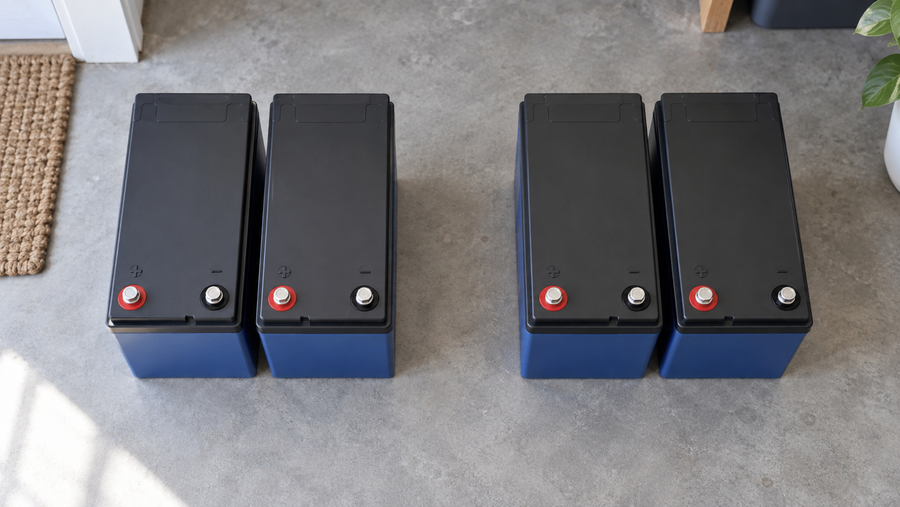

If you match system voltage and choose a lithium kit that respects your cart’s current limits, your stock golf cart controller usually survives; the real risks are voltage mismatch, undersized wiring, and cheap or incompatible chargers.
Imagine dropping in a new lithium battery, pressing the pedal, and feeling the cart lurch, stall, or give off a hot electrical smell while you picture the motor controller dying an expensive death. Done right, lithium conversions deliver several times the run time and years more service than tired lead-acid packs without sacrificing reliability. Here is how to tell whether your existing controller is up to the job, when an upgrade actually makes sense, and the simple protection steps that keep your cart safe.
How Lithium Changes the Load on Your Cart
Modern LiFePO4 golf cart batteries are sold as drop-in replacements for 36- and 48-volt carts, with the same system voltage but very different behavior under load. Instead of sagging hard as you climb a hill, lithium holds voltage almost flat until it is nearly empty, so the cart feels stronger and more consistent. In typical use you can see roughly 2,000–5,000 charge cycles for LiFePO4 versus about 500–1,000 for lead-acid, along with much faster charging and about 50–60% lower battery weight, which together translate into longer life, quicker turnarounds, and sharper handling for the same cart chassis.
One lithium supplier highlights that its lithium golf cart batteries can deliver up to triple the runtime of traditional packs at the same nominal voltage, which lines up with broader experience from conversion guides. Lighter packs free up payload for passengers and gear, and faster charging means you are less tempted to “nurse” weak lead-acid batteries to the last drop, which is where most of the damage happens.
At a high level, the swap looks like this:
Aspect |
Lead-acid pack |
Lithium golf cart pack |
Typical lifespan |
About 500–1,000 charge cycles |
Roughly 2,000–5,000 charge cycles |
Weight |
Very heavy, several hundred pounds |
Often 50–70% lighter for the same usable energy |
Charge time |
Around 8–10 hours |
Around 2–5 hours |
Maintenance |
Watering, corrosion cleaning, venting |
Essentially maintenance-free, no watering or fumes |
The key for your controller is that system voltage stays 36 or 48 volts and the motor has not magically changed. What does change is that the controller can now access almost full pack voltage for much more of each drive instead of spending half the round starved by sagging lead-acid batteries.

Will a Lithium Upgrade Burn Out Your Stock Controller?
For a healthy cart, simply swapping matched-voltage lead-acid batteries for a lithium pack does not automatically fry the controller. Mainstream conversion guides such as a golf cart lithium guide and drop-in 48-volt systems treat lithium batteries as replacements that work with the existing motor controller, because the controller “sees” voltage and current, not chemistry.
The controller really cares about three things: system voltage, how much current it has to switch, and how hot it gets doing that work. Lithium raises the bar on performance mainly by removing voltage sag and internal resistance, so the controller can deliver closer to its rated power for longer stretches. That can make it run warmer on long hills or during heavy towing compared with the same cart on weak lead-acid, but it is still operating within the design envelope if you have not changed voltage or asked for more current than its rating.
Where people get into real trouble is ignoring basic compatibility. One conversion guide warns that even installing a 36-volt pack into a 48-volt cart can cause poor performance and potential damage to electrical components when the system is not matched. Flipping that around and feeding a controller designed for 36 volts with a 48-volt lithium pack is even more likely to over-stress electronics. If you change system voltage rather than matching the original 36 or 48 volts, you should assume the stock controller is no longer safe and move to a controller designed for the new voltage.

Most lithium GC2 batteries now ship with an integrated Battery Management System (BMS). Many LiFePO4 packs include a BMS that limits discharge current and shuts down on overcharge, over-discharge, or overheating, and manufacturers recommend pairing any pack with a lithium-capable charger to protect both the battery and connected gear. In practice, the BMS limit means the battery is less likely to push current beyond what the controller can tolerate, as long as you choose a pack whose continuous discharge rating is not far above the controller’s maximum input and you avoid stacking too many high-output batteries in parallel for a stock-speed cart.
In short, if you keep the original system voltage, choose a cart-specific lithium kit, and respect the controller’s current rating, the controller itself is one of the least likely parts to “burn out” from the chemistry change alone.
The Parts That Usually Fail First (Hint: Not the Controller)
In real-world conversions, the weak links exposed by lithium’s stronger, flatter power delivery are usually cables, solenoids, and chargers rather than the controller logic board. Shops that install many lithium upgrades recommend heavier 4-gauge or 2-gauge cables and a heavy-duty solenoid on older carts when stepping up to a more powerful pack, because those parts run hotter as current and duty cycle go up. Manufacturers that market high-output lithium golf cart batteries sell heavy-duty cables, advanced controllers, and heavy-duty solenoids alongside their batteries, reflecting the same reality: wiring and switching hardware are where stress shows first.
Chargers are another make-or-break component, and resources such as Intermountain Golf Cars highlight non-OEM or incompatible chargers as a major fire and failure risk for both lithium and lead-acid carts. Overcharging, wrong voltage curves, and cheap unregulated chargers can drive any battery into overheating or early failure, and they are just as capable of damaging contactors and other electronics as they are of hurting the pack.
That is why serious lithium kits from reputable suppliers always specify or bundle a lithium-compatible charger with the correct voltage profile and safety protections. Lead-acid chargers are usually tuned for very different absorption and float stages and can push lithium packs outside their comfort zone. The result is often a BMS shutdown, a tripped breaker, or a cooked charger long before a controller actually fails.
If you are deciding where to spend upgrade budget, cables, the solenoid, and the charger deserve priority attention.

Once those match the lithium pack, the controller is rarely the first casualty.
BMS Cutoffs, Brakes, and Real Safety Risks
Lithium packs bring one more layer your old lead-acid setup never had: active fault protection through the BMS. Some BMS designs use separate ports for charging and discharging, so they can shut off charging when voltage is high while still allowing the cart to drive, or block discharge when the pack is empty while still allowing charging. Others use a single common port and fully isolate the battery whenever voltage or temperature moves outside a safe range, reconnecting only after conditions settle.
That behavior matters because many golf carts use an electromagnetic parking brake that stays released only while it is powered. When the main battery suddenly loses power because the BMS cuts out, that brake can grab hard at speed, locking the wheels with almost no warning. A hobbyist working on this problem proposed a safety circuit that keeps a small auxiliary battery alive just for the brake so it cannot suddenly lock when the main lithium pack shuts down, underlining how serious this edge case can be.
For most owners, the practical takeaway is to choose a lithium system designed specifically for golf carts, with harnesses and BMS behavior vetted on real vehicles rather than adapting generic powerwall-style packs. After installation, it is also worth doing test runs in a controlled area, including hard accelerations and braking on a mild slope, to confirm the cart does not cut out abruptly when the pack reaches a lower state of charge or encounters brief overloads.
Fire safety is the other side of lithium risk. Investigations of lithium battery fires in golf carts and fire-prevention guidance from service shops both stress the same points: use UL-listed lithium packs and OEM chargers, avoid extension cords and power strips, charge in well-ventilated areas, and retire any pack that shows swelling, cracks, or strong chemical odors. Those practices protect your battery, your controller, and your garage in one step.
How to Protect Your Controller During a Lithium Conversion
The safest lithium conversions treat the cart as a system, not just a battery swap. Conversion guides and walkthroughs all start with the same first step: confirm your cart’s system voltage and overall health before you buy anything. Check the count and voltage of the existing batteries, confirm whether you have a 36- or 48-volt system, and make sure the cart runs properly on lead-acid; a controller that already overheats or stutters on stock batteries will not magically heal when you install lithium.
Next, size the lithium pack to your usage and controller. Upgrade overviews and bundled system guides show how to scale capacity by adding 48-volt batteries in parallel to reach your target range while keeping total current within design limits. Typical conversion-kit data shows that a 48-volt 100 amp-hour pack can deliver on the order of 50 miles per charge in typical use, while light users can be satisfied with roughly half that capacity. The goal is to choose enough amp-hours for your daily pattern without stacking so many high-output modules in parallel that you tempt the stock controller into continuous full-throttle, max-current duty it was never designed for.
Installation quality is the next line of defense. Good practice calls for clean cable routing, proper strain relief, and using bus bars for parallel connections to keep current paths short and predictable. It also emphasizes correct torque on terminals and the value of a battery monitor to verify system voltage and state of charge. Spacer blocks can help keep fewer lithium batteries tightly secured in a tray designed for more lead-acid units; a loose pack that can bounce and flex will stress cables and connectors, which in turn can cause hot spots that threaten both battery and controller.
After conversion, a conservative test protocol protects both hardware and passengers. Resources such as lithium battery care tips and a maintenance guide both suggest keeping lithium between roughly 20–80% charge in routine use, avoiding deep discharges and long periods at 100%. Combine that with periodic inspections for loose or corroded terminals, monitoring how warm the controller and cables get after a hard run, and responding promptly to any built-in state-of-charge warnings in your battery documentation, and you dramatically reduce the odds of a surprise failure.
Short FAQ
Can you mix lithium and lead-acid batteries in the same cart?
Conversion kits from major suppliers are very clear that you should not mix lithium and lead-acid batteries in the same pack. The two chemistries charge and discharge at different voltage curves, so putting them in series or parallel leads to some batteries being overcharged while others are undercharged, which accelerates wear and increases the risk of failure or fire. If you are going lithium, commit to a full lithium pack with its own matched charger and monitoring.
When is a controller upgrade actually worth it?
For standard-speed carts where you keep the original system voltage and simply want better range, faster charging, and less maintenance, most guides assume you will retain the stock controller. A controller upgrade becomes part of the conversation when you intentionally raise system voltage, install a higher-voltage motor, or pursue performance levels well beyond factory specs. In those cases, it is best to follow the controller manufacturer’s wiring and fuse recommendations and treat the project as a full drivetrain upgrade, not just a battery swap.
Closing Thoughts
A well-planned lithium conversion rarely kills a healthy golf cart controller; it simply lets that controller do its job with steadier, stronger power. If you match voltage, choose a quality cart-specific lithium kit, upgrade weak wiring and solenoids, and pair everything with a proper lithium charger, you upgrade your range and reliability rather than your risk. Treat the controller as one component in a balanced system, and your power upgrade will feel like a clean win every time you press the pedal.