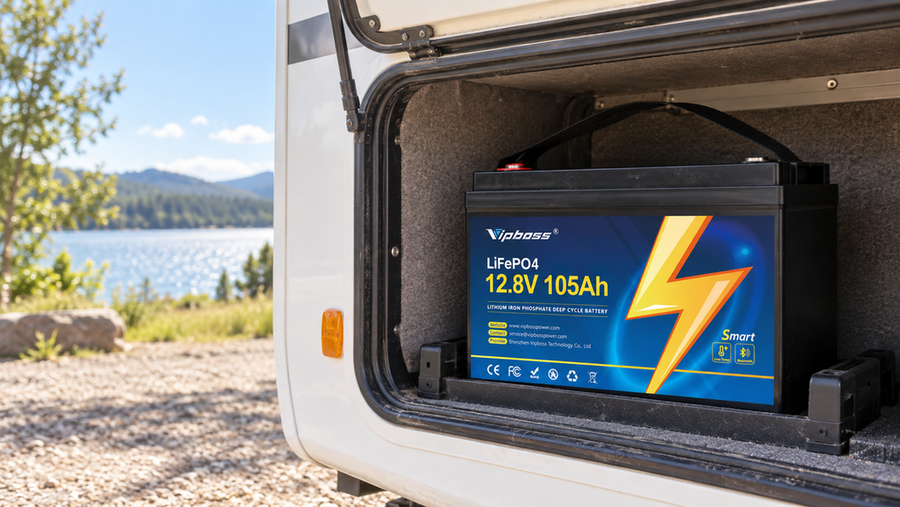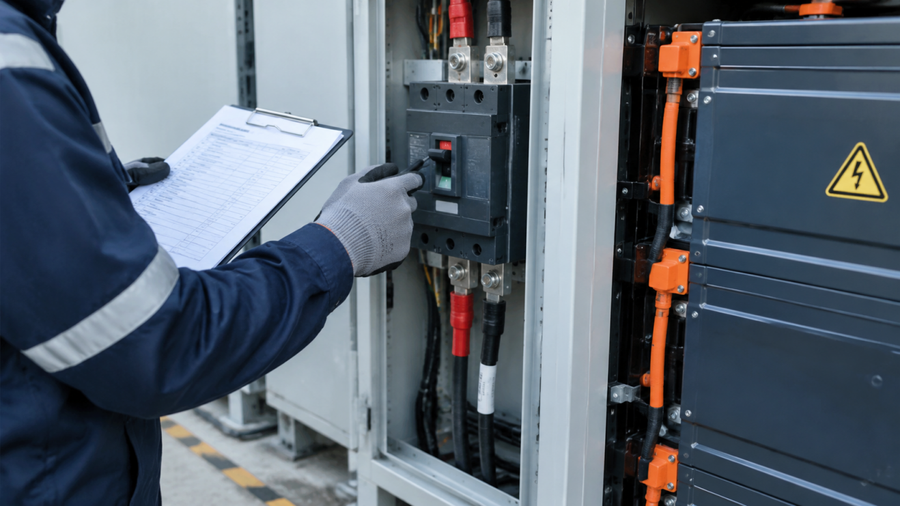

A Battery Management System is the fast-reacting bodyguard between your lithium bank and expensive failure, especially in off-grid and retrofit setups.
If you have ever watched your brand-new lithium bank suddenly shut down in the middle of a stormy night, it is easy to feel like some invisible gadget is out to get you. Again and again in retrofit projects, the same pattern shows up: owners who let that hidden guardian work the way it was designed see fewer surprise shutdowns and far longer battery life than those who try to bypass it. You are about to see what this guardian actually does, where it protects you, where it can bite back, and how to choose and configure it so your upgraded system runs harder, cooler, and longer.
Meet Your Battery's Personal Bodyguard
Engineers describe a Battery Management System as the electronic "brain" or "bodyguard" of a rechargeable pack. Technical guides from TenXer Labs, Monolithic Power, and a major Journal of Power Sources review all converge on the same core picture: it is a control system that continuously measures each cell's voltage, the pack's current, temperature at key points, and how full and how worn out the battery really is. From that data it decides when to allow charging, when to allow discharge, when to balance cells, and when to simply say "no" for safety.
Racepow and Setec explain that this bodyguard enforces a safe operating window in real time. It prevents overcharge at the top, deep discharge at the bottom, over-current in short events, and overheating across the whole pack. In practice, that means it can cut off charging when a single cell hits its limit, stop loads before cells are driven too low, and open the main contactors instantly if a short or overload appears.
The "personal bodyguard" analogy becomes very real when you look at how it treats individual cells. Synopsys and Large Battery show that cells in series are never perfectly identical. Some self-discharge faster, some age faster, and some reach full earlier. Without supervision, the most charged cell in a stack is pushed past safe voltage while the weakest cell is still catching up, which is how you get heat, swelling, and ultimately failure. By watching every cell and trimming or shuttling charge between them, the system keeps all of them in a tight band instead of letting one become the sacrificial weak link.
A practical way to think about it is this: fuses and breakers protect against big, obvious faults; the BMS protects against slow, subtle damage that ruins expensive lithium banks long before their time.

How the BMS Actually Protects Your Investment
Safety specialists like StartPac and Power Electronics News break the bodyguard's work into a few big jobs: charge protection, discharge protection, thermal management, and fault response.
On charge, the system monitors every cell's voltage and the pack current. When any cell reaches its upper limit it either reduces current or tells the charger to stop. That single action is what prevents overcharge, rapid voltage rise, and the chain reaction that leads to thermal runaway. In lithium iron phosphate and other lithium chemistries, this control is non-negotiable; modern devices simply assume a competent BMS is in charge.
On discharge, the story is similar. The bodyguard continuously watches pack current and the lowest cell voltages. If the pack is being drained toward damaging low levels, it will disconnect the load before the weakest cell crosses the line where capacity loss becomes irreversible, as described by Racepow, TenXer Labs, and Actenviro. Some systems even keep you in a preferred working window, roughly avoiding the top and bottom 10% of capacity, to slow chemical wear while still giving you plenty of usable energy.
Heat is where things get really serious. Synopsys points out that a pack optimized around about 68°F can lose around 20% efficiency when it spends its life closer to 86°F, and continuous operation around 113°F during charge and discharge can cost up to about half its performance over time. That is before you even talk about safety. The BMS answers this by watching temperatures across the pack and commanding air or liquid cooling, heaters in cold climates, and if necessary complete shutdown. Power Electronics News notes that many systems simply refuse to charge below roughly 32°F or above around 131°F or to operate outside about -4°F to 140°F, because the chemistry is not happy there.
Finally, when something goes badly wrong, the BMS acts as an ultra-fast fuse. StartPac and Large Battery describe circuits that detect short-circuit spikes and open in milliseconds, isolating faulty cells or the whole pack before arcs and heat can do real damage. Event logs stored by the controller then give you a trace of what happened, which is invaluable when you are troubleshooting an off-grid system that went down in the night.
Why Off-Grid Retrofits Need This Guardian Even More
Most off-grid banks live in sheds, basements, and containers and spend their lives cycling, often with nobody watching. Gerchamp's backup-power work shows how quickly things can change: a battery can move from healthy to faulty in as little as one to two weeks, and quarterly manual checks are nowhere near enough. That is in controlled facilities; a solar cabin with dust, moisture, and temperature swings is even rougher.
Modern stationary storage and renewable-energy guides from Racepow, Actenviro, and Large Battery all emphasize the same point: in systems tied to solar, wind, or critical backup, continuous monitoring is not a luxury, it is the difference between "lights stay on" and "surprise outage." The BMS tracks voltage, current, temperature, internal resistance, and leakage, raises alarms when those values drift, and feeds that data to your inverter, gateway, or remote dashboard.
Right Power and Enerlution go a step further and treat the BMS as a predictive maintenance engine. Instead of waiting for a failure, the controller watches long-term trends in state of health and temperature patterns to flag weak cells early. That lets you schedule service when the weather is good and the generator is available, rather than discovering a dead bank during the first big storm of the season.
For lithium iron phosphate packs that power homes, RVs, and forklifts, manufacturers like BSLBATT stress that this protective layer is what keeps these robust chemistries operating safely in demanding cycles. The same functions that keep an electric forklift's pack out of trouble on a warehouse floor are exactly what you want protecting your cabin or shop at 2:00 AM.
Real-World Payoff: Life, Uptime, and Usable Energy
From a purely economic angle, the bodyguard earns its keep. StartPac's field experience in aviation, rail, and mining shows that high-end protection and monitoring typically pay for themselves over a few years by extending expensive battery life and cutting unplanned downtime. When a bank that should have served for a decade dies in half that because it ran hot and unbalanced, the lost years dwarf the cost of a competent controller.
Large Battery reports test work where advanced active balancing improved lithium cycle life by roughly 28% and cut energy loss by about 8% compared with simple schemes. ABI Research adds that intelligent software can increase the portion of a pack's capacity that is safely usable so much that manufacturers can shrink pack size, with billions of dollars in forecast savings. In the electric-vehicle world, they highlight a software-driven BMS that pushes lifetime toward about 620,000 miles while also cutting charge time and boosting range.
Translate that mindset to an off-grid bank and the pattern is the same. Better balancing and thermal control mean more of your nameplate kilowatt-hours are truly usable every night, fewer "why is my state of charge collapsing?" moments in winter, and longer intervals before you are buying another bank, hauling out old batteries, and recommissioning your system.
Basic Versus Advanced BMS: How Much Bodyguard Do You Really Need?
Not every system needs a custom, cloud-connected controller, but every serious lithium bank needs something better than bare fuses. Epec's engineering guidance and Actenviro's selection advice make one point very clear: whatever you choose must match your chemistry, your voltage and current levels, and your environment.
Epec maps out several architectures. Centralized systems put one controller over all cells and are common in smaller packs. Modular and distributed setups divide the pack into smart blocks, which makes sense for large off-grid racks where you want redundancy and easier service. Off-the-shelf units can be a good fit for straightforward banks with well-understood current limits, but they trade away flexibility. Custom systems cost more and require more engineering, yet allow you to dial in balancing strategies, sensors, and communications specifically for your hardware.
Enerlution and Tritek describe what happens as you move up the ladder. Basic units focus on core protections and simple cell balancing. More advanced ones add precise state-of-charge and state-of-health models, predictive maintenance analytics, and remote connectivity. At the leading edge, vendors integrate machine learning and cloud platforms so large fleets of packs, from grid storage to EVs, can be watched and tuned in real time.
A useful way to compare options is to look at what they actually do for you in daily operation.
BMS Type |
Typical Focus |
Where It Fits Best |
Basic protection |
Over/under-voltage, over-current, simple temperature cutoffs, passive balance |
Small off-grid banks, RVs, simple retrofits with modest currents |
Advanced smart |
Accurate SoC/SoH, strong thermal control, data logging, better balancing |
Heavier-cycled home storage, fleets, critical backup |
Intelligent/IoT |
Predictive analytics, remote monitoring, AI-assisted optimization |
Large ESS, commercial sites, multi-site operators |
For many cabin and RV builds, a solid mid-range unit with reliable protections, decent cell balancing, and clear data access is the sweet spot.

For larger homesteads or commercial sites, stepping up to advanced or intelligent platforms unlocks better uptime and planning.
Practical Setup Priorities for Retrofits and Upgrades
Several sources converge on the same checklist when you are pairing a new bodyguard with an existing or planned bank. Actenviro and TenXer Labs stress that you start by matching chemistry, voltage, and current. A controller tuned for lithium iron phosphate is not interchangeable with one meant for a different chemistry, and the hardware must be rated for your maximum charge and discharge currents, including surge events.
Epec, StartPac, and Large Battery emphasize environmental and mechanical survival. If your bank lives in a trailer, workshop, or yard container, expect vibration, dust, and moisture. Choose units with enclosures, conformal-coated boards, and sensors placed where they will see true cell and busbar temperatures, not just ambient air. Proper thermal management hardware—fans, channels for airflow, or liquid plates where warranted—has to work in tandem with the BMS instead of fighting it.
Cell balancing deserves deliberate attention. Synopsys explains how imbalance quietly eats capacity by forcing the first full cell to end the charge for every other cell. ABI Research and Power Electronics News note that passive balancing, which simply burns off extra charge as heat on the high cells, is often cost-effective and acceptable for mainstream packs, even though it wastes some energy. Active balancing moves energy from strong cells to weak ones and, as Large Battery shows, can noticeably extend life and reduce loss, but it adds design complexity and cost. For many off-grid owners, passive is perfectly acceptable; if you are running a high-value, hard-cycled bank, exploring active or hybrid options is worth your time.
Integration with your charger and inverter is the last big piece. Setec details how, in both AC and DC fast charging, the battery controller and charger negotiate safe current and voltage in real time. Even if you are only running a 48-volt cabin system, you want the same principle: the BMS and charger must agree on limits rather than fight each other. That means verifying communication options, default behaviors, and what happens on error before you bolt everything into a wall.
Myths and Drawbacks: What the BMS Is Not
There are reasons people are wary, and it is worth handling them head-on. The first myth is that the controller "steals" capacity. In reality, as StartPac and Synopsys both show, limiting operation to a healthier window and keeping cells aligned is what prevents permanent loss. You might see the top few percent and bottom few percent taken off in daily use, but that trade protects far more capacity over the battery's life.
The second myth is that it is "just another thing to fail." Accure's safety analysis and MDPI's EV review acknowledge that these systems are complex and safety-critical, and that poor designs can indeed cause trouble, especially when algorithms are sloppy or reused with new chemistries they were never tuned for. That is an argument for choosing proven hardware and vendors that understand your use case, not an argument for running a high-energy lithium bank without protection.
The third concern is complexity and cost. Enerlution, Epec, and VVDN all point out that advanced systems demand real expertise in electronics, software, and battery chemistry. They are not free. But the same sources, along with industry surveys from Actenviro and Right Power, consistently frame them as foundational infrastructure: the layer that makes modern lithium-based storage safe, efficient, and economical over time.
Short FAQ
Q: Can I rely on my inverter's low-voltage cutoff instead of a BMS? No. Inverter cutoffs watch pack voltage, not individual cells or internal temperatures. TenXer Labs, Racepow, and Monolithic Power all describe how the battery guardian's job is cell-level protection and accurate state tracking. Without that, one weak cell can be driven into damage long before the pack voltage looks low to your inverter.
Q: Is a cheap generic controller enough for a small cabin bank? Sometimes, but only if it truly matches your chemistry, has proper cell balancing and temperature sensing, and comes from a supplier with a track record in lithium applications. Actenviro and Epec underline that mismatched or under-specced units can be worse than none at all, because they give a false sense of security.
Q: Do I really need active balancing for off-grid use? For most systems, industry guidance from ABI Research and Power Electronics News suggests that passive balancing is adequate and much simpler. If you are running a large, heavily cycled, high-value bank and pushing it hard, the life and efficiency gains reported in industrial tests for active schemes, like those summarized by Large Battery, can justify the extra complexity.
Bring Your Bodyguard Onto the Team
The controller bolted to your lithium bank is not a mysterious enemy waiting to pull the plug; it is the bodyguard that quietly keeps dangerous conditions, wasted capacity, and early failures off your property. When you size it correctly, give it good cooling hardware, and let it talk to your charger and inverter the way it was designed, you unlock the real power of your retrofit or off-grid system. Treat that guardian as a core part of your upgrade, not an afterthought, and your batteries will pay you back in years of harder-working, more reliable energy.
References
- https://www.accure.net/blogs/battery-management-systems-role-in-battery-safety
- https://movemnt.net/the-importance-of-battery-management-systems-within-evs/
- https://www.enerlution.com.cn/a-news-best-bms-systems-essential-features-for-safe-and-efficient-battery-management.html
- https://blog.epectec.com/battery-management-systems-considerations-for-optimal-performance
- https://www.abiresearch.com/blog/battery-management-systems-for-electric-vehicles
- https://www.actenviro.com/better-battery-management-for-better-living/
- https://www.rightpowerups.com.my/battery-management-system-how-smart-monitoring-prevents-battery-failures/
- https://www.cyient.com/blog/battery-management-system-in-electric-vehicles
- https://ezealco.com/why-are-battery-management-systems-needed-for-electric-vehicles/?srsltid=AfmBOopJG_HSDdKmLtFmXIzcemXopWv5JXt50NB2bMt_sxa54YPU01pF
- https://www.gerchamp.com/blog/application-scenarios-and-key-advantages-of-battery-management-system-bms.html