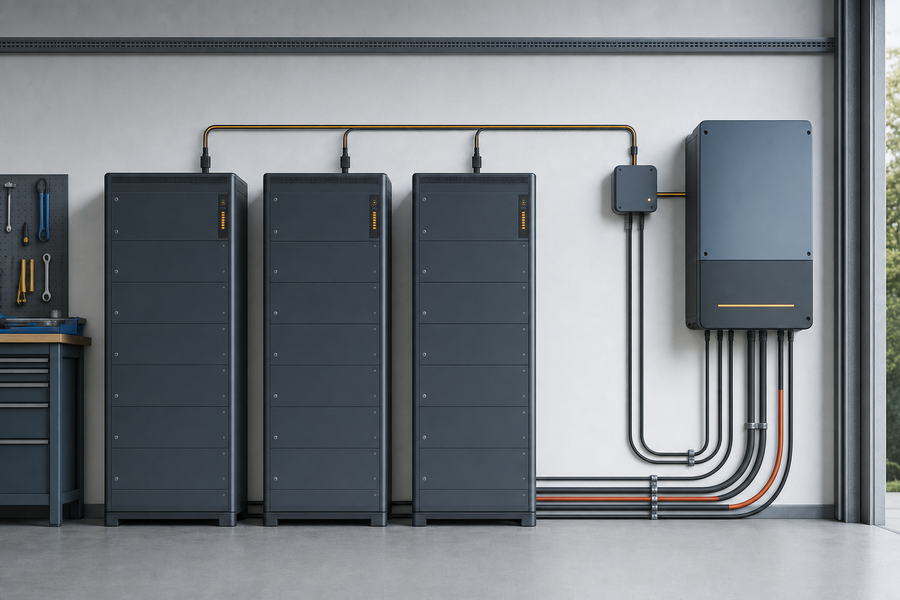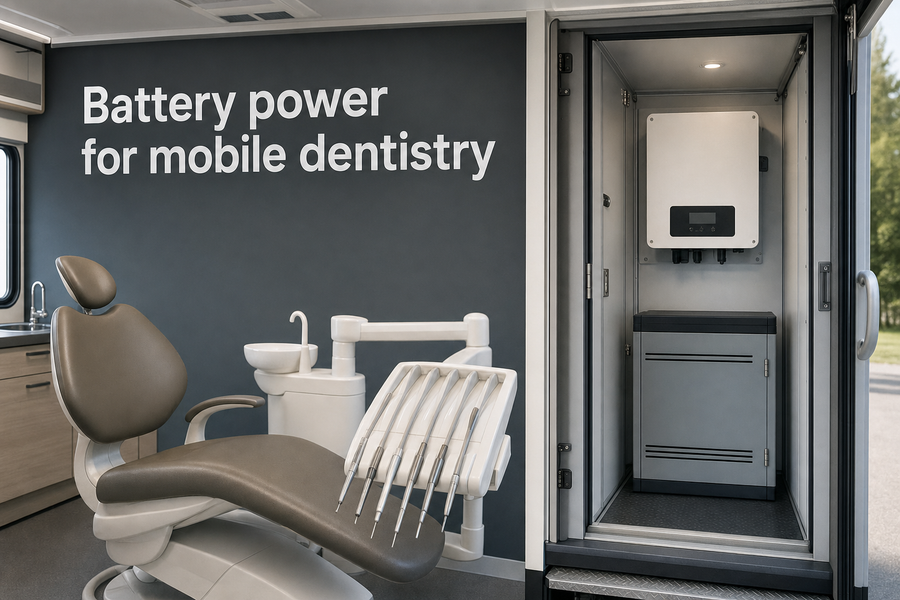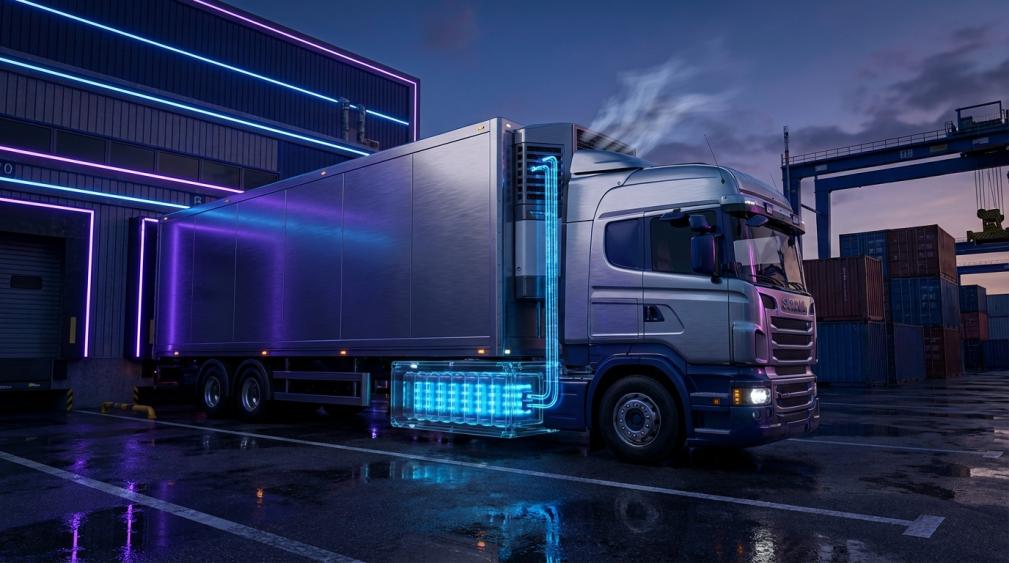

This guide explains how to power a refrigerated truck’s cooling system from a LiFePO4 battery bank so you can shut off the engine without risking cargo.
You pull into a dock on a hot afternoon, leave the engine running so the load stays cold, and watch both the fuel gauge and your patience drop while someone complains about the noise. After seeing how long-running warehouse and pallet trucks stay powered all day on modern lithium systems with almost no maintenance, it is natural to ask why a refrigerated box cannot do the same while parked. This guide shows how to get there: what “independent cooling” really means, how LiFePO4 fits in, how to size and integrate the system, and where the real-world trade-offs sit.
What Independent Cooling Really Means on a Reefer Truck
A refrigerated truck, or reefer, is essentially an insulated box with a mechanical cooling unit designed to hold cargo anywhere from about -20°F to around 70°F for products ranging from ice cream to fresh produce and pharmaceuticals, supported by digital controls, sensors, and telematics for real-time monitoring and alarms in modern fleets Guide to refrigerated trucking. In best-practice operations, the trailer and cargo are pre-cooled before loading, airflow paths are protected, and drivers rely on continuous temperature logging and alerts so any deviation can be corrected before product quality is lost The ultimate guide to refrigerated shipping. This combination of tight temperature bands and continuous documentation is why the cooling system becomes the heartbeat of the truck.
On small and medium trucks, many refrigeration units are non-independent, meaning they take their power directly from the truck’s engine via belts or an engine-driven generator and simply shut off when the engine stops. Operators running city routes or multi-stop food distribution know the pattern: park at a dock or store, keep doors opening and closing, and feel the pressure to leave the engine idling so the compressor can keep running. Independent units, by contrast, have their own small diesel engine and alternator, so they keep cooling even if the main truck has a mechanical problem or is completely shut down, which is why they dominate on longer bodies and high-value, long-haul freight.
The price of that independence with today’s typical diesel-powered transport refrigeration units is fuel and maintenance. A typical reefer unit burns roughly 0.5–1.5 gallons of diesel per hour, and reefer trailers often carry their own 50-gallon fuel tank, which translates into thousands of dollars per year in fuel just to move heat out of the box, on top of significant annual maintenance spend on the refrigeration engine itself Guide to refrigerated trucking. Reefer freight earns higher rates partly because equipment, fuel, and operating complexity are all higher than for dry vans, not because carriers enjoy the sound of idling engines. That is the economic hole an engine-off, battery-based system is meant to plug.

Independent cooling in the context of LiFePO4 means the cooling unit can hold temperature with the truck’s main engine shut down and without a diesel-driven refrigeration engine running, instead drawing from a dedicated, deep-cycle battery bank and associated power electronics sized for the duty cycle. Some modern truck refrigeration units are already offered as fully electric or as hybrids that can run from a diesel powerhead on the road and switch to an electric standby input at docks or depots, making them natural candidates to pair with a high-capacity battery system Choosing the right truck refrigeration unit. The design work is about turning that electric input into a reliable, off-grid power channel and ensuring it can be replenished quickly enough between stops.
Why LiFePO4 Is the Backbone of Engine-Off Cooling
Lithium iron phosphate, or LiFePO4, is a lithium-ion chemistry that has already proven itself in demanding industrial roles such as forklifts, where batteries see deep cycling, high currents, and multi-shift use for years at a time Lithium forklift batteries. In those fleets, lead-acid batteries typically last about 3–5 years or 1,000–1,500 cycles, while lithium forklift batteries commonly deliver 7–10 years and roughly 2,000–3,000 cycles, with a flatter voltage curve that keeps trucks working at full power until the pack is nearly empty. That combination of long life and consistent output under heavy load is exactly what an independent cooling system needs.
The economics also favor lithium when utilization is high. For material-handling fleets converting forklifts to lithium, operators see faster charging, the ability to opportunity-charge during breaks, and a return on investment in roughly 36 months when trucks run around 3,000 hours per year, helped by lithium systems being about 40 percent more energy-efficient than lead-acid and nearly 90 percent more efficient than diesel in converting input energy into useful work Converting forklifts to lithium-ion batteries FAQs. Because packs are sealed and maintenance-free, they also eliminate watering, acid spills, and most ventilation requirements, which is why they are used in freezer warehouses where both low temperatures and safety are critical. Those same traits mean a LiFePO4 bank can sit outside under a truck body or in a dedicated compartment and quietly do its job while drivers sleep.

Outside warehouses, off-grid and overland builders have converged on LiFePO4 for the same reason: they need to run fridges, fans, pumps, inverters, and chargers reliably when there is no plug-in power available. Overland rigs increasingly use dedicated auxiliary LiFePO4 batteries, often in dual-battery setups with DC-DC chargers, backed by solar and shore power so that refrigeration, lighting, and electronics keep running far from hookups. Lithium retrofits on pallet trucks tell a similar story: lighter packs deliver more consistent power, longer runtime, and can last up to about five times longer than the lead-acid batteries they replace, significantly reducing downtime and total cost of ownership.
From an electrical design perspective, LiFePO4 lends itself to truck-scale systems because it offers high usable capacity, stable voltage under load, and fast charging, while also tolerating frequent partial charging if the Battery Management System (BMS) and chargers are configured correctly. Industrial safety guidelines for lithium batteries in lift trucks underline the importance of integrated BMS electronics that monitor cell temperatures and voltages, enforce overcurrent limits, and communicate with vehicle controls so the pack can be deep-cycled daily without drifting into dangerous conditions. In practice, a reefer battery bank built around LiFePO4 cells with a robust BMS gives you a dense, durable energy reservoir that is far more tolerant of the daily abuse of cooling than a traditional starter or deep-cycle lead battery.
Designing a LiFePO4 System That Keeps Your Reefer Cold with the Engine Off
Start with a real energy audit
The first step is to treat the refrigerated body as just another off-grid cabin with one dominant load and quantify exactly how much energy that load needs in your worst realistic conditions. Off-grid specialists start by listing every device, noting its power rating, estimating daily hours of use, and translating that into watt-hours per day, then adding a buffer for weather and seasonal variation to correctly size batteries, solar, and inverters. For a reefer, the main driver is the refrigeration unit’s average draw over a duty cycle that includes hot ambient temperatures, frequent door openings, and any time the truck may sit with the doors shut but no engine power.
You can pull this number directly from manufacturer specifications, from your telematics and fuel burn data, or from a clamp meter and an energy monitor installed on the existing unit, much like overlanders measure real-world use before committing to a battery bank. Remember that reefer units are designed primarily to maintain temperature, not rapidly cool warm cargo, so pre-cooling the box and loading pre-chilled product will reduce both average power draw and battery size requirements. For design purposes, focus on the maximum number of hours you want to hold temperature with every engine off, then target that energy budget plus a safety margin.
Sizing the LiFePO4 battery bank
Once you know the daily or per-stop watt-hours, you can translate that into battery capacity. Designers typically work back from the desired runtime: multiply your refrigeration unit’s average power by the number of hours of engine-off operation you need to get the required watt-hours of storage, then divide by your system voltage to get amp-hours, adjusting for the fact that LiFePO4 batteries can safely use a high percentage of their nameplate capacity. In industrial and off-grid settings, LiFePO4 systems are routinely sized so that about 80 percent of capacity is usable in everyday cycling, taking advantage of their ability to handle thousands of deep cycles without significant degradation Lithium forklift batteries.
As a worked example, if you measure your reefer and find it averages about 1,500 watts while holding temperature during a worst-case scenario, and you want to cover 10 hours of engine-off time, you are designing around roughly 15 kilowatt-hours of usable storage. On a 48-volt system, that is about 312 amp-hours of usable capacity; with LiFePO4 and an 80 percent depth-of-discharge target, you would specify a roughly 390 amp-hour bank, whether as one large pack or multiple parallel strings. This is the same arithmetic overland builders use to decide whether they need a single auxiliary battery or a full bank to run a fridge, inverter, and auxiliary loads through the night. The difference is scale: a reefer truck simply draws more power, so you design at tens of kilowatt-hours instead of a few.
Charging sources: alternator, solar, and shore power
With a target bank size in hand, the next constraint is how quickly you can refill it. Robust off-grid systems are built around multiple charging sources—solar for parked days, alternator charging while driving, and shore power for pre-trip top-offs—so batteries stay within healthy state-of-charge ranges and users are not forced into deep discharges during bad weather. The same strategy applies to reefers: use high-output alternator charging to recover most of the energy during line-haul segments, then let solar and depot chargers handle topping off and long dwell times.
Lithium systems support fast charging, but that speed demands properly designed chargers and cabling. Forklift conversion guides emphasize using chargers matched to the battery and truck, often located close to operating areas, and note that while charging can be completed in about an hour in high-power setups, the facility’s electrical capacity must be audited and sometimes upgraded to handle the current Converting forklifts to lithium-ion batteries FAQs. On a reefer, that translates into specifying DC-DC alternator chargers that respect the LiFePO4 charge profile, properly sized MPPT solar controllers if you add roof- or trailer-mounted panels, and shore chargers that can pull heavy currents without tripping depot breakers. Good cable discipline, appropriate wire gauge and run length, solid lugs, and correctly rated fuses and breakers are non-negotiable both for efficiency and safety.

Integration with the refrigeration unit
Where many projects succeed or fail is in the interface between the battery system and the refrigeration unit itself. For trucks with modern refrigeration units that already offer electric standby or fully electric operation, the cleanest approach is to connect your LiFePO4 bank and inverter to that electric input, treating the unit exactly as if it were plugged into dock power but drawing from your onboard battery instead Choosing the right truck refrigeration unit. In this arrangement, diesel power can still be used on the road if desired, but when you pull into a stop or overnight location, controls switch the transport refrigeration unit (TRU) to run entirely from the battery.
On vehicles with non-independent, direct-drive units powered mechanically from the engine, you cannot simply “wire in” a battery; the compressor is on a belt. In those cases, moving to independent engine-off cooling typically means either upgrading to a refrigeration package that includes electric standby or full-electric capability, or adding a separate compact electric refrigeration unit designed for that body size. Either way, the control architecture should give you clear modes: engine-powered cooling while driving, battery-powered cooling when parked, and in some cases shore-powered cooling at a dock, with automatic transfer switches ensuring you never backfeed power or lose cooling unexpectedly.
Future-facing TRU designs already point in this direction. Industry trends highlight electric and shore-power-capable reefers, battery operation, and solar-assisted systems that reduce or replace diesel runtime while adding richer sensor and telematics data Guide to refrigerated trucking. Building your own LiFePO4-based system is essentially a way to get ahead of that curve for specific routes and customer demands rather than waiting for a turnkey zero-emission reefer to appear on the dealer lot.
Comparing Options: Idling, Diesel TRUs, and LiFePO4 House Banks
The decision is not abstract; it comes down to what you want to stop paying for and what you are willing to invest in upfront. The core options can be summarized this way:
Option |
How it powers cooling |
Main advantages |
Main limitations |
Engine idling |
Uses the truck’s main engine to drive a belt-driven compressor or alternator that feeds the refrigeration unit. |
No new hardware, simple to understand, works with existing non-independent units. |
High fuel burn, engine wear, noise, and emissions; cannot cool if the truck breaks down or idling is restricted. |
Diesel TRU (independent) |
Dedicated small diesel engine and alternator power the refrigeration unit, independent of the truck engine. |
Keeps cooling even if the truck is off, highly reliable for long-haul, high-value loads. |
Extra engine to maintain, 0.5–1.5 gallons of diesel per hour, additional weight and cost Guide to refrigerated trucking. |
Lead-acid auxiliary bank |
Deep-cycle lead-acid batteries and inverter power an electric refrigeration unit or standby input. |
Lower upfront cost than lithium, familiar technology, relatively simple chargers. |
Heavy, limited usable capacity, longer charge times, more frequent replacement and maintenance such as watering and cleaning Lithium forklift batteries. |
LiFePO4 battery bank, BMS, and inverter or DC drive power the refrigeration unit during engine-off periods. |
High usable capacity, long cycle life, fast charging, lighter weight, and higher energy efficiency than lead-acid and diesel Converting forklifts to lithium-ion batteries FAQs. |
Higher upfront cost, requires engineered integration, and demands training around lithium safety and charging practices. |
Forklift and pallet-truck experience shows that while lithium packs often cost two to three times as much as comparable lead-acid units, the longer life, higher efficiency, and lower maintenance can pay for the upgrade in about three years in high-utilization operations Converting forklifts to lithium-ion batteries FAQs. For reefer trucks that currently idle for hours a day or burn dedicated diesel in TRUs, the fuel savings alone can be substantial over the life of the system, and when you add reduced engine wear, less noise, and a cleaner emissions profile, a LiFePO4 house bank becomes a serious contender rather than a niche experiment.
Safety, Compliance, and Daily Operation
Running a high-capacity LiFePO4 system under a commercial truck body demands disciplined safety and compliance practices, but the groundwork is already laid in industrial guidelines for lithium-powered lift trucks. Lithium-ion batteries use flammable electrolytes and can enter thermal runaway if abused, which is why safety documents stress using only manufacturer-approved batteries and chargers, robust cell-level monitoring, and protective housings that prevent physical damage Lithium-ion battery safety guidelines & best practices. Best practice includes pre-use inspections for swelling, cracks, leaks, loose cables, or unusual heat; immediate removal from service of suspect packs; charging and storage only in clean, dry, well-ventilated areas; and keeping packs within recommended temperature ranges and away from open flames or direct sun Lithium-ion battery safety guidelines & best practices.
From an electrical standpoint, match chargers, batteries, and vehicle control software as a unified system, logging alarms, maintaining BMS firmware, and ensuring that any modifications are properly engineered rather than improvised in the field Lithium-ion battery safety guidelines & best practices. Off-grid builders add another layer: correct overcurrent protection on every branch circuit, clearly labeled disconnects, low-voltage cutoffs to prevent deep overdischarge, and documented wiring diagrams that make roadside troubleshooting and future upgrades straightforward. Treat the battery system as a core truck subsystem like brakes or steering, not as aftermarket electronics, and set inspection and maintenance intervals accordingly.
Independent cooling does not change your obligations around cargo safety and documentation. Food and pharma shipments still require that you maintain specified temperatures throughout transit, often under FSMA sanitary transportation rules that emphasize documented procedures, temperature logs, and equipment cleanliness Reefer trucking step-by-step guide. If anything, pairing a battery-based cooling system with modern reefer telematics makes compliance easier, because you can capture both the cargo temperature history and the power system’s performance over time, strengthening your position in any dispute about product condition The ultimate guide to refrigerated shipping. Operators should train drivers not only on reefer settings and loading practices but also on basic lithium care, such as when to plug in for opportunity charging and what warning signs to report.
FAQ
Q: Can an existing reefer truck be converted to LiFePO4-powered cooling, or is new equipment required? A: Retrofitting is easiest when your existing refrigeration unit already offers electric standby or full-electric operation, because a LiFePO4 bank and appropriately sized inverter can feed that input just as a dock power outlet would Choosing the right truck refrigeration unit. Trucks with non-independent, belt-driven units usually require installation of a new electric-capable refrigeration system designed for the body size, plus the LiFePO4 bank and charging hardware; this is similar in scope to a forklift conversion project where the battery, charger, and vehicle controls are all updated together Converting forklifts to lithium-ion batteries FAQs.
Q: How do you decide whether LiFePO4 is worth the investment for a reefer fleet? A: The upgrade makes the most sense when trucks spend many hours idling for temperature control, run multi-shift routes, or frequently stage in areas where idling restrictions, noise concerns, or emissions rules are tightening, because fuel savings and uptime gains accumulate rapidly in those conditions Guide to refrigerated trucking. A practical approach is to model your current diesel or idling fuel use for refrigeration, estimate the cost of replacing lead-acid batteries under your actual cycling pattern, and compare that to the capital cost and expected life of a LiFePO4 system using the same three-year payback logic that warehouse operations use when they evaluate lithium forklift conversions Lithium forklift batteries.
A refrigerated truck that can hold temperature silently on a LiFePO4 backbone turns waiting time into controlled downtime instead of a costly fuel burn.

When you start from real power measurements, design a robust battery and charging architecture, and respect lithium safety and cold-chain compliance, you end up with a reefer that stays cold, keeps customers happy, and lets the engine finally rest when the truck does.