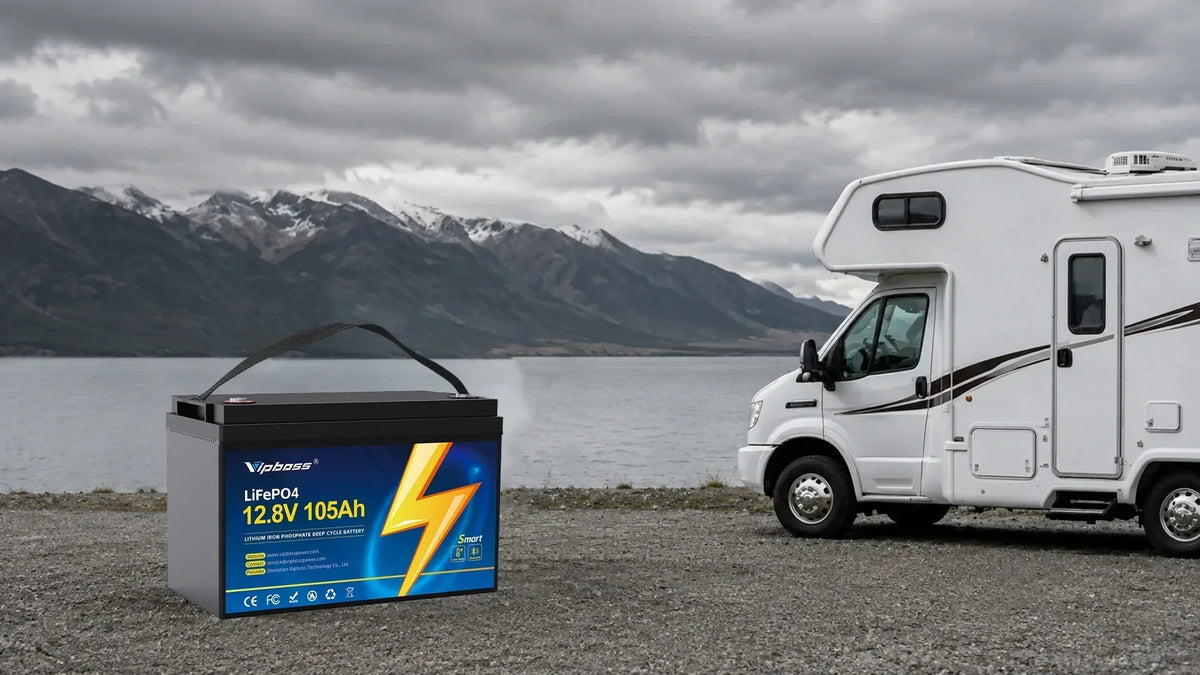

Your RV solar battery stays below full charge because cloudy weather cuts solar production while your appliances keep using energy. The shortfall grows each day, so one sunny afternoon may lack enough extra power to refill the battery bank.
How Do Several Cloudy Days Create a Charging Deficit?
Several cloudy days create a charging deficit when your RV uses more energy than the panels collect. Panels still produce power through cloud cover, though thick clouds can sharply reduce direct sunlight. Cloud density, moisture, dust, season, and sun angle all affect solar radiation reaching a panel.
Suppose your RV uses 1,500 watt-hours per day. The array may collect 1,800 watt-hours on a clear day, leaving a 300 watt-hour surplus. Under heavy cloud cover, the same array may collect only 700 watt hours. The battery supplies the missing 800 watt hours.
After three similar days, the gap reaches about 2,400 watt hours. When stronger sunlight returns, current RV loads use part of the new solar harvest before any surplus reaches the battery.
Use one simple calculation:
Daily solar harvest minus daily RV use equals the daily surplus or deficit.
Track watt hours because battery percentage alone can shift with voltage, temperature, and recent loads.
Is Solar Input Lower Than Daily Battery Use?
Solar input is lower than daily use when the controller records fewer watt hours than your RV consumes over the same 24 hour period.
If your RV uses 1,200 watt hours while the panels collect 750 watt hours, the battery supplies 450 watt hours. Four similar days create a 1,800-watt-hour deficit.
Check high-draw appliances first. Water heaters, space heaters, air conditioners, microwaves, coffee makers, and electric cooking equipment can use more energy in a short period than lights and fans use all day.
A battery bank for camper use with Bluetooth monitoring can show voltage, current flow, remaining capacity, and charging activity. Such readings make the daily energy gap easier to identify.
Record solar harvest and energy use at the same time each evening. Several days of data will show whether weak production, high use, or both are causing the shortfall.
What Is Limiting the Solar Panel Output?
Panel output falls when shade, dirt, heat, poor sun angle, wiring loss, or controller limits reduce charging power. Real roof output changes throughout the day because sun angle, cell temperature, equipment condition, and shading affect solar photovoltaic performance.
Check these common limits:
• Partial shade: Roof vents, antennas, air conditioners, trees, and nearby RVs can shade part of a panel.
• Dirty surfaces: Dust, pollen, road film, leaves, and bird droppings reduce incoming light.
• Low sun angle: Flat roof panels receive less direct light during winter, early morning, late afternoon, and high latitude travel.
• High cell temperature: Hot panels often produce lower voltage, which can reduce photovoltaic efficiency.
• Wiring loss: Long cable runs, undersized wire, loose connectors, weak crimps, corrosion, and damaged fuses can reduce charging current.
• Controller limits: A low current rating can cap output even when the array has more power available.
Check panel voltage, controller input, charging current, battery voltage, and active loads near solar noon on a clear day. Steady low readings often point to dirt, heat, sun angle, or an undersized component. Fast changes often point to moving shade or a loose connection.

Are the Charging Settings Preventing a Full Recharge?
Charging settings can stop the battery short of full when the controller uses the wrong chemistry profile, charge voltage, absorption period, temperature rule, or current limit. A lead acid profile may use charging stages that differ from LiFePO4 requirements.
Review the setup in order:
- Select the battery chemistry. Choose a LiFePO4 profile or an approved custom profile.
- Confirm the charge voltage. The Vipboss 12V105Ah LiFePO4 battery uses a listed charging range of 14.2 to 14.6 volts. Follow the limits for your exact model.
- Review the absorption period. A short timer may move the controller into float mode before charging is complete.
- Check temperature protection. Many LiFePO4 batteries pause charging near freezing to protect the cells.
- Compare current limits. The controller, battery management system, charger, cable, and fuse ratings can each cap charging speed.
- Check voltage drop. Measure voltage at the controller and battery during charging. A clear difference can point to a cable, connection, or fuse issue.
The best lithium battery for RV solar system use should match the controller voltage, charging current, cold-weather needs, monitoring preferences, and expansion plans.
Which Backup Charging Source Can Close the Gap?
Shore power, alternator charging, or a generator can close the gap when solar production stays below daily use. Choose the source that fits your camping location and travel pattern.
Shore Power
Shore power provides steady charging at campgrounds, driveways, and storage locations with an outlet. Use a lithium-compatible converter or charger that matches the battery voltage and charge limits. Missing watt hours and charger output give you a rough recovery time, though active RV loads and charging losses add extra time.
Alternator Charging
A DC to DC charger refills the battery while you drive. Match the charger with the alternator capacity, cable size, fuse rating, and battery charge limit. Regular travel days can add several hours of charging without relying on strong midday sun.
Generator Charging
A generator can power an AC battery charger during remote stays. Match generator output with charger demand, and account for ventilation, fuel supply, operating noise, and quiet hours. A higher current charger can shorten run time when the battery accepts that rate.
Use backup charging before the battery reaches a very low level. Earlier charging leaves more reserve for overnight loads and another cloudy day.

Restore Reliable RV Battery Charging Before the Next Cloudy Period
Reliable charging returns after you compare daily solar harvest with RV use, remove panel losses, correct controller settings, and test a backup charger. Battery capacity controls how long your RV can run through weak solar conditions, while panel wattage and charger output control recovery speed.
Use measured daily consumption to size your RV solar battery. Multiply daily watt hour use times the number of reserve days, then allow room for cold weather, inverter losses, and the battery’s usable capacity limit. The result gives you a practical storage target for future trips.
FAQ about RV Solar Battery and Solar Charging
Q1: Can Several Cloudy Days Permanently Damage an RV Solar Battery?
Usually, no. Cloud cover leaves the battery chemistry unchanged. Long periods near empty can shorten service life when standby devices keep drawing power. A battery management system may disconnect output at its low voltage threshold. Recharge soon after that event and check the battery manual before reconnecting heavy loads.
Q2: Does an MPPT Controller Store Unused Solar Energy?
No. An MPPT controller converts available panel power into charging power at an efficient voltage and current. Energy storage happens inside the battery. Once the battery reaches its accepted charge target and RV loads stay low, the controller reduces panel output because the extra energy has nowhere to go.
Q3: Can a Second Energy Storage Battery Be Added Without Replacing the Solar Panels?
Yes. A compatible second battery can increase energy storage while the same panels remain in place. Match chemistry, nominal voltage, capacity, connection method, cable size, fuse rating, and state of charge. The larger bank will take longer to refill, so check controller capacity and expected charging time before expansion.
Q4: Can Bright Overcast or Snow Reflection Increase RV Solar Output?
Yes, under certain conditions. Bright clouds can scatter light across the sky, while clean snow can reflect extra light toward tilted or bifacial panels. Bifacial solar testing over reflective snow has recorded higher output. Snow covering the panel surface blocks light and lowers production.
Q5: Should RV Solar Panels Stay Connected During Long-Term Storage?
Usually, yes, when the controller and battery manuals allow continuous connection, and the battery stays within its charging temperature range. Turn off large RV loads, keep fuse protection active, and check charge level periodically. Disconnect the array during electrical service, damaged wiring, or storage conditions outside the battery limits.