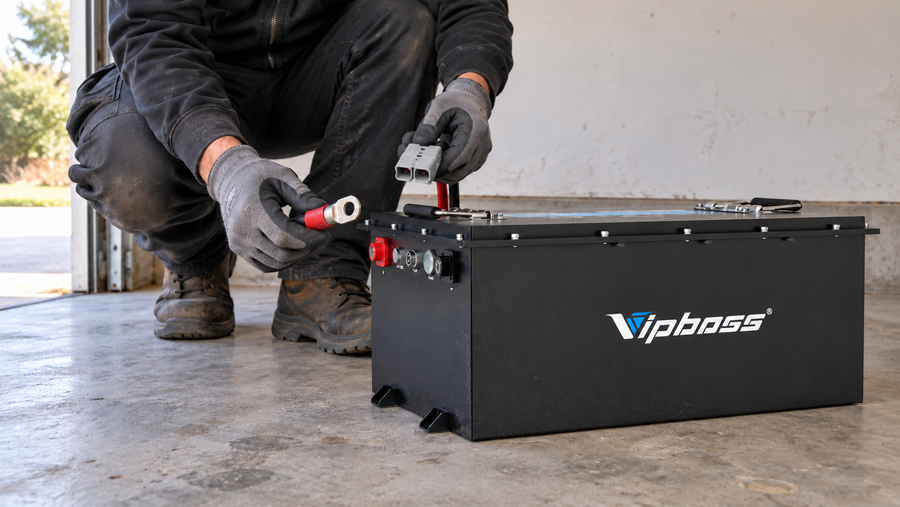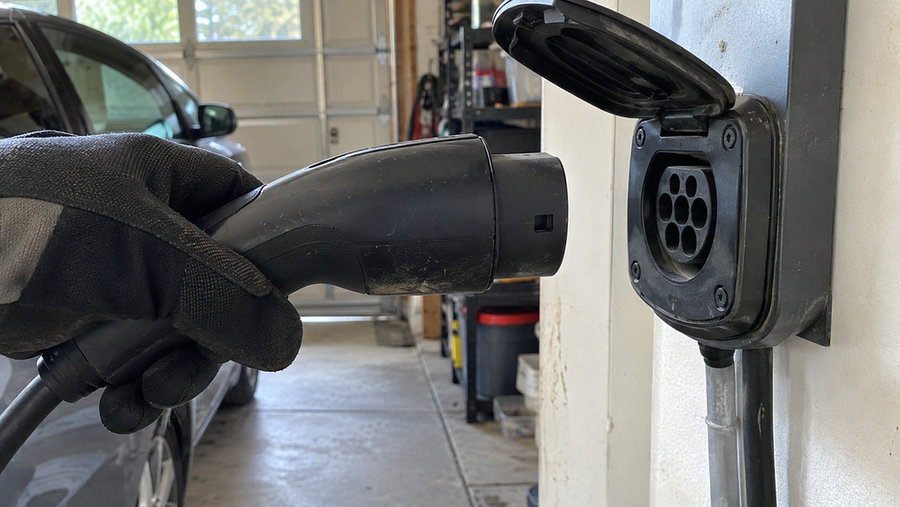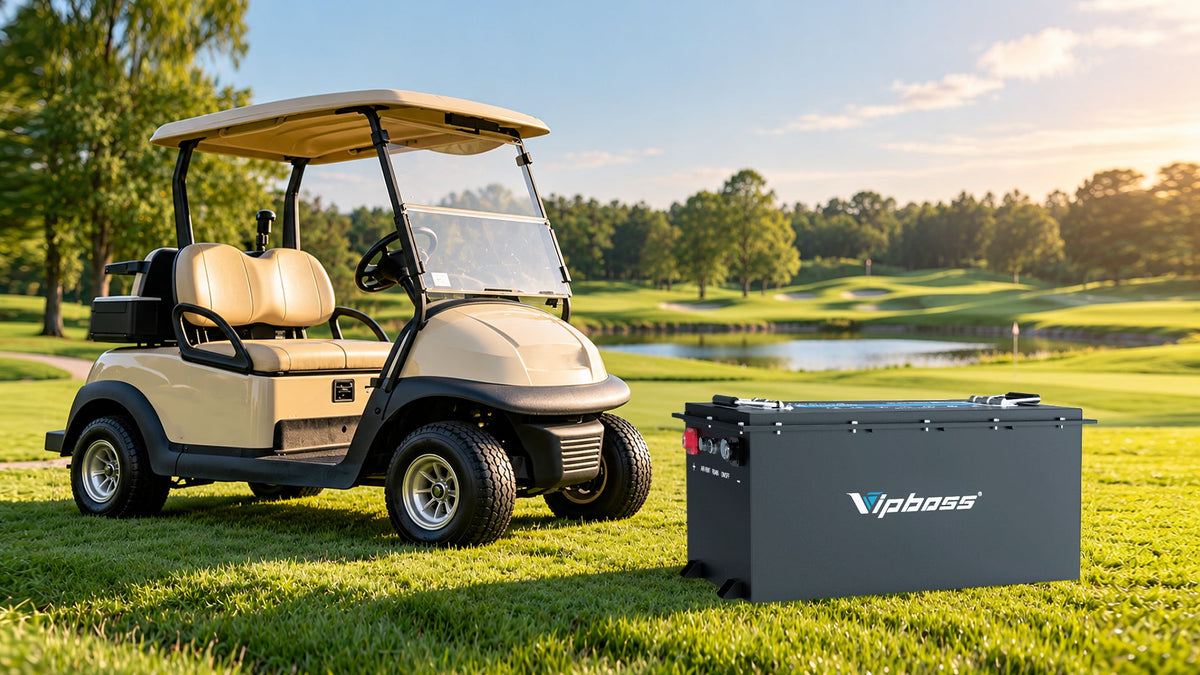

Yes, you can often keep the factory charge port after a golf cart lithium conversion. Reuse works when the receptacle, plug, polarity, cable rating, charger output, and lockout circuit fit the new battery system. The socket may stay, but every connection behind it still needs inspection.
What Does the Factory Charge Port Connect To?
The factory charge port usually connects the charger to pack positive and pack negative, with extra contacts on some carts for sensing or drive lockout.
| Connection | Common Job | What to Check |
|---|---|---|
| Positive cable | Carries charging current to pack positive | Polarity, cable size, fuse, and terminal condition |
| Negative cable | Returns current to pack negative | Direct path or original control route |
| Sense contact | Detects the charger or battery pack | Lithium charger compatibility |
| Lockout circuit | Blocks vehicle operation during charging | Correct operation after conversion |
| Port housing | Holds and protects the contacts | Firm mounting, clean contacts, and tight plug fit |

During a golf cart lithium battery conversion, trace every wire from the rear of the port to its final connection. Reuse is suitable only when the full path supports the battery management system and charger.
Does the Charger Match the Lithium Pack?
A charger matches the lithium pack only when its chemistry profile, maximum voltage, charge current, connector wiring, and polarity meet the battery specifications.
Most LiFePO4 systems use a constant current stage, then a constant voltage stage. Current stays controlled early in the cycle and gradually drops as the pack reaches its charge limit. Research on CC and CV charging covers the same two-stage method used across lithium battery systems.
| Battery Label | Common Pack Layout | Typical Charge Limit |
|---|---|---|
| 36V LiFePO4 | Often 12 cells in series | 43.8V |
| 48V or 51.2V LiFePO4 | Often 16 cells in series | 58.4V |
| Other lithium pack | Cell count varies | Follow the battery label |
The VIPBOSS 36V 25A lithium charger lists a 43.8V output. Its 48V 18A LiFePO4 charger lists a 58.4V output.
A 36V golf cart battery charger built for lead-acid may share the same plug while using a different final voltage or control pattern. A 48V LiFePO4 battery charger also needs a current rating within the pack's allowed range. Match the electrical ratings before checking plug fit.
Do Club Car OBC Systems Need Changes?
Many older Club Car carts with an onboard computer need circuit changes when the original charging controls remain in the negative path.
An OBC may control charger operation, monitor pack voltage, and support charging logic. OBC-equipped Club Car vehicles use different charging procedures from other systems.
Check the setup in order:
- Identify the OBC or later charging controller.
- Trace the negative lead from the factory receptacle.
- Confirm where the lead reaches the battery pack.
- Follow the lithium kit wiring plan for the charger and BMS.
- Keep a working drive lockout through the original circuit or a compatible replacement.
- Test charger startup and lockout operation before closing the battery compartment.
Some conversion kits include an OBC bypass cable or replacement receptacle loom. Use parts built for the exact cart generation, pack voltage, and charger plug.
How Do EZGO and Yamaha Ports Differ?
EZGO and Yamaha charge ports differ in plug shape, contact layout, activation circuits, and communication features across model years.
| Cart Family | Common Port Features | Main Check |
|---|---|---|
| EZGO | Polarized receptacle with activation or lockout features on many models | Plug shape, polarity, and signal contact |
| Yamaha | Several receptacle styles, with battery communication on some lithium models | Battery type, pin layout, and data connection |
An EZGO TXT electric manual covers a polarized charger connector. Other EZGO manuals describe an interlock that prevents vehicle operation while a charger remains connected.
Some current Yamaha lithium golf cars pair the battery pack with a vehicle control unit. Older lead acid carts may use a simpler charging circuit.
Similar plugs may carry different signals. Confirm the cart model, model year, pack chemistry, system voltage, and pin layout before choosing an adapter.
What Wiring Checks Come Before Charging?
Check polarity, continuity, cable size, fuse protection, connector condition, and cable support before applying charger power.
- Isolate the battery pack under the battery installation procedure.
- Label the positive, negative, sensing, and lockout conductors.
- Check continuity from each port contact to the intended battery connection.
- Confirm port polarity with a digital multimeter.
- Compare cable and connector ratings with charger output current.
- Inspect the fuse, terminals, insulation, grommets, and strain relief.
- Secure cables away from sharp edges, moving parts, heat, and tire spray.
- Seat the plug fully, then watch the first charging session for heat, odor, noise, or fault lights.
Repair a loose receptacle, dark contact, weak contact spring, damaged cable jacket, or corroded terminal before regular charging. Poor contact raises resistance and can heat the connector even when charger voltage is correct.
When Is Replacing the Factory Port Safer?
Replace the factory port when damage, low current capacity, poor plug fit, or incompatible control contacts create an unreliable charging path.

A replacement port is the safer choice when you find:
- Melted plastic, dark marks, or burned terminals
- Corrosion, bent pins, or weak contact pressure
- A plug that moves or loses electrical contact
- Cable or connector ratings below charger output
- A sensing contact that conflicts with the lithium charger
- Too little room for insulated terminals or strain relief
- Repeated heat near the receptacle during an early charging test
- An adapter with loose or exposed connections
Choose a port rated above the charger's maximum voltage and current. Add strain relief, insulated terminals, edge protection, weather protection, and a clear polarity label.
Confirm Your Charging Setup Before Regular Use
You can reuse the factory charge port when the wiring, polarity, current rating, charger output, and safety circuits match the lithium battery system. Run one supervised full charge and check for excess heat, loose connections, fault lights, or repeated BMS cutoffs. Record the final wiring layout, fuse rating, and charger output for future service. Complete every check before returning the cart to daily use.
FAQ about Reusing the Factory Charge Port
Q1: Should a Golf Cart Be Disabled While the Charger Is Connected?
Yes. Turn the key off, set the parking brake, place the direction control in neutral, and shut down accessories. A working charger interlock adds protection against accidental movement. End the charging session before removing the plug, then return the cart to run mode after the connector has cleared the receptacle.
Q2: Can You Replace the Charge Port Cover Without Replacing the Port?
Yes. A damaged lid can often be replaced while the electrical receptacle stays in place. Match the hinge position, screw spacing, cover shape, and panel opening. The new lid should close fully and shield the contacts from dirt and water. Replace the full port when the hinge base or surrounding housing also has cracks.
Q3: How Often Should Golf Cart Charge Port Contacts Be Inspected?
Check the plug and receptacle before each charging session, with a closer inspection once a month. Carts used near salt water, in rain, on dusty paths, or several times per day need shorter intervals. A seasonal cart also needs one check before storage and another before returning to service.
Q4: Can a Golf Cart Charge Port Be Relocated to a Different Panel?
Yes. The new panel needs enough depth, cable clearance, weather protection, and structural support. Keep the cable route short and protect cut metal or plastic edges with a grommet. Place the port away from suspension travel, steering parts, tire spray, hot components, and spots where passengers may hit the connected plug.
Q5: Does an Onboard Charger Need a Separate AC Inlet?
Yes. An onboard charger needs an AC inlet for shore power and a DC output connection to the battery. For a cart used in an energy storage setup, keep charger input separate from inverter output. Each circuit needs its own cable rating, connector type, overcurrent protection, and clear labeling to prevent an incorrect connection.