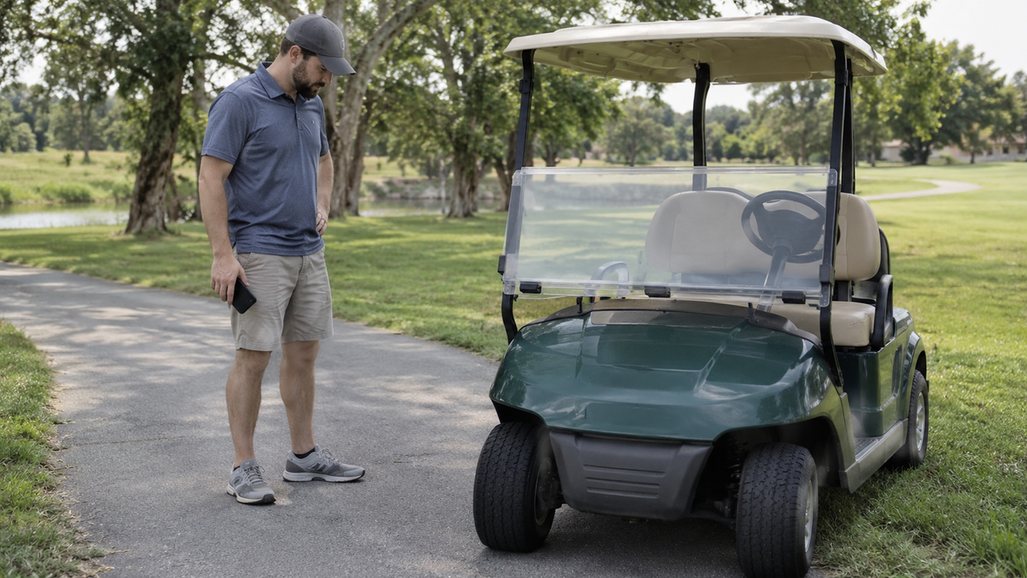

A lithium golf cart that shuts off when you accelerate should be treated as a fault requiring diagnosis, not as proof that the battery is dead. Stop driving, record the exact condition and any battery display or app message, then use the battery and cart manuals to choose the next check. If the shutdown returns during acceleration, compare the documented battery and controller limits for the exact models; do not bypass the battery management system (BMS) or reset it outside the applicable recovery procedure.
What the shutdown pattern tells you
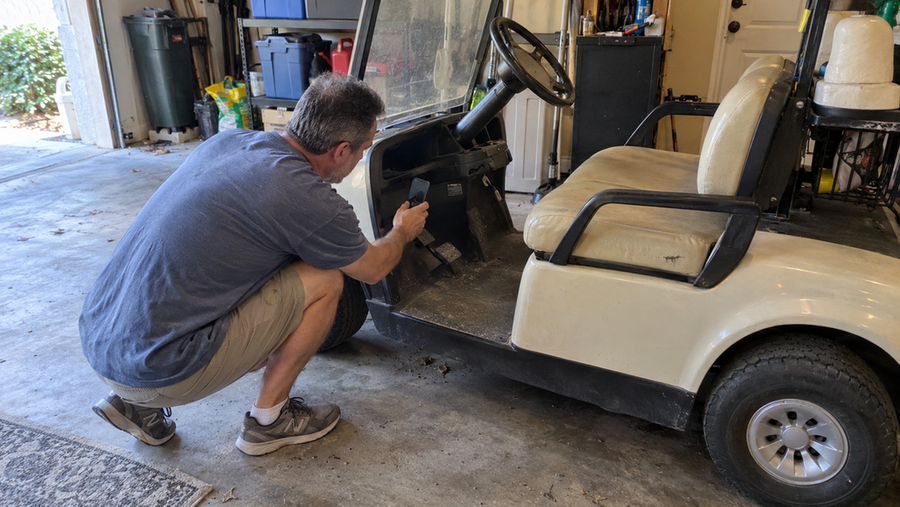
Record when the shutdown occurs, such as during acceleration, hill climbing, charging, or another repeatable condition. Record the exact battery and cart models and use their manuals to determine which check applies next. The trigger is a record for the diagnosis, not by itself a confirmed cause.
If the cart loses power unpredictably, stop repeated test runs and record the available fault information first. Keep the cart out of service when it is unsafe or damaged. Pre-use inspection of acceleration, steering, brakes, tires, and other operating systems is also recommended in the Texas Department of Insurance golf cart safety fact sheet.
Check the battery and high-current connections first
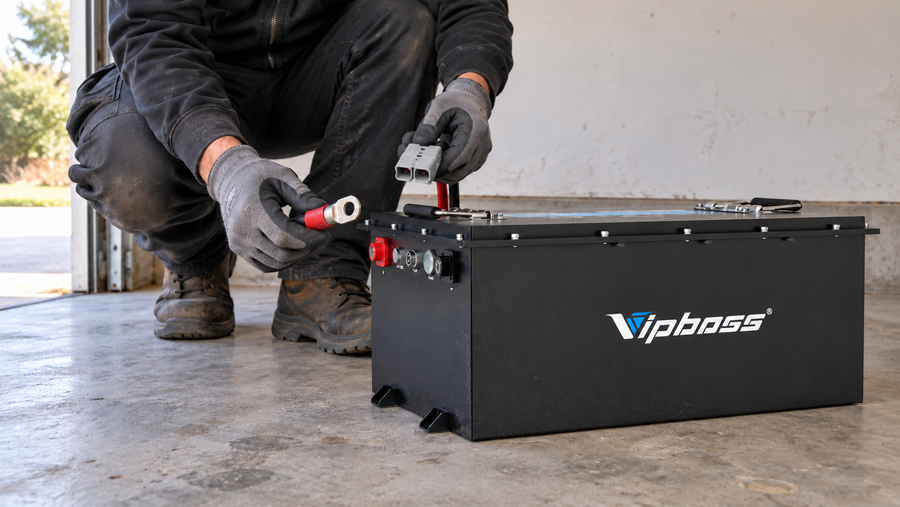
Turn the key off and follow the exact cart and battery service instructions before inspecting any accessible connection. Use those instructions to determine the required service position and whether the check is suitable for you. Record the condition of the accessible battery, fuse, disconnect, and main-cable connections without treating a visual check as a diagnosis.
Do not guess a tightening torque or change a high-current connection outside the applicable service instructions. If an accessible connection appears loose or damaged, record it as a service issue and follow the exact manual. If the connection check does not identify the next step, return to the battery's documented fault information rather than replacing parts at random.
Read the BMS fault before resetting anything
Record the exact battery model and any available LED pattern, display message, app warning, or fault code before using a reset or recovery procedure. Use only the procedure documented for that battery model; do not assume that a power button, charger connection, app command, or timed power cycle applies to every BMS.

Record whether the documented procedure changes the shutdown behavior. If the battery documentation does not establish a safe recovery step, stop there and seek model-specific service support instead of repeating resets.
Compare battery output with controller demand
Use the exact battery, controller, and cart manuals to compare the battery's documented discharge limits with the controller's documented demand and operating limits. Do not apply a generic 36V or 48V rule to every lithium pack. Treat compatibility as unconfirmed when the applicable limits are missing or do not match.
For a replacement or conversion candidate, the Vipboss 48V 150Ah lithium golf cart battery conversion kit is specified as a 51.2V, 150Ah LiFePO4 battery with a 200A BMS, 200A maximum continuous discharge, and a peak discharge rating of up to 1000A for 3 to 5 seconds. These are product specifications, not proof that the kit matches your cart. Confirm your cart's voltage, controller demand, charger, wiring, accessory system, and physical installation requirements against the applicable manuals before considering it.
Check the charger and cart-side components
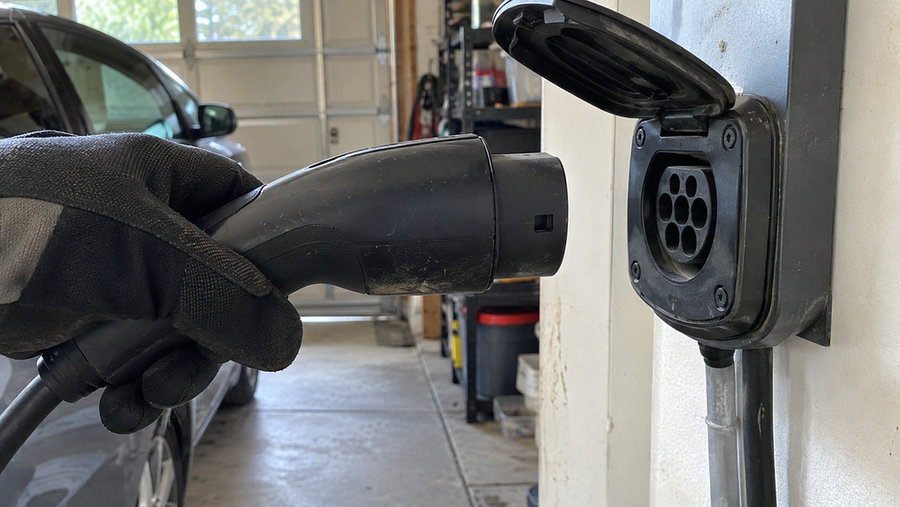
Record the charger, controller, fuse or disconnect, main cables, solenoid or contactor, throttle input, motor, regenerative-braking system, and accessory converter models where applicable. Use the applicable vehicle, battery, charger, and controller manuals to determine which of these components must be checked for the exact cart configuration.
Do not change controller cutoffs, regenerative-braking settings, charger voltage, or battery wiring based on a generic setting found online. When a required limit or procedure is missing, record the model numbers and obtain model-specific guidance before changing the system.
If the battery documentation does not identify a fault and the accessible connection check does not establish the next step, use the cart service manual to determine whether further component testing is appropriate. Do not proceed with a test that the manual does not describe as safe for your configuration.
Know when to stop testing
Stop using unsafe or damaged equipment. The Texas Department of Insurance golf cart safety fact sheet recommends stopping use of unsafe or damaged equipment and inspecting operating systems before use. Do not continue charging or testing when the applicable battery or cart instructions do not establish a safe next step.
The diagnosis is not established merely because the cart starts again after a reset. If the exact battery and cart documentation does not identify the next safe check, leave the cart out of service until qualified service support provides one.