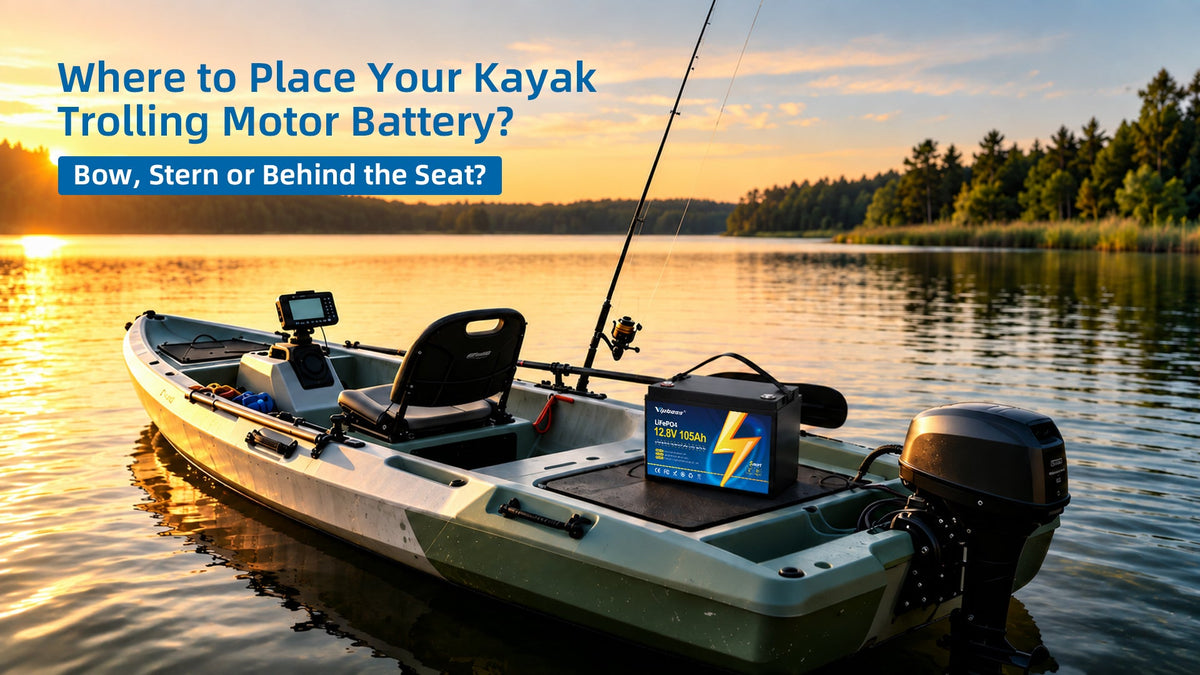

The best battery position keeps your kayak level and easy to control. Put the battery in the bow to balance rear weight, near the stern for a shorter cable run, or behind the seat for easier access. Total load, hull trim, available space, and motor location should determine the final spot.
How Much Weight Can Your Kayak Carry?
Use the kayak’s rated capacity and full fishing load to set a safe battery weight limit. Add your body weight, motor, battery, seat, tackle, electronics, cooler, anchor, safety gear, and any water that may collect inside the hull.
Safe boat loading practices favor even weight distribution and a low center of gravity. Leave extra capacity for waves, current, and gear that may shift while you fish.
Check the load in five steps:
- Find the weight limit on the capacity label or in the owner manual.
- Add the weight of every person and item carried.
- Include the motor mount, battery box, cables, and connectors.
- Load the kayak as you would for a normal trip.
- Place it in calm, shallow water and check the waterline.
A low stern, raised bow, or steady side lean shows where weight needs to move. Adjust the load before installing a permanent battery tray.
Can Bow Placement Balance a Heavy Stern?
Yes, bow placement can balance a kayak with a motor, crate, rudder, and fishing gear near the stern. Moving the kayak battery for trolling motor use forward reduces rear load and helps the hull sit closer to level.
Bow placement works best when you have:
- A strong front hatch or battery tray
- A protected route for the power cables
- Room for straps and covered terminals
- Battery access from shore
- Enough front buoyancy for the added weight
Keep the pack low and close to the centerline. A battery too far to one side can cause a steady lean, while a pack too far forward can push the bow lower than needed.
Does Stern Placement Simplify Motor Wiring?
Yes, stern placement usually gives a rear-mounted trolling motor the shortest cable run. Shorter cables reduce clutter and limit voltage loss when cable size matches motor current.
A tank well, crate slot, or covered rear compartment can hold the pack. Keep the battery centered and clear of rudder lines, scupper holes, and moving hardware.
Stern placement works well on kayaks with strong rear buoyancy and limited gear behind the seat. Move the pack forward when the rear waterline sits low, the bow rises in wind, or slow turns feel heavy.
After checking motor draw and loaded trim, compare 12V LiFePO4 battery options based on voltage, expected runtime, weight, and case size. The best battery for kayak trolling motor use should meet the motor’s power needs while leaving enough load capacity for fishing gear.
Is Behind the Seat More Convenient?
Yes, a battery behind the seat is usually easier to check, connect, and remove.
Use a fitted tray, rigid box, or crate section that holds the pack firmly. Leave room for seat adjustment, pedal drive removal, tackle access, and reentry after a capsize. Keep the main connector within reach from shore.
A small battery for trolling motor use may fit beside a tackle box. A larger pack may need most of the tank well and stronger anchor points.
Load your normal gear before choosing the spot. Check legroom, side balance, and access to safety equipment.
How Does Battery Placement Affect Cable Length?
Battery position determines the cable distance between the pack and a rear mounted trolling motor. Longer routes may need thicker wire to keep voltage drop within the motor’s wiring limits.
| Battery Position | Typical Cable Distance | Main Wiring Effect |
|---|---|---|
| Bow | Usually the longest | May need thicker wire |
| Behind the seat | Usually moderate | Keeps the battery accessible without a full length cable run |
| Stern | Usually the shortest | Uses less cable and keeps wiring close to the motor |

Measure the full circuit from battery positive to the motor and back to battery negative. A six-foot one-way route counts as a twelve-foot circuit. Select wire size from the motor wiring chart using maximum amp draw and total circuit length.
How Should You Secure the Battery?
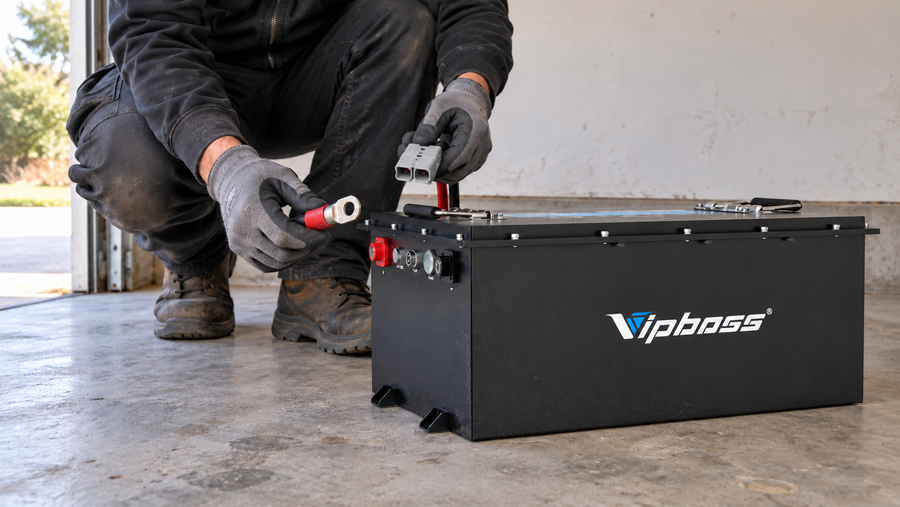
Secure the battery low and near the centerline in a water-resistant tray or box. The mount must hold the pack during sharp turns, waves, transport, and a capsize.

A solid setup includes:
- A rigid tray or fitted box
- Two strong straps or a fixed hold-down
- Covered battery terminals
- A fuse or circuit breaker near battery positive
- Sealed cable exits with strain relief
- Corrosion-resistant hardware
- A connector rated above motor current
- Clearance above standing water
Keep plugs and terminals above water that may collect in a hatch or tank well. Add secure electrical connections to your kayak safety checks before each trip.
Turn the loaded kayak on its side during a dry land test. The battery should remain in the tray and the cables should stay free from strain.
Test the Battery Position Before Drilling
Test each practical battery position in calm, shallow water before drilling or installing a permanent tray. Load the kayak with your normal fishing gear, then check the waterline, steering response, turning effort, and access to controls. Move the battery a few inches at a time until the kayak stays level and handles evenly in both directions. Mark the final location only after the setup feels stable under motor power.
FAQ about Kayak Trolling Motor Battery
Q1: Can a Fish Finder and Trolling Motor Share the Same Kayak Battery?
Yes. One LiFePO4 pack can power both devices when voltage matches and total current stays within battery limits. Use separate fused circuits for the motor and fish finder. Motor electrical noise may affect sonar images, so a voltage regulator or separate accessory battery can provide cleaner power for sensitive electronics.
Q2: Does a LiFePO4 Battery Box Need Ventilation?
Usually, yes. A LiFePO4 battery box needs airflow for heat control and clear space around any pressure feature built into the case. Follow the battery temperature limits and enclosure instructions. Use openings that allow drainage while limiting spray, and avoid an airtight homemade box that traps heat around the battery.
Q3: Can You Charge the Battery Without Removing It From the Kayak?
Yes. Charging can take place in the kayak when the boat sits dry, stable, and sheltered from rain. Turn off all electrical loads and use a charger matched to battery voltage and chemistry. Keep AC plugs and extension cord connections away from wet ground or standing water, and stay nearby until charging finishes.
Q4: Is a Quick Disconnect Plug Necessary for a Kayak Trolling Motor?
No. A hardwired connection can power the motor, while a quick disconnect makes setup, battery removal, transport, and cleaning faster. It also lets you separate the motor from the battery before storage or service. A protective cap keeps the unplugged connector clean during transport and between fishing trips.
Q5: Can the Battery Stay in the Kayak Between Fishing Trips?
Yes, for short periods when the kayak stays dry, shaded, secure, and within the battery storage temperature range. Disconnect all loads because small electronics can slowly drain the pack. For longer breaks, remove the battery, check its charge level, and store it in a dry area away from direct sun, freezing conditions, and metal objects near the terminals.