
Your existing golf-cart cables and connectors may work with a lithium battery, but a matching plug alone does not establish compatibility. First identify the cart's system voltage, then compare the cable, terminal, connector, protection, controller, and charger information with the lithium battery and cart documentation. If any required detail is unknown, treat the connection as unconfirmed until the applicable documentation or model-specific guidance resolves it.
Check the cable and connector against the cart's electrical system

Start with the battery cables, not the connector shape. Record the cart's voltage, cable labels or markings, terminal size, connector type, polarity, and any fuse, breaker, or disconnect information. Then compare those details with the battery and cart manuals.
Check whether the documentation identifies suitable cable insulation, terminals, routing, and current capacity for the specific system. Also inspect whether the lug is secure, the insulation is intact, and the connection can be made without stressing the terminal. Physical reach or a loose fit does not establish compatibility.
Check the connector in the same way:
- Polarity: Compare positive and negative with the applicable wiring documentation rather than relying on color alone.
- Voltage rating: Confirm the documented connector rating against the battery system and its charging requirements.
- Current rating: Compare the connector rating with the requirements stated for the cart's controller and battery system.
- Contact condition: Inspect for looseness, melting, corrosion, discoloration, or other visible damage before treating the connection as confirmed.
- Cable entry: Confirm that the documented cable route can be followed without forcing the cable against a cover or edge.
- Protection: Check the fuse, breaker, or disconnect arrangement against the applicable cart and battery documentation.
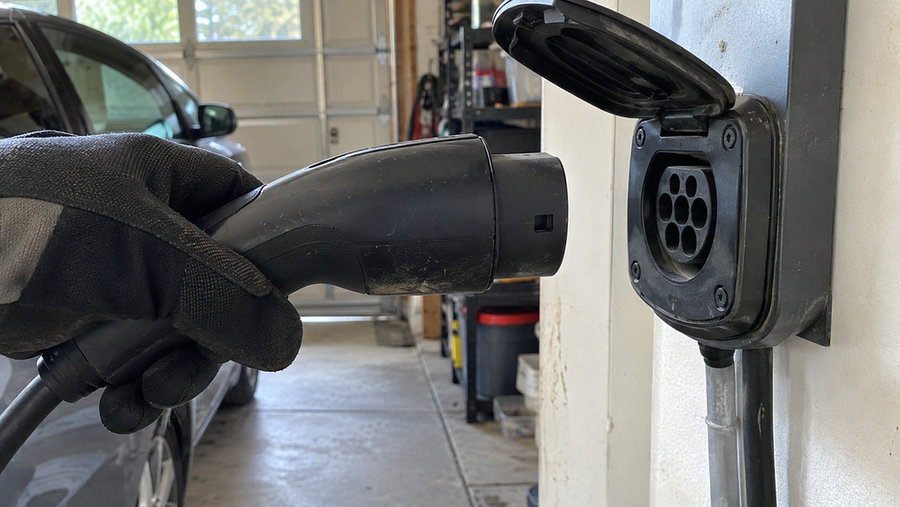
Apply the same documentation check to the charging connection. A plug can fit the cart's charge port while the charger requirements remain unresolved. Confirm that the charger and its output requirements are identified for the lithium battery before classifying the connection as compatible.
Use the cart's actual starting condition, not a generic fitment rule
The compatibility result depends on what is already in the cart. For a stock 48V cart with undamaged cables and a documented lithium conversion path, compare the existing main cables and connections with the applicable battery and cart documentation. If the cart has a different voltage, a replacement controller, an added motor, damaged wiring, or unknown modifications, treat the existing connectors as unconfirmed until the complete system information is checked.
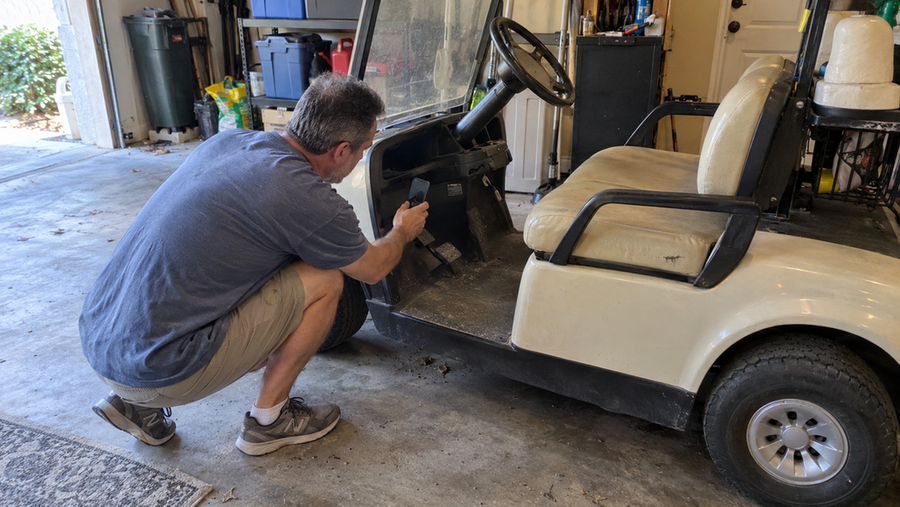
Measure the battery compartment and inspect the cable route before ordering. Compare the available space, terminal locations, and cable reach with the battery and cart documentation. Also check whether accessories and their voltage-reduction equipment are covered by the applicable instructions.
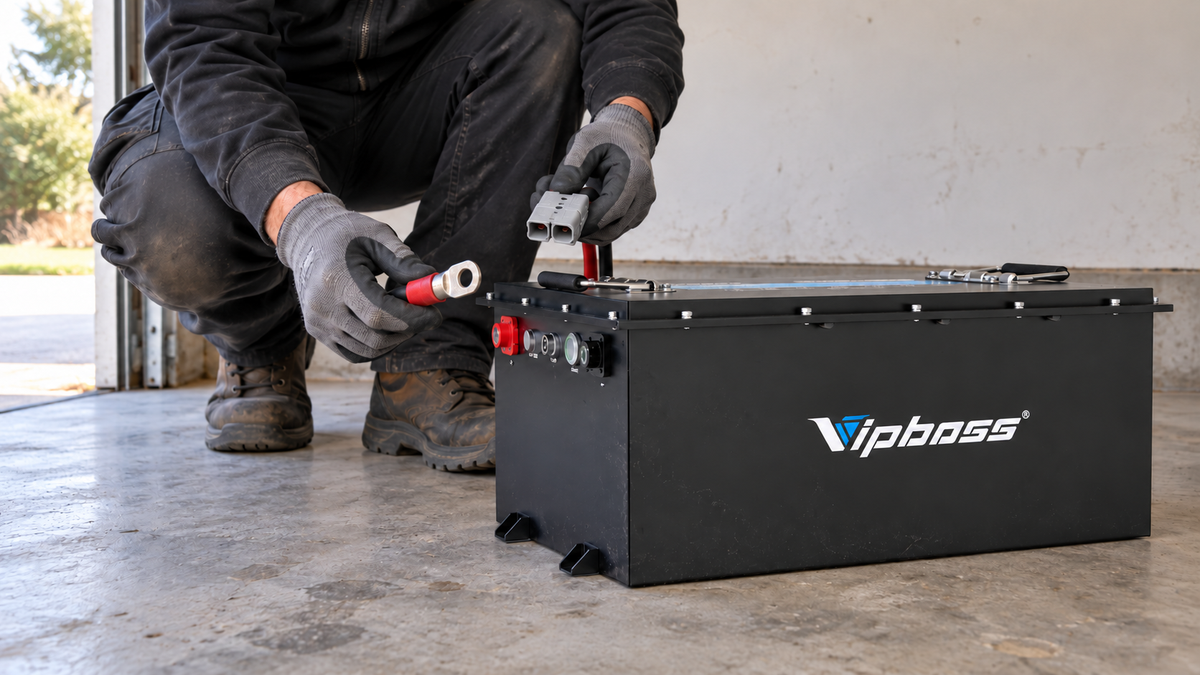
For a 48V cart that passes those checks, the Vipboss 48V lithium golf cart battery conversion kit is a product candidate. The kit is described as a 51.2V, 150Ah LiFePO4 battery with a lithium-compatible charger, an Anderson connector cable, terminal hardware, insulating sleeves, and a 20.5 × 13.7 × 8.66-inch enclosure. Compare those product details with the cart's actual voltage, controller, charger, cable route, connector arrangement, and available space before treating the kit as a fit. The included connector cable does not establish compatibility with every cart.
Stop when one connection cannot be verified
Do not classify the conversion as confirmed when the positive and negative paths, connector condition, cable information, charger requirements, or physical fit remain unresolved. Resolve the missing detail using the applicable cart and battery documentation or model-specific guidance.
A practical compatibility decision is: confirmed means the cart voltage, battery operating range, cable and connector information, polarity, charger, terminals, protection, and physical fit agree with the applicable documentation. Unconfirmed means at least one of those items is unknown or unresolved. The connector's ability to plug in is only one observation and does not by itself establish that the complete electrical system is compatible.