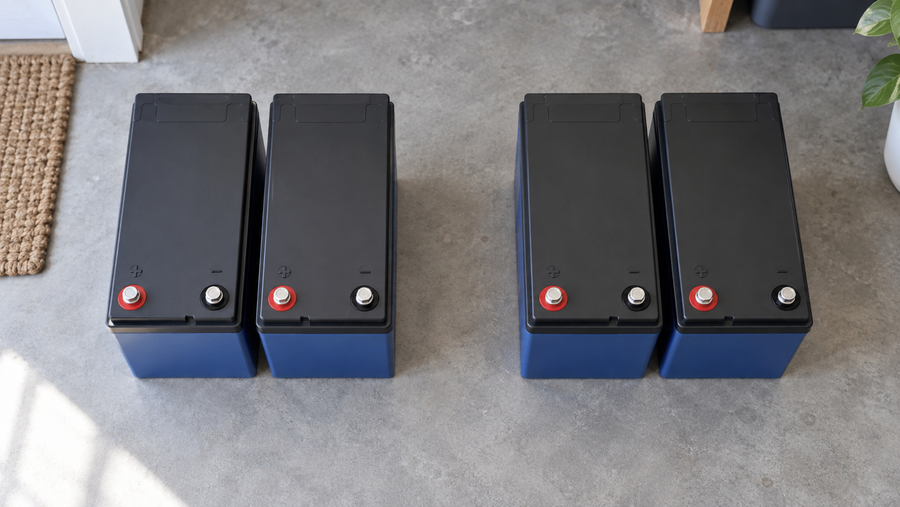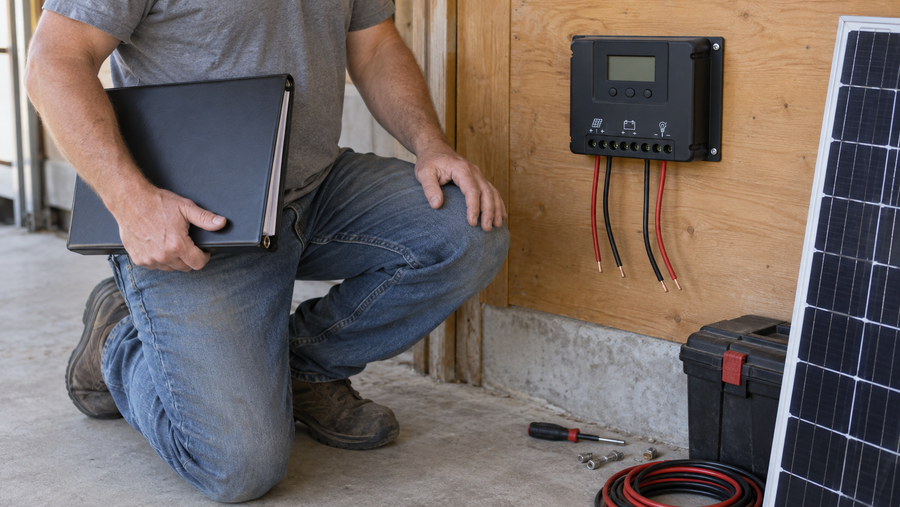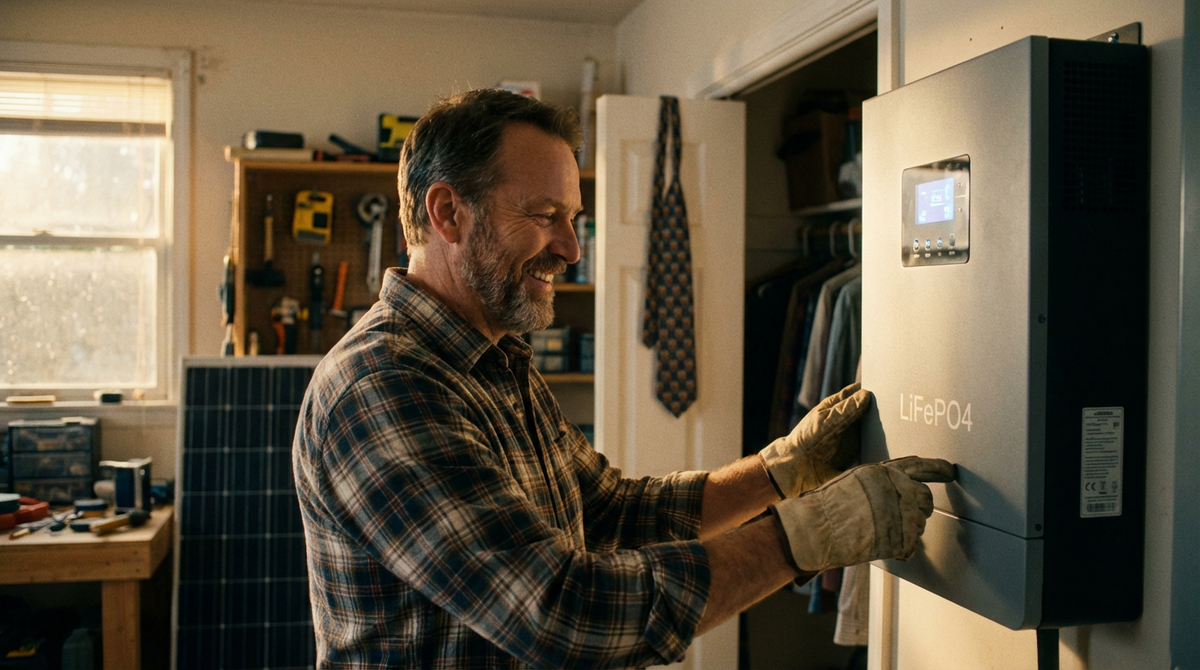

A lithium iron phosphate (LiFePO4) battery bank gives Dad quiet, reliable power for his home, hobbies, and adventures long after any dress tie has been forgotten in the closet.
Picture Dad fumbling for flashlights when the power drops during the big game while last year’s tie still hangs untouched. Swap that frustration for a modern battery system that keeps his lights, fridge, and favorite tools running through outages for thousands of charge cycles with almost no tinkering. This guide shows how LiFePO4 technology works, when it truly beats old-school batteries, and how to choose a setup Dad will actually use every week, not just on Father’s Day.
What Makes a LiFePO4 Battery a Game-Changer Gift?
Lithium iron phosphate, often shortened to LiFePO4, is a modern rechargeable battery chemistry built for deep cycling, safety, and longevity. Compared with traditional lead-acid batteries, LiFePO4 packs deliver far more usable energy from the same rated capacity because they can safely use nearly their full charge instead of being limited to roughly half before damage becomes a concern. They also typically last for about 3,000 to 5,000 or more charge-discharge cycles rather than just a few hundred. LiFePO4 batteries tend to be much lighter for the same capacity and charge more efficiently, so less of Dad’s hard-earned solar or grid electricity is wasted as heat.
For home solar, off-grid cabins, and backup systems, LiFePO4 has become a preferred chemistry because it combines long cycle life with high round-trip efficiency, often above 90%, and a working temperature range that typically spans from roughly -4°F to about 140°F. These traits make lithium iron phosphate batteries ideal for garages, utility rooms, and outdoor enclosures where summer heat and winter cold are part of everyday life. In practical terms, Dad can store solar energy all day and get most of it back at night, season after season.
On the environmental side, LiFePO4 cells use iron and phosphate rather than cobalt or lead, are less prone to toxic leaching, and generally handle recycling better than many older chemistries. That makes them attractive if Dad cares about both performance and the impact of his gear on the planet.

Why Dad Will Actually Use This Gift
A gift only matters if it gets used regularly. LiFePO4 delivers here because it quietly solves problems Dad already has: keeping food cold in an outage, running a sump pump during a storm, powering a detached workshop, or giving his RV or fishing cabin reliable energy without hauling gas cans.
Modern residential energy storage systems built around LiFePO4 cells, such as home battery solutions that sit between solar panels and the breaker panel, are designed specifically to run homes during peak demand, at night, or when the grid fails. Systems like the residential energy storage solutions offered by Seplos take solar power or off-peak grid electricity, store it in LFP batteries, and automatically feed that energy back into the home when needed. For Dad, that means the lights stay on while the neighbors go dark, and his workshop can keep humming even when the grid is strained.
For dads focused on serious backup and off-grid power, high-capacity LiFePO4 banks such as the NEXUS 15 kWh off-grid system are built for exactly this workload. The NEXUS LiFePO₄ battery bank pairs a 15 kWh pack with a 300 Ah capacity, 100 A continuous discharge rating, and support for more than 8,000 cycles, plus an integrated battery management system and a 12-year warranty. In real use, Dad can run heavy loads like power tools, well pumps, or a small mini-split without babying the battery or worrying that a few deep discharges will ruin it.

Safety and Peace of Mind in the Garage or Basement
If you are putting a powerful battery in Dad’s garage, basement, or cabin, safety is not negotiable. This is where LiFePO4 stands out. The chemistry has strong thermal and chemical stability, with a very low risk of overheating or thermal runaway compared with many other lithium-ion types. That is why LiFePO4 is widely described as a safer alternative for high-demand applications like vehicles, buildings, and grid-connected storage.
Several factors work together here. The phosphate-based cathode is inherently more stable, and reputable residential systems wrap the cells in an intelligent battery management system that monitors voltage, current, and temperature. Home storage products built on LiFePO4, including certified residential ESS lines such as Seplos home energy storage, add fire-resistant enclosures, third-party safety certifications, and app-based monitoring that lets you check system status from anywhere. The result is a battery bank that is much less likely to overheat or vent dangerous gases than conventional flooded lead-acid batteries and that actively protects itself from abuse.
On the system side, large-format LiFePO4 banks designed for off-grid homes and cabins, like the rugged floor-standing NEXUS design, incorporate thermal management and strong mechanical protection. With smart thermal suppression and wide operating temperature support built into the NEXUS off-grid lithium battery bank, Dad can park the pack in a utility space and trust that it will continue to operate safely across seasons.

Will It Really Save Dad Money and Hassle?
Upfront, a LiFePO4 battery bank is more expensive than a single traditional battery or a novelty gadget. It makes sense as a serious gift because the total cost over its life is often lower than cheaper chemistries while providing far more usable power and far less hassle.
Where a typical lead-acid battery bank may be limited to about 500 to 1,000 cycles and only half its rated capacity to avoid premature failure, LiFePO4 batteries routinely deliver thousands of cycles at deep depths of discharge before reaching even 80% of their original capacity. When you divide purchase price by total usable kilowatt-hours delivered over that lifetime, LiFePO4 often ends up cheaper per unit of real-world energy than older technologies. Add the fact that many LiFePO4 systems are effectively maintenance free—no watering, no acid fumes, no corrosion cleanup—and it becomes clear how quickly Dad’s time and frustration are saved.
For whole-home or serious backup, complete residential ESS packages that include LiFePO4 batteries, an inverter, and controls typically land in roughly the $5,000 to $20,000 range depending on capacity and installation complexity. That range may sound steep compared with a tie or a gadget, but it buys tangible resilience and the ability to shift energy use away from peak pricing. For a dad who already has rooftop solar or lives where outages are common, the investment turns into protection for refrigerated food, critical medical devices, and day-to-day comfort.
Even at smaller scales, such as a 12 V 100 Ah LiFePO4 module for a cabin or RV, the combination of high usable depth of discharge and efficiency means he can run lights, fans, a laptop, and a small fridge longer and more reliably than on a similarly sized lead-acid battery. Over the years, replacing batteries far less often and avoiding repeated generator fuel costs quickly adds up in your favor.
Real-World Examples: From Garage Backup to Off-Grid Dads
Different dads have different power profiles. Some want rock-solid backup in the suburbs; others are happiest in an off-grid cabin or tinkering with a DIY battery kit.
For grid-tied homeowners, a wall-mount or rack LiFePO4 system tied into solar often makes the most sense. Rack-mounted batteries in the 5 to 10 kWh class, such as the 51.2 V LiFePO4 rack batteries, are designed to slot into standard enclosures and integrate with hybrid inverters. Dad gets a clean, expandable bank that can grow with future loads like a workshop, EV charger, or home office.
For property owners managing more demanding or agricultural loads, multi–tens-of-kilowatt-hour battery systems can make farms and greenhouses far more energy efficient. Large deployments, such as the 38.4 kWh agricultural installation described Renon Power, demonstrate that LiFePO4-based storage can handle real-world, heavy-duty cycles in harsh environments. Scaling the same design principles down to a residential system gives Dad the same type of robust energy backbone.
For the hands-on father who loves building things, LiFePO4 DIY battery kits can be surprisingly approachable. A documented customer experience assembling a LiFePO4 battery kit reports that the kit included all necessary components, assembly was straightforward, and the build took about three to four hours at a careful pace. That kind of project becomes a weekend bonding opportunity and leaves Dad with a practical, high-performance battery he understands from the inside out.
Downsides You Should Consider Before You Buy
Every powerful technology comes with tradeoffs, and LiFePO4 is no exception. The most noticeable drawback is energy density. Compared with some nickel- and cobalt-based lithium-ion chemistries, LiFePO4 stores less energy per pound, which means packs must be physically larger to reach the same capacity. That limitation is highlighted in technical comparisons of LFP batteries and in broader discussions of lithium iron phosphate batteries. For stationary home and cabin systems, this usually is not a problem, but it can matter for very tight installations or weight-critical applications.
Upfront price is another consideration. Manufacturing LiFePO4 cells can cost more than some alternatives, and the packs use more cells in series to reach higher voltages because each cell has a slightly lower nominal voltage than certain other lithium-ion types. As a result, Dad’s LiFePO4 gift may feel more expensive at checkout even though the long lifespan and low maintenance typically repay that premium over time.
Finally, while LiFePO4 handles a wide temperature range well, performance still drops in extreme cold, and charging is typically restricted below freezing to protect the cells. For a dad in a very cold climate, it is important to place the battery where winter temperatures stay within its operating window or choose a system designed for colder environments, and to follow storage and maintenance guidance like fully charging the pack and topping it up every few months as recommended for long-term LiFePO4 storage.
How to Match the Battery to Your Dad
To turn this from a cool idea into the right purchase, think through how Dad will use his new power source and pick a form factor that fits his life.
If he already owns or plans to install rooftop solar and cares about riding through blackouts, a dedicated home energy storage system is the gold standard. Residential ESS solutions built on LiFePO4, such as those described in home energy storage overviews, can sit in the garage, connect to an inverter, and automatically charge from solar or the grid. When the grid drops or energy prices spike, they power the home seamlessly and can often be expanded by stacking additional battery modules later.
If Dad is more of a cabin, RV, or boat person, a smaller 12 V or 48 V LiFePO4 battery or two may fit better. A 12 V 100 Ah pack stores on the order of 1.2 kWh of energy, enough for basic lights, devices, and a compact fridge, while larger or multiple packs can handle heavier loads. The key is to match voltage and capacity to his existing inverter or charge controller, making sure it supports LiFePO4 charging profiles or can be set accordingly.
For DIY-oriented dads, a kit-based LiFePO4 build is both a project and a payoff. Complete kits like the DIY LiFePO4 battery sets deliver cells, bus bars, hardware, and a BMS in one package, and real users report that assembly is feasible in a single afternoon with basic tools and some patience. Pairing that kit with a simple solar setup or small inverter gives Dad a compact power center for his workbench or weekend adventures.
Whichever route you choose, plan to include a short handoff session where you walk Dad through basic operation, app monitoring if available, and simple care habits like keeping the battery above 50% charge before long storage and topping it up every few months in line with LiFePO4 storage best practices. That small investment of time sets him up for long, trouble-free use.

Quick Comparison: Tie vs. LiFePO4 Power Upgrade
Gift idea |
What Dad actually gets |
How long it delivers value |
Dress tie |
Occasional use, purely cosmetic, quickly forgotten in the closet |
Years in the drawer, minutes of impact |
LiFePO4 battery system |
Real backup power, lower energy bills, support for hobbies and off-grid trips |
Thousands of cycles over a decade or more when built on LiFePO4 technology |
A tie tells Dad you thought of him for one day. A LiFePO4 battery upgrade tells him you want his home, projects, and adventures powered and protected for years. If you are ready to move past disposable gifts and put something in his life that works every time the lights flicker, a well-chosen LiFePO4 system is one of the most practical, high-impact presents you can give.