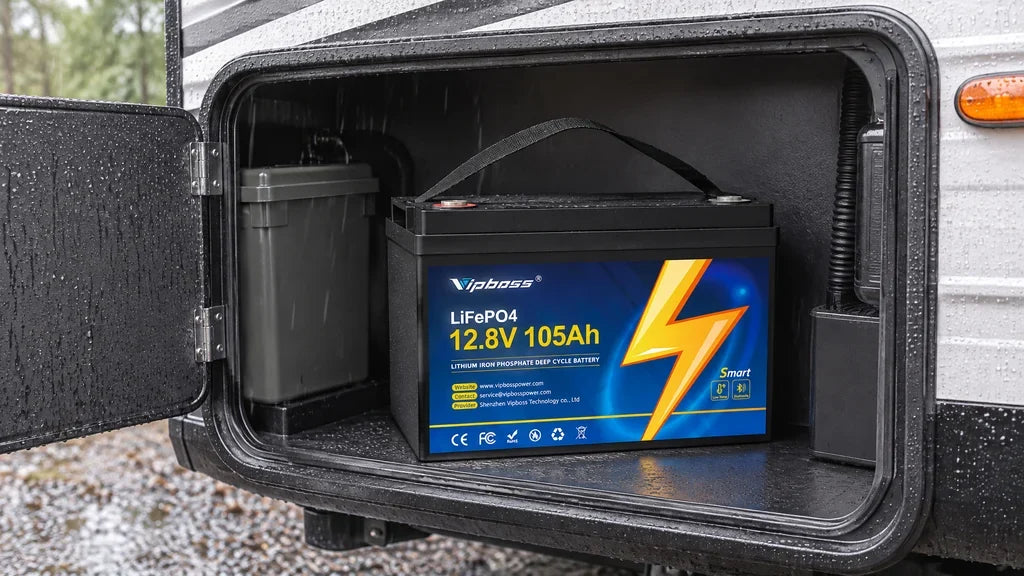

An IP65-rated 12V lithium battery has a dust-tight enclosure and protection against water jets from any direction. It is not rated for immersion, pressure-washer exposure, or prolonged salt-spray exposure.
An IP rating covers the enclosure only. Temperature limits, terminal condition, cable entries, mounting location, and current rating need separate checks.
What IP65 Means for Dust and Water Protection
IP65 uses the Ingress Protection code defined in IEC 60529.
- 6 means the enclosure is dust-tight under the relevant test conditions.
- 5 means the enclosure resists water jets from any direction.
The rating applies only when the battery is assembled as intended. A loose lid, cracked case, missing screw, worn gasket, or altered cable entry can reduce water resistance.
IP65 also does not protect exposed ring terminals, corroded cable ends, or an open fuse holder. It says nothing about freezing temperatures, extreme heat, vibration, impact, charge limits, or discharge limits.

Where Can You Use an IP65 12V Lithium Battery?
Use an IP65 battery in a protected outdoor location without standing water. It suits areas exposed to dust, rain, and occasional spray, such as:
- RV battery compartments with limited road spray
- Freshwater trolling-motor systems
- Utility trailers and outdoor work equipment
- Covered solar cabinets
- Camp setups under a canopy or inside a vented battery box
- Golf-cart accessory systems protected from direct tire spray
Choose a location above drains and low points where water can collect. Keep the battery away from direct tire spray, washdown areas, and places exposed to continuous saltwater.
When Does an IP65 Battery Need Additional Protection?
Add protection where standing water, constant salt spray, high impact risk, extreme heat, or direct high-pressure washing are possible. An IP65 case protects the enclosure, while terminals, cables, fuse holders, and mounting hardware remain exposed.
Use a suitable battery box or protected compartment near:
- Bilge water, deck drains, or low points in a boat
- Open truck beds and trailer floors
- Wheels and areas exposed to road splash
- Fuel, oil, cleaning chemicals, or battery acid
- Loose cargo, tools, anchors, or equipment that can strike the case
A battery compartment needs a drainage path and ventilation that meets the battery manufacturer’s requirements. A sealed box can trap heat and condensation. Open gaps can allow dirt and water to enter. Check the lid, cable pass-throughs, drainage, and mounting hardware before use.
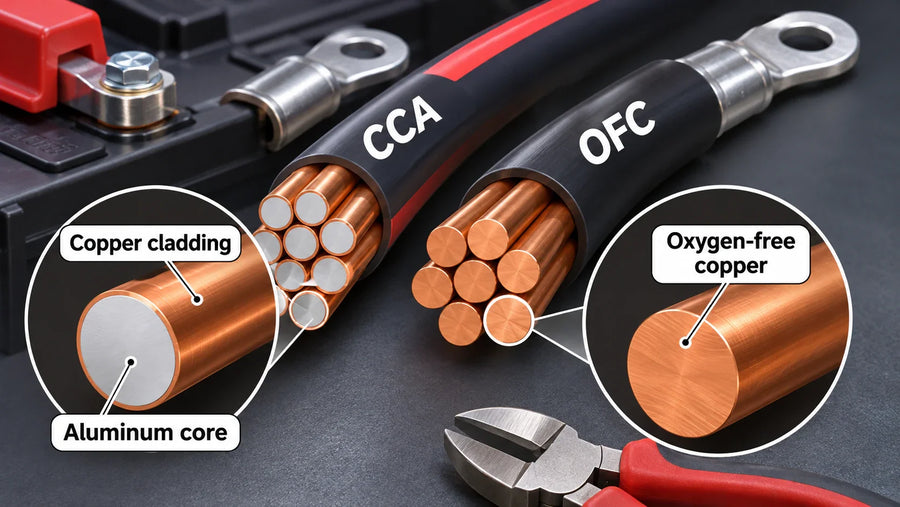
Use marine-grade cable where saltwater exposure is possible. Seal crimped cable lugs with adhesive-lined heat shrink and fit terminal boots after tightening the connections. Keep fuses close to the positive battery terminal.
Avoid aiming a pressure washer at the battery, terminals, or cable entries. IPX5 covers water jets under defined test conditions, not every cleaning method or water pressure level. IP water-protection levels distinguish IPX5 water jets from IPX6 powerful jets and IPX7 temporary immersion.

IP65 vs. IP66 vs. IP67 for Outdoor Battery Use
IP65, IP66, and IP67 all use a dust-tight first digit of 6. The second digit changes the level of water exposure the enclosure can handle.
| Rating | Dust Protection | Water Protection | Suitable Use |
|---|---|---|---|
| IP65 | Dust-tight | Water jets | Covered outdoor areas, RV compartments, freshwater boat installations |
| IP66 | Dust-tight | Powerful water jets | Equipment exposed to heavier washdown or forceful spray |
| IP67 | Dust-tight | Temporary immersion | Locations where brief accidental submersion is a realistic risk |
IP67 covers temporary immersion under test conditions. It does not mean a battery can remain underwater, operate underwater, or withstand prolonged saltwater exposure. Terminals, connectors, and cable junctions still need their own protection.
Choose the rating for the harshest normal condition at the mounting point. A battery under an RV seat faces a different risk from one in an open boat compartment. A raised, dry mounting position remains preferable even for an IP67 battery.
Verify the Installation After the First Load Test
Run the normal load for several minutes after installation. Then inspect the battery area for movement, cable strain, heat, and moisture.
- Confirm that the battery stays secure. Push the battery gently from each side. The case should remain secure without sliding, tipping, or contacting nearby equipment. Reinspect the hold-down after rough water or trailering.
- Look for strain at the cable ends. Watch for cables pulling on the terminals when the battery shifts or the compartment cover closes. Add support where cable weight, vibration, or a sharp bend puts strain on a lug or cable entry.
- Feel for abnormal terminal heat. Carefully touch the terminal hardware and cable lugs after the load test. Unusual warmth can indicate loose hardware, corrosion, an undersized cable, or a poor crimp.
- Inspect the compartment for new moisture. Look at the battery tray, cable entries, fuse holder, and compartment floor. Moisture after rain, spray, or washdown can reveal a drainage or sealing issue that was not obvious during installation.

Use IP65 Only Where the Whole Installation Fits
Use an IP65 battery where the enclosure, exposed connections, drainage, and temperature limits all suit the location. A raised, dry mounting point with controlled spray lets the rating serve its intended purpose. Move the battery or add protection where pooled water, forceful washdown, or regular salt exposure is present.
IP65 12V Lithium Battery FAQs
Does an IP65 Rating Expire Over Time?
No. An IP65 rating does not expire on a set date. It reflects the enclosure’s original design and current condition. UV exposure, vibration, damaged seals, loose fasteners, cracked plastic, and modified cable entries can reduce real-world protection.
Can an IP65 Rating Be Restored After a Battery Case Repair?
Only after the repaired enclosure passes the relevant protection tests again. Replacing a gasket or sealing a crack may improve water resistance, yet the repair alone does not confirm an IP65 rating. Contact the manufacturer before opening the case, since unauthorized work can affect safety and warranty coverage.
Is an IP65 Rating Tested With the Battery Mounted?
It depends on the tested configuration. The enclosure, lid, seals, cable glands, and fitted covers may form part of the rated assembly. A mounting bracket or external cable connection has no automatic IP65 rating unless the manufacturer includes it in the tested configuration.
Does Condensation Affect an IP65 Rated Battery?
Yes. IP65 covers dust and external water jets, while condensation can form inside a compartment during temperature changes. Moisture around terminals can promote corrosion and leakage paths. Use a dry mounting area with airflow, drainage, and protected cable connections.
Does an IP Rating Tell You Whether a Battery Can Handle Extreme Temperatures?
No. An IP rating does not state charge or discharge temperature limits. A 12V LFP battery may limit charging in freezing conditions or reduce performance in extreme heat, depending on its battery management system and cell design. Check the battery’s temperature specifications before use.