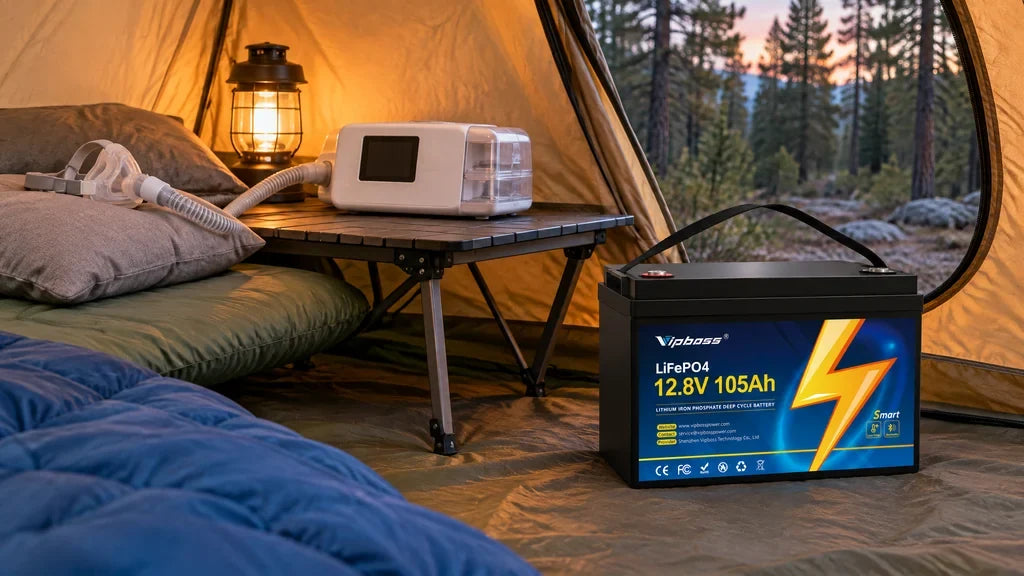

A 12V LiFePO4 battery can run a CPAP machine while camping when battery capacity, the power adapter, and nightly energy use match. Confirm your CPAP model’s approved DC power option, calculate a full night of use, and test the setup at home before the trip.
Confirm Your CPAP Model and Approved DC Power Options
Your CPAP model determines the correct adapter, connector, and battery connection. Check the label on the CPAP, the power brick, and the owner’s manual before packing cables.
Some CPAP machines use an AC wall adapter even though the machine itself runs on DC power. A model-specific DC adapter can connect the CPAP to a 12V battery system without an inverter. Other models need a voltage converter or only work through the supplied AC power brick.
Record these details:
- CPAP model name and number
- Input voltage and current
- Approved DC adapter or converter part number
- Maximum power rating
- Heated humidifier and heated-tube setup
- Altitude range or altitude setting, if listed
Avoid generic barrel connectors and homemade cable changes. A plug may fit while still having the wrong voltage, polarity, or current rating. That can damage the CPAP or cause a power failure overnight.

Calculate the Energy You Need for Each Night of Camping
Use watt-hours, or Wh, to estimate CPAP battery use. Amp-hours alone do not show how much energy the CPAP needs for a full night.
Use this formula:
Average watts × hours of use = watt-hours per night
For example, a CPAP averaging 35 watts for eight hours uses about 280Wh. Actual use can change with pressure, mask leaks, humidifier use, heated tubing, room temperature, and sleep time.
An inverter adds energy loss. If the CPAP uses 280Wh and the inverter runs at about 85% efficiency, the battery may need to supply about 330Wh.
| Item | Add to Your Estimate |
|---|---|
| CPAP blower | Average watts and expected sleep hours |
| Humidifier | Energy used at your normal setting |
| Heated tube | Energy used at your normal setting |
| Inverter | Conversion loss, if required |
| Reserve | Extra capacity for a longer night or missed recharge |
A 12v lithium battery with more watt-hours can cover more nights. Compare stored energy, continuous output rating, physical size, and recharge options. Our 12V LiFePO4 batteries can suit a camping power system when the ratings match the CPAP adapter and planned load.
Account for Heated Humidifiers, Heated Tubes, and Pressure Settings
Heated accessories often use more energy than the CPAP blower. The humidifier warms water, while a heated tube keeps air warm between the machine and mask. Both can reduce runtime, especially during cold and dry nights.
Use your normal humidifier and heated-tube settings when estimating energy use. A blower-only estimate can leave out the equipment using the most power.
Pressure settings also affect power use. Higher pressure and variable airflow can increase the load. Mask leaks can change how the machine operates. Keep prescribed pressure settings in place unless your sleep clinician recommends a change. CPAP care information from NHLBI also supports speaking with a provider about problems with pressure, masks, or humidification.
If humidity helps you sleep comfortably, include it in the battery plan. Turning off heat can reduce power use, though dry air may affect comfort. Pack distilled water if your CPAP instructions call for it.
Your camping power setup should support your prescribed therapy instead of changing it around the battery. PAP treatment standards support treatment decisions based on the individual patient and clinical care plan.
Choose a Safe Battery Connection and Compatible Power Adapter
Use the CPAP manufacturer’s approved DC adapter whenever possible. The adapter needs the correct input voltage, connector type, polarity, and current capacity for your model.
A safe battery setup includes:
- A fully charged battery
- A model-compatible DC adapter or converter
- A fuse near the positive battery terminal
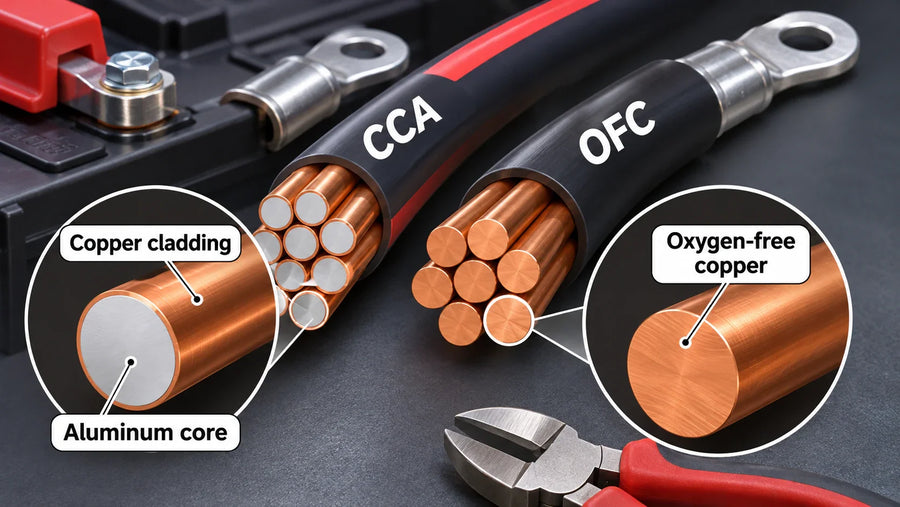
- Correct cable size for the adapter’s current
- Protected battery terminals
- A dry, stable spot for the battery and cables
Keep the battery outside the sleeping bag and away from tent condensation and water containers. Route the cable where nobody can step on it or pull the adapter loose.
An inverter can work when a CPAP requires AC power. Check its continuous output rating and low-voltage shutdown setting before the trip. Run the inverter, CPAP, humidifier, and heated tube together during the home test.
Plan a Recharging Schedule for Longer Camping Trips
For a multi-night trip, compare each night’s Wh use with the energy you can restore each day. Solar, vehicle charging, campground power, and generators all work differently.
Solar output changes with weather, panel angle, shade, and daylight hours. Vehicle charging depends on driving time and charging equipment. Base the schedule on a weaker charging day rather than ideal weather.
A 12v deep cycle battery needs a charger compatible with LiFePO4 chemistry and the battery manufacturer’s charging requirements. Keep chargers, batteries, and connectors dry. Check low-temperature charging limits before a cold-weather trip.
Keep a backup option for missed charging, such as a second approved battery, campground power, or a shorter trip. If CPAP interruption presents a serious health risk, discuss an outage plan with your clinician before camping.

Test Your CPAP Power Setup at Home Before Camping
Run the full setup at home for one normal night before relying on it outdoors. Use the same CPAP, mask, humidifier setting, heated tube, adapter, cables, and battery planned for camping.
Confirm that:
- The CPAP starts normally from battery power
- The display shows no adapter or power warning
- The humidifier and heated tube operate as expected
- Cables and adapters stay cool
- The battery has enough energy left after a full night
- No inverter alarm or low-voltage shutdown occurs
Check the battery level after the test and compare it with your estimate. A gap between the estimate and the actual result can point to inverter loss, heated accessories, or a longer-than-expected sleep period.

Set Your Camping Limit From a Full-Night Test
Use the battery level after a full-night home test to decide how many nights the setup can support between charges. Treat actual runtime as the final number, then leave extra capacity for a longer night, colder weather, or higher humidifier use.
CPAP Camping Battery FAQs
Can a CPAP Travel Battery Be Taken on an Airplane?
Sometimes. Airline rules depend on the battery’s watt-hour rating, how it is packed, and the airline’s own policy. The FAA’s lithium battery rules generally require spare lithium batteries in carry-on baggage and set watt-hour limits. Check the airline’s medical-device and battery policies before travel.
Can a 12V LiFePO4 Battery Power a CPAP During a Home Power Outage?
Yes, if the battery, adapter, and expected runtime match your CPAP setup. Keep the CPAP battery separate from nonessential loads so the available capacity stays reserved for therapy. The FDA’s medical-device outage advice also recommends keeping device instructions and provider contact details available.
Does Camping at High Altitude Change CPAP Battery Use?
Sometimes. Cold temperatures can reduce available battery performance, and dry mountain air can increase humidifier use. Some CPAP machines compensate for altitude, while others have stated limits or settings. The CDC Yellow Book’s altitude guidance supports discussing major elevation changes with a clinician, especially for severe sleep apnea.
Can You Charge a Phone From the Same Battery as a CPAP Machine?
Yes, if the battery has a regulated USB output or a separate approved USB adapter. Add the phone’s energy use to the total battery plan and keep enough stored energy for CPAP use first. Keep splitter cables and loose adapters away from the sleeping area.
What CPAP Documents Should You Pack for a Camping Trip?
Pack the CPAP manual or a saved copy, power-adapter specifications, battery instructions, warranty or support contact details, and your prescription or clinician contact information when relevant. Those details can help confirm compatibility, replace a damaged part, or explain the medical equipment during travel.