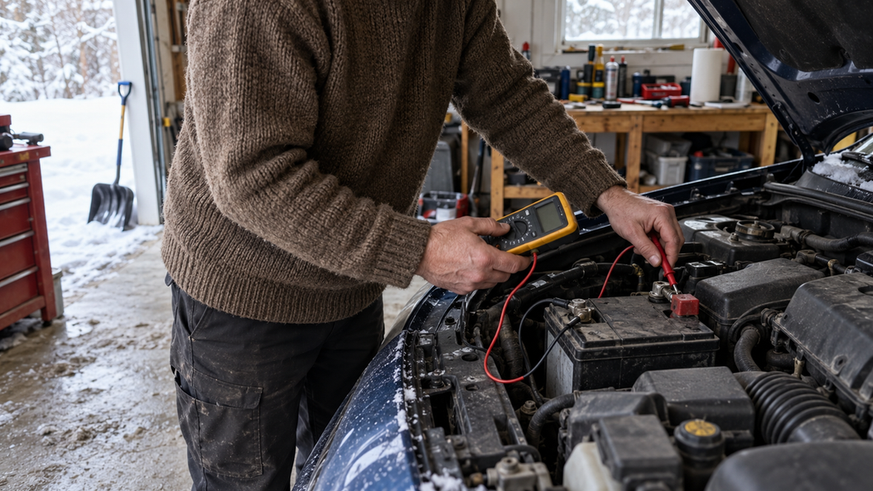

Freezing temperatures can reduce LiFePO4 battery output, voltage stability, and usable energy during discharge. Charging lithium-ion cells below 0°C (32°F) is the more important cold-weather concern because lithium plating was reported to increase as charging temperature decreases.
What cold does during discharge

When a LiFePO4 battery discharges in freezing conditions, its internal electrochemical reactions proceed more slowly. The practical effects can include:
- Less available power: The battery may have more difficulty supplying high current, especially during a large load or motor start.
- Greater voltage sag: Terminal voltage can drop more under load, which may cause equipment to shut down earlier even when energy remains in the cells.
- Reduced usable performance: Cold conditions can limit the energy and power available compared with operation at moderate temperatures.
A battery may permit discharge in sub-freezing conditions without delivering its full rated capacity or power. The actual effect depends on the cell temperature, load, battery design, and how long the battery remains cold. The Vipboss 12V 105Ah Bluetooth LiFePO4 Lithium Battery includes low-temperature charge protection.
Why charging below freezing is the bigger concern
Lithium plating was reported to increase as charging temperature decreases in a U.S. Department of Energy and Argonne National Laboratory battery assessment.
For lithium-ion batteries, do not charge below 0°C (32°F). If the cells are below freezing, let the battery warm above 0°C before starting a charge.
The Vipboss battery includes low-temperature charge protection and a built-in 100A smart BMS. These features are relevant when managing charging in cold conditions.
How to use a LiFePO4 battery in freezing weather
- Separate discharge from charging. A battery may continue to discharge in sub-freezing conditions, but that does not make sub-freezing charging acceptable.
- Check the cell temperature before charging. If the cells are below 0°C, do not begin charging. Allow them to warm above 0°C before starting the charge.
- Expect lower cold-weather performance. Plan for more voltage sag and less available power while the battery is cold, particularly under a heavy load.
- Use available monitoring and protection. The Vipboss model includes low-temperature charge protection, a built-in 100A smart BMS, and Bluetooth monitoring. Bluetooth can help you observe battery information while the battery is used in cold conditions.
Once the cells are above 0°C, resume charging within the battery’s permitted range. Do not treat permission to discharge at a given temperature as permission to charge at that temperature.
Frequently Asked Questions
Does freezing weather permanently reduce LiFePO4 capacity?
Cold can temporarily reduce usable capacity and power while the battery is cold. Performance may improve after warming, although charging or operating outside the battery's limits can contribute to lasting degradation.
Can a LiFePO4 battery discharge below 0°C (32°F)?
Many models can discharge below freezing, but the exact lower limit is model-specific. Use the battery's discharge-temperature rating and expect more voltage sag and less usable output in colder conditions.
Why is cold-weather charging more restricted than discharging?
Charging a cold graphite-based lithium-ion cell can promote lithium plating, while discharge involves a different ion-flow direction. That is why a battery may be allowed to power loads at temperatures where charging is blocked.