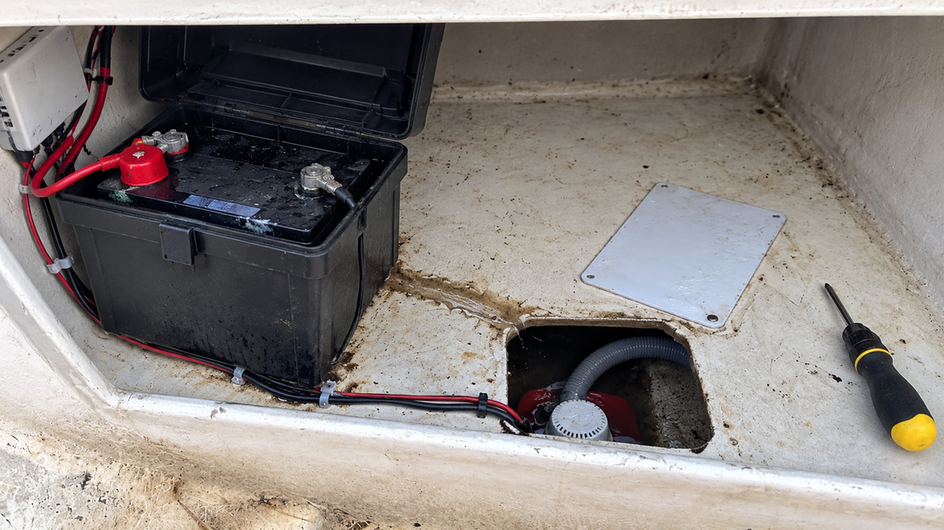

Usually, a marine LiFePO4 battery box needs drainage for splash or condensation and some way to prevent heat from being trapped, but it does not need to be treated like a flooded-lead-acid box that must release normal hydrogen charging gas. Start by identifying whether water can enter the box; add a low-point drain or drainage path for that exposure, then check whether the box or locker also holds a charger, inverter, or other heat-producing equipment. Keep the battery protected from direct spray and standing water, and follow the boat's applicable installation rules when the compartment is enclosed or part of a regulated system.
Drainage protects the box from water

A drain is useful when the box can receive rain, washdown water, spray, or condensation. It gives that water a controlled route out instead of leaving the battery sitting in a wet bottom. Put the outlet at the lowest practical point, keep it from being blocked, and make sure it does not direct water onto terminals or another electrical component.
Drainage does not make an enclosure waterproof by itself. Keep the lid, cable entries, and terminals protected from direct water exposure. Do not let the battery sit in standing water, even when its enclosure has a stated water-resistance rating.
Ventilation depends on heat and the surrounding compartment
A LiFePO4 battery box is not normally ventilated for the same routine gas-release concern as a flooded battery. Airflow can still matter when the box is tight, exposed to strong sun, installed in a warm locker, or placed beside a charger, inverter, or other heat source.
For a battery-only box in a cool, dry, naturally ventilated space, the priority is usually water control, secure restraint, protected terminals, and access for inspection. For an enclosed locker or a box containing heat-producing equipment, provide a practical path for heat to leave without opening the box to direct spray. Do not seal the battery into a small airtight cavity simply because the battery itself does not require hydrogen venting. Marine rules, the equipment manual, and the boat's installation requirements may impose more specific conditions for an enclosed or regulated installation.
Choose the box arrangement for the boat's actual exposure
If the box is in an open cockpit or another area that receives spray, use a covered enclosure with a drainage path. Keep the drain low and the venting path protected from the direction of spray. This arrangement prioritizes getting water out while allowing heat to escape through sheltered openings or the surrounding compartment.
If the box is inside a closed locker, first determine whether the locker itself has enough space and natural air movement. A drain still handles leaks and condensation, but it does not solve heat trapped in a confined space. Keep chargers and inverters out of the battery box unless the enclosure and installation instructions specifically support that arrangement; those devices can add heat even when the battery does not produce routine charging gas.
If the battery box is exposed to repeated washdown or can sit in pooled water, improve the drainage route before adding more ventilation openings. Large or poorly placed openings can trade a small heat benefit for more water entry. The correct balance is a protected airflow path and a clear low-point drain, not a completely sealed box and not an open container.
A 105Ah battery still needs room around it
The Vipboss 12V 105Ah Bluetooth LiFePO4 battery measures 12.95 by 6.77 by 8.42 inches and weighs about 24.2 pounds. Its compact Group 31 footprint, IP65 enclosure, Bluetooth monitoring, and built-in 100A smart BMS make it a practical marine house-bank choice. Use its dimensions as the starting point for box selection, then add room for terminal access, cable bends, secure restraint, drainage, and airflow.
The practical answer
Use a covered, securely mounted box with a low-point drainage path wherever splash or condensation can enter. Add sheltered airflow when the box sits in a warm or confined space, especially near charging equipment. This combination keeps water from collecting, lets heat escape, and preserves access for inspection without treating a LiFePO4 installation like a vented flooded-battery compartment.
FAQs
Does a LiFePO4 marine battery box need a drain hole?
It needs a drainage path when splash, washdown water, leaks, or condensation can reach the box. Place the drain at the lowest practical point and direct water away from terminals and other electrical equipment.
Does a marine lithium battery produce gas that must be vented?
A LiFePO4 battery does not normally require ventilation for routine hydrogen release in the way a flooded lead-acid battery does. Airflow may still be useful for heat control and condensation in a tight or warm compartment.
How much clearance should a marine battery box have?
Allow enough room beyond the battery dimensions for terminal hardware, cable bends, a secure hold-down, drainage, airflow, and inspection access. For the Vipboss 12V 105Ah, begin with its 12.95 x 6.77 x 8.42-inch case and size the box around the completed installation.