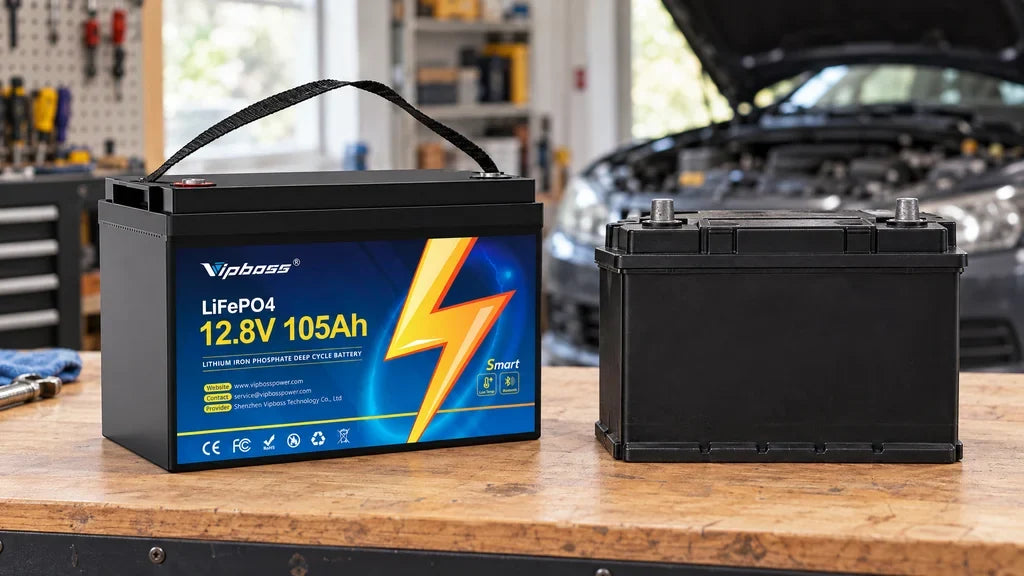

A regular car battery delivers a brief burst of high current to start an engine. A 12V deep cycle battery supplies steady power for equipment that runs for longer periods. Both operate in a 12-volt system, but their internal design, ratings, charging needs, and ideal uses are different.
How Do Both Batteries Deliver Power?
A car battery provides high current for a few seconds, while a deep cycle battery releases energy over a longer period.
Car batteries usually contain many thin lead plates. The large surface area supports the heavy current needed to turn a starter motor. After the engine begins running, the alternator quickly replaces the energy used during startup.
Deep cycle lead-acid batteries often use fewer and thicker plates. The thicker design handles repeated discharge and recharge cycles better. A 12-volt deep cycle battery can power lights, pumps, refrigerators, trolling motors, and other equipment that may run for hours.
Lead battery plate construction shows how plate size and surface area affect battery behavior. LiFePO4 batteries support many of the same long-running loads through a different chemistry and an internal battery management system.
The 12 volt label only identifies nominal voltage. Battery type and electrical ratings show how the stored energy should be used.
Can a Car Battery Run Camping Gear?
A car battery can power small camping devices for a short time, but longer use may leave too little charge to start the engine.
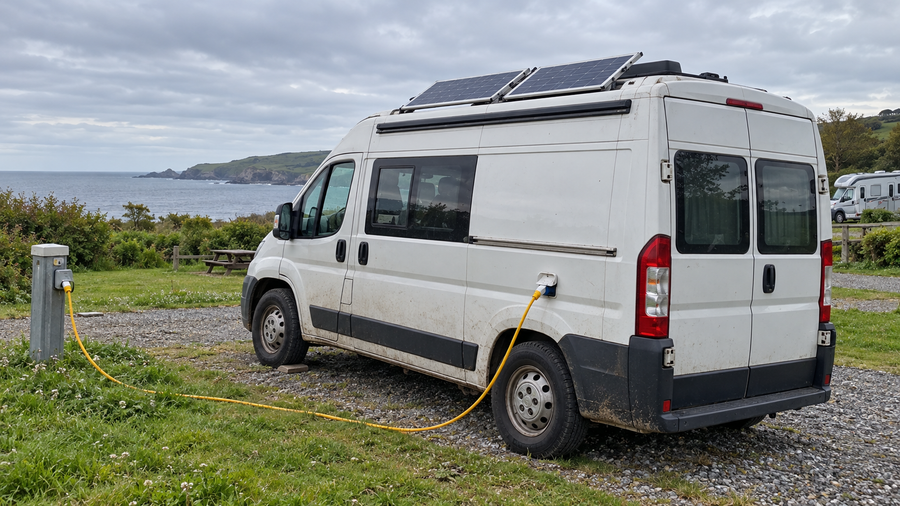
Phone chargers, LED lights, and a radio draw relatively little power during brief use. Portable refrigerators, fans, pumps, and inverters can run for hours and remove much more energy.
| Camping Load | Car Battery Use | Better Setup for Longer Use |
|---|---|---|
| Phone charger | Short periods | Power bank |
| LED light | Short periods | Rechargeable light |
| Radio | Short periods | Portable battery |
| 12V refrigerator | Limited use | Deep cycle battery |
| Fan or pump | Limited use | Deep cycle battery |
| Inverter loads | Depends on wattage | Sized battery system |
Use a 12V deep cycle battery when camping equipment needs steady power while the engine is off. Keep the starting battery available for its main job, which is starting the vehicle.

Can a Deep Cycle Battery Start a Car?
A deep cycle battery can start some cars when its voltage, cold cranking amps, case size, and terminal layout match the vehicle.
Small gasoline engines usually need less starting current than large truck engines. Cold weather also raises the load on the starter because engine oil thickens and battery output drops.
Check four details before using a deep cycle battery for starting:
- Required cold cranking amps
- Battery group size
- Terminal type and position
- Vehicle charging voltage
Amp hour capacity alone does not confirm starting performance. A battery may store plenty of energy while offering less cranking current than the engine requires.
For regular vehicle use, choose a starting or dual purpose battery with the required cold cranking rating. Keep a dedicated deep cycle battery for accessories that run while the engine is off.
How Do Their Main Ratings Compare?
Car batteries lead in starting current, while deep cycle batteries lead in sustained capacity and repeat cycling.
| Rating or Feature | Regular Car Battery | Deep Cycle Battery |
|---|---|---|
| Main purpose | Start an engine | Run equipment over time |
| Common rating | Cold cranking amps | Amp hours or reserve capacity |
| Power delivery | High current for a few seconds | Steady current for longer periods |
| Normal discharge pattern | Shallow discharge | Repeated partial discharge |
| Lead plate design | Many thin plates | Fewer thick plates |
| Common applications | Cars and light trucks | RVs boats camping and marine equipment |
| Main performance goal | Reliable engine starts | Longer runtime and repeat cycling |
Cold cranking amps measure how much starting current a battery can deliver at a set low temperature. Amp hours estimate how much current a battery can supply over a set period.
A high amp hour rating does not guarantee strong engine starting power. A high cold cranking rating also gives little information about appliance or trolling motor runtime.
Discharge depth affects battery life as well. Lead battery cycle performance changes as more stored capacity is removed during each cycle. Frequent deep discharge places extra stress on lead-acid plates.
Do Charging Methods Differ?
Sometimes. A 12V car battery and a 12V deep cycle lead acid-battery may use the same charger when the charger supports the correct battery type and voltage range.
Both commonly use three charging stages:
- Bulk: Supplies most of the charge at controlled current.
- Absorption: Holds a set voltage while current drops.
- Float: Keeps the battery charged during storage.
A car battery usually needs a shorter recharge because engine starting uses only a small part of its capacity. A deep cycle battery may need a longer session after powering lights, pumps, refrigerators, or other equipment for several hours.
Check the battery label before selecting charger settings. Flooded, AGM, and gel batteries have different voltage limits. A LiFePO4 deep cycle battery needs a lithium charging profile, so its charger settings differ from those used for a regular lead-acid car battery.

Which Battery Fits Each Application?
Use a starting battery for engine cranking, a deep cycle battery for equipment that runs over time, and a dual purpose battery when one battery must handle both jobs.
| Application | Battery Category | Main Selection Point |
|---|---|---|
| Daily car starting | Starting battery | Required CCA and correct group size |
| Boat engine starting | Starting battery | Marine rating and engine cranking demand |
| RV house power | 12V deep cycle battery | Usable capacity and charger compatibility |
| Trolling motor | 12V deep cycle battery | Motor voltage and expected runtime |
| Camping equipment | 12V deep cycle battery | Daily energy use and recharge plan |
| Engine with light accessories | Dual purpose battery | Cranking rating and reserve capacity |
For RV or camping use, multiply each device’s wattage by its expected run time to estimate daily watt hours. A 60-watt refrigerator running for five hours uses about 300 watt-hours. In a 12-volt system, that equals about 25 amp-hours before charging losses and discharge limits.
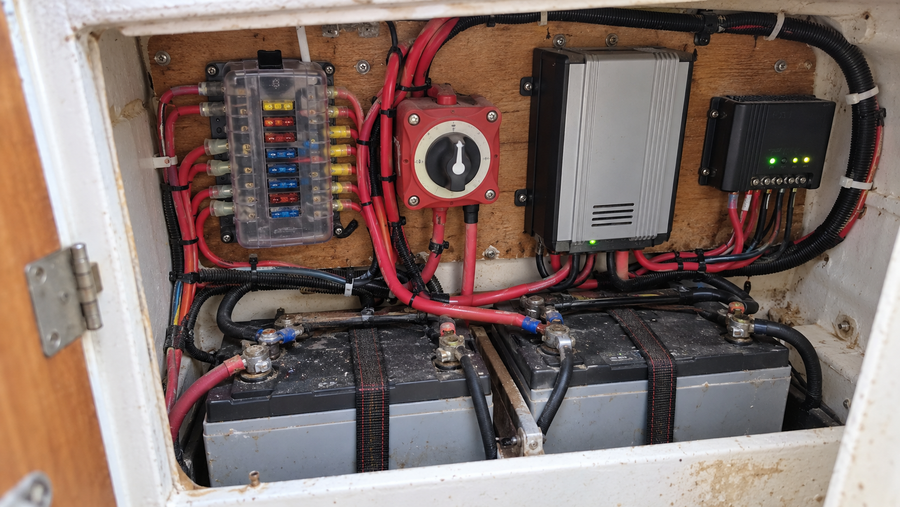
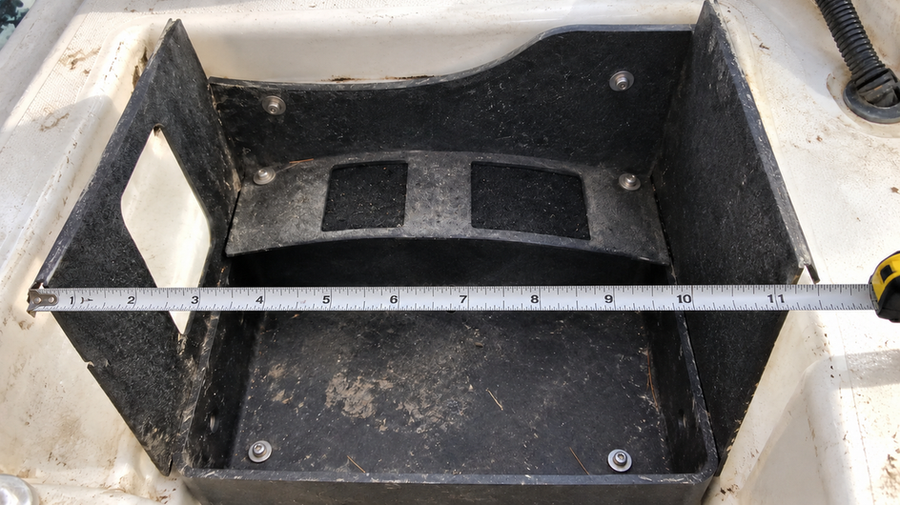
After calculating daily energy use, compare 12V deep cycle batteries for RV use based on usable capacity, case size, weight, terminal layout, and charger compatibility.

Match the Battery to Your Power Needs
Use a car battery for brief engine starting loads and a deep cycle battery for equipment that runs over time. Before buying, confirm voltage, cranking current, usable capacity, chemistry, charger profile, case size, and terminal layout. Match the cables, fuse, charger, and connected equipment to the battery ratings. Choose around the actual load so the full electrical system works as planned.
FAQs about Deep Cycle Battery & Regular Car Battery
Q1: Can an Automotive Load Tester Accurately Test a Deep Cycle Battery?
No. A quick automotive load test checks voltage response under a heavy short-term load, so it gives limited information about total amp hour capacity. A full capacity test uses a charged battery, controlled current, a set cutoff voltage, and measured run time. Battery capacity testing procedures provide a more complete result.
Q2: Why Do Some Deep Cycle Batteries Use Stud Terminals?
Stud terminals hold ring lugs with nuts, which works well for inverters, trolling motors, solar controllers, and fixed DC wiring. Several accessory cables may share one stud when the terminal rating allows it. Use the correct lug size, insulating covers, flat washers, and listed torque value. Automotive posts fit clamp style cables commonly used for engine starting.
Q3: Does Battery Age Matter if a Deep Cycle Battery Has Never Been Used?
Yes. A battery continues to age while sitting in storage. Heat, self discharge, low charge level, and sulfation can reduce lead-acid capacity before regular use begins. Lithium batteries also experience calendar aging. Check the manufacturing date, resting voltage, case condition, storage history, and warranty period before buying older inventory.
Q4: Can a 12V Deep Cycle Battery Support Emergency Energy Storage?
Yes. A 12V deep cycle battery can support lights, radios, phone chargers, fans, or a small refrigerator during an outage. Add the wattage of each load and estimate the required run time. Use rated cables, a fuse, and a suitable inverter for AC equipment. Available runtime depends on usable capacity, temperature, appliance demand, battery condition, and inverter efficiency.
Q5: What Does a 12V Battery Date Code Show?
A battery date code usually identifies the month and year of production. It can help you check inventory age, warranty timing, and possible storage time. Code formats vary across manufacturers, so use the label key or battery documentation for decoding. The date shows battery age, while voltage and capacity tests show its present condition.