
Plan the system from both ends: list the equipment you need to run and the charging sources available during a typical trip. Estimate daily energy use, then check whether the battery bank can cover the gap between charging periods; if the numbers do not balance, reduce demand, add suitable charging capacity, or change the operating plan before selecting components.
Start with the loads you need powered
Write down each electrical device, its voltage, its current or power rating, and how long it is expected to run in each operating period. Separate equipment that must remain available, such as navigation or communications equipment, from comfort loads that can be switched off. Keep engine starting needs distinct from house loads unless the equipment and system design explicitly support sharing them.
For a DC device with a known current draw, estimate energy in amp-hours:
amp-hours = current in amps x hours of use
For a device rated in watts, estimate energy in watt-hours:
watt-hours = watts x hours of use
Use the device label or its manual for the rating. If runtime or power draw varies, use a realistic operating estimate and note the uncertainty rather than treating a peak rating as continuous use. Add the loads for the same operating period. Do not add loads that cannot run together unless they actually overlap in your use.
For example, an illustrative 12-volt pump drawing 4 amps for 30 minutes uses about 2 amp-hours: 4 x 0.5 = 2. This is an estimate, not a measured boat result. Repeat the calculation for the other loads you expect to use, and keep high-power devices such as inverters or motors in their own entries so their demand is not hidden in a small average.
Compare demand with battery storage
Group the load estimates by the periods that matter to you: underway, anchored, and connected to shore power, for example. Add the energy used between opportunities to recharge. The battery bank needs to cover that interval while staying within the limits stated for the actual battery and connected equipment.
Amp-hours are comparable only at the same voltage. For a rough energy comparison, multiply nominal volts by amp-hours to get watt-hours. This is a nameplate-energy estimate, not a promise of usable energy: operating limits, conversion losses, temperature, and the battery maker's instructions can change what is available. Avoid sizing from amp-hours alone when comparing different system voltages.
If your boat has long periods away from charging, compare the expected energy use over that entire period with the battery capacity that the manufacturer allows you to use. If demand exceeds that capacity, the plan needs a change before installation: reduce or schedule loads, increase suitable storage, or add a charging source that can operate during that period. Do not solve a daily energy shortfall by assuming an unverified discharge limit.
The Vipboss 12V 105Ah Bluetooth LiFePO4 battery gives a 12V house-power plan 1,344Wh of stored energy, a 100A smart BMS, and Bluetooth monitoring in a Group 31 footprint. It is a natural fit for planned house loads such as lights, electronics, pumps, and refrigeration, while the app makes daily energy use and remaining charge easier to follow. Its low-temperature protection pauses charging below 32°F (0°C) and resumes it at 41°F (5°C), adding automatic protection for boats used in cold conditions.
Match charging sources to the time they can run

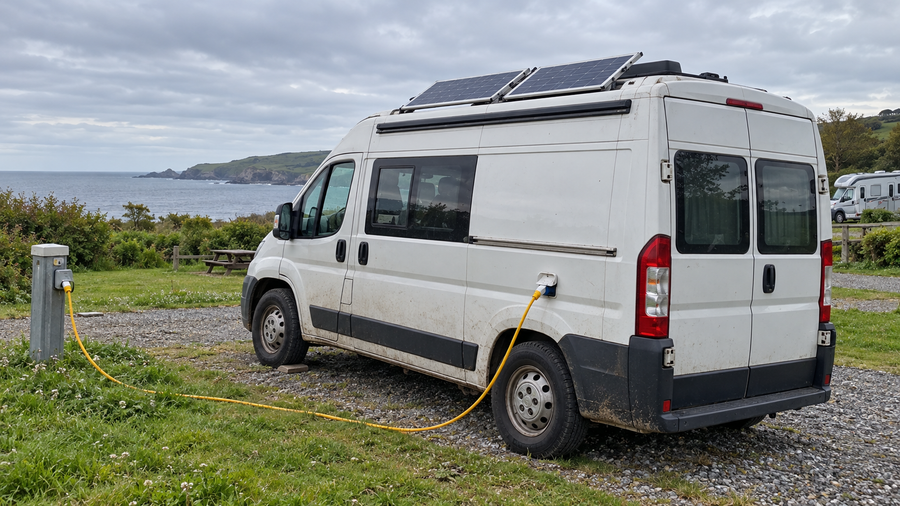
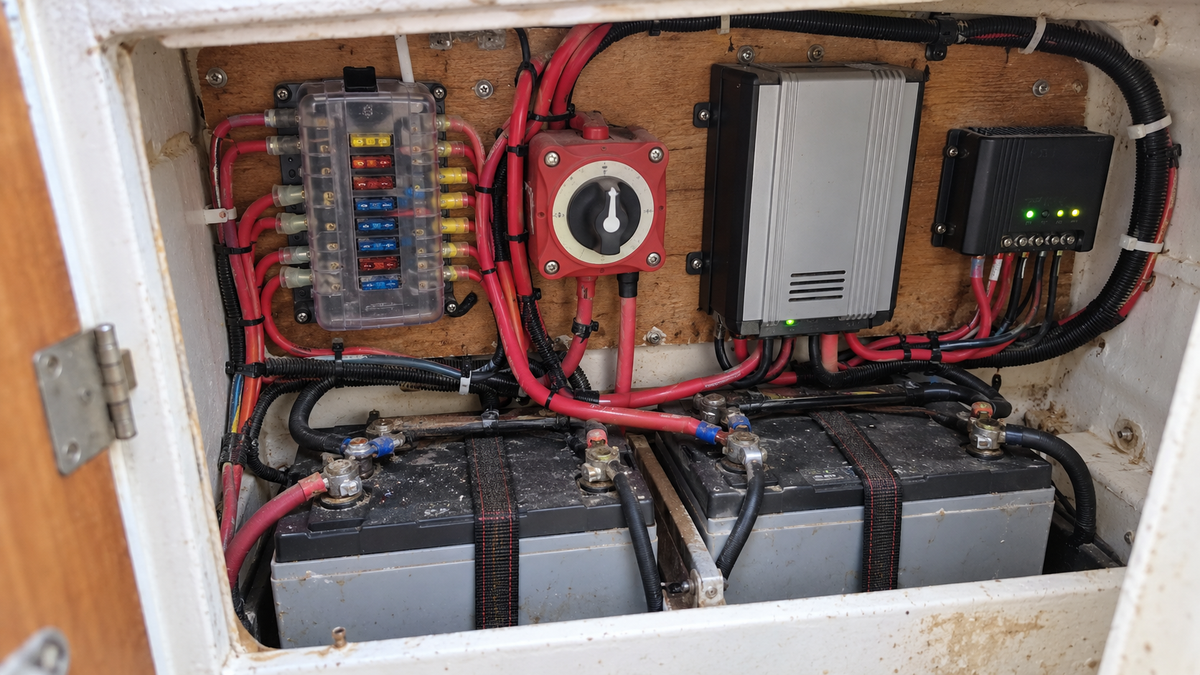
List each charging source and when it is actually available: engine-driven charging underway, shore charging at a dock, solar during daylight, or a generator when operated. For each source, identify its output limits and the equipment between it and the battery, such as a charger or controller. Use the relevant manuals to confirm that those components are compatible with the battery chemistry, system voltage, and each other.
Compare expected charging time with the energy used between charging opportunities. A source that runs only during a short trip cannot be counted as though it operates all day. Solar output also varies with conditions and installation, so use a conservative estimate based on the actual setup rather than its peak nameplate rating alone.
Consider the different operating patterns separately. A boat used for short daytime trips may have frequent engine charging but little overnight demand. A boat anchored overnight may use lights, refrigeration, pumps, and electronics after the engine stops; its storage and recharge plan must cover that interval. A boat kept at a dock may rely more on shore charging, but the charger still has to match the battery and available shore supply. These patterns change the energy balance, so do not size from one convenient day if it is not representative.
Check the complete system before choosing parts
Confirm that the battery voltage matches the loads and charging equipment. Check the battery's stated continuous current limit against the loads that may run at the same time, including startup or surge demands where the device specifies them. Confirm charger settings and operating limits from the manuals for the exact equipment; do not assume that a charger suitable for one battery type is suitable for another.
A load-and-source estimate is a planning aid, not a wiring design. Have a qualified marine electrician review the design before installation, especially when changing battery chemistry, combining charging sources, or adding an inverter. Use the boat and component manuals for the exact installation requirements.
Once the loads, charging windows, and equipment limits agree for each way you use the boat, you have a defensible basis for choosing components. If they do not, revise the demand or charging plan before buying or wiring equipment.
FAQs
How should I compare battery capacity with boat loads?
Add the energy used between charging opportunities, then compare it with the capacity the battery manufacturer allows you to use. Amp-hours are directly comparable only at the same voltage; for a rough energy comparison across voltages, multiply nominal volts by amp-hours to estimate watt-hours.
What should I check before choosing charging equipment for a boat battery?
List when each charging source is actually available and compare its expected charging time with the energy used between charging opportunities. Check the manuals to confirm that chargers, controllers, and other components match the battery chemistry, system voltage, and equipment limits.
How do I estimate the energy use of boat electrical loads?
For a DC device with a known current draw, multiply amps by hours of use to estimate amp-hours; for a device rated in watts, multiply watts by hours of use to estimate watt-hours. Use realistic runtime and power estimates, add loads that operate during the same period, and keep high-power devices such as motors and inverters listed separately.