
Yes, you can use a marine battery in an RV when it is built for deep cycle use and matches your RV's electrical system. Deep cycle batteries for campers are a strong fit for lights, fans, pumps, refrigeration, and electronics because those loads draw power for long periods between charges.
Identify the Marine Battery Type
A true deep cycle marine battery is the best match for regular RV house use. Deep cycle lead acid batteries generally use thicker battery plates, which support slower, longer discharge cycles.
- Starting battery: Delivers a short burst of high current for engine cranking. CCA or MCA usually matters more than long duration capacity.
- Dual purpose battery: Combines cranking power with some cycling ability. It can support lighter RV house loads when its capacity fits your use.
- Deep cycle battery: Supplies steady power over longer periods and suits repeated discharge and recharge cycles.
For lights, water pumps, fans, refrigerators, and electronics, the third type usually fits the job best.
How Do Marine and RV Battery Needs Differ?
Marine and RV batteries can serve similar house loads, but each application puts different demands on the battery. Marine battery standards cover electrical systems used on boats, while RV low voltage standards cover low voltage systems in recreational vehicles.
| Requirement | Marine Use | RV House Use |
|---|---|---|
| Main job | Starting, trolling, or house power | Long duration house power |
| Common ratings | CCA, MCA, Ah | Ah, Wh, continuous current |
| Exposure | Moisture and salt air | Heat, cold, and road travel |
| Charging sources | Alternator, shore charger, solar | Converter, alternator, solar |
For RV use, the marine label matters less than the battery's actual role and electrical ratings. A deep cycle model lines up most closely with the steady loads found in a camper.
Which Marine Batteries Can Support RV House Loads?
Deep cycle marine batteries can support regular RV house loads, while dual purpose models fit lighter use when their ratings are high enough. Flooded and AGM models can fit compatible lead acid systems, while a marine LiFePO4 battery can work with an RV set up for lithium charging.
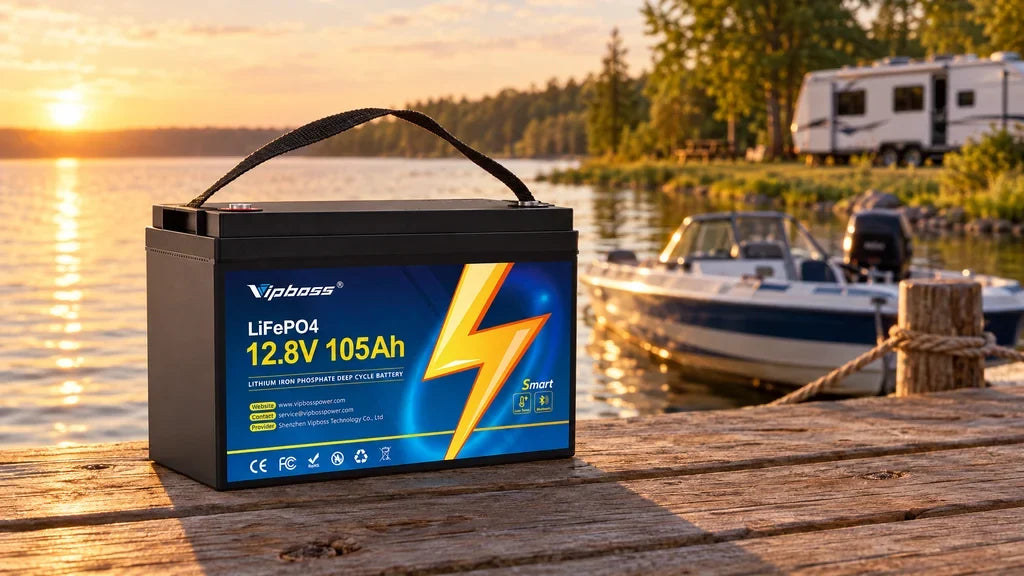
For example, a 12V 105Ah LiFePO4 battery has 12.8V nominal voltage, 105Ah capacity, 1,344Wh of stored energy, and a 100A continuous discharge rating.
Estimate how many watt hours your RV uses each day. Then compare that demand with battery Wh capacity and check whether the continuous current rating can handle the largest group of loads you may run at the same time.

Compare Capacity, Current, and Cycle Life
Capacity, current output, and cycle life show how well a battery can handle repeated RV use. Temperature, state of charge, current level, and cycle depth can all affect battery degradation.
| Specification | What It Means in an RV |
|---|---|
| Amp hours | Helps estimate runtime in a 12V system |
| Watt hours | Shows total stored energy |
| Continuous current | Sets the sustained load limit |
| Peak current | Covers short surges from higher draw equipment |
| Cycle rating | Shows repeated charge and discharge durability |
| Temperature limits | Defines the approved operating range |
A marine battery 12 volt model and a 12v rv battery can share the same nominal voltage while offering very different stored energy and current limits. Compare cycle ratings only when the published test conditions use similar depth of discharge and remaining capacity criteria.
Check Fit, Terminals, and Cables
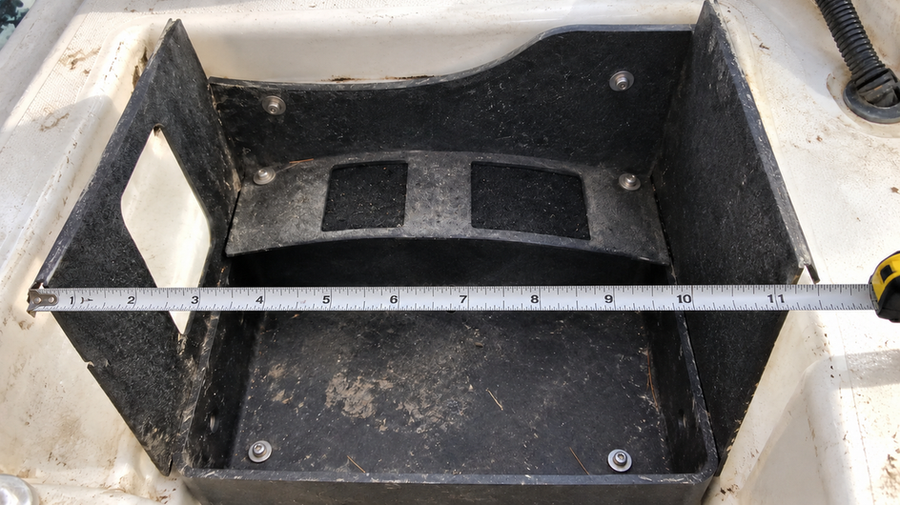
The battery will fit your RV only when the case size, terminal position, mounting hardware, and cables work with the existing compartment. Check each item before installation.
- Measure the compartment. Record length, width, height, and clearance above the terminals.
- Check terminal position. Cables should reach without tension or sharp bends.
- Match terminal hardware. Ring terminals, posts, studs, and bolt sizes need secure contact.
- Check cable and fuse ratings. Both need to support the expected current.
- Secure the battery. Use a tray or hold-down sized for the battery case.
Electrical compatibility covers only part of the installation. The battery also needs enough clearance for cables, terminals, and service access.

Verify the RV Charging System
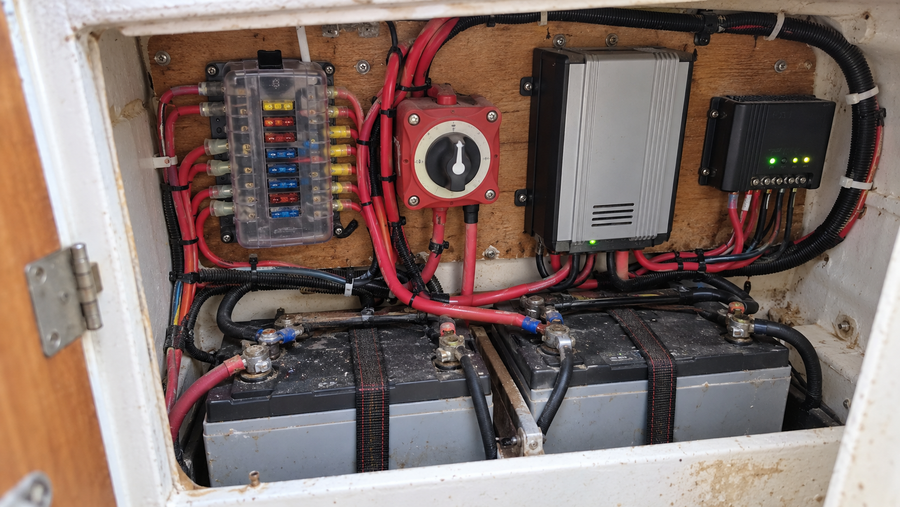
Your RV charging system must match the battery chemistry and approved charging voltage. Flooded, AGM, gel, and lithium batteries can use different charging voltages and charge stages, as covered in battery charging requirements.
Check every charging source connected to the house battery:
- Converter charger: Use a charging profile approved for the battery chemistry.
- Solar controller: Set the correct charge voltage.
- Alternator charging path: Keep voltage and current within the battery limits.
- External charger: Match charger output with the approved charge range.
A LiFePO4 RV battery generally uses a lithium compatible charge profile. You can compare 12V LiFePO4 RV battery options using charge voltage, current limits, capacity, and low temperature charging protection.

Choose a Battery for Your RV Use
Choose capacity around daily energy use and the time you expect to go between charges. Weekend trips with light loads may need less stored energy, while longer stays with refrigeration, electronics, or inverter use may call for more.
For longer trips, estimate daily Wh use, check continuous current for inverter loads, and compare LiFePO4 deep cycle batteries for campers using capacity, current rating, available space, and charging requirements.
FAQs about Marine Battery in an RV
Q1: Does a 12 Volt Marine Battery Need Ventilation in an RV?
It depends on the battery chemistry. Flooded lead acid batteries can release hydrogen gas and need a ventilated battery compartment. AGM batteries are sealed but still have pressure relief valves, so installation instructions still matter. LiFePO4 batteries do not release hydrogen during normal use. Check the ventilation requirements for the exact battery before placing it inside an RV compartment.
Q2: Can an RV Battery Monitor Accurately Track a Marine Battery?
Yes. A shunt based monitor can track a marine battery when you enter the correct capacity and chemistry settings. Coulomb counting accuracy research links accuracy with current measurement, starting state of charge, and capacity. Periodic synchronization after a known full charge can keep the displayed state of charge closer to the battery's actual level.
Q3: How Should Reserve Capacity Be Interpreted for RV Use?
Reserve capacity shows how long a fully charged battery can deliver a fixed current before reaching a defined voltage cutoff. The reserve capacity test definition uses a standardized load. For RV energy planning, Ah or Wh is often easier to use because camper loads change throughout the day.
Q4: Does a Marine Battery Require a Different Battery Disconnect Switch?
Usually no. Choose the disconnect switch according to DC voltage, continuous current, surge current, terminal size, cable size, and fuse coordination. Battery chemistry can affect available current during a surge or fault. A high current LiFePO4 bank may require a higher DC current rating if its BMS allows more current than the previous battery bank.