
Yes, you can use a 12v deep cycle battery while it is charging. The charger supplies current, your appliances use current, and the battery takes in or provides the remaining amount. Safe operation depends on matching the charger, battery, wiring, fuse, inverter, and load.
What Happens When You Charge and Use a Battery at the Same Time?
Your battery charges when charger output is greater than appliance demand.
For example, a 20A charger running with an 8A load leaves about 12A for battery charging. If the load rises to 25A, the charger supplies 20A and the battery supplies the extra 5A.
Net battery current = Charger current minus Load current
A positive result means charging. A negative result means discharging. A solar charge controller can send power to the battery, connected loads, or both.
A 12v deep cycle battery can power lights, fans, pumps, and small electronics during charging. Larger inverter loads need more current and can pull energy from the battery even when the charger stays active.

Is Simultaneous Charging and Discharging Safe?
Yes, simultaneous charging and discharging is safe when every component stays within its rated limits.
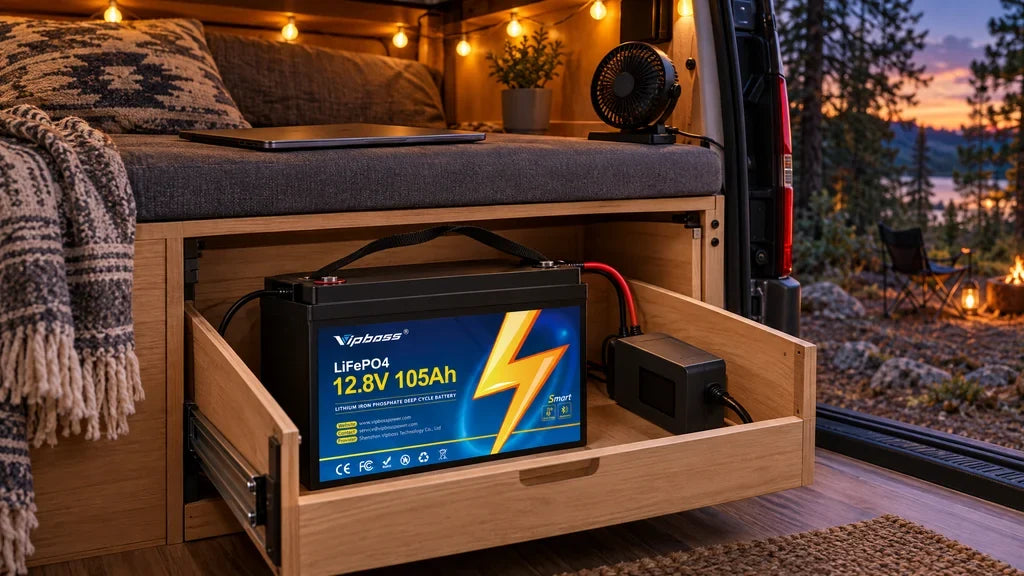
A LiFePO4 battery with a built-in BMS tracks voltage, temperature, and current. The BMS can stop charging or discharging when operating conditions move outside its protection range. Battery monitoring technology supports ongoing tracking of battery condition and capacity.
Check these items before leaving loads connected:
- Use a charger designed for LiFePO4 batteries.
- Match charger voltage with battery voltage.
- Keep load current within battery and inverter ratings.
- Use cable sized for expected current.
- Install a fuse near the battery positive terminal.
- Charge within the temperature range listed in the battery manual.
How Charger Output and Load Demand Determine Net Battery Current
Net battery current comes from charger output minus load demand.
| Charger Output | Load Demand | Battery Result |
|---|---|---|
| 20A | 5A | Charges at about 15A |
| 20A | 20A | Holds close to level |
| 20A | 30A | Discharges at about 10A |
| 40A | 15A | Charges at about 25A |
Use wattage to estimate current:
Current in amps = Watts ÷ System voltage
A 120W DC appliance on a 12V system uses about 10A. AC appliances also use inverter power. Pumps, compressors, and power tools can draw a short startup surge above their normal running current.
When you use the battery while charging, watch the net current reading. It shows whether stored energy is going up or down.

Common Use Cases in RV, Marine, and Solar Systems
RV, marine, and solar systems often run loads while charging the battery.
| System | Charging Source | Typical Loads | Main Check |
|---|---|---|---|
| RV | Shore power or solar panels | Lights, fans, water pump, refrigerator | Inverter surge rating |
| Marine | Alternator, shore charger, or solar panels | Navigation gear, bilge pump, cabin lights | Moisture resistant connections |
| Solar storage | Solar panels | Lights, router, fans, small appliances | Changing solar output |
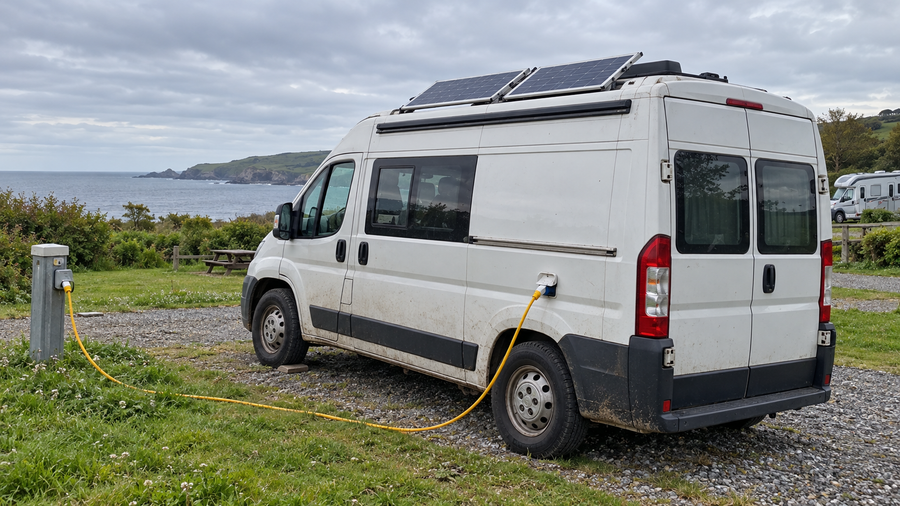
In an RV, shore power can charge the battery while regular DC loads stay on. On a boat, an alternator or shore charger can support navigation equipment and cabin power. In a solar setup, the battery fills the gap when panel output drops.
You can run appliances while charging a battery when the charging source and battery bank can handle the active load.

Check BMS, Wiring, Fuse, and Charger Limits
Check the ratings for every part of the system before connecting high-demand equipment.
Use the battery’s continuous charge current, continuous discharge current, peak current, and temperature range as your starting point. Then compare those figures with the rest of the system.
- BMS: Controls battery protection functions.
- Charger: Needs the correct voltage and LiFePO4 charging profile.
- Fuse: Protects the cable during a fault.
- Cable: Needs enough thickness for continuous current and startup surges.
- Inverter: Needs enough running watts and surge watts.
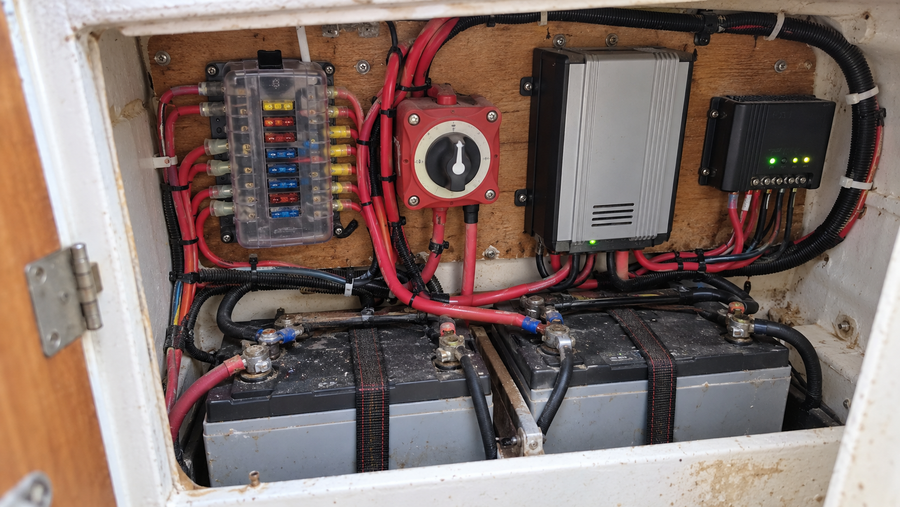
- Terminals: Need clean, tight connections to limit heat and voltage drop.
Treat the lowest rated component as the system limit. A battery rated for 100A still needs cables, fuses, connectors, and an inverter rated for the current you plan to use.
When Should Loads Be Disconnected During Charging?
Disconnect loads during installation, maintenance, charger changes, or unusual heat.
Keep small everyday loads connected during normal charging. Disconnect loads in these situations:
-
During Installation
Turn off loads before connecting cables, changing fuses, or installing a battery. -
During Maintenance
Turn off loads before checking terminals, cable condition, and fuse connections. -
During High Current Charging
Pause heavy inverter loads when charging current and appliance demand approach system limits. -
During Heat Alerts
Stop heavy loads if cables, terminals, charger housing, or the battery case feel unusually hot. -
During Charger Setting Changes
Turn off loads while changing charge voltage, current, or battery chemistry mode.
Keep Charging and Load Demand Within System Limits
You can charge and use a deep cycle battery at the same time when system ratings match the load. Check charger output, battery current limits, cable size, fuse rating, and inverter capacity before connecting heavy appliances. Monitor net current during use and keep every component within its rated range.
FAQs about Deep Cycle Battery Charging
Q1: Does Using Loads While Charging Make the State of Charge Reading Less Accurate?
Yes. A voltage based display can move around during charging or active loads because current changes battery voltage. A shunt based monitor tracks amp hours moving into and out of the battery, so it gives a steadier view of available capacity. Voltage readings usually settle after the battery rests.
Q2: Can One Battery Shunt Show Separate Charger and Appliance Current?
Yes, if the monitor uses separate current inputs. A basic single shunt shows net battery current. Extra shunts or a multi-channel monitor can show solar input, shore charging, alternator charging, and appliance demand as separate readings.
Q3: What Happens to Connected Loads if the Charger Suddenly Stops?
Connected loads keep running from stored battery energy while enough charge remains. The battery begins supplying the full load immediately. A low voltage alarm or inverter cutoff can protect the battery from deep discharge during a longer charging interruption.
Q4: Does Simultaneous Use Reduce Energy Storage Efficiency?
Yes, some energy turns into heat in cables, terminals, chargers, controllers, and inverters. Short cable runs, solid connections, and correctly sized wire reduce those losses. DC appliances also avoid the extra conversion loss that comes with inverter powered AC loads.
Q5: Does Pass Through Power Mean the Battery Is Being Bypassed?
No. Pass-through power means incoming power can serve connected loads while the battery remains connected. The power path depends on the charger or inverter design. Incoming power may cover the load, charge the battery, or support both jobs at once.