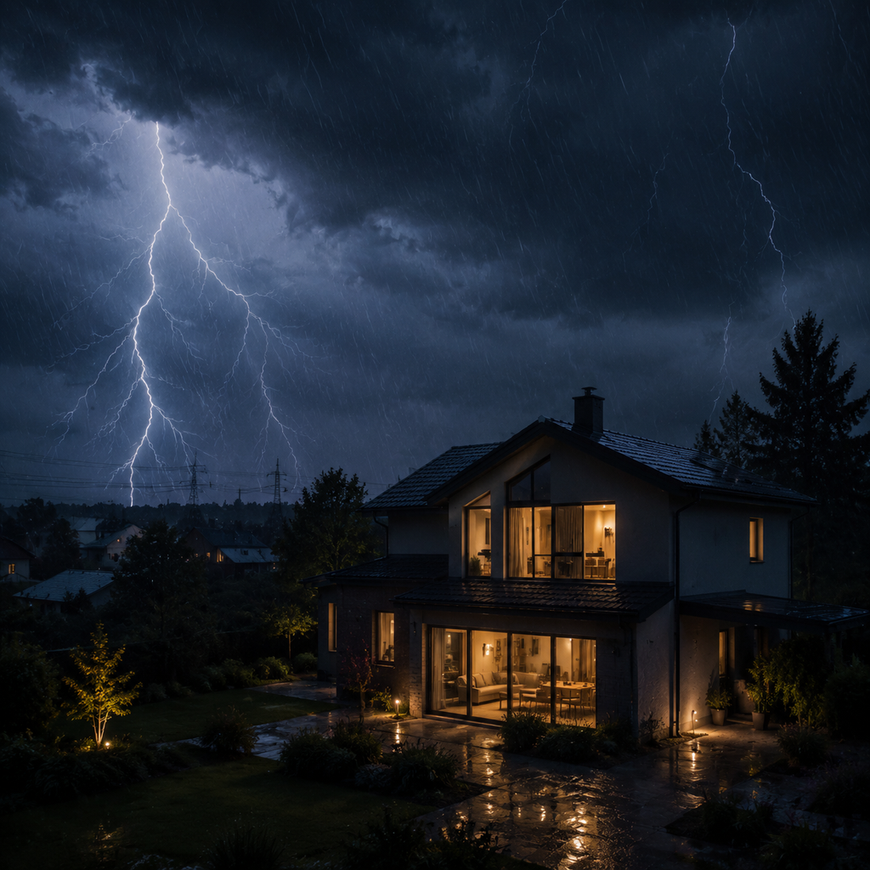

Weather-related outage risk is making backup power relevant to more households, and residential storage deployment is growing quickly. The evidence supports a resilience-driven adoption trend, especially in areas exposed to frequent grid disruptions and severe weather. It does not show that weather-related outages are the sole reason households install batteries.
For a homeowner, the practical question is simpler: would a properly designed battery system protect the loads that matter most during the outages your home actually experiences?
Outage Risk is Rising—but Local Patterns Matter More Than Headlines

Across the United States, power-outage frequency and duration increased from 2000 through 2023, with major weather events identified as a primary driver. Climate change is also increasing the intensity and frequency of some extreme-weather hazards, including hurricanes and severe storms that can damage or disrupt electric-grid infrastructure.
That does not mean every outage has the same cause—or that every community faces the same risk. A coastal household may be planning for storm-related outages, while another may be more concerned about severe convective storms, winter conditions, heat-related grid stress, or local distribution-line failures.
Before evaluating a home battery, look at two local factors:
- Your outage history: How often has your home lost power, how long did outages last, and did they occur during conditions that made restoration difficult?
- The consequence of losing power: Identify what becomes unacceptable without electricity, such as refrigeration, communications, selected lighting, cooling, or necessary health-related equipment.
A battery assessment is most useful when these questions reveal a clear resilience gap—not simply because national outage headlines are alarming.
Residential Storage is Growing, with Resilience as One Motivation
Residential battery storage is moving from a niche solar add-on toward a broader home-resilience technology. In the United States, the residential storage market reached a reported quarterly milestone of 1 GWh installed in the fourth quarter of 2025.
That figure measures installed energy capacity, not the number of homes served, the duration of backup, or the reason every household purchased storage. Still, it aligns with a broader pattern: homeowners in areas with higher outage exposure and extreme-weather risk increasingly view backup power as a reason to consider a battery.
The relationship should be interpreted carefully:
- Outage concerns can increase interest in home storage.
- Resilience can be an important purchase motivation.
- Electricity rates, utility tariffs, and local program structures may also affect a household's decision.
- A specific storm or climate hazard cannot be assumed to have caused a particular installation.
In other words, weather-related disruption is helping make storage strategically relevant, but the final value of a battery remains highly local.
Start with Critical Loads, Not a Whole-Home Assumption

The most useful first step is not selecting a battery size. It is deciding what the system must keep running.
Create two lists before requesting any proposal:
| Priority | Examples |
|---|---|
| Critical loads | Refrigeration, communications, selected lighting, essential medical equipment |
| Deferrable loads | Equipment or appliances that can remain off during an outage |
Then define the outage scenario you want the system to address. Is the goal to bridge a short interruption, maintain essential circuits through a weather event, or support a more extensive household backup plan? A proposal should identify the backed-up circuits and the intended outage operating sequence.
Solar Generation is Not the Same as Outage Backup
Solar panels generate electricity when sunlight is absorbed by photovoltaic cells and produces moving electrical charges. As the Department of Energy's solar overview explains, that is the basic mechanism behind photovoltaic generation.
But solar production alone does not establish that a home can operate during a grid outage. Outage capability depends on the complete configuration: the inverter, controls, battery, and backup design must be designed to work together for that purpose.
Ask a prospective installer to explain, in writing:
- Which circuits remain powered during an outage
- How the system transitions into backup operation
- Whether the proposed solar and storage configuration is designed for outage use
- What operating expectations apply during low-sun conditions or a prolonged disruption
This prevents a common planning mistake: assuming that having rooftop solar automatically means having usable household power when the grid is unavailable.
Treat the Battery as Part of a Home Resilience System

A home battery is not just a battery module. Its real-world usefulness depends on the integrated system around it, including power-conversion equipment, controls, electrical-panel work, and the selected backup circuits.
That is why documentation matters. A UL 9540-listed energy-storage system is an integrated system listing; it is not a status automatically created by pairing separately listed components. The battery, inverter, management software, and related system elements need to be evaluated as the documented system proposed for the installation.
Before moving forward, use this pre-purchase check:
- Confirm the exact integrated energy-storage system proposed.
- Match the design to your critical-load list rather than an assumed whole-home outcome.
- Review local permitting and inspection requirements.
- Confirm utility interconnection requirements and any applicable operating restrictions.
- Check current local incentives, tariffs, or grid-service program terms rather than assuming they apply.
- Request the documentation used to support the proposed system's listing and local approval path.
Make the Decision From Your Exposure and Load Plan
Weather-related disruption is increasing the strategic value of residential storage for some households, particularly where outages repeatedly interrupt essential services. But a battery is not automatically the right response to every outage risk.
Start with your local outage exposure and the loads you cannot afford to lose. Then review location-specific incentives, utility interconnection requirements, permitting expectations, and a documented integrated system design. Only after those checks should you evaluate home-backup solutions that fit the resilience plan you have actually defined.