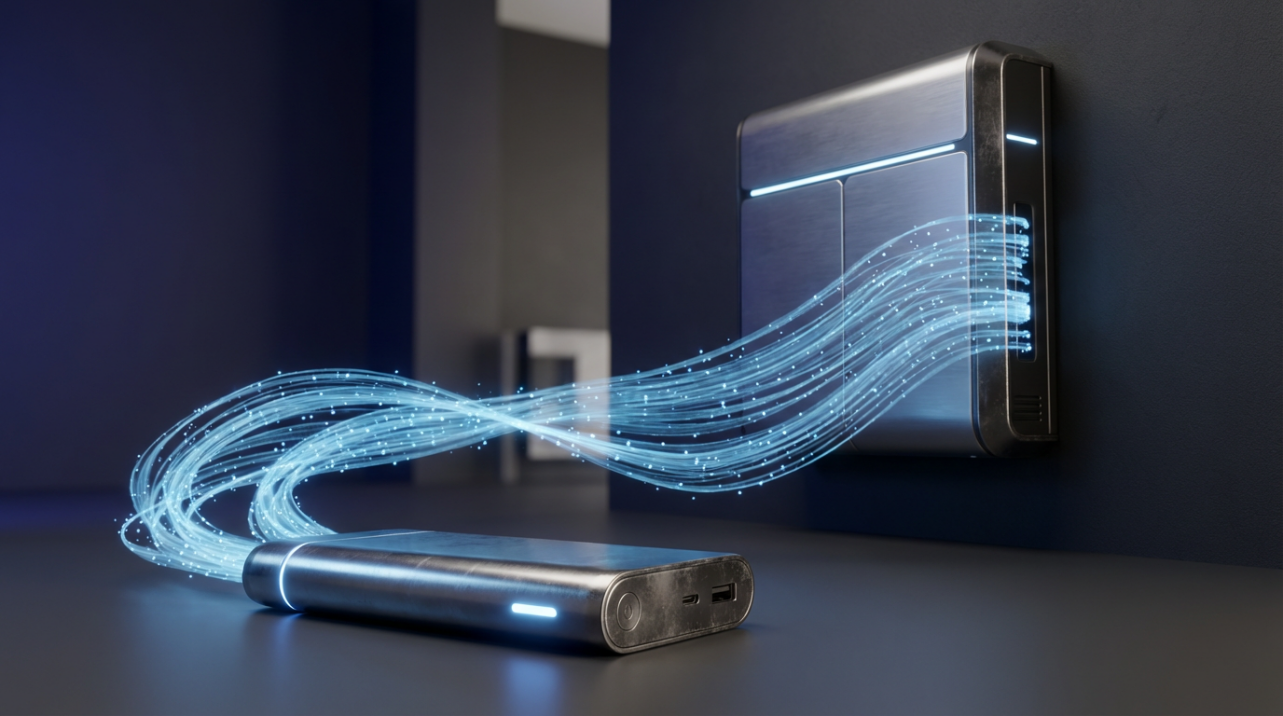

Home batteries really are big cousins of the power banks in your bag, but their job, scale, and protections are very different. Understanding where they overlap lets you build a backup plan that actually works when the grid goes dark.
Staring at that quiet gray box on the wall and wondering if you basically paid for an oversized phone charger while the lights still flicker during storms? When you match that box to real-world loads instead of guesses, you can keep the fridge, lights, and Wi-Fi running for many hours instead of scrambling for candles and dead phones. This guide shows how small and large batteries relate, where they differ, and how to turn that knowledge into a practical, resilient power setup.
Same DNA: Why Home Batteries Feel Like Giant Power Banks
Modern home energy storage uses the same family of lithium-based battery technology found in cell phones and laptops, packaged into larger modules with stricter safety controls and building code requirements. Instead of just topping up a phone during a commute, a home battery stores solar or cheaper off-peak grid electricity and feeds it back into your house when rates spike or the grid fails.
A phone power bank is simply a compact external battery that you charge from a wall plug, then use later to refill a phone, tablet, or earbuds. In a typical power bank guide, a 10,000 mAh bank is enough to recharge a smartphone about two to three times, even though only about 60–70% of its rated capacity is actually usable once you account for conversion losses and heat. That gap between the label and what you really get is the same reality you face at home scale.

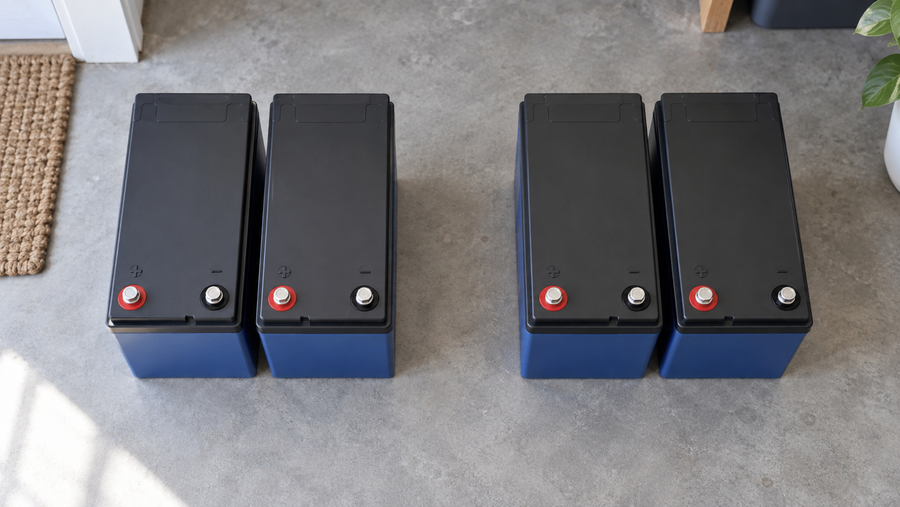
Home batteries are the same idea scaled up: large stationary units, often about the size of a dishwasher and weighing a few hundred pounds, that sit in a garage or on an outside wall and store grid or solar power for later use. Typical home batteries offer around 10–20 kilowatt-hours (kWh) of usable energy per cabinet, which is enough to run selected circuits such as lights, the refrigerator, and Wi-Fi for many hours, while whole-home backup usually needs multiple cabinets working together.
Both small and large batteries rely on a battery management system, or BMS, that acts as the "brain," monitoring voltage, temperature, and current so the pack can safely charge and discharge. Good phone power banks add protections against overcharge, short circuits, and overheating, and home batteries layer on even more monitoring plus internet or cellular connectivity for remote checks and alerts from the installer or utility.

Capacity and Runtime: How Long Will It Really Last?
If you already think about how many phone charges you get from a power bank, you are halfway to sizing a home battery. A 10,000 mAh bank might recharge a typical phone battery roughly two to three times because only about two-thirds of its rated capacity is truly usable under real conditions, as explained in the same power bank guide. The rule of thumb is simple: the larger the bank's energy storage and output rating, the more devices you can charge and the longer they will run.
Portable power stations sit between a pocket power bank and a fixed home battery. In a portable power station comparison, typical units store roughly 200–2,000+ watt-hours (Wh), with enough output to run laptops, CPAP machines, or a mini-fridge. For example, a 500 Wh station can power a 50 W device for about 10 hours because runtime is approximately stored watt-hours divided by device watts. That is the same math you use, unconsciously, when you sense that a small phone bank will not survive a full weekend festival.
At house scale, capacity jumps from hundreds of watt-hours to tens of thousands. Basic home battery systems commonly store around 10–20 kWh per unit, while some large whole-home batteries deliver roughly 20–25 kWh each and can be stacked. A simple example from residential design: a fridge around 500 W, a microwave at 1,500 W, and a big electric water heater at about 4,500 W will use roughly 6.5 kWh in a single hour if they all run at once, which is about half of a 13.5 kWh home battery.
Real outage performance depends on how hard you lean on the battery. In low-usage scenarios where you keep just the fridge, freezer, and some lights running at around 750 W, one large home battery in the 20–25 kWh class can often cover something like 15–24 hours before it needs a recharge. At higher draw, closer to 1.5 kW with more appliances and some air conditioning, that same battery might last on the order of 8–12 hours, which still covers most short grid failures if you manage loads carefully.
Think of it this way: upgrading from a 5,000 mAh to a 20,000 mAh phone bank roughly quadruples the number of charges you get. Adding a second home battery cabinet does the same thing for your backed-up circuits, often turning a single-night solution into a multi-day safety net, especially if solar panels can keep topping the system up during the day.
At-a-Glance Comparison
Feature |
Phone power bank |
Portable power station |
Home battery system |
Typical stored energy |
About 18–110 Wh |
About 200–2,000+ Wh |
About 10–25 kWh per unit |
Typical weight |
Around 0.2–1 lb |
Around 5–50 lb |
Roughly 200–500 lb |
Typical use |
Phones, tablets, earbuds |
Camping gear, CPAP, mini-fridge |
Home circuits, rooms, or whole home |
Typical outputs |
USB ports |
AC outlets, USB, 12 V sockets |
Hard-wired to home panel |
The table makes the core point clear: it is the same storage idea, but the home battery plays in a completely different power league.
Safety and Lifespan: Lessons from Your Pocket
Lithium batteries pack a lot of energy into a small space, which is why regulators treat even small battery packs as potential fire risks. Airline and safety investigations have documented incidents where poorly built packs went into thermal runaway, a runaway overheating reaction that can lead to fire within minutes, driving home the need to favor quality devices and watch for recalls, as summarized in this battery pack safety overview.
On the phone side, good manufacturers add multiple layers of protection and give clear instructions to keep things cool and under control. A practical charging safe with power banks guide recommends keeping packs off soft beds or couches while charging, unplugging them once full, avoiding cracked or swollen units, and using high-quality cables so you do not create hot spots or short circuits. Simple habits like not leaving a pack in a hot car and not charging it to 100% or draining it to 0% day after day can noticeably extend its useful life.

Those same principles apply to the big box on your wall. Residential lithium storage uses the same chemistry family as smaller devices, but home systems add much more robust management and oversight, as described in detail in the NYSERDA program for energy storage for your home. Systems must meet UL safety listings and modern fire code requirements, and installers place batteries in garages or outside on shaded walls to keep temperatures in a healthy range and maintain safe clearances.
Chemistry choice also affects lifespan and risk. Many home batteries use either nickel manganese cobalt (NMC) cells, which are compact and handle high surge currents but typically have somewhat shorter lifespans, or lithium iron phosphate (LFP), which is heavier but supports more charge-discharge cycles and tends to last longer. Similar LFP chemistries increasingly show up in higher-end portable stations and some outdoor power banks, where 2,000–6,000 cycle life is now common, compared with much shorter implicit lifespans for many cheap phone banks.
Phone power bank guides that recommend keeping the charge level mostly between about 20% and 80% are really giving you a crash course in how to treat any lithium pack kindly. Home battery manufacturers bake the same idea into their warranty assumptions, typically guaranteeing around 70% of original capacity after a set number of cycles or years, and some systems reserve a small buffer at the top and bottom of the charge range so you cannot unintentionally abuse the pack.
What Happens When the Battery Is Full?
With a phone power bank, you already know the routine: the last LED stops blinking, the display hits 100%, and if the pack is well designed it stops drawing much power even if you leave it plugged in. Keeping it on the wall charger all weekend may not cause immediate failure, but it adds unnecessary heat and long-term stress, which is why careful guides tell you to disconnect it once full.
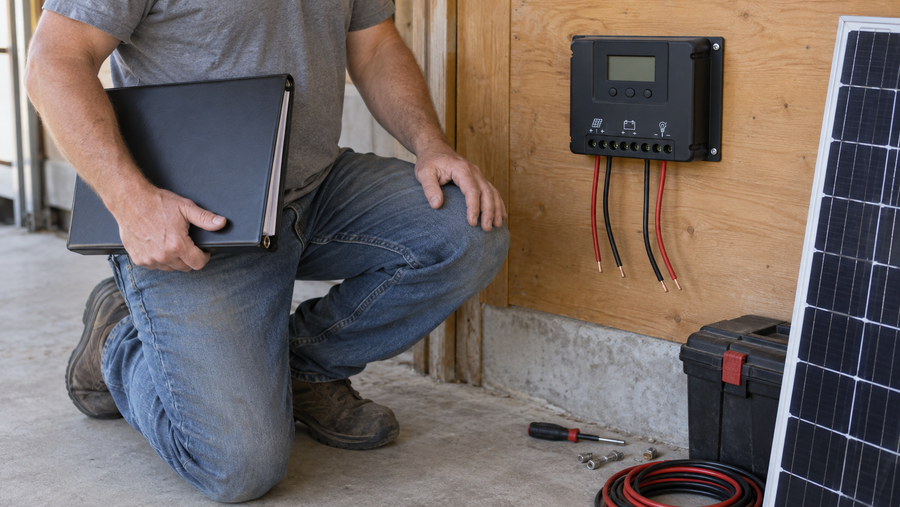
Solar-plus-storage systems behave in a similar way, just with more players involved. When your home battery reaches its target state of charge, the charge controller and inverter must manage any extra solar generation so the pack is not overcharged, as described in this explanation of what happens when batteries are full. Depending on your setup, surplus power may be curtailed, fed back to the grid for credits, or diverted to other loads, but in every case the control electronics protect the battery from taking more than it should.
The practical takeaway is that you cannot just keep adding panels and assume the battery will "soak it up." Just as you bought a phone bank sized to your charging needs, your home system needs a matched combination of solar capacity, battery storage, and household loads so daytime production has somewhere useful to go once the battery is topped off.
Do You Need a Giant Power Bank, a Portable Station, or a True Home Battery?
Most people do best with a layered strategy rather than betting everything on a single box. For phones and tablets, a couple of well-chosen power banks keep communication and navigation alive during short blackouts or road trips, and they are cheap enough that you can keep one in a bag and one at home. A mid-size portable power station bridges the gap by powering laptops, CPAP machines, 12 V fridges, or a few lamps during camping and short outages, without any hard-wiring or permits.
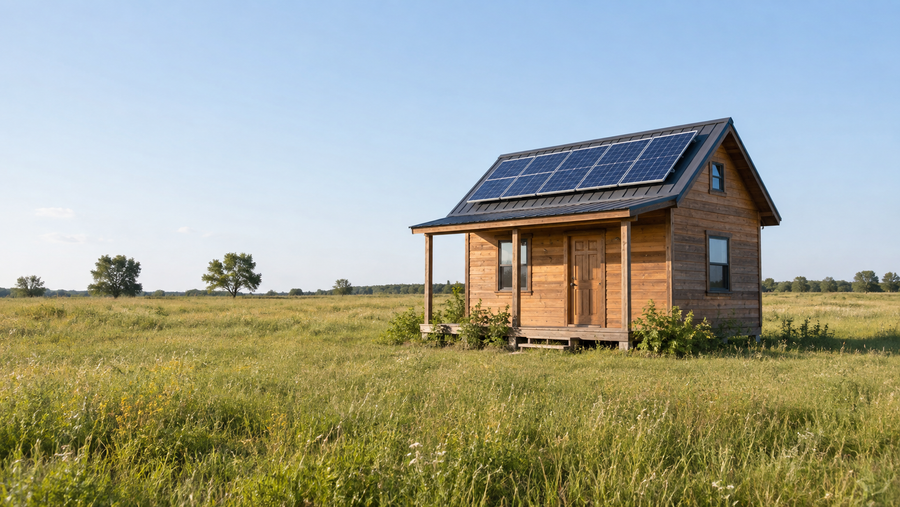
When outages are frequent, or when you want to turn solar from a "daytime only" resource into an all-day solution, a fixed home battery becomes the backbone of the system. A beginner's guide to home batteries points out that popular units like Tesla Powerwall-class products typically offer around 10–13.5 kWh each and can be stacked to cover more of the home. Paired with rooftop solar, they can keep essential loads running through extended outages and are effectively required if you want your solar array to keep producing during a grid failure.
Cost is where the "giant power bank" analogy really breaks down. Quality outdoor power banks and portable stations often land around a few hundred dollars each, while solar home battery backup systems usually cost several thousand dollars per battery and can reach around $20,000 for multi-battery, whole-home designs. However, federal tax credits can offset about 30% of qualified storage costs, and state or utility incentives and virtual power plant programs can improve the long-term economics for many homeowners, as emphasized by both Palmetto's guide and NYSERDA's incentives for energy storage for your home.
Deciding which level you need starts with your goals.

A home battery backup system that integrates solar, grid, batteries, and sometimes a generator shines when you want seamless automatic backup, smarter control over when you buy from the grid, and the option to support the grid or earn program payments. By contrast, if your main priority is flexibility for RV trips, remote cabins, or van life, a modular battery bank or portable stations tied to solar may deliver more value per dollar and can grow with your lifestyle.
In practical terms, you can think in three layers. First, stabilizing phone and laptop charging with robust, safe power banks removes a lot of day-to-day anxiety. Next, a portable power station covers medical devices and small appliances during a night-long outage or weekend off-grid. Finally, a well-sized home battery coupled to solar takes you into true resilience territory, where storms, heat waves, or utility shutoffs become inconveniences instead of emergencies.
FAQ
Can one home battery back up my entire house? Usually not. Most systems around 10–20 kWh are designed to support selected "critical circuits" such as the fridge, some lights, internet equipment, and maybe a small air conditioner, rather than every outlet and large electric heater in the home, as explained in multiple residential storage guides including NYSERDA's discussion of critical loads. Whole-home backup typically needs multiple batteries plus careful planning around big loads.
Will my solar panels still work if the grid goes down and I only have a home battery? Yes, if your system is designed for it. Modern hybrid inverters and battery systems can isolate ("island") your home from the grid so your panels keep feeding the battery and your backed-up circuits during an outage, as described in both NYSERDA's and Palmetto's overviews. A solar-only system without a battery normally must shut down during a grid failure for safety, which is one more reason many homeowners choose to add storage.
Is it overkill to buy a home battery if I already own big power banks and a portable station? Not if you face longer or more frequent outages or want better control over rising electricity rates. Power banks and portable stations are great for keeping phones and a few devices alive, but they are not wired into your home panel, they cannot respond automatically when the grid fails, and they cannot usually shift large chunks of evening usage away from expensive peak rates. A home battery fills that gap and turns your smaller gear into backup layers rather than your only line of defense.
A home battery is more than a giant power bank, but the mental model of "stored energy you can spend later" is exactly right. Use that intuition, plus the numbers on your gear and appliances, to build a smart stack of phone banks, portable stations, and home storage so the next outage feels like a controlled drill instead of a crisis.