When a cart slows down on hills, runs out of juice sooner than it used to, or needs the charger after just a few holes, tired batteries are usually the culprit. Swapping them out is a big-ticket item, and online prices can range from a few hundred dollars to several thousand with no explanation. Instead of guessing, it helps to break the cost into clear pieces and compare what you actually pay over time for lead-acid packs versus lithium upgrades.
What Factors Affect the Cost of a Golf Cart Battery?
Several variables combine into your final quote. Once you see each piece clearly, the total cost stops feeling random.
Battery Type: Lead-Acid, AGM, or LiFePO₄
Most older carts still run on flooded lead-acid batteries. They are the basic workhorse option and usually the cheapest way to get a cart moving again, as long as you do not mind regular watering and corrosion cleanup.
AGM batteries are sealed versions of lead-acid. They handle vibration better, do not spill, and do not need topping up, which makes them a good fit for owners who want less hands-on maintenance. You pay more upfront than you would for a flooded pack, but you gain convenience and a bit more resilience.
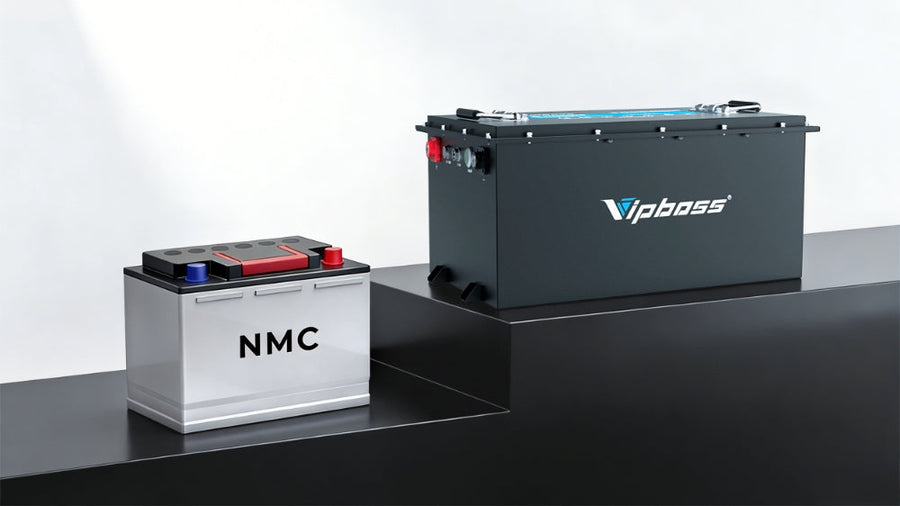
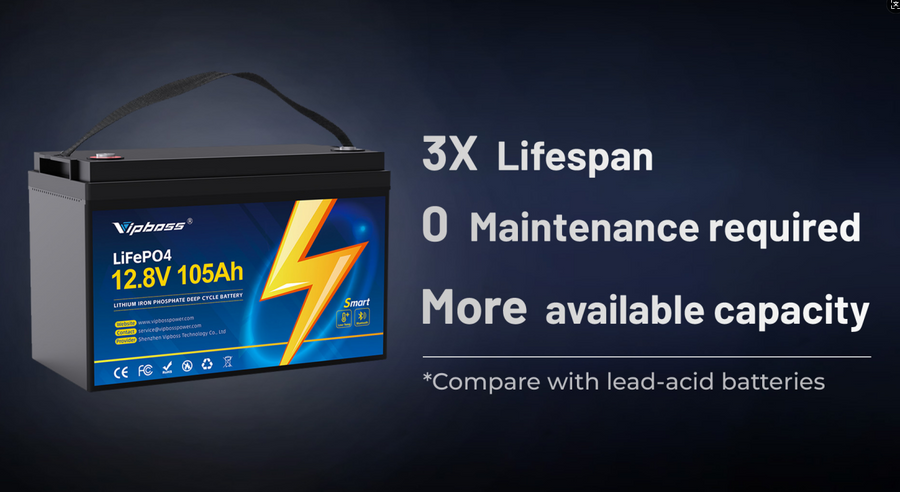
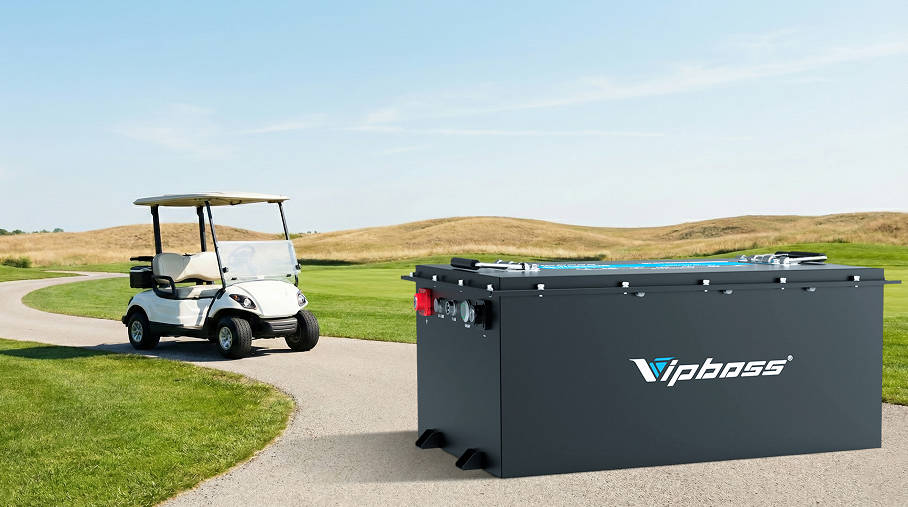
LiFePO₄ lithium packs sit at the top of the ladder. A single 36 or 48 volt unit replaces the whole bank, drops a lot of weight, and holds voltage more steadily from full to nearly empty. They cost the most at purchase, yet they usually last the longest and ask for the least day-to-day attention.
In practical terms, lead-acid keeps the initial bill low, AGM trades a bit of money for less mess, and LiFePO₄ trades a higher upfront cost for more years of use and fewer headaches.
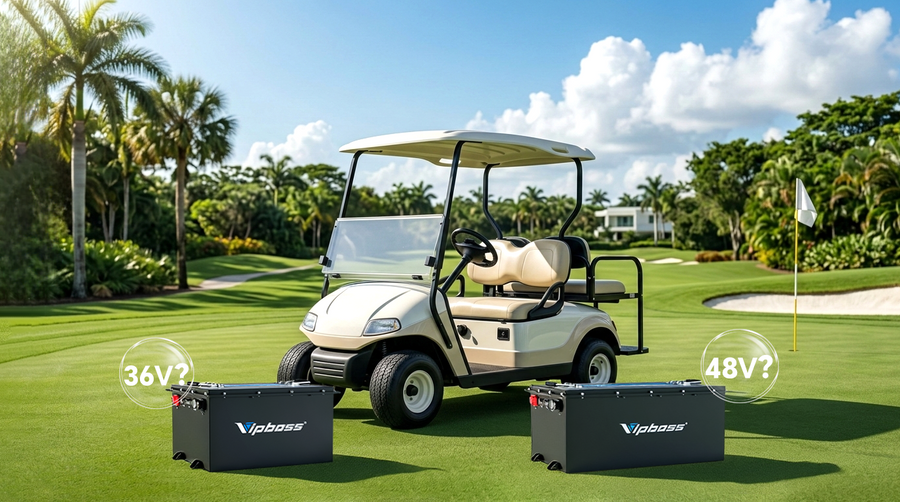
Voltage and Capacity: 36V vs 48V Systems
A 36V golf cart battery bank is still common on older or budget models. These carts usually handle flatter routes and lighter loads. A 48-volt system shows up on newer carts that climb hills, carry passengers, and stay in use longer each day.
For the same chemistry and brand, a 48-volt pack usually costs more than a 36-volt pack because it holds more total energy. Capacity in amp hours then adds another layer. Higher amp hours bring a longer range and a higher invoice.
Brand, Warranty, and Labor
Two packs with the same voltage and capacity can still sit in different price brackets. Well-known brands with strong dealer networks typically cost more but often include longer warranties, especially for lithium, where five to ten year coverage is now common.
Labor and accessories also matter. A basic swap might add 100 to 300 dollars for installation plus 50 to 200 dollars for cables, hold downs, and recycling of the old pack. Upgrading to LiFePO₄ can also require a new charger that matches the chemistry.

How Much Are Golf Cart Batteries on Average in 2025?
Putting numbers on the table makes the decision easier. Multiple 2024 and 2025 price surveys line up around similar bands for a complete pack.
| Battery Type | Typical Pack Cost (36V / 48V) | Typical Service Life* |
| Flooded lead-acid | 800 – 1,500 USD | about 2–4 years |
| AGM sealed lead-acid | 1,000 – 2,000 USD | about 3–6 years |
| LiFePO₄ lithium packs | 1,500 – 3,000+ USD | about 5–10 years |
*Life depends heavily on use, depth of discharge, climate, and maintenance.
These figures cover most everyday carts. A quote far below this usually involves very small capacity, off-brand packs, or used batteries. A quote far above it often includes high-capacity lithium with long warranties and professional installation.
36V Golf Cart Battery vs 48V Golf Cart Battery: What’s the Price Difference?
Carts with 36-volt systems tend to be cheaper to repower. A typical 36-volt flooded pack using six 6-volt batteries commonly falls in the 600 to 900 dollar range. AGM or lithium at the same voltage moves into the 900 to 1,500 dollar and 1,500 to 2,000 dollar ranges.
A 48-volt pack usually costs a little more. For flooded lead-acid, many sources list 900 to 1,500 dollars for a full set. LiFePO₄ upgrades at this voltage often sit between 1,800 and 3,000 dollars, depending on capacity and brand reputation.
That extra spend brings better hill performance, higher top speed on many models, and greater efficiency. Owners who drive far, carry people or cargo, or live in hilly communities usually notice the difference quickly.
Are Lithium Batteries for Golf Carts Worth the Higher Upfront Cost?
Sticker shock is real when you compare a lithium kit to another lead-acid pack. Looking at lifespan and maintenance helps put that price gap into context.
Upfront Cost vs Lifespan and Maintenance
Flooded lead-acid packs in golf cart duty often deliver around 300 to 500 useful cycles, which translates to roughly two to four years for many owners. AGM usually stretches that to about 500 to 1,000 cycles.
LiFePO₄ cells are built for deeper cycling. Technical references and battery manufacturers commonly quote 2,000 to 5,000 cycles or more in suitable conditions, with service lives in the five to ten year range for golf cart applications. Maintenance is also lighter. There is no watering, very little corrosion, and the voltage stays more stable over the discharge curve.
Total Cost Over the Life of the Pack
Consider two simple scenarios that reflect current averages. A lead-acid pack costs 1,200 dollars and lasts 500 cycles. A LiFePO₄ pack costs 2,000 dollars and lasts 3,000 cycles.
The lead-acid cost per cycle works out to about 2.40 dollars. The lithium cost per cycle comes out to be near 0.67 dollars. Real numbers in your case will differ, yet several cost analyses show the same pattern: lithium costs more at purchase and often less per mile over the long term for carts that see regular use.
Owners who only use a cart a few weekends per month may not need that full advantage. Daily drivers and work carts usually do.
How to Estimate Your Own Golf Cart Battery Replacement Budget
Average prices are helpful, but you still need a number for your own cart. A short checklist keeps this grounded.
Confirm Voltage and Current Battery Type
Look at the data plate or the manual. Most carts run either 36 or 48 volts. Count the batteries and read the labels. Screw caps and visible liquid usually mean flooded lead-acid. Sealed tops marked AGM or a single compact lithium pack point to other chemistries.
Decide Between Like-for-Like and an Upgrade
If you are happy with the current performance and want the lowest invoice, replacing your pack with a similar type will usually be the cheapest path. If you plan to keep the cart for many years, use it heavily, or dislike the upkeep of flooded batteries, a LiFePO₄ upgrade deserves a close look. In many cost breakdowns, the higher upfront price is offset by fewer replacements and lower maintenance over a decade.
Add Labor, Charger, and Recycling
Ask local shops for quotes that separate battery cost, labor, and extras. For most installs, labor costs somewhere between 100 and 300 dollars, and a new charger or cables can add another 50 to 200 dollars. Also, confirm how they handle the disposal of your old pack and whether there is a recycling credit.
Compare Two Time Windows
Take a five or ten-year view. Estimate how many times you would replace a lead-acid pack in that window and what each replacement would cost. Then compare that total with a single lithium pack plus any charger changes. This simple exercise often reveals which option actually treats your wallet better in your real usage pattern.

How Can You Reduce the Cost of Golf Cart Batteries Safely?
Cutting corners on safety or quality can get expensive later. Small habits and sizing choices are safer places to save.
Maintenance Habits That Protect Your Investment
For flooded lead-acid packs:
- Check electrolyte levels regularly and top up with distilled water
- Charge after each use instead of letting the pack sit low
- Clean corrosion from terminals and keep connections tight
For LiFePO₄ packs:
- Avoid running the pack completely flat on a regular basis
- Limit long-term storage in very hot locations
- Follow the manufacturer’s storage and charging guidance
These steps extend life, which directly lowers the effective cost of the pack over time.
Choosing Capacity That Matches Your Routes
Oversizing capacity by a small margin can be smart. Oversizing by a huge margin often means paying for energy you never use. Track a typical day on your cart. If you rarely dip below half charge, you may not need a significantly bigger pack. If you arrive home nearly empty, moving up one capacity step can protect the pack and reduce stress on the system.
Make Your Next Golf Cart Battery Upgrade Worth It
Swapping out a golf cart battery affects how your cart feels every single day, so it pays to think past the next round of golf. If you drive short, flat routes a few times a month, a well-looked-after flooded, or AGM pack can still make sense. If you haul people and gear, climb hills, or use the cart year-round, lithium usually earns its price with longer life and less hassle. Match your choice to your voltage, routes, and how long you plan to keep the cart.
FAQs
Q1: How can I tell if my golf cart batteries need full replacement instead of reconditioning?
A professional load test is the clearest signal. If the pack drops below recommended voltage under load, recovers very slowly, or shows one or two batteries consistently weaker than the rest, capacity is usually too far gone for equalizing or desulfation to bring back.
Q2: Is it safe to mix old and new batteries in the same golf cart pack to save money?
Mixing ages, brands, or capacities in one pack is almost always a false economy. The weakest battery limits the whole system, causing chronic imbalance, overcharging on stronger units, and early failure of the new ones. Most technicians recommend replacing the entire pack at once.
Q3: What should I look for in a golf cart battery warranty besides the number of years?
Read how the warranty is structured: full replacement vs prorated credit, cycle-life assumptions, and specific exclusions such as improper charging, low water levels, or mixed packs. Also, check who handles claims: the dealer, installer, or manufacturer, because that affects how quickly issues can be resolved.