
Your travel trailer lithium battery may charge very slowly or receive no useful charge because the 7 pin auxiliary circuit has limited current, loses voltage along the wiring, or stays inactive. A blown fuse, weak ground, worn plug, or smart alternator can also keep charging power from reaching the battery.
How Much Charging Power Can a 7 Pin Connector Actually Supply?
A 7 pin connector usually supplies only a slow charge to a lithium battery for travel trailer use. Long factory wiring and small conductors often reduce voltage and current before power reaches the trailer battery.
Charging watts = battery voltage × charging amps
| Current at the Battery | Power at 13.5 Volts | Energy Added in Four Hours |
|---|---|---|
| 3 amps | About 41 watts | About 162 watt hours |
| 5 amps | About 68 watts | About 270 watt hours |
| 10 amps | About 135 watts | About 540 watt hours |
A 100Ah lithium battery stores about 1,280 watt hours at nominal voltage. Even a 10 amp charge adds only about 540 watt hours during a four hour drive, and travel loads may use part of that energy.
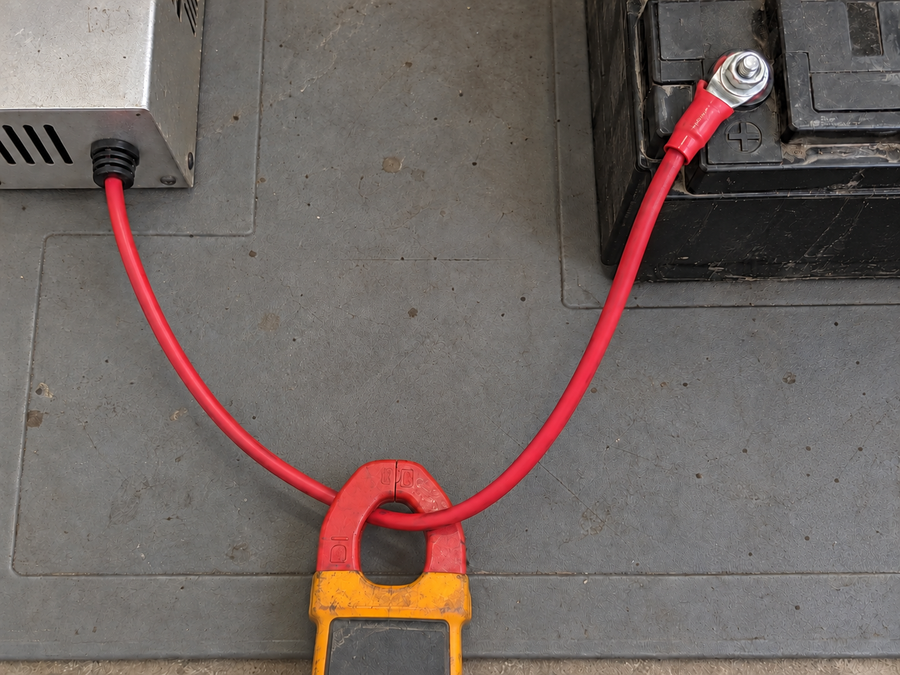
Measure current at the trailer battery with a DC clamp meter while the engine runs. Voltage confirms that power reaches the trailer, while current shows the actual charging rate.
Check Whether the Tow Vehicle Is Sending Charging Voltage
The trailer battery can charge only when the tow vehicle sends voltage through the auxiliary pin. Some vehicles need a towing fuse, relay, software setting, or factory activation before the circuit becomes live.
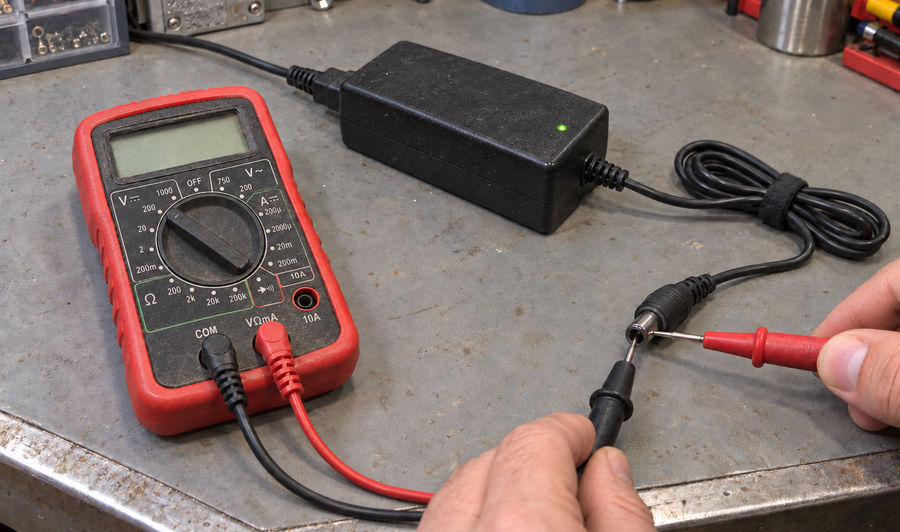
- Park on level ground and set the parking brake.
- Set a multimeter to DC volts.
- Place the black probe on the socket ground terminal.
- Place the red probe on the auxiliary terminal listed in the vehicle manual.
- Record voltage with the engine off and running.
- Repeat the test at the trailer plug and battery terminals.

Low voltage at the rear socket points to the tow vehicle circuit. Normal socket voltage with a much lower battery reading points to the plug, trailer wiring, fuse, or ground path.
Some systems energize the charge pin only after the engine runs or the towing system detects a trailer. Check the owner manual before tracing trailer wiring.
Voltage Drop Between the Alternator and Trailer Battery
Voltage drop reduces charging current even when the rear socket shows power. Long wires, small conductors, corroded terminals, loose crimps, worn plug contacts, and weak grounds add resistance. The voltage current and resistance relationship shows why small resistance changes matter on a long 12 volt circuit.
Take readings while current is flowing:
| Test Point | What the Reading Tells You |
|---|---|
| Tow vehicle battery | Alternator voltage at the source |
| Rear socket charge pin | Loss through vehicle wiring |
| Trailer side of the plug | Resistance across the connector |
| Trailer battery terminals | Final charging voltage |
| Ground path | Resistance on the return side |
An open circuit may show normal voltage even when a weak connection restricts current. A large difference between the tow vehicle battery and trailer battery points to resistance in the positive cable, ground path, or both.
Clean corroded terminals, repair loose crimps, replace heat damaged plug parts, and use cable sized for the full round trip distance.
Smart Alternators and Their Effect on Lithium Battery Charging
A smart alternator can lower vehicle voltage after the starting battery recovers, leaving very little current for the trailer battery. Output may change during acceleration, cruising, braking, and light electrical demand. A variable alternator charging system can produce several voltage levels during one trip.
Watch for these signs:
- Charging current falls after a few minutes.
- Rear socket voltage moves up and down during one drive.
- The trailer battery gains little energy after several hours on the road.
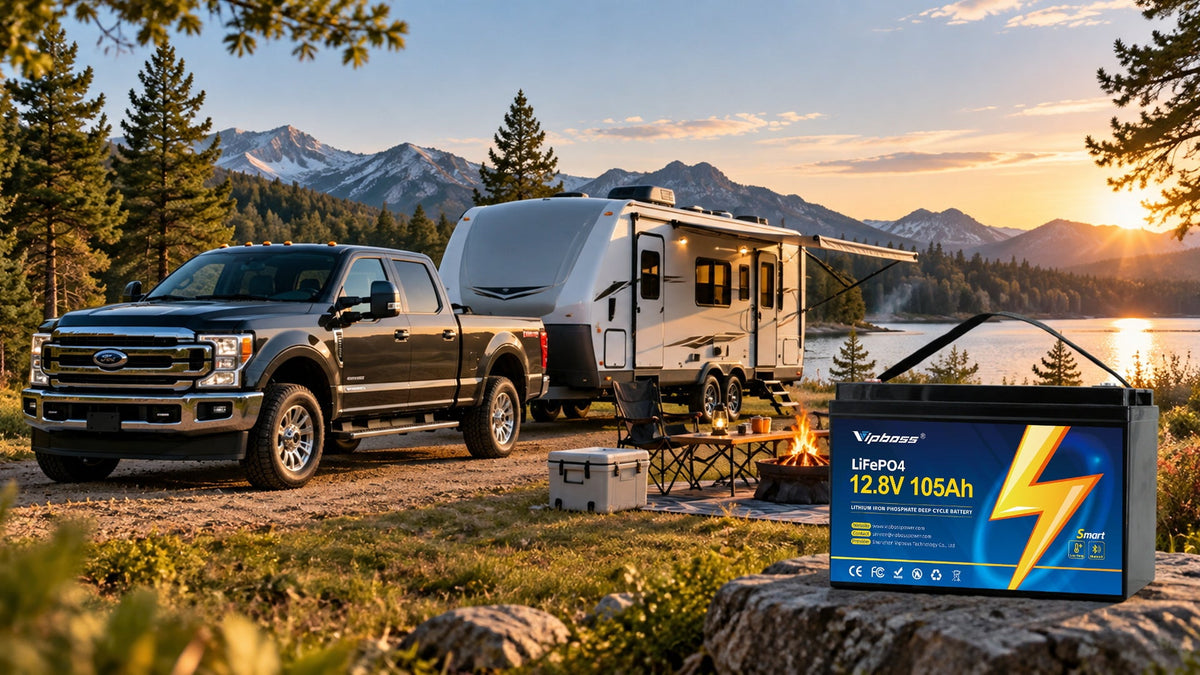
The Vipboss 12V105Ah LiFePO4 battery has a nominal voltage of 12.8 volts and a listed charging range of 14.2 to 14.6 volts. A direct auxiliary circuit may stay below that range during part of a trip. Charging current can fall sharply once vehicle voltage moves close to battery voltage.
When a DC to DC Charger Becomes Necessary
A DC to DC charger becomes necessary when the 7 pin circuit cannot provide steady voltage or useful current. The charger takes power from the tow vehicle and sends a controlled charging profile to the trailer battery.

A charger is a strong fit when:
- Rear socket voltage changes during the drive.
- Battery charging voltage stays below the required range.
- Charging current drops close to zero.
- The cable run between the tow vehicle and trailer is long.
- The travel trailer deep cycle battery has a large capacity.
- Off-grid trips leave little access to shore power.
Install the charger close to the trailer battery. Size the wires, fuses, and grounds for the charger rating and total cable length. A higher current model normally needs a dedicated cable from the tow vehicle battery. Check alternator capacity before selecting one.
A 12V battery for travel trailer use needs charging voltage and temperature limits that match its specifications.
Test the System Before Your Next Trip
Before your next trip, confirm that the charge pin is active, compare voltage at the tow vehicle and trailer battery, and check the real charging current. Repair weak grounds, worn plug contacts, or undersized wiring before adding new equipment. If a smart alternator or long cable run keeps voltage low, a DC to DC charger may provide steadier charging. Review the Vipboss RV battery options to find a lithium battery that matches your trailer capacity, charging setup, and travel plans.
FAQs About Travel Trailer 7 Pin Charging and Trailer Wiring
Q1: Does the Trailer Battery Disconnect Switch Stay On While Towing?
Usually, yes. The on position often keeps the house battery connected to the charging circuit and selected trailer equipment. Wiring layouts vary, so check the switch label and diagram. The emergency breakaway circuit must stay powered even when the house battery disconnect controls other loads.
Q2: Can the House Battery and Breakaway Battery Share One Charging Circuit?
Yes, when the circuit was designed for both batteries and includes proper fuses and isolation. The house battery supports living area energy storage, while the breakaway battery powers emergency braking. Many trailers use separate batteries. Check charger compatibility and test breakaway operation after any wiring change.
Q3: Can Shore Power Backfeed Into the Tow Vehicle Through the 7 Pin Connector?
Usually, no. A relay, isolator, or charging device normally blocks current from flowing toward the tow vehicle. Changed wiring or failed isolation can place voltage at the plug. Disconnect the trailer before electrical work and test the auxiliary pin while shore power is active when backfeed is suspected.
Q4: Will the Trailer Brakes Still Work if the Auxiliary Charge Circuit Fails?
Yes. Normal electric trailer brakes usually receive power through a separate brake control pin. Emergency braking depends on a charged breakaway battery, working switch, and sound wiring. Breakaway system wiring should be tested before travel because the two circuits serve different functions.
Q5: Can Reverse Polarity at the Trailer Plug Damage a Lithium Battery?
Yes. Reverse polarity can blow fuses, trigger battery protection, overheat wiring, or damage charging equipment. Disconnect every charging source before inspection. Identify the positive and ground terminals with a multimeter, correct the plug wiring, replace damaged parts, and confirm polarity before reconnecting the trailer battery.