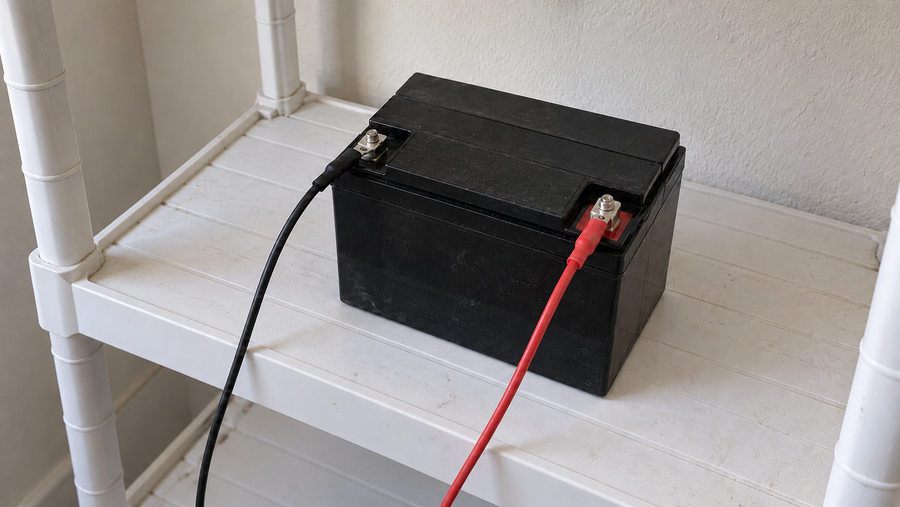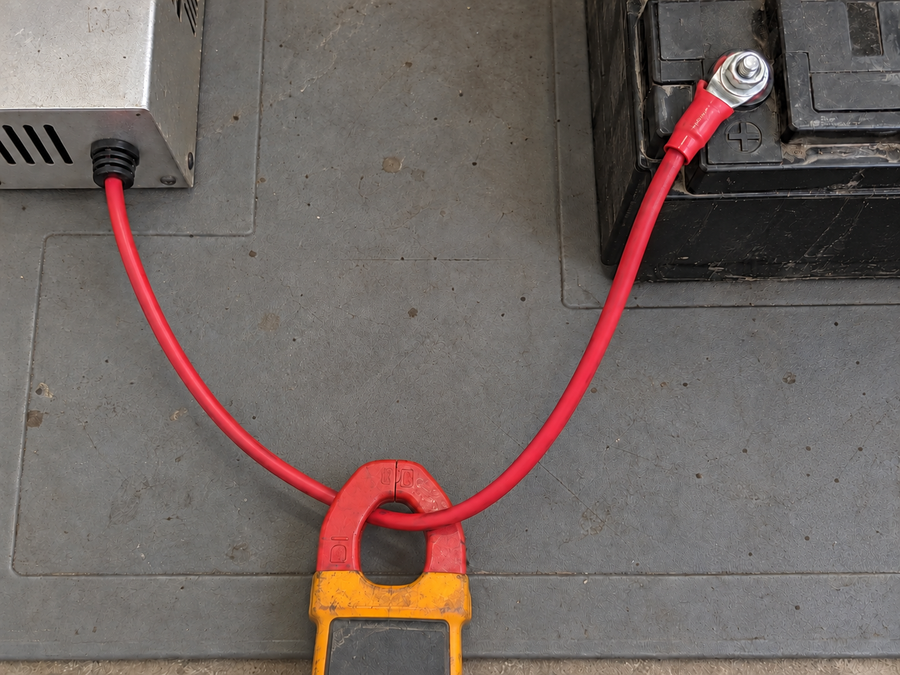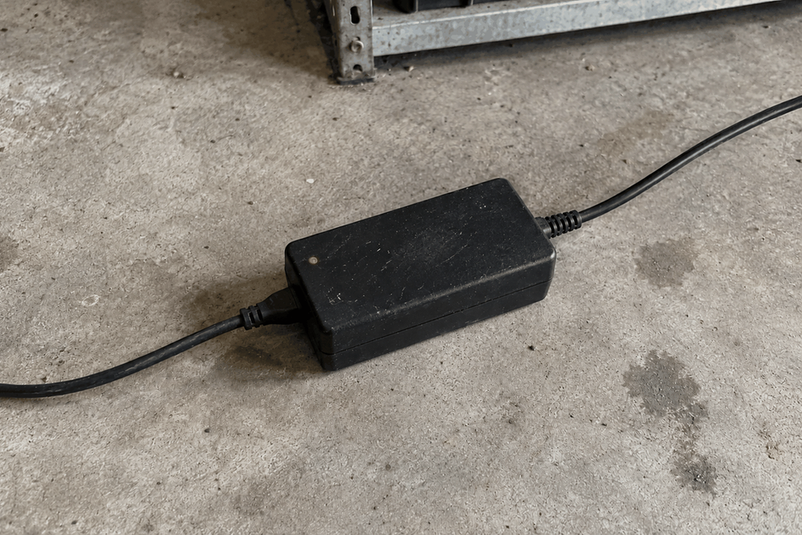

Before connecting a 36V lithium charger, unplug it from AC and compare its output label with the battery requirements. Then confirm that the plug fits without force and that the charger's positive and negative contacts match the battery's markings or wiring diagram. If the voltage, chemistry, connector pinout, or polarity is unknown, do not connect it until the battery or charger documentation identifies the match.
Match the charger output to the battery
A “36V” battery is a system designation, not enough information by itself. Confirm all of these details before checking the plug:
- The battery chemistry is compatible with the charger. A LiFePO4 battery needs a charger intended for LiFePO4 charging.
- The charger output voltage matches the battery maker's required charging voltage.
- The charger current is permitted for that battery and its wiring.
- The connector and pin assignment match the battery connection.
Do not use a charger simply because its plug fits. A compatible-looking plug can still have a different pin assignment or polarity. Lithium-ion battery guidance from MIT Environmental Health and Safety also advises using charging parameters suited to the pack and avoiding reversed polarity.
For example, the supplied specifications for the Vipboss 36V 25A Lithium Battery Charger identify it as a 43.8V charger for 36V LiFePO4 batteries with a 25A output. That information can help compare the charger with a compatible battery.
Inspect the plug and socket while power is disconnected
Keep the charger unplugged from the wall while you inspect it. Check the connector against the battery socket or adapter:
- Compare the connector's shape, size, keying, and number of contacts.
- Look for looseness, bent contacts, cracked insulation, corrosion, or exposed conductors.
- Check the charger label and battery documentation for a polarity diagram. A diagram may show a positive center contact, a negative outer contact, or a different pin arrangement; do not assume one pattern applies to every plug.
- Confirm that the connector seats fully without twisting, forcing, or using an improvised adapter.
A connector that will not seat naturally is not a match. Stop if the plug fits physically but the documentation does not identify the same contact arrangement.
Measure polarity with a multimeter

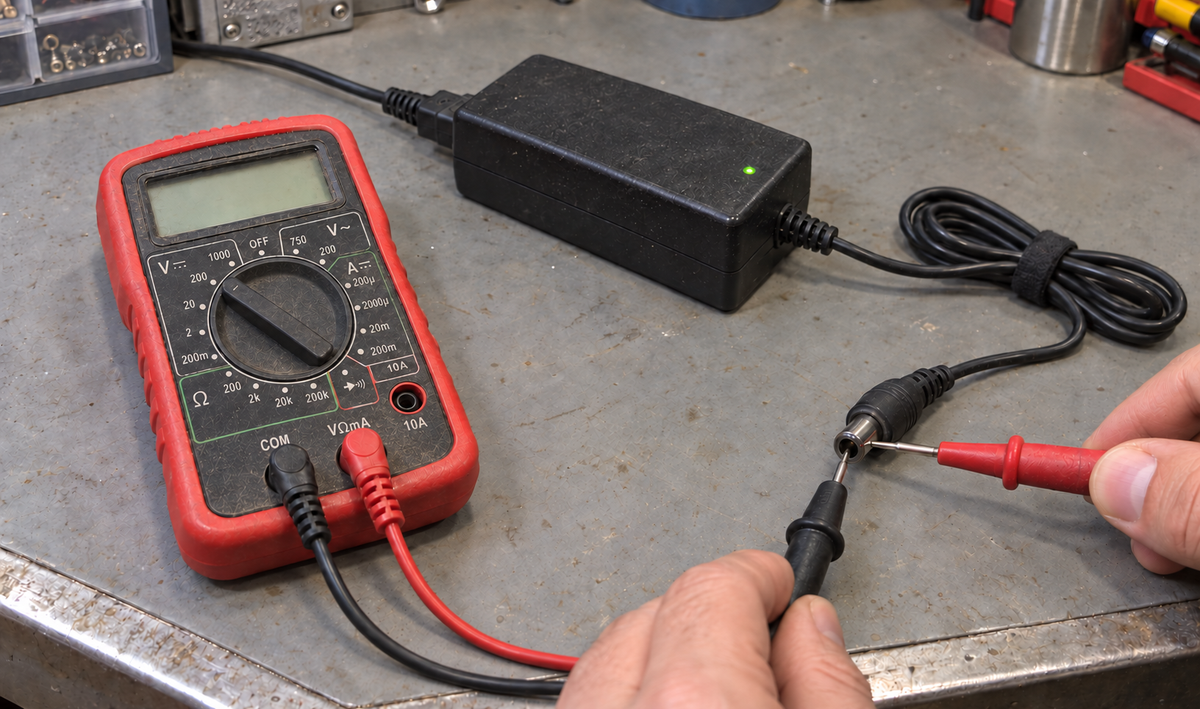
Use a digital multimeter only if you know how to select DC voltage and use its probes safely. Keep the charger disconnected from the battery during the measurement.
- Set the meter to a DC-voltage range higher than the charger's stated output.
- Connect the charger to AC only when the charger instructions allow an unloaded output measurement.
- Touch the black probe to the contact identified as negative and the red probe to the contact identified as positive. Do not let the probes bridge two contacts.
- Compare the displayed voltage with the charger's label. A negative sign means the probe positions are reversed relative to the measured polarity.
- Disconnect the charger from AC before making any connection to the battery.
Connect only after every check agrees
The connection is ready only when the battery chemistry, charger output, permitted current, connector geometry, pin assignment, and polarity all agree. Connect the charger with AC power disconnected, then follow the charger's specified power-up sequence. Watch for abnormal heat, smell, swelling, sparking, or fault indications and disconnect power immediately if any appears.
If one detail does not match, do not try to correct it by swapping wires or forcing the plug. A wrong connection can damage the charger or battery. Replace the mismatched charger or obtain a documented adapter and pinout from the responsible manufacturer.
Frequently asked questions
What voltage should a 36V LiFePO4 charger show on a multimeter?
The correct value is the charger's stated output and the battery's specified charging voltage; many 12-cell LiFePO4 chargers are rated at 43.8V.
What does a negative reading mean when checking charger polarity?
It means the probes are reversed relative to the connector polarity. Reverse the probe positions to confirm the reading.
Can I test charger polarity while the charger is connected to the battery?
No. Check the disconnected charger plug first, then connect only after voltage, polarity, and connector details agree.