
A 12V LiFePO4 battery can shut off under load when its BMS detects excess current, low cell voltage, unsafe temperature, or a short circuit. Loose terminals, weak cables, and undersized circuit parts can also cause low voltage at the load without a battery shutdown.
Identify Whether the BMS Is Entering Protection Mode
A battery management system, or BMS, can disconnect output to protect the cells. Check the battery app, display, status light, or fault history before resetting power.
The shutdown pattern often points to the likely cause:
| What Happens | Area to Check |
|---|---|
| Power cuts out as a motor or inverter starts | High current demand or wiring resistance |
| Power drops after long use | Low state of charge, cell-voltage limit, or heat |
| Charging stops in cold weather | Low-temperature charge protection |
| Battery voltage looks normal but equipment runs weakly | Cable, fuse, switch, or terminal voltage drop |
| Power returns after cooling | Battery or connection overheating |
Protection limits vary across battery models. Check the battery documentation for continuous current, surge current, discharge temperature, charging temperature, and reset conditions.
Avoid repeated resets. A reset can restore power for a short time while leaving the original overload, heat, or wiring problem in place.

Calculate the Real Current Draw From Your 12V Loads
A 12V system can pull high current quickly. Use this estimate for a DC load:
Amps = Watts ÷ Battery Voltage
A 600W load can draw about 50A from a 12V battery. A 1,200W load can draw about 100A before inverter losses. If battery voltage drops during use, the inverter may pull more current to support the same AC load.
Check:
- Running watts
- Startup or surge watts
- Maximum DC input current
- Other loads that can run at the same time
Motors, pumps, compressors, power tools, and refrigerators can pull a brief startup surge. A load that seems small during normal operation can still trip protection at startup.
Add up loads that may operate together. A water pump, refrigerator, fan, lights, and inverter can overload a deep cycle lifepo4 battery even when each device works fine on its own.
A DC clamp meter on the main battery cable gives the clearest answer. Record current at idle, during normal use, and during startup.

Check Cable Size, Fuse Ratings, and Terminal Connections
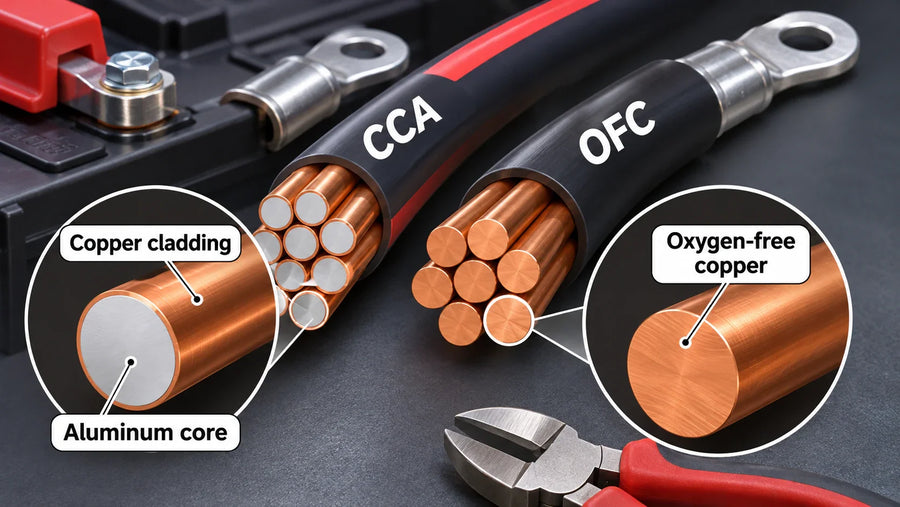
The battery, cables, fuse, switch, bus bar, and load all need to handle the same circuit current. A strong battery cannot compensate for a small cable, loose lug, corroded fuse holder, or worn disconnect switch.
Check the full power path:
- Battery terminal
- Main fuse and fuse holder
- Disconnect switch
- Bus bar
- Positive cable
- Load terminal
- Negative return cable
Look for warm insulation, melted plastic, dark terminal hardware, green corrosion, loose nuts, cracked lugs, or stiff cable near a crimp. Heat usually points to resistance at that location.
Fuse size needs to protect the cable. A fuse that is too large can leave the cable unprotected during a fault. A fuse that is too small can open during normal startup current.
Cable length matters. Long 12V cable runs can lose enough voltage to make an inverter, pump, or motor shut down while the battery remains healthy.
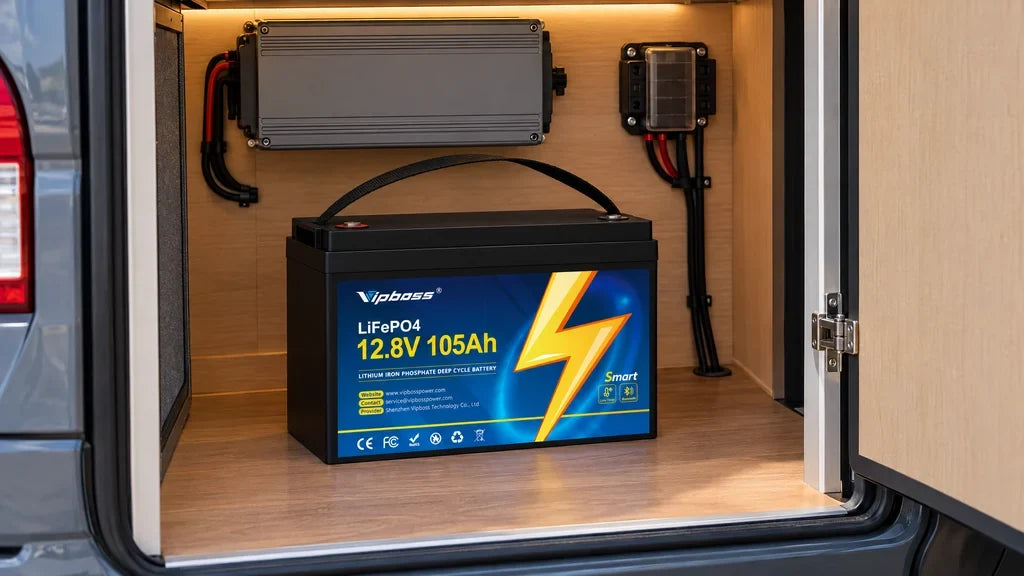
Compare output capability, current rating, and system demand when selecting a 12V LiFePO4 battery.
Test for Voltage Drop Between the Battery and the Load
A voltage-drop test separates a battery issue from a wiring issue. Measure voltage at the battery terminals while the load runs. Then measure voltage at the inverter, motor, or distribution panel.
If battery voltage stays stable while voltage at the load falls much lower, the issue is in the wiring path.
Test one part at a time:
- Positive battery cable
- Fuse and fuse holder
- Disconnect switch
- Bus bar
- Negative return cable
- Terminal connection at the load
A high reading across one part means that part is losing voltage. Compare matching cables or terminals where possible.
Do not hold meter probes near live high-current connections while equipment runs. Use secured test leads, a data logger, or a qualified technician.
Check Battery Temperature and State of Charge Before Resetting
Temperature and state of charge can change how a battery behaves. Check both before resetting power.
A battery in a hot compartment may limit discharge current or shut down. A cold battery may limit charging. A battery that is low on charge may sag under a load that it handled earlier in the day.
State of charge alone does not prove every cell is healthy. One cell can reach a low-voltage limit before the pack looks empty. Check fault codes, loaded voltage, temperature, and any available cell-voltage data.
Remove the load before resetting. Let the battery return to its allowed operating temperature. Then test one load at a time.

Build a 12V System That Can Handle Peak Loads Without Shutdowns
Build the system around the highest expected load, not the average load. Match battery output to continuous and startup demand. Use suitable cables, fuses, switches, terminals, and cable lengths. Test the full setup under the loads you plan to run.
12V LiFePO4 Battery Shutdown FAQs
Can a LiFePO4 Battery Shut Off Even When the App Shows a High State of Charge?
Yes. State of charge shows stored energy, not how every cell behaves during a heavy load. One cell may reach a low-voltage limit first, or the BMS may react to current or temperature. Check fault codes and loaded voltage before treating the app reading as the problem.
Can a DC to DC Charger Cause a 12V LiFePO4 Battery to Enter Protection Mode?
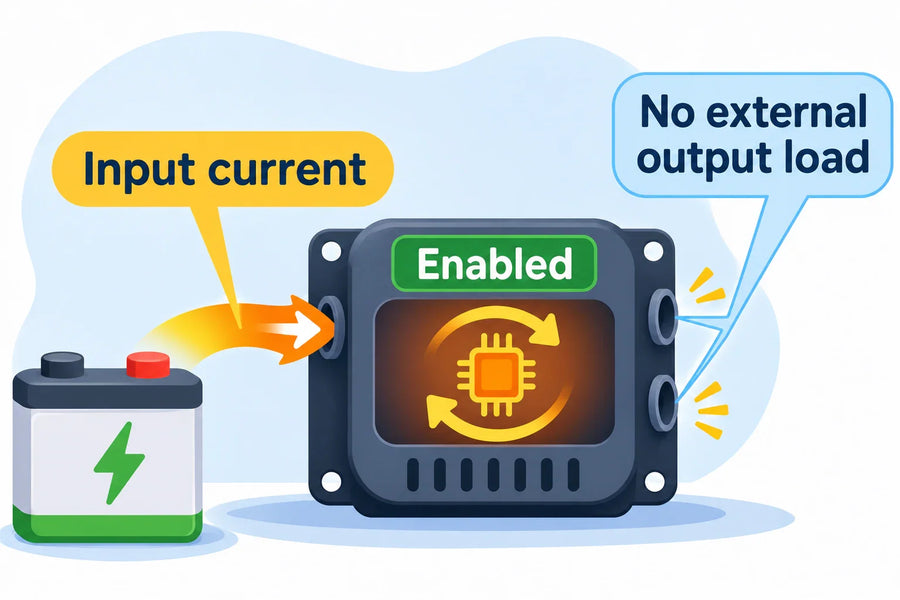
Yes. A DC-DC charger can cause a protection event if its voltage setting, current setting, wiring, or temperature conditions fall outside the battery’s allowed range. Check the charger profile, cable size, fuse size, and battery temperature.
Does a Battery Disconnect Switch Create Voltage Spikes?
Sometimes. Opening a switch while a motor, relay, or inverter is actively drawing power can create a voltage transient. Turn off heavy loads first and use a disconnect switch rated for the system’s DC voltage and current.
Can an Undersized Inverter Cause a Battery Shutdown?
Yes. An undersized inverter may overload during appliance startup or while supporting a load above its continuous rating. Some inverters also have their own low-voltage cutoff. Check that cutoff before treating the battery as the fault.
When Should You Stop Troubleshooting and Request Battery Support?
Request support after repeated shutdowns with correct wiring, a known-safe load, normal temperature, and a healthy charge level. Save fault codes, installation photos, voltage readings, and load-current readings first.