
With a well-tuned setup, a 100Ah 12-volt lithium battery can usually power a CPAP for about 7 to 14 nights while camping, and efficient configurations can stretch that even further.
You finally snag a dark-sky campsite, but as the sun drops you are staring at your CPAP and 100Ah lithium battery wondering whether you will sleep soundly all week or run dry halfway through. Real-world runtimes from travel batteries, portable power stations, and LiFePO4 CPAP packs show that a single 100Ah battery can safely cover anything from a long weekend to a multi-night backcountry trip when it is set up correctly. This breakdown turns that anxiety into clear night-by-night estimates and practical power tweaks that buy you extra sleep off-grid.
Why CPAP Has To Come With You
CPAP is a long-term nightly therapy for obstructive sleep apnea, not a "when convenient" gadget, so skipping it on camping trips undermines both sleep and health over time, as highlighted CPAP travel experts. Untreated sleep apnea can worsen fatigue, mood, and cardiovascular risk, and CPAP remains the standard treatment to keep the airway open and protect long-term health, as emphasized major sleep centers that discuss sleep apnea care and alternatives such as upper-airway stimulation.
For camping, that means your power system has to be designed so you can confidently run CPAP every single night rather than saving it only for the rough ones. The good news is that camping with a CPAP is entirely feasible once you plan around trip length, weather, and power options. Once power is sorted, the rest of the camping logistics feel surprisingly normal: you set up your tent, plug in just like at home, and wake up ready for the trail instead of fighting brain fog.

The Power Math: From 100Ah to Nights of Sleep
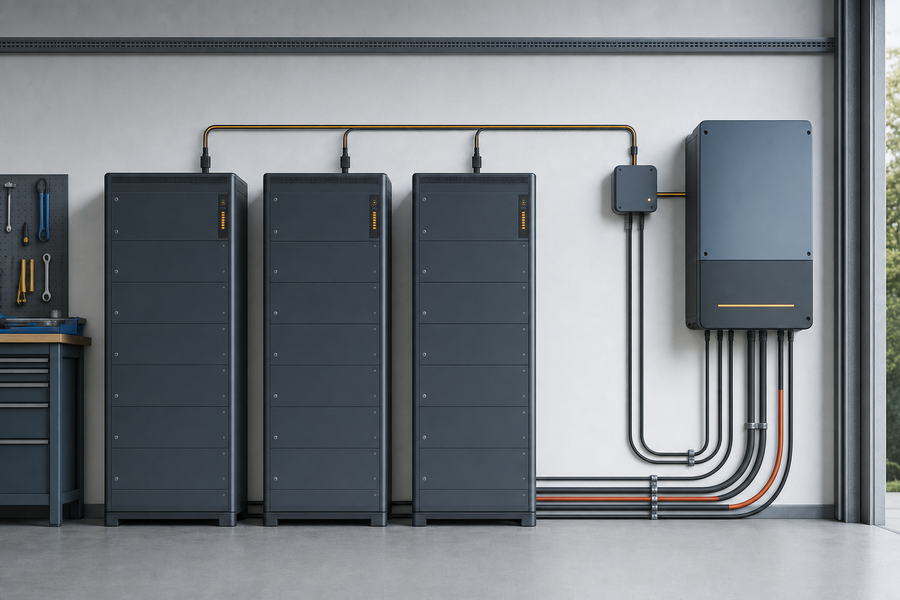
A typical 100Ah "12-volt class" lithium battery (often around 12 to 12.8 volts) stores roughly 1,200 to 1,300 watt-hours of energy. To turn that into nights of sleep, you only need one number: how many watt-hours your CPAP actually uses per night.
You rarely get that number directly from the machine, but you can estimate it using manufacturer battery packs and tested runtimes. Several CPAP battery kits in the 150 to 300 watt-hour range are rated for roughly 8 to 16 hours of use at common pressures, which works out to about one to two nights per charge, according to runtime data compiled for CPAP battery kits. A specialized 307.2 watt-hour LiFePO4 CPAP battery is rated for about four to six nights at moderate pressures with the humidifier off, which works out to several dozen watt-hours per night when used efficiently, as shown in camping case studies of LiFePO4 CPAP batteries.
Those two data points tell you most of what matters. If a 159 watt-hour pack can cover one to two nights and a 307.2 watt-hour LiFePO4 pack can cover four to six nights with the humidifier disabled, then many real-world CPAP setups without humidification are drawing roughly 50 to 150 watt-hours per night. That is the range you use when you scale up to a 100Ah battery.
So How Many Nights From 100Ah, Really?
Take that 1,200 to 1,300 watt-hour battery and divide by a realistic nightly draw from your machine and accessories.
If you have a very efficient setup with the heated humidifier off, no heated hose, and a direct DC cable instead of an inverter, your nightly consumption may be toward the low end of that range, similar to the LiFePO4 pack that yields four to six nights from 307.2 watt-hours. In that scenario, a 100Ah lithium battery has roughly four times the energy, so in theory you could see something like 16 to 24 comparable nights before the battery is empty, assuming usage similar to those reported for LiFePO4 CPAP camping batteries.
Most campers, however, are a bit less optimized.

Maybe you run CPAP plus phone charging, a small fan, and occasionally forget to disable the humidifier. Portable power stations in the 200 to 500 watt-hour class are commonly rated for about one to two nights of CPAP runtime plus some extra electronics, which points to per-night usage closer to the middle or upper end of that 50 to 150 watt-hour range once you factor in other loads, as described in off-grid power recommendations for CPAP-friendly power stations. Layer in inverter losses, cold-weather capacity sag, and a reasonable safety margin so you are not running the battery to absolute zero, and a practical planning figure for a CPAP-first 100Ah lithium battery is about 7 to 14 nights.
In a high-comfort, high-draw configuration with the heated humidifier on, inverter losses, and multiple gadgets using the same battery, you should treat a 100Ah pack as more of a three-to-six-night solution. That conservative lower bound lines up with experience from multi-night camping setups powered by portable stations where CPAP shares capacity with lights and electronics, as outlined in multi-device camping scenarios for CPAP battery users.
Scenario Table: Translating 100Ah Into Nights
CPAP camping setup |
Power traits |
Planning nights from 100Ah 12V lithium |
Efficiency-first CPAP-only (humidifier off, direct DC, moderate pressures) |
Similar to a 300Wh LiFePO4 CPAP pack getting 4 to 6 nights |
Around 12 to 20 nights |
Balanced comfort (humidifier off, some device charging, occasional fan) |
Comparable to mid-size power stations rated 1 to 2 nights for CPAP plus small loads |
Around 7 to 10 nights |
High-draw comfort (humidifier on, inverter, several gadgets on same battery) |
Resembles general-purpose power stations that only manage 1 to 2 CPAP nights per 500Wh |
Around 3 to 6 nights |
These are planning numbers, not guarantees, but they are grounded in real battery runtimes rather than guesswork.
How to Squeeze More Nights Out of 100Ah
The fastest way to extend runtime is to reduce what the CPAP itself consumes per night.
First, shut down the power hogs. Heated humidifiers and heated hoses can be great at home but are notorious battery killers, and many camping and travel guides advise turning humidification off or at least switching to low-draw alternatives when running from batteries. A simple option is waterless humidification using a heat-moisture exchanger cartridge that recycles your own breath's warmth and moisture, an approach specifically recommended for off-grid use in discussions of waterless humidifiers and HME cartridges from camping-focused CPAP resources. Some ultra-portable travel CPAPs build HME technology right into their accessory ecosystem, making them ideal companions on battery-powered trips, as described in trail-tested reviews of lightweight travel CPAP systems.
Second, avoid conversion losses wherever possible. Running a CPAP off an AC inverter wastes energy, and CPAP power specialists repeatedly recommend skipping the inverter and using a dedicated DC cable tailored to your machine when you are on battery power, a tip echoed in both technical designs for solar-ready CPAP kits and practical camping walkthroughs on CPAP battery use. With a 100Ah lithium battery, going DC-to-DC instead of DC-to-AC can easily shift you from the three-to-six-night bracket toward the seven-to-fourteen-night bracket, especially if you are not sharing that battery with many other devices.
Third, choose the right lithium chemistry. LiFePO4 batteries are particularly well suited for CPAP camping because they hold voltage more steadily as they discharge, tolerate heat better, and offer far more charge cycles than typical lithium-ion packs, while still being relatively compact and light. CPAP-focused LiFePO4 systems are highlighted for high cycle life and thermal stability in camping-oriented reviews of LiFePO4 CPAP batteries, which translates into a power bank you can rely on trip after trip rather than babying a fragile cell.
Finally, use the sun to protect your reserve. Many CPAP-ready batteries and power stations accept solar input, and folding panels can top up your main battery during the day, turning a fixed 100Ah capacity into an effectively much larger virtual tank. Solar recharging is a recurring theme across CPAP camping resources because it lets you stretch multi-night trips without ever plugging into shore power, as described in the use of solar chargers and backup batteries for off-grid CPAP setups.
Safety and System Design Essentials
A 100Ah lithium battery is serious power, and how you connect it matters as much as how big it is. When you must use AC, pair your battery with a pure sine wave inverter that matches your machine's requirements; using the wrong inverter can damage sensitive electronics, which is why sleep-medicine providers and equipment suppliers stress checking compatibility and favoring pure sine wave units for CPAP use in their guidance on camping with CPAP. If you are camping in a trailer or RV without hookups, an inverter tied into the house battery bank can be a safe way to feed household-style outlets, provided you respect the limits of both the inverter and the batteries.
Hygiene and environmental conditions also affect gear longevity and sometimes runtime. Dust and moisture are the enemies of both CPAPs and batteries, so a dedicated, water-resistant gear bag and basic wipes go a long way, a point made repeatedly in CPAP travel articles. Extreme heat or cold and very humid or very dry air can stress electronics and batteries, so it is worth checking your CPAP's recommended temperature range and keeping both the device and battery within that band as much as possible, in line with weather-related cautions in camping-specific CPAP guidance.
Above all, test your full setup at home before you ever rely on it in a tent. Several camping guides urge users to run their CPAP from the chosen battery for a few nights at home to confirm real-world runtime rather than trusting the label, because altitude, pressure settings, and individual machines all change the outcome. That at-home shakedown is where you will dial in your personal "nights per 100Ah" number and decide whether you need solar or a second battery.
Quick Real-World Examples
Consider a car-camping setup where the CPAP runs eight hours a night with the humidifier off, using a DC cable into the 100Ah LiFePO4 battery, and nothing else plugs into that battery. In that configuration, your per-night draw is similar to efficient battery-only examples where 300 watt-hours yield multiple nights, and it is reasonable to expect around two weeks of CPAP use before you need to fully recharge, as long as you are not in extreme cold or adding heavy device charging.
Now look at a more typical family-camp scenario. The same 100Ah battery powers CPAP, charges two phones, feeds a small LED lantern strand, and occasionally tops off a GPS. That multi-load behavior starts to resemble how CPAP users rely on general-purpose portable power stations, where about 500 watt-hours can cover one to two nights with CPAP and electronics. Scale that up to your 100Ah pack and you land closer to the seven-to-ten-night band, which is still a solid week-long trip with power to spare if you are smart about what plugs in where.
FAQ
Can a 100Ah lithium battery replace smaller CPAP-specific batteries?
For stationary or vehicle-based camping, a 100Ah lithium battery can replace multiple small CPAP batteries and often has enough capacity to run other camp gear at the same time. CPAP-specific lithium batteries are lighter and usually FAA-approved for air travel, which makes them ideal for flights and minimalist trips, but a single large 100Ah pack gives you far more watt-hours and fewer pieces to juggle once you are on the ground, a tradeoff emphasized in comparisons of dedicated CPAP batteries and larger power stations in CPAP camping overviews.
Is it safe to run a CPAP directly from my vehicle battery instead of a separate 100Ah pack?
It is technically possible to run CPAP from a car or RV battery via an inverter or DC adapter, but it can drain the starting battery quickly, and multiple camping resources point out the risk of waking up to a vehicle that will not start after running CPAP all night. A safer strategy is to use the vehicle to recharge a separate CPAP battery or power station during the day and then run CPAP from that dedicated pack at night, which is the approach recommended in vehicle-based camping advice for CPAP users.
Do I still need a backup plan if I have a big 100Ah lithium battery?
Yes. Even with a large battery, straps can fail, cables can break, and unexpected cold snaps or longer-than-planned trips can eat into your energy budget. Many experienced CPAP campers apply the "two is one, one is none" mindset and pack spare mask parts along with at least one alternate power path such as a smaller CPAP battery, a compatible solar panel, or access to campsites with electrical hookups, as suggested in redundancy advice in CPAP camping tips.
A 100Ah lithium battery can turn CPAP from a camping constraint into a strength, but only if you treat it as a power system, not just a big number on a label. Dial in your nightly draw, optimize your connections, and give yourself a margin with solar or backup power, and that single battery becomes a reliable ticket to many nights of deep, quiet sleep far from the grid.