
In most cold-climate lithium systems, self-heating batteries waste less power than external heating pads because they warm the cells directly and shut off once they reach a safe operating temperature.
For serious cold-climate lithium systems, self-heating batteries usually offer better overall efficiency because they direct heat into the cells and stop heating as soon as the pack reaches a safe operating temperature. External heating pads can be competitive only when the battery enclosure is very well insulated and the heater is tightly controlled.
How Each Heating Strategy Uses Your Watts
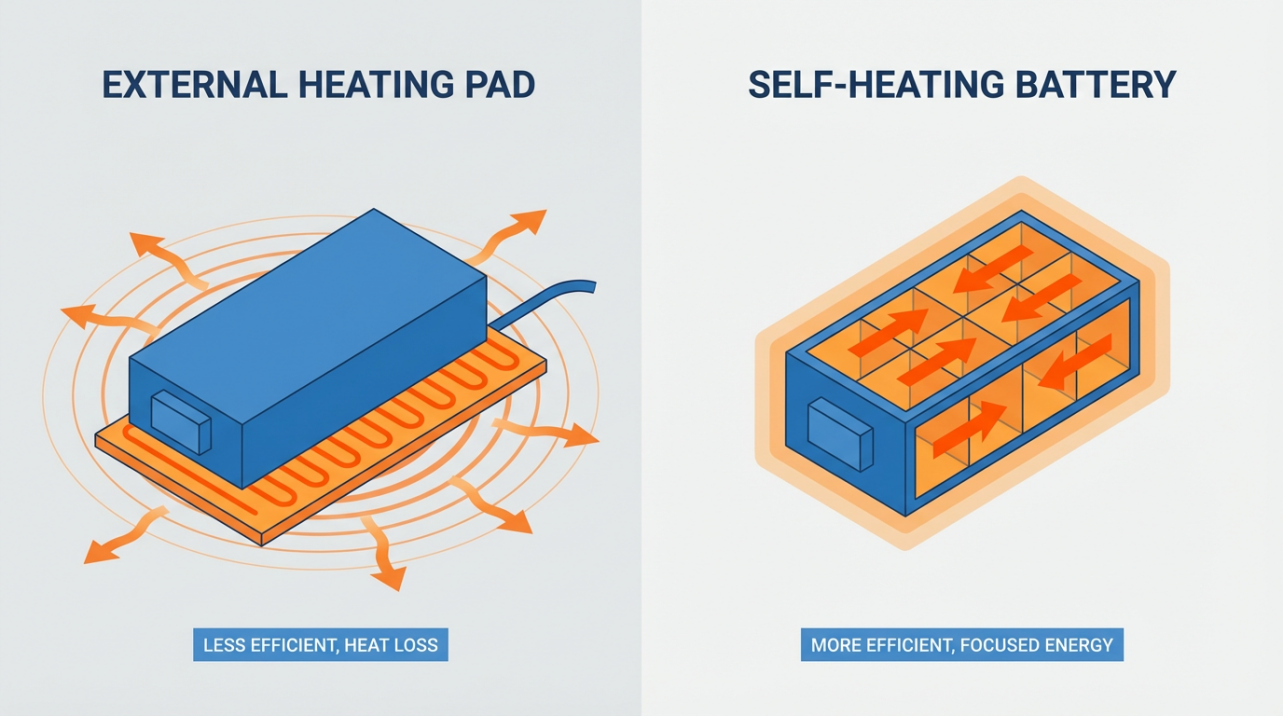
Both options are resistive heaters: nearly all of the electrical power turns into heat, just like when electric heating pads deliver heat therapy to a sore back. The efficiency difference comes from where that heat goes.

External heating pads warm the outside of the case, the bus bars, and the air in the box before they warm the cells themselves. In a poorly insulated shed, you also end up heating the surrounding air, which is pure waste from a battery performance standpoint.
Self-heating batteries embed heaters on or between the cells and let the battery management system (BMS) decide when to run them. More of each watt goes straight into the active cell mass, and the BMS can stop heating as soon as the internal temperature crosses the charge-safe threshold.
Option |
Where Heat Goes |
Control Style |
Power Waste Risk |
Self-heating lithium pack |
Cell cores first |
Built-in BMS, temp-based |
Low |
External pads, insulated box |
Case → air → cells |
Thermostat / relay |
Medium |
External pads, uninsulated |
Case + surrounding air |
Simple on/off |
High |
No active heat |
None (cells stay cold) |
N/A |
Low heater waste, high performance loss |
When Self-Heating Batteries Win on Efficiency
In off-grid cabins and telecom sites we retrofit, self-heating packs almost always use fewer watt-hours over a full winter than external pads providing the same level of cell protection.
For example, a 12 V, 100 Ah lithium pack with an internal heater might draw about 60 W for 30 minutes to bring the cells from 10°F up into a safe charge range. That is roughly 30 Wh per warm-up.

An external pad trying to warm the case, air space, and wiring in a chilly battery room can easily run the same 60 W for 2 hours or more, burning 120 Wh or more to reach similar cell temperatures.
Because the heater is right against the cells, you get deep warming at lower surface temperatures, similar to how infrared pads provide deeper heat at lower surface temperatures. That means:
- Less time with the heater actually on
- Smaller temperature swings inside the pack
- Better cell longevity from consistent, moderate temperatures
If your system cycles daily in real winter (nights below 20°F with regular charging), those savings can add up to hundreds of watt-hours per week, often the difference between staying off-grid comfortably and needing to run the generator.
Data comparing these two approaches head to head is still limited, so the best designs lean on field experience plus straightforward heat-transfer calculations.
Smart Ways to Use External Heating Pads Without Bleeding Power
Sometimes you cannot swap batteries this season, or you are protecting a mixed bank; in those cases, external pads are the practical move. The goal is simple: reduce heater duty cycle and keep as much heat as possible inside the enclosure.
Key tactics I use in retrofits:
- Build a tight, insulated battery enclosure with rigid foam, minimal air volume, and a sealed lid.
- Use DC pads sized to the pack footprint, bonded firmly to the case instead of hanging in the air.
- Control them with a thermostat on the cells or case, not on room air.
- Tie heater enable into the BMS so the heater cannot run when state of charge is dangerously low.
Shifting from an always-on heater to a 25% duty cycle on a 120 W pad saves about 2.1 kWh per day, which is a big gain in a solar-constrained winter system.

Consumer safety guidance for household pads stresses limiting session time and temperature to avoid burns and device damage. The same discipline protects your battery wiring, terminals, and insulation from hotspots while also trimming wasted runtime.
Retrofit Playbook: Choosing the Right Heating Upgrade
Here is how I advise owners when we are optimizing cold-weather performance around real budgets and timelines:
- Daily-cycled off-grid cabin in serious winter: if you are already replacing batteries, choose self-heating lithium to minimize heater runtime, wiring clutter, and cold-related capacity loss.
- Existing lithium bank you must keep: add external DC pads, wrap the enclosure in foam, and use a good thermostat, then include heater draw in your winter energy model before sizing panels and generator hours.
- RV, van, or boat: if roof solar is tight, self-heating packs typically waste less power while parked; if you have ample alternator or shore power and want simpler service, insulated external pads can work well.
- Light-duty backup bank (emergency panel, UPS, infrequent outages): a small external pad with a smart controller is usually enough because absolute energy waste stays low when the heater rarely runs.
If you plan to live with this system for several winters, the extra upfront cost of self-heating batteries often comes back to you in saved watt-hours, quieter generator time, and batteries that stay in their preferred temperature range instead of freezing on the job.