
Insulated battery boxes work, and a well-designed DIY "battery parka" can extend your usable range in extreme weather by keeping your pack in its preferred temperature window instead of letting heat or cold steal capacity.
Ever watched your range fall off a cliff after a freezing night or seen your house batteries sag hard after an afternoon parked in blazing sun? That is not “mystery drain” so much as temperature beating up your chemistry. When you wrap a battery bank in a properly insulated, well-ventilated enclosure and control where heat comes in or out, batteries stay closer to their ideal temperature and deliver more of the energy you already paid for, season after season. This guide shows you when insulation helps, when it hurts, and how to build a simple battery parka that protects your pack instead of cooking it.
How Temperature Really Steals Your Range
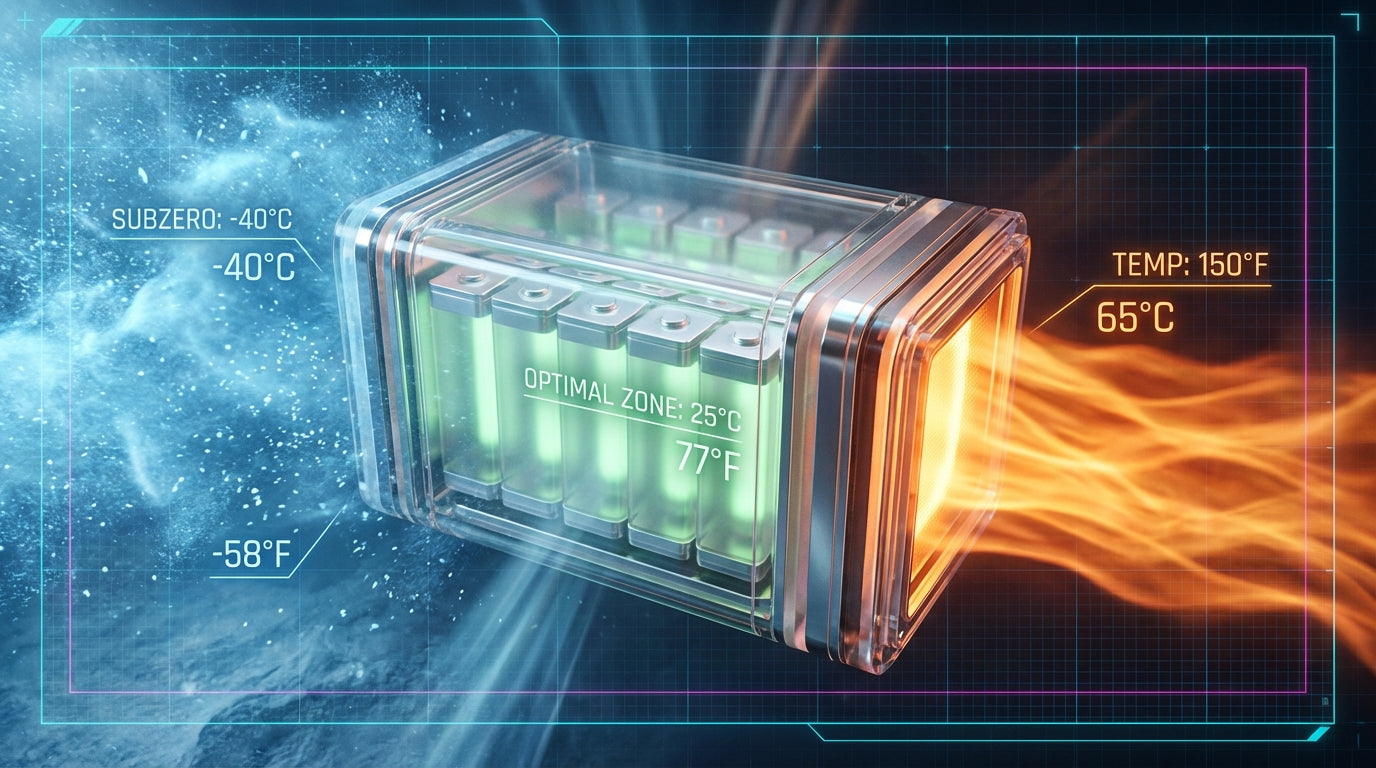
Lithium batteries are highly temperature sensitive: below freezing they lose capacity and charge slowly, and above roughly 113°F they head toward overheating and faster aging. That behavior is why off-grid and RV suppliers stress keeping lithium in a moderate band around room temperature for best performance and life. In practice, cold-soaked packs feel “smaller” and hot packs get pushed toward protective shutdowns, both of which cut range without changing rated amp-hours.
In real vehicles and vans, the environment swings far faster than battery chemistry likes. Engine bays, underfloor boxes, and van garages can easily see sustained temperatures well over 140°F in summer sun and steep overnight drops in winter. A thermal enclosure that slows those swings keeps cell temperatures closer to a daily average rather than chasing brutal peaks and valleys, which means more consistent output and less stress per cycle.

You can see the value of thermal buffering clearly in aviation-style battery enclosures. The EarthX stainless thermal box, tested in a 185°F chamber with a simulated 1,000°F exhaust pipe nearby, extended the time before the internal cells hit their high temperature limit by about three to five times compared with an unprotected battery, simply by combining reflective metal and insulation to resist radiant and convective heat for about an hour or less in extreme conditions. That delay in heating protects performance and service.
Insulated EV and traction battery systems apply the same principle at a higher level. Automotive battery insulation combines thermal management with structural protection and often contributes to fire safety by slowing flame spread and giving more time to respond if a failure occurs.
What an Insulated Battery Box Actually Does
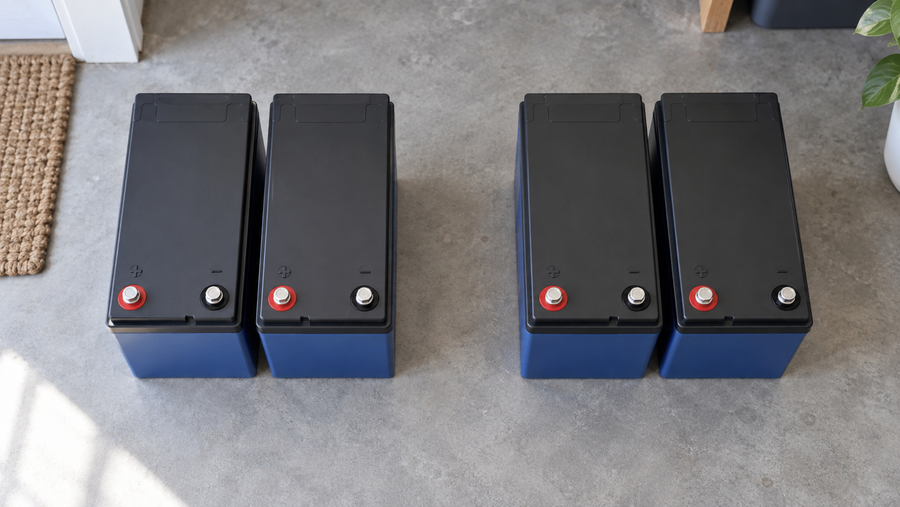
An insulated battery box is more than a plastic crate with foam glued inside. Well-designed insulated enclosures for vans and RVs, such as those specialty builders, use insulation to slow heat flow from hot surfaces or cold floors, structures that shield cables and components from damage, and smart details like drain paths and cable glands to keep condensation and chafe from becoming hidden failure modes.
Thermally, the best analogy is a cooler riding in your trunk. Enthusiasts who store electronics and batteries in a cooler inside a hot car notice that the cooler does not magically keep things “cold,” but it does smooth out the spikes. The insulated shell acts like a semi-permeable barrier. Add mass inside—like water bottles—and temperature changes even more slowly. A battery parka is the same idea: it does not create free energy; it buys you time and stability.

When a Battery Parka Really Extends Your Range
The most obvious win is cold weather. Lithium batteries dislike being charged below 32°F; their usable capacity drops and internal resistance rises, so the same drive or boondocking night pulls the voltage down faster. Insulated enclosures that break contact with cold floors, wrap the sides in closed-cell foam, and add a small heater or self-heating battery can keep the pack above freezing long enough to deliver a normal discharge and accept charging again once the system has warmed. Van builders who combine insulation with thin silicone heat pads under the batteries on thermostats see banks stay above the critical charging threshold even when ambient air is well below freezing, which means the same bank covers more cold-weather miles or nights before voltage sags.

Heat is the flip side. In hot climates and engine compartments, the trick is not getting hot at all or at least heating much more slowly. The EarthX test results show how a reflective, insulated box can multiply the time a battery can spend in a 185°F environment before crossing its internal limit, which is exactly what you want after a long climb, a hard fast charge, or a shutdown in a hot bay. Lithium and lead-acid batteries both have upper comfort zones. Slowing the heating curve keeps you in the sweet zone longer, so the BMS is less likely to cut power or charging and you see more of the pack’s rated energy on hot days.
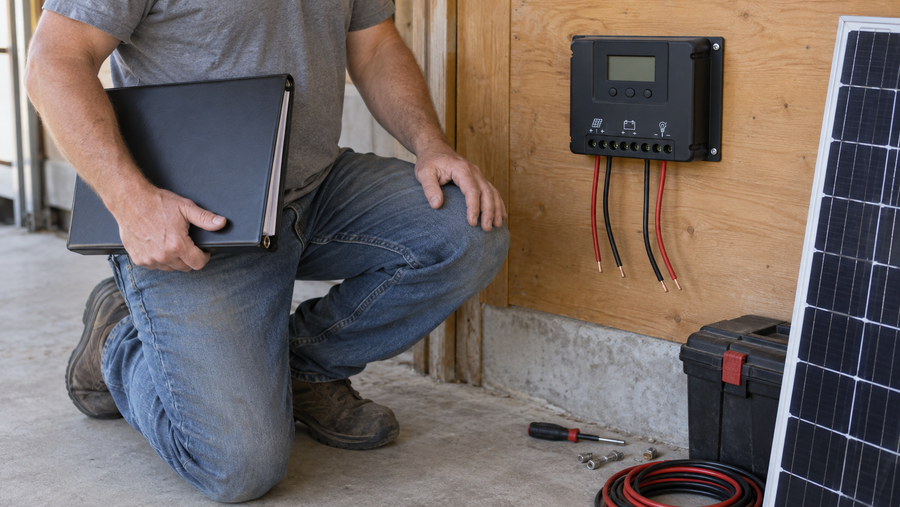
For off-grid rigs and campervans, insulated battery boxes pair naturally with smart protective accessories. Lithium RV suppliers often bundle thermal jackets and monitors. In those setups, a DIY parka that follows the same principles—keep temperatures moderate, monitor closely, and avoid hard abuse at extremes—can deliver a noticeable increase in usable range and cycle life.
Cold-Weather Use: Keep the Pack Above Freezing
Most lithium chemistries experience reduced capacity when stored or operated below freezing, and charging at those temperatures can cause permanent damage, which is why many manufacturers explicitly prohibit cold charging. Designers of insulated van boxes address this with a layered approach: they add an insulated base to break thermal contact with the cold vehicle floor, line the walls with closed-cell foam that resists moisture, and route a minimal amount of controlled heat into the box only when necessary. Closed-cell insulation boards and foams are preferred materials for these designs.
Storage practices matter just as much as the box itself. Safe lithium storage favors cool, dry, dark spaces. If your batteries live in a garage that routinely drops below that range, an insulated enclosure with a modest heat source controlled by a thermostat keeps the chemistry in its comfort zone, preserves capacity, and reduces cold-weather voltage sag.
Hot-Weather Use: Prevent Heat Soak and Thermal Stress
In hot environments, insulation alone is not enough; it must be paired with reflection and controlled airflow. Builder-focused guidance for van battery boxes emphasizes radiant barriers facing the vehicle skin, minimizing metal “thermal bridges” that conduct heat straight into the pack, and using small, temperature-controlled fans to exchange air without throwing away all the insulation benefits. A good thermal strategy includes an insulated base plus carefully managed airflow and reflection so the pack stays in its preferred range even when the surrounding compartment gets hot.
High-power EVs push this further by baking cooling into the structure itself. Modern composite and thermoplastic battery enclosures can integrate continuous channels that carry coolant, combining impact protection and thermal management in a lighter package than traditional aluminum boxes. Keeping the enclosure lighter and thermally efficient means less vehicle mass to move and more consistent pack temperatures, which both contribute to better real-world efficiency.
Designing a Battery Parka That Works, Not Just Looks Clever
To build a DIY battery parka that actually helps, start by thinking in terms of heat flow, not just “more foam.” The cooler analogy is useful again here. An insulated container slows temperature changes but will eventually follow the surrounding temperature if it is left long enough. That mindset keeps you from over-sealing the box and cooking your batteries under sustained load.
Material choice sets the baseline. Plastic battery boxes are lighter and corrosion resistant. For most off-grid and van builds, a robust plastic or composite outer box with internal closed-cell foam and strategic metal shielding near hot surfaces gives a good balance of insulation, safety, and weight.
Option |
Thermal behavior |
Best use case |
Plastic box plus foam liner |
Naturally insulates, resists corrosion, but sheds heat slowly |
House banks in vans, RVs, and indoor off-grid systems where loads are moderate and physical impacts are limited |
Aluminum box with internal insulation |
Conducts and dissipates heat quickly while still allowing internal buffering |
Engine bays, high-power systems, or packs near exhausts or in very hot ambient conditions |
Composite or thermoplastic enclosure |
Tunable balance of insulation, strength, and weight with integrated cooling channels |
Purpose-built EV packs where weight, crash safety, and cooling are tightly engineered |
Internal layout and cable routing are just as important as the shell. Professional van battery enclosures leave space around components. That same discipline in a DIY box avoids hotspots around overcrowded busbars, prevents insulation rubbing through on sharp edges, and keeps fuses and disconnects reachable when you need them most.
Safety: Venting, Mounting, and Fire Protection
Insulation must never come at the expense of basic safety. Flooded lead-acid and many AGM batteries generate hydrogen when charging and need both containment and venting. Marine best practice is to install flooded batteries in secure boxes with venting that allows gas to escape away from ignition sources. Shoebox-style lids must be vented at the highest point so gas can escape and not accumulate around any loose or arcing connections.
Campervan builders follow similar rules. AGM batteries installed inside living spaces should be vented directly outdoors, while lead-acid units belong in gas-tight boxes with properly designed vents; lithium packs generally do not need routine gas venting but still benefit from being mounted in well-ventilated areas away from heaters and direct sun. A battery parka for lithium should therefore focus on temperature control and fire containment rather than gas management, while still respecting the manufacturer’s mounting and clearance instructions.
Mechanical security matters just as much as thermal design, especially in mobile rigs.

Experienced marine installers treat “no movement” as the standard. Translated to vans and trucks, that means mounting your insulated box low, near the center of mass, with tie-downs rated for several times the battery weight so a crash or hard braking event does not turn the pack into a projectile.
When Insulation Backfires
Insulation can be harmful when it hides the real problem: too much internal heat from pushing the pack too hard. Experienced DIY EV builders point out that if a battery box seems to “trap heat,” the underlying issue is almost always an excessively high discharge rate rather than the enclosure itself. High current “beats the pack,” generating substantial internal heat that shows up as a rising case temperature regardless of how well the box breathes. In that situation, ventilation and insulation tweaks are secondary; the primary fix is reducing current draw or increasing the battery capacity so each cell is worked less hard.
There is also a point where insulation must yield to active cooling. Large EV packs and high-power off-grid systems can generate sustained heat that no amount of foam will safely absorb. Advanced battery enclosures for traction applications solve this by integrating cooling channels and selecting materials that balance heat conduction, impact resistance, and weight, instead of simply wrapping cells in ever-thicker insulation. For those systems, your “parka” might be a combination of a thermally conductive enclosure, localized insulation, and liquid or forced-air cooling rather than a fully insulated box.
Finally, remember that an insulated box can only buffer over a given time window. Just as a cooler inside a hot trunk will eventually warm up, a battery parka can only slow, not stop, the march toward ambient temperature. If your rig lives full-time in brutal conditions, you may need to change the environment—move the pack indoors, add shading and ventilation, or upgrade to active thermal management—rather than expecting insulation alone to do all the work.
FAQ: Quick Answers on Battery Parkas
Will an insulated box overheat my lithium batteries?
It can if you aggressively discharge the pack in a sealed space without ventilation, but in moderate-duty off-grid and RV use, a well-designed insulated box with a defined airflow path is far more likely to protect your batteries than harm them. The key is to combine insulation with temperature monitoring, modest venting or small fans in hot weather, and reasonable current limits so the pack does not generate more heat than the enclosure can shed.
Can a battery parka replace active heating or cooling?
In mild to moderate climates, a battery parka that uses good insulation, an insulated base, and perhaps a small thermostatically controlled heat pad can keep lithium above freezing and below damaging heat without full-blown HVAC. However, in sustained desert heat or deep-winter exposure, insulation should be thought of as a range extender for your active systems, slowing how quickly temperatures wander out of bounds rather than fully replacing more powerful heating or cooling hardware.
How much extra range should I expect?
There is no universal percentage, because the gain depends on how extreme your temperatures are and how marginal your pack was before. What the data and field experience do show is that keeping batteries near their preferred temperature band—roughly room temperature for lithium, with clear limits below freezing and above about 113–140°F—lets you access more of their rated capacity per cycle and cuts down on BMS-driven cutbacks and early aging, which is exactly how a battery parka quietly extends your real-world range over many trips.
A smart battery parka does not try to cheat physics; it uses physics in your favor. If you control heat flow, mount and vent your pack correctly, and respect what the chemistry wants, an insulated box turns into a quiet range extender that keeps your off-grid system, van, or small EV delivering full-strength power long after bare, exposed batteries would have tapped out.