
If your lithium batteries might ever charge below 32F, you need heaters or a smart heating strategy; if they always charge above freezing, careful placement and habits are usually enough.
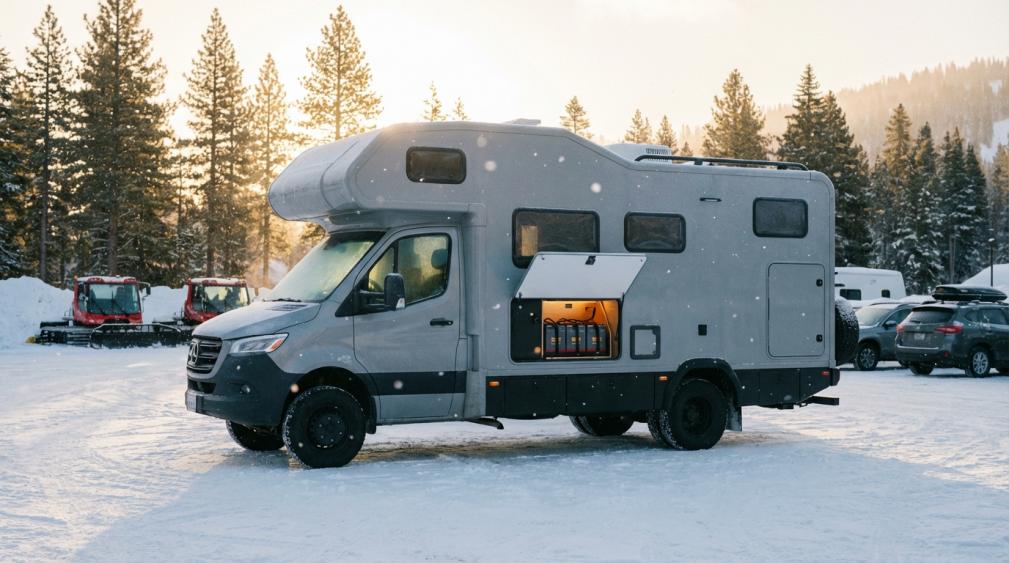
Picture rolling into a snowy resort parking lot, furnace fan humming, lights cozy, and then your "upgraded" battery bank suddenly refuses to take a charge the next icy morning. Many real-world winter RV and cabin setups keep their power reliable through long cold snaps simply by controlling when and how batteries see freezing temperatures instead of throwing hardware at the problem. This guide gives you a clear, step-by-step way to decide whether heaters belong in your system, how to size and deploy them, and what to do instead if you choose to run without them.
Why Cold Lithium Batteries Misbehave
Cold weather slows the chemistry inside lithium batteries, thickens the electrolyte, and raises internal resistance. In practice, that shows up as voltage sag and noticeably shorter runtime in winter; around freezing, usable capacity often falls by roughly 20-30%, so that "200 Ah" bank behaves more like 140-160 Ah under load in the snow lithium battery cold-weather performance. Lithium deep-cycle batteries still outperform lead-acid in these conditions, keeping a much higher percentage of their rated capacity at 32F than flooded or AGM banks, especially when they can warm slightly under use lithium batteries in cold weather.
Discharging in the cold is not the real killer; charging when the cells are too cold is. Many lithium iron phosphate batteries can safely discharge down to about -4F while simply giving you less runtime and more voltage drop, but charging below 32F risks lithium plating, where metallic lithium deposits on the anode instead of going into the structure of the electrode. That plating is permanent damage and can eventually cause internal shorts if dendrites grow, which is why robust low-temperature charging protection has become a standard recommendation for cold-climate off-grid systems.
For a typical ski-trip setup, that means you might be running your heater and lights from a cold battery overnight with no problem, but the risk appears at dawn when solar, alternator, or shore chargers push current into cells that are still below freezing. Winter power planning often extends beyond battery care to protecting other infrastructure; calculating energy needs for heat tape becomes essential for preventing frozen pipes in unheated cabins and RVs.
Do You Need Heaters for a Christmas Ski Trip System?
Where Your Batteries Live Matters More Than the Weather Report
If your lithium bank is mounted inside the conditioned space of an RV, van, or cabin, it often coasts through ski season without dedicated heaters because the ambient temperature stays in a safe band whenever you are actually there. Lithium batteries tend to warm a bit internally as they deliver current, which helps them maintain voltage and capacity in a cold-weather discharge situation using lithium batteries in cold weather.
By contrast, packs mounted in unheated exterior bays, tongue boxes, or underfloor compartments are far more exposed and can sit well below 32F for long stretches, even while you are comfortably warm inside. Cold storage guidance for lithium batteries consistently warns against leaving them in vehicles, sheds, or garages that fall below freezing for long periods, emphasizing either bringing them indoors or actively keeping the compartment above freezing how to store lithium batteries in cold weather. If your bank lives in one of those exposed spaces, you should assume it will need either heaters or a self-heating, low-temperature-protected design to survive Christmas week charging cycles.
When and How You Charge Determines Heater Needs
Lithium banks can be discharged safely at sub-freezing temperatures, especially modern lithium iron phosphate models designed for outdoor and off-grid use, but their capacity and power output drop as the temperature falls. That means your furnace fan will run, but maybe not all night if you sized the bank assuming summer conditions.
The critical question is what the temperature will be during charging, not during discharge. Standard lithium packs should be warmed above 32F before charging to avoid plating, and even when charging in the 14F to 32F range, reputable manufacturers recommend cutting charge current down to roughly 0.1C or less, with further reductions below 14F. In practice, that means if your typical pattern at the resort is solar bulk charging in late morning after the inside of the rig has already warmed up, heaters are less critical; if you plug into shore power or run a generator at dawn while the bank is still icy, you need either heaters or a BMS that blocks cold charging.
How Critical and Hands-Off Is Your Power?
When your battery bank is running mission-critical loads like a furnace in a winterized camper or a remote cabin with nobody on site for days, the tolerance for error drops. Experienced off-grid users who have stress-tested cold-weather solutions report that systems with thorough low-temperature protection and automatic restart behavior can be "fool proof," even after aggressive winter torture tests.
On the other hand, if you are parked at a resort for a long weekend and are willing to watch temperatures and state of charge, you can get away with a lighter approach by adjusting charge times, keeping the bank warm when charging, and using monitoring tools such as Bluetooth battery apps to keep an eye on internal conditions. The more "set-and-forget" you want the system to be, the more strongly heaters and low-temperature protection move from "nice insurance" to "mandatory."
Three Cold-Weather Strategies for Lithium Banks
Indoor Mounting With Smart Operating Habits
The simplest strategy for many ski-trip rigs is to mount the lithium bank inside the conditioned envelope and treat temperature as another thing you manage with habits rather than hardware. Cold-weather guidance for lithium storage recommends keeping packs roughly between 41F and 68F, storing them at about 40-60% state of charge when idle, and avoiding both full charge and deep discharge for long periods in the cold to reduce stress on the cells.
Before and after trips, you can bring portable packs indoors, disconnect all parasitic loads such as inverters and USB chargers, and top the battery gently with a compatible charger every month or two if voltage droops, rather than leaving it either full or empty in a freezing garage essential winter battery maintenance. For an RV or cabin where the bank stays near room temperature while you are there, this strategy often means you do not need dedicated heaters at all, as long as you avoid charging when the space is still below freezing.
External Heaters and Insulated Enclosures
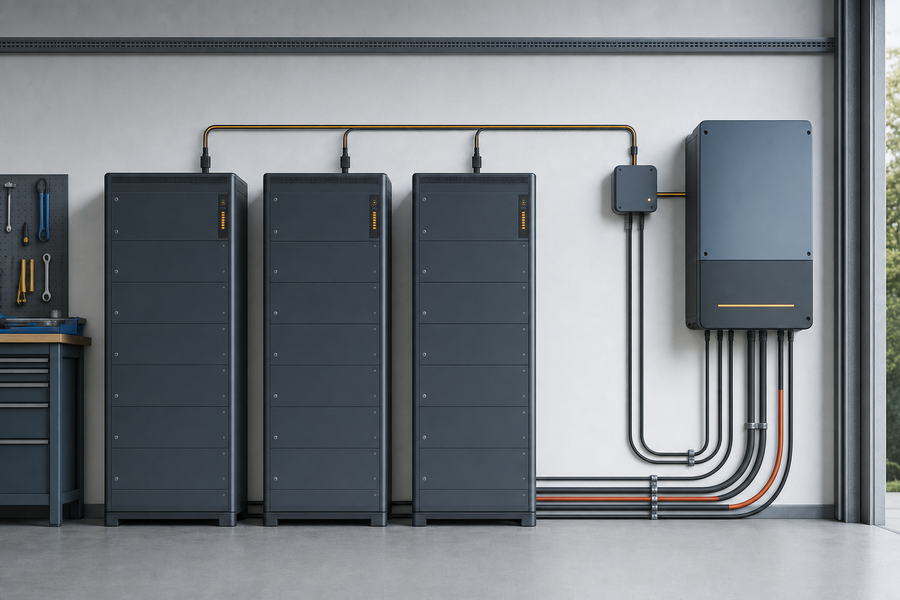
When batteries must live in unheated bays or underbody boxes, external heaters paired with insulation let you create a microclimate just warm enough to charge safely. Cold-weather storage and usage advice explicitly recommends insulating battery compartments and, in harsher conditions, supplementing that with heating pads or wraps designed for batteries to keep them in their ideal operating range how to store lithium batteries in cold weather. Purpose-built LiFePO4 systems for winter use also highlight the value of insulated enclosures to stabilize temperature and reduce the energy needed to keep packs above freezing.
From a design standpoint, imagine a heating pad drawing 4 A from your 12 V system when it cycles on; if it runs for 10 hours during a frigid night, that is about 40 Ah and roughly 480 Wh consumed just keeping the bank warm. On a 200 Ah bank, that can be around a fifth of your usable capacity, so whenever you add external heaters, you should explicitly include that load in your amp-hour and solar sizing calculations rather than treating it as "free."
Self-Heating LiFePO4 Batteries With Low-Temperature Protection
The most elegant option for many modern upgrades is to choose lithium batteries with integrated low-temperature protection and self-heating. In these designs, the battery management system measures internal cell temperature and simply refuses to accept charge below a safe threshold, often around 32F, then routes incoming current to internal heaters until the cells rise to about 41F before allowing actual charging. Self-heating lithium iron phosphate batteries explicitly marketed for RVs, boats, and off-grid cabins follow this pattern, protecting the pack from user error when you plug in during a cold snap.
Some cold-weather product lines can even accept normal charge current at temperatures down to about -4F because they automatically preheat internally, avoiding the need to slow charging or micro-manage current limits in winter. High-capacity heated lithium batteries for harsh climates pair this with advanced protection features and multi-thousand-cycle lifespans, making them especially attractive for serious off-grid ski cabins, ice-fishing setups, and long-term RV living lithium batteries in cold weather.
Strategy |
Best for |
Benefits |
Tradeoffs |
Indoor mounting, no dedicated heater |
Vans, RVs, and cabins where batteries stay warm |
Lowest cost, simplest wiring, no extra loads to manage |
Requires disciplined charge timing and good temperature habits |
External heaters plus insulation |
Existing banks in cold bays or exterior boxes |
Works with many brands; targeted warmth where needed |
Adds wiring complexity and significant overnight energy draw |
Self-heating lithium with protections |
New installs or major upgrades in cold climates |
Automatic cold-charge protection and plug-and-play use |
Higher upfront cost; still benefits from reasonable placement |
Unattended Winter Storage and Extreme Cold
If your ski condo or backcountry cabin will sit empty for months of deep winter, the design tradeoffs shift again. Experienced off-grid owners in very cold regions sometimes prefer robust flooded lead-acid batteries for unattended winter storage because a fully charged unit can survive well below zero when it is kept topped by a small array, even in an unheated outbuilding, and lead-acid chemistry is more forgiving of a frozen environment as long as the electrolyte does not actually freeze. In contrast, lithium packs stored in those conditions risk falling below their recommended temperature range and being accidentally charged while too cold, which is exactly what low-temperature protections are trying to prevent.
For lithium storage between ski trips, the guidance converges on a controlled indoor environment, moderate state of charge, and occasional health checks. Keeping a lithium bank in a dry space around 50-68F, charging it to roughly half to two-thirds full before storage, and checking voltage every month or two to add a gentle top-up if it drifts all help preserve capacity and avoid both over-discharge and long-term high-voltage stress how to store lithium batteries in cold weather. Seasonal storage advice for lithium iron phosphate systems also emphasizes disconnecting all loads, inspecting terminals, and labeling storage state of charge so you know exactly where the bank stands when it comes out in the spring essential winter battery maintenance.
If you plan to leave a lithium bank connected to solar through the winter while you are away, it becomes even more important that both the charge controller and the batteries themselves have temperature-aware charge profiles or internal low-temperature cutoffs. Otherwise, a bright but bitterly cold morning can trigger cold charging from the array before the cells are anywhere near a safe temperature, which is precisely the failure mode that low-temperature protection and self-heating designs are built to avoid.
So, Do Your Batteries Need Heaters for Christmas?
If your lithium batteries live in a heated space and you only ever charge them when the area is above freezing, dedicated heaters are usually not essential. In that scenario, the high cycle life and strong cold-weather discharge performance of modern lithium iron phosphate banks, paired with good operating habits, are enough to keep lights and fans running through Christmas week.
If your bank sits in an unheated compartment that can be below 32F when charging starts, you should treat heaters or self-heating batteries as required equipment rather than optional extras. Either external heaters controlled by a thermostat or batteries with integrated low-temperature protection will keep charging in the safe zone and prevent the permanent damage associated with cold plating. For fully unattended winter cabins in harsh climates, it can even make sense to combine approaches, or in some cases keep a separate, simple lead-acid bank for dead-of-winter storage while reserving lithium for seasons when you are on site.
The real "power upgrade" is not just bolting on a heater but designing your Christmas ski-trip system so temperature, charge timing, and storage are all under control. Get those three right, choose the heating strategy that fits your install, and your lithium bank will handle the cold as confidently as you carve that first run after a fresh snowfall.
FAQ
Q: Can I charge my lithium batteries if they are at 30F?
Standard lithium packs should not be charged at that temperature; best practice is to warm the cells above 32F first or use batteries with low-temperature cutoffs and self-heating that automatically warm the cells before charging begins. Some cold-rated lines can accept charge in sub-freezing conditions only because they use internal heaters to bring cell temperature into a safe band before allowing current.
Q: Is insulation alone enough to protect a lithium bank at a ski resort?
Insulation slows heat loss and can smooth out temperature swings, but it does not add heat, so it cannot keep a pack safe indefinitely if ambient temperatures stay well below freezing. Cold-weather guides emphasize that insulation should be paired with either controlled indoor placement, external heaters, or batteries that can monitor and manage low-temperature charging themselves.
Q: Should I switch to lead-acid just for winter trips?
For attended ski-trip use, high-quality lithium iron phosphate batteries usually remain the better choice because they hold capacity better in the cold, weigh less, and last many more cycles than lead-acid lithium batteries in cold weather. Lead-acid can make sense for very simple, unattended winter storage in brutal climates, but for most ski-resort rigs, the smarter play is to keep lithium and add the right mix of placement, heaters, and protections so your system stays both high-performance and winter-proof.