
This article explains when you can safely run loads directly from solar panels, when that approach fails, and how to design reliable solar and battery setups for homes, cabins, and backup power.
You can run a few simple loads directly from solar panels in the right conditions, but any serious home, cabin, or backup system needs proper power electronics and usually a battery if you want stable, predictable power.
You hook up a shiny new panel on a sunny afternoon, the meter jumps, and the question hits: why not just plug a fridge, pump, or power strip straight into that free energy and skip the cost of batteries? Many projects that start with this "panel-only" idea end up with tripped devices, dead tools, or ruined electronics long before their first storm or outage. Read on to see when battery-free operation makes sense, when it is a trap, and how to build a system that actually keeps your critical loads running.
How Solar Power Really Reaches Your Loads
Photovoltaic devices convert sunlight directly into electricity using semiconductor materials that push freed electrons into a usable circuit. Photovoltaic devices convert sunlight directly into electricity, and in a home setting they produce direct current (DC), not the alternating current (AC) your service panel and most appliances expect.
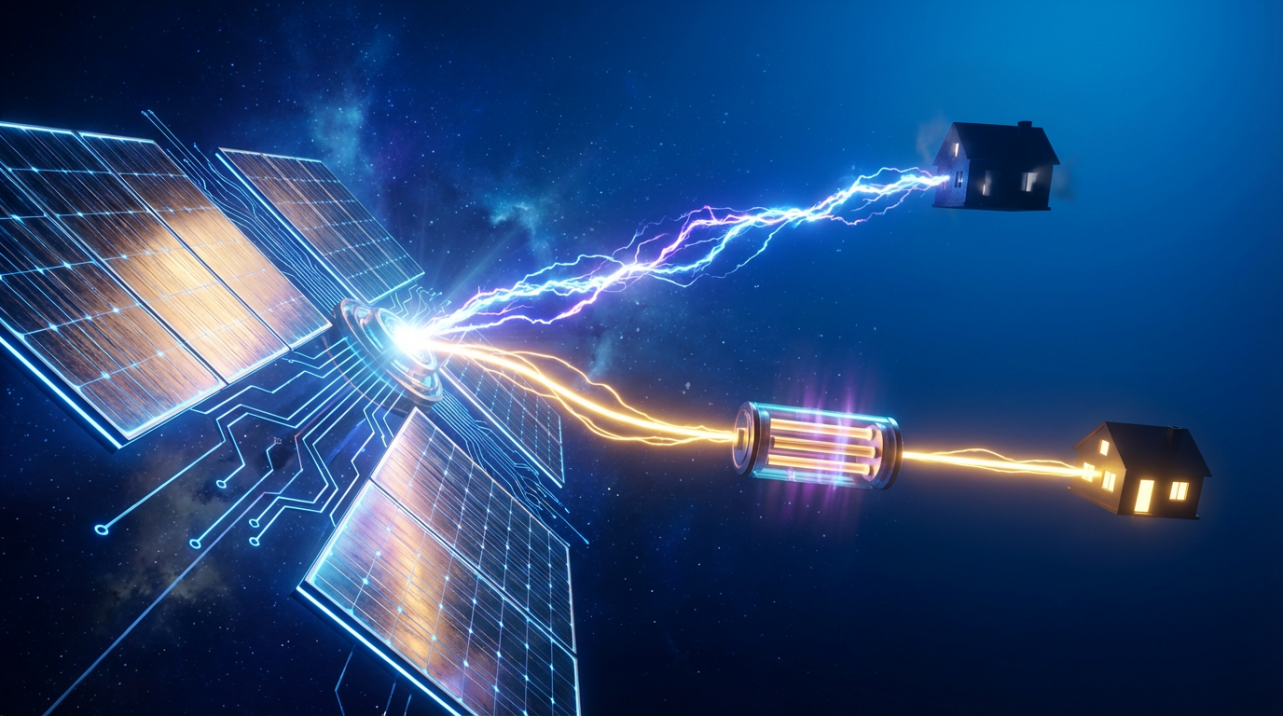
In a typical residential system, sunlight hits the modules, they produce DC, and an inverter converts that DC into grid-standard AC for your house and the wider grid. A solar system’s basic flow is sunlight hitting the panels, DC going to an inverter, AC feeding the breaker box, and any excess either stored or exported. Without that inverter bridge, the raw panel output simply does not match what your 120-volt outlets are built for.
Most roof systems remain tied to the utility, so when solar output is low your home automatically pulls what it needs from the grid. Residential solar setups route AC through the main electrical panel just like utility power, and a bidirectional meter tracks both what you draw and what you send back so billing can credit surplus. In other words, residential solar power systems are integrated networks of panels, inverters, wiring, and protection equipment that work together with the grid.

Grid-direct systems take that a step further by synchronizing the inverter with the grid’s voltage and frequency so power can flow both ways. In a standard grid-direct configuration, solar production first serves on-site loads, any surplus is exported to the utility, and grid power fills in whenever the array cannot keep up. Grid-direct photovoltaic systems connect a solar array directly to an interactive inverter that operates in lockstep with the grid.
What "Direct From Panel" Actually Means
When people talk about "running loads directly from panels," they usually mean skipping any significant battery bank and sometimes even skipping proper regulation. A solar system without a battery is a setup where panels and an inverter feed immediate loads or the grid without any on-site energy storage, so whatever the array produces in real time is all you have; A solar system without battery is defined as that kind of direct, grid-or-load-connected arrangement.
At the panel terminals, voltage and current are constantly changing as clouds move, temperature shifts, and the angle of the sun changes. Many small panels sold as "12-volt" can swing from roughly 12 up into the 20-volt range while still staying within their wattage rating, and the current rises and falls right along with the light. That is why a bare 12-volt panel cannot directly run a 120-volt kitchen appliance and why even devices designed for 12-volt operation can misbehave when the sun drops behind a cloud.
In practice, only simple DC loads that tolerate fluctuation, such as certain fans or pumps, are reasonable candidates for true panel-only operation. Field experience shows that sensitive electronics, especially anything with digital charging logic like many cell phones, often stop charging or reset when the solar input dips in and out during patchy sun. For stable operation, the usual recommendation is a panel feeding a charge controller, the controller charging a small battery, and the load powered from the smoothed battery side.

A small "buffer" battery in this context is not about storing days of energy; it is about flattening those second-by-second swings so your load sees relatively steady voltage and current. When you size the panel to consistently produce a bit more power than the load normally draws, the battery stays topped up and quietly absorbs the noise in the solar supply instead of your devices trying to ride that roller coaster.
Myth: Panels Will Run the House During an Outage
One of the most persistent myths is that if your roof is covered in panels, your house will keep humming along during a blackout even without batteries. Grid-direct systems in reality are designed to shut down during utility outages because the interactive inverter must avoid energizing dead lines and creating a safety hazard for lineworkers. Standard grid-direct systems automatically stop operating during utility outages for this reason.
Modern grid-tied inverters include anti-islanding logic that constantly checks for the presence of a stable grid waveform and disconnects within fractions of a second if the grid disappears. That means a typical grid-tied system without batteries supplies power to your house and exports surplus to the utility on normal days, but the moment the neighborhood loses power, your inverter deliberately goes dark as well.

Grid-tied inverters for systems without batteries convert photovoltaic energy into grid-synchronized alternating current, but by design they shut down quickly when that grid reference disappears.
There are niche inverters that can form their own waveform from the array and provide limited backup from panels alone, but they are rare, heavily stressed, and often sold with very short warranty periods. Experience from long-running hybrid systems shows that pairing an inverter with a real battery bank is far more reliable for backup: the battery gives the inverter a stable reference, and the array simply supplements it when the sun is available. When sited and configured correctly, this kind of hybrid setup can ride through outages so smoothly that occupants only learn about them from neighbors whose lights went out.
Battery-Free Systems That Actually Work
Despite the myths, there are situations where running without a battery is not just acceptable but smart. A very common and effective pattern is a grid-tied system with no on-site storage, where panels feed an interactive inverter and the grid effectively acts as your energy buffer. In that sense, a solar system without battery uses a grid-synchronized inverter and treats the utility as a virtually unlimited storage reservoir.
In this configuration, daytime solar production first covers whatever your home is using at that moment, and any extra power spins your meter backward under net metering or similar policies. When the sun goes down or you have a cloudy spell, the grid automatically supplies the difference, and your bill reflects the net of what you used and what you exported. Homes that stay connected to the grid in this way see their utility bill reduced by the value of that net production.
The advantages of this battery-free approach are real. You avoid the cost and maintenance of batteries, keep the system simpler, and often gain slightly higher overall efficiency because you are not cycling energy in and out of storage. A battery-free setup has lower upfront cost and reduced ongoing complexity. Environmentally, you also sidestep much of the mining, manufacturing, and end-of-life handling that lithium-ion storage requires, while still reducing reliance on fossil-fuel generation whenever the sun is shining.
The trade-off is that you are still completely dependent on grid reliability. In regions with frequent outages, unstable voltage, or long repair times after storms, a battery-free grid-tied array will cut bills but will not keep your refrigerator, well pump, or network gear running when the grid fails. In those cases, either a hybrid solar-plus-battery system or a well-sized portable solar generator becomes the more resilient choice.
Why Off-Grid and Serious Backup Need Batteries
Once you cut the cord to the utility, the picture changes completely. For off-grid homes with no utility connection, batteries are not an accessory; they are the core of the system, because they supply power at night and during cloudy stretches when no amount of panel capacity can substitute for stored energy. For off-grid homes without a grid connection, batteries are effectively your personal miniature power plant.
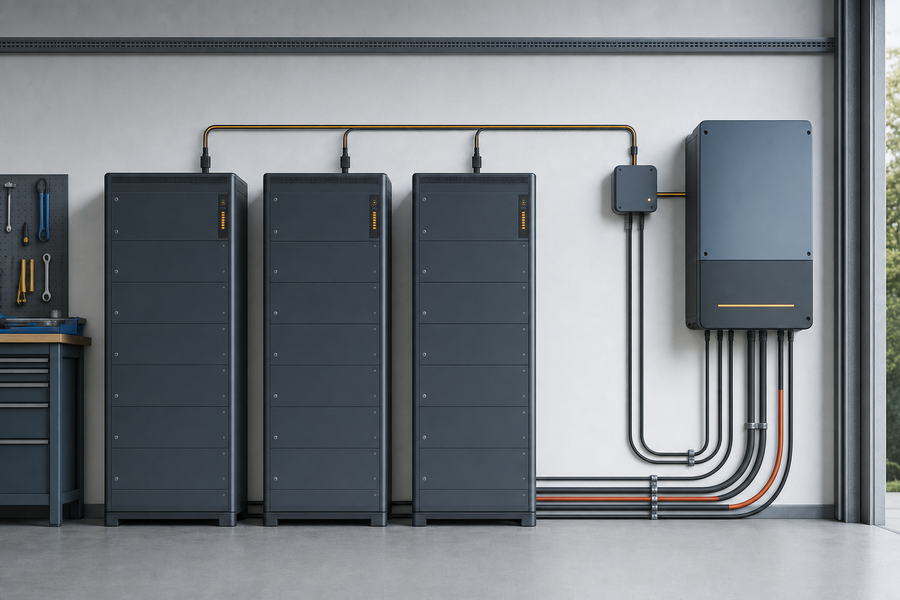
A well-built off-grid or hybrid system typically includes a photovoltaic array sized to your daily usage and worst-season sun, a charge controller, a battery bank sized for roughly one to three days of autonomy, and an inverter delivering stable AC to your loads. Hybrid systems that stay tied to the grid add flexibility: when the grid is up, they can export surplus or charge batteries from cheap off-peak power; when the grid fails, they automatically island and feed a critical-loads panel. Hybrid architectures that combine grid connection with batteries let you prioritize either bill savings or resilience, depending on your priorities and local rate structures.
Lithium iron phosphate batteries stand out here because they are efficient, long-lasting, and essentially maintenance-free compared with older chemistries. Lithium iron phosphate batteries are highlighted as a strong choice in many modern systems because they combine long cycle life with good safety margins. In practical retrofits, a right-sized combination such as roughly 5-7 kilowatts of photovoltaic capacity paired with around 10-15 kilowatt-hours of storage often covers evening peaks and short outages for essential loads like refrigeration, lighting, communications, and basic heating, with larger banks reserved for homes that rely on electric cooking or heating.
A simple rule of thumb from field design is that outage runtime in hours roughly equals usable battery capacity in kilowatt-hours divided by average load in kilowatts. For example, a 10 kilowatt-hour battery with about 9 kilowatt-hours usable, supporting an essential 0.8 kilowatt load, can ride through on the order of 11 hours before sunshine or the grid has to pick up the slack, assuming you respect recommended depth-of-discharge limits. Practical sizing examples show that a 10 kilowatt-hour battery configured this way can comfortably bridge many overnight outages for critical loads.
Portable solar generators and power stations offer a compact variant of the same idea by bundling battery, inverter, and charge controller into one unit that you feed with folding panels. They are particularly useful for renters, RVs, and smaller backup applications where a full hardwired system is not feasible. Portable solar products pair panels with integrated power systems so you can plug in devices without having to build a custom array and battery bank from scratch.
Direct Panels vs Storage: Practical Comparison
Setup |
What it looks like in practice |
Best for |
Main limitation |
Bare panel to direct-current load |
Panel wired straight to a tolerant pump or fan, running only when sunlight is strong |
Simple daytime-only tasks like ventilation or pumping |
Output flickers with every cloud; voltage swings can damage electronics |
Grid-tied, no battery |
Roof array feeding an interactive inverter and the main panel, with surplus exported to grid |
Cutting bills where the grid is reliable |
No power during outages; still fully dependent on utility |
Array, hybrid inverter, lithium bank, and a critical-loads panel for backup |
Homes needing resilience plus lower bills |
Higher upfront cost and design complexity |
|
Portable power station plus panel |
Folding panel feeding a compact solar generator with built-in storage and outlets |
Renters, mobile setups, and targeted backup loads |
Limited capacity and power; not a whole-house solution |
Grid-tied systems without batteries sit in a sweet spot for many households because they maximize bill savings per dollar of hardware while keeping operation straightforward. Battery-free grid-direct systems generally offer lower upfront cost and simpler day-to-day use than comparable systems with batteries. Hybrid systems and portable generators come into their own when you care less about the lowest possible electricity cost and more about guaranteed power for critical loads when the grid is down.
How to Choose the Right Path for Your Loads
The first decision point is whether you have a reasonably dependable grid or you are truly off-grid. If you can count on utility service most days and your primary goal is lower bills rather than outage protection, a well-sized grid-tied array without batteries is often the most economical answer, especially in areas with net metering or fair export compensation. Grid-connected solar systems with bidirectional metering let you treat the utility almost like a virtual battery that absorbs your surplus during the day and feeds you back at night.
If your area sees frequent or long outages, or you rely on critical loads such as medical equipment, well pumps, or home offices that cannot go down, then storage stops being optional. Under those conditions, a hybrid system that can island from the grid and power a dedicated backup panel is worth serious consideration, even if you start with a modest battery bank and expand later as budget allows. Hybrid systems that combine grid connection with batteries give you both bill savings and backup capability in a single package.
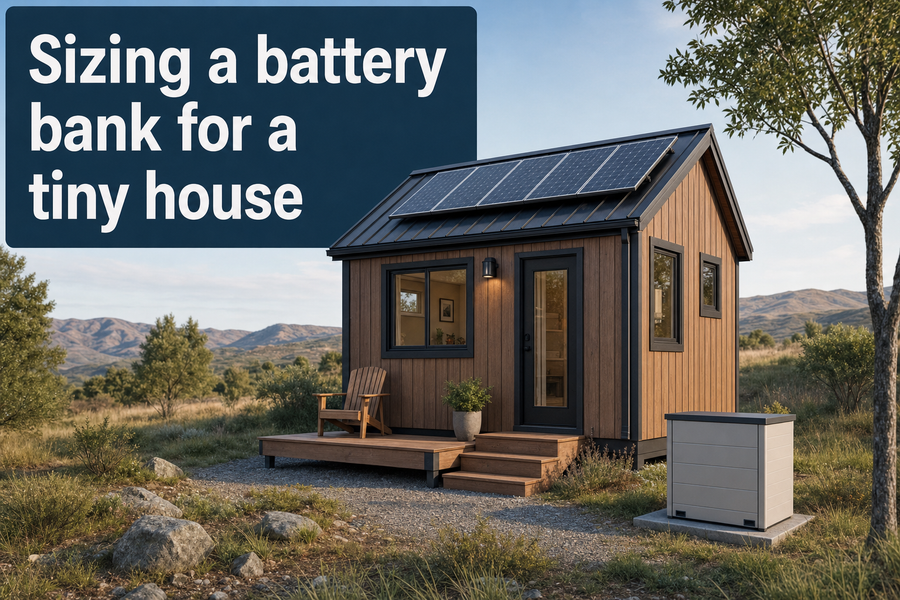
For cabins, remote outbuildings, or mobile rigs that see no grid at all, design from the battery outward rather than from the panel inward. Start by listing essential loads and their run time, convert that into daily kilowatt-hours, then size batteries for at least a day or two of autonomy and panels to comfortably recharge them during your worst sun season. Off-grid solar designs size arrays and storage around those daily energy needs and the weakest-sun months, not just peak summer output.
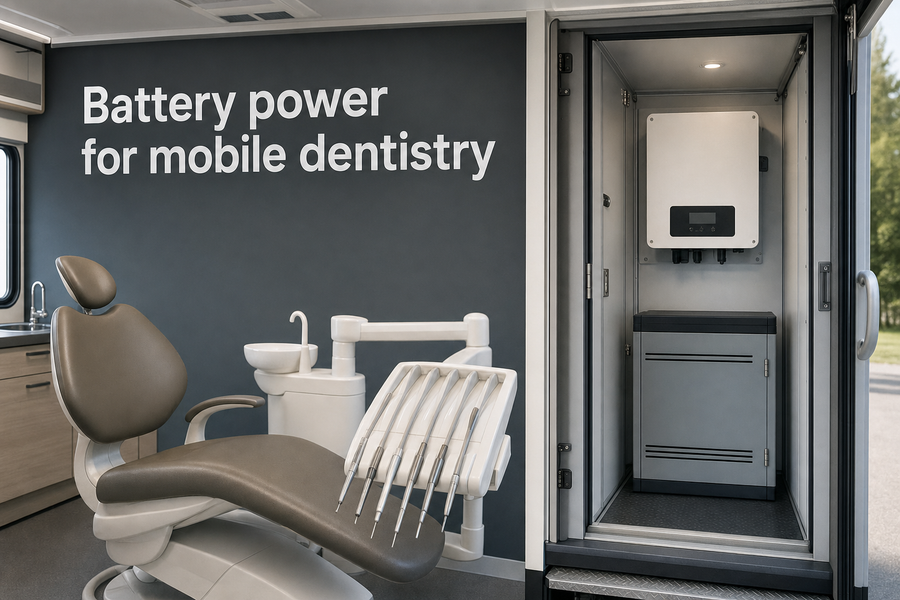
Finally, if your needs are modest or highly portable, do not overlook modern solar generators. A compact power station paired with a folding panel can keep communication gear, small fridges, lights, and tools running silently during outages or trips without a permanent installation. Portable solar systems provide quiet, fuel-free backup for situations where a permanent rooftop array is not practical.
FAQ
Can I charge a battery directly from a solar panel without a controller?
That shortcut is tempting, but it is risky for both lead-acid and lithium batteries. Panel voltage regularly rises above what the battery can safely accept, and at low states of charge the battery may draw more current than the panel and wiring are designed to deliver. A solar charge controller is the component that keeps charging within safe limits and prevents reverse current from flowing back into the array at night. Solar batteries in modern systems are expected to be paired with properly sized charge controllers for exactly these reasons.
Can I start with grid-tied solar now and add batteries later?
Yes, that is a common and sensible upgrade path, especially when you care about payback today but want resilience tomorrow. Many systems begin as straightforward grid-tied arrays and later add battery storage using AC-coupled solutions that tie into the existing AC side of the system, trading a small efficiency hit for easy retrofit. Solar batteries can be integrated as either alternating-current-coupled or direct-current-coupled additions, depending on your existing hardware and design goals.
A few loads can ride directly on solar panels for simple daytime tasks, but if your goal is a home, cabin, or business that actually stays powered when it matters, treat panels, inverters, and lithium storage as a coordinated upgrade, designed around your critical loads rather than around the myth that bare panels alone can run anything you plug in.