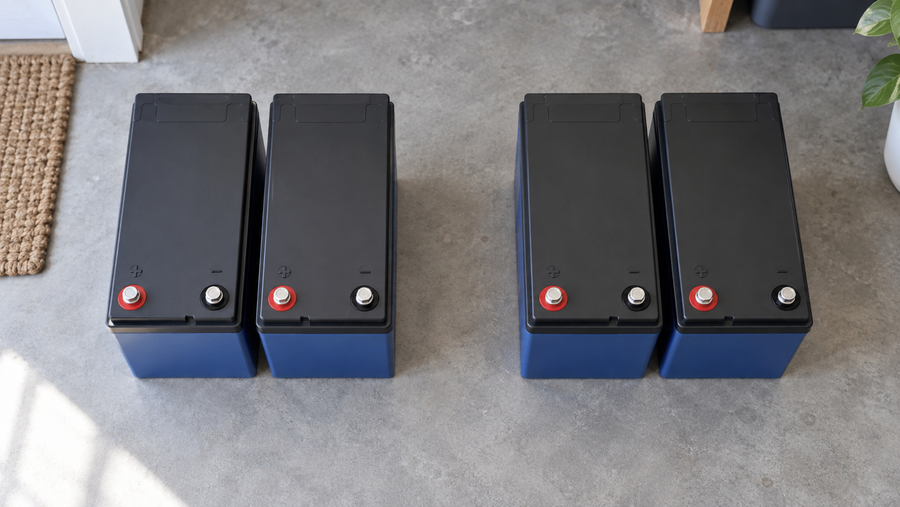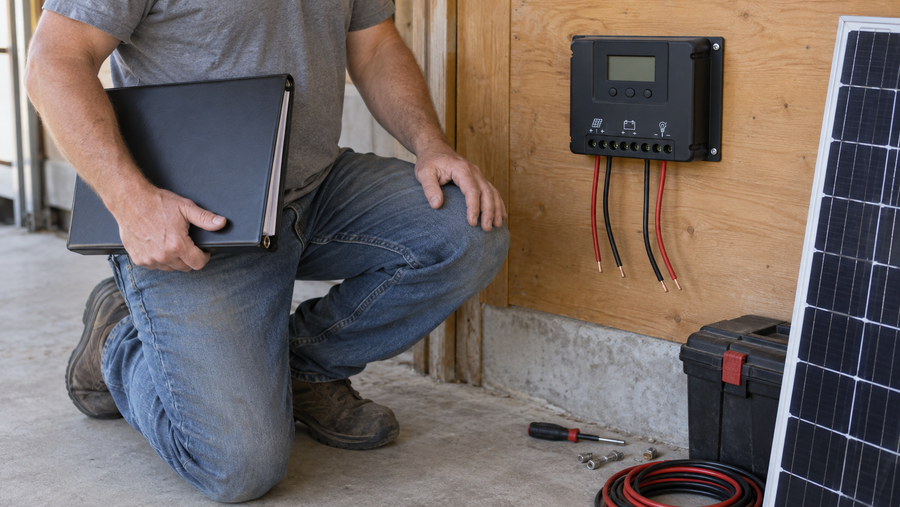

LiFePO4-based battery power stations provide quiet, emission-free power at your job site, so you can keep tools charged without the noise, fumes, and hassle of a gas generator.
Clean, Quiet Power Where You Work
A gasoline generator has to sit outside, far enough away to manage noise, fumes, and carbon monoxide, which means long extension cords and voltage drop just to charge a few tool batteries. A LiFePO4 power station can sit in the trailer, on a rolling cart, or right beside your charging wall without exhaust or fuel cans on the floor.
These stations run essentially silently, with no tailpipe emissions and minimal maintenance, which makes them ideal for interior work, punch lists, and occupied buildings where a generator is not acceptable. On tight urban infill sites, that can be the difference between winning the job and losing it to a crew that can work quietly.

Because the power source sits at the point of use, you can run chargers, LED work lights, and tablets from the same hub instead of splitting loads across random outlets and spider boxes scattered around the site.
More Uptime, Less Fuel Burn
Most cordless tool chargers draw roughly 50–200 W, so even a mid-size LiFePO4 station around 2,000 Wh and 2,000 W continuous can comfortably feed several chargers plus lights for hours before it needs to be recharged. That pattern matches how modern portable stations are field-tested for drills, sanders, and small saws.
Using stored energy for low to medium loads is far more efficient than idling a 3,500 W gas generator at a few hundred watts all day. You stop burning gasoline just to keep chargers humming, and you cut the soft costs of refueling runs, oil changes, and occasional no-start mornings.
The longer cycle life and stability of LiFePO4 chemistry also mean the station can handle thousands of charge cycles, while a small contractor-grade generator may need major service or replacement after a similar amount of runtime. On retrofit and off-grid projects, shifting pack charging to LiFePO4 can routinely shave an hour or more of generator runtime per crew per day.

For all-day corded loads like large welders or big compressors, a correctly sized gas generator still belongs on site, but it can be smaller and run fewer hours when a LiFePO4 station handles charging and light-duty power.
Safer Charging Hubs for Modern Lithium Packs
Gas generators bring obvious hazards: carbon monoxide, hot exhaust, fuel storage, and noise that encourages hearing protection at the expense of verbal warnings. A LiFePO4 charging station eliminates exhaust and fuel handling in and around the structure, which is a major benefit for indoor and renovation work.
Traditional industrial battery rooms introduce different risks, with battery charging areas recognized as potential hazard zones because of hydrogen gas and ignition sources. With sealed lithium packs and LiFePO4 stations, you are not venting hydrogen like a bank of flooded lead-acid forklift batteries, but following the same discipline—clear zones, no smoking, non-sparking tools—still raises your safety game.
Experience from shops and garages shows that cheap power strips, unattended chargers, and “temporary” setups that turn permanent are often a bigger risk than the batteries themselves. A dedicated station with quality power strips, fire-conscious outlet placement, timers to avoid overnight charging, and clear housekeeping standards drastically reduces those problems.

Smarter Power Management for Cordless Tool Fleets
On busy sites, poor charger layout is a productivity leak: crews line up for batteries, hunt for their charger, and unplug each other’s packs. A well-planned charger setup becomes the powerhouse of the site, minimizing lines and lost hours, as emphasized in this charger setup guidance.
Pairing a LiFePO4 station with a purpose-built wall rack or cabinet turns that idea into a portable asset you can move from job to job. Popular DIY builds show how a simple wall-mounted power tool storage and charging station can centralize every charger, cord, and drill in a compact footprint.
Quick setup steps for a LiFePO4-powered charging hub:
- Mount a sturdy charging shelf or cabinet at chest height in the trailer or job box.
- Bolt a mid-size LiFePO4 station below or beside it with short AC runs to each charger.
- Label each charging bay by crew or tool type so batteries do not get borrowed and lost.
- Add a master switch or timer so the whole bank shuts down automatically after hours.
Smarter charging is the other half of the equation. Modern tool manufacturers and innovators are pushing intelligent charge profiles that cut charge time and extend pack life, and those smart chargers perform best when they see stable power. Feeding them from a steady LiFePO4 station, instead of a fluctuating or overloaded generator circuit, keeps your crew working instead of waiting on batteries.